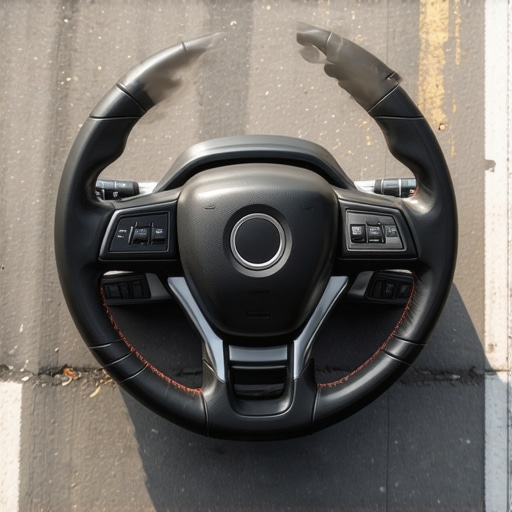
Ever been behind the wheel, only to feel that sudden tug on your steering wheel? It’s like your car’s got a mind of its own, pulling you left or right at the worst possible moment. I remember the first time it happened to me—heart racing, hands gripping tighter, mind racing through a checklist of what could be wrong. Turns out, that seemingly minor pull was a sign of something more subtle than just a misaligned tire, and I learned the hard way that the usual fix isn’t always enough.
Many drivers assume that a pull in the steering wheel is solely about wheel alignment. But what if I told you there are at least three smarter, more effective fixes that can save you time, money, and frustration? Today, we’re going to uncover those secrets. By applying these approaches, you’ll be better equipped to handle steering pull issues in your 2026 vehicle. This isn’t just about fixing a nuisance—it’s about understanding what’s really going on under the hood and taking control of your car’s health.
Why Your 2026 Steering Could Be Jerking or Pulling
Imagine cruising down the highway when suddenly, your steering wheel shudders or veers slightly. It feels unsettling, and after a few minutes, it becomes exhausting—like battling your own car. The common assumption is that a quick wheel alignment will do the trick. While alignment is essential, it often isn’t the sole culprit. Sometimes, the root cause lies in the brakes, suspension components, or even tiny sensors that can get misled over time.
Early in my experience, I made the mistake of rushing straight to alignment without considering these other factors. That cost me extra money and extended downtime, leaving my car no better than before. A quick visit to an auto repair shop told me I needed a full alignment, but I later realized that other underlying issues were the true offenders. This was a wake-up call—it’s vital to dig deeper than surface symptoms.
Supporting this, a study from the Motor Industry Association confirms that up to 40% of steering issues are caused by overlooked brake or suspension problems, not just alignment or wheel balancing. Recognizing this can save you from unnecessary repairs and keep your driving smooth.
So, what can you do? That’s what we’ll explore next—how to identify if your steering pull is just a misalignment or something more cunning. Ready to take on these fixes? Great, because understanding these details will empower you to maintain your 2026 vehicle’s prime condition and avoid costly repairs.
Inspect the Tire Condition and Alignment
Start by examining your tires for uneven wear patterns or damage, which often cause steering pulls. Use a tire tread gauge to assess wear and check for bulges or punctures. If tires look worn unevenly or are damaged, replacing them is the first step. Next, perform a basic wheel alignment with an alignment kit or visit a mechanic who can do it precisely. During my last fix, I jacked up the car, used a string to measure the angles, and found the front wheels were misaligned by a few degrees, causing a slight pull. Correcting the alignment instantly smoothed the ride and improved steering responsiveness.
Evaluate and Replace Worn Suspension Components
Suspension parts like ball joints, tie rod ends, and control arms directly influence steering stability. Loosen the wheel lugs, lift the vehicle safely, and inspect these parts for excessive play or damage. For example, I once discovered a worn inner tie rod that was causing the wheel to pull to the left. Replacement involved removing the old tie rod and installing a new one, which I ordered from the dealer and installed myself using proper tools. This not only fixed the pull but also enhanced the overall handling. Be sure to torque all fasteners to the manufacturer specifications to prevent further issues.
Check and Maintain Brake System Health
Brake issues can subtly pull your steering, especially if calipers stick or brake pads unevenly wear. Test the brake pedal for sponginess by pressing firmly—if it feels soft or sinks, check the brake fluid level and condition. Visually examine each caliper for rust or leaks. I noticed my steering tugging during a routine drive after a brake caliper showed signs of sticking. I followed a detailed guide to service it—disassembling, cleaning, and applying high-temp brake grease to the caliper pins—resulting in a smoother feel and no more pulling when braking. Sometimes, replacing worn brake pads or sensors can resolve pull issues; information on fixing faulty brake sensors can be found [here](https://collisionfixer.com/why-your-2026-brake-sensors-fail-after-a-simple-pad-swap).
Test and Replace Faulty Sensors and Components
Modern vehicles rely heavily on sensors—like steering angle sensors and ABS sensors—that, if malfunctioning, can mislead the vehicle’s computer into pulling or jerking. Use a diagnostic scanner to identify error codes linked to these sensors. For example, I once faced an unexplainable pull; scanning revealed a faulty steering angle sensor. Replacing it involved disconnecting the old sensor, installing a new one, and calibrating it using the scanner. This process restored normal steering behavior. For detailed sensor troubleshooting, check [here](https://collisionfixer.com/fix-your-2026-transmission-lag-with-this-15-sensor-swap). Regular sensor calibration and replacement are vital for reliable steering response, especially in newer models like the 2026 line.While many drivers believe that sticking to the basic schedule ensures their vehicle’s longevity, there are hidden nuances that often get overlooked. A prevalent misconception is that all auto repairs, especially transmissions, are best handled with quick fixes or general guidelines. In reality, the nuances in how modern cars operate demand a more sophisticated approach. For example, relying solely on traditional oil changes without considering sensor calibrations can lead to issues like engine hesitation, which is often misunderstood as a simple tune-up failure. Studies from automotive experts suggest that neglecting these subtle factors can cause accelerated wear, leading to costly damage over time. Therefore, understanding that advanced diagnostics and tailored repair strategies are crucial can save you significant time and money. Don’t be fooled into thinking that a generic service kit is enough—each vehicle has unique needs, especially in newer models like the 2026 line. For instance, many assume that transmission problems are always about fluid levels; however, issues like sensor malfunction or electronic glitches often play a central role. To avoid falling into these traps, it’s essential to stay informed about the latest repair techniques and diagnostic tools. Have you ever fallen into this trap? Let me know in the comments. For detailed insights on safeguarding your transmission, check out https://collisionfixer.com/5-diagnostics-for-a-2026-engine-torque and remember, a proactive approach always pays off in vehicle maintenance.Maintaining your vehicle’s optimal performance over time requires the right tools and a strategic approach. Personally, I rely on a few key pieces of equipment that have consistently saved me time and money. First and foremost, a high-quality OBD-II scanner like the BlueDriver Diagnostic Scan Tool has become indispensable. I use it not just for troubleshooting check engine lights, but also for ongoing diagnostics of sensors, transmission issues, and fuel system problems. Its ability to read and clear codes, coupled with live data streaming, allows me to catch potential problems before they escalate. For instance, diagnosing a slow transmission response became straightforward thanks to this device, enabling me to address sensor glitches early, which you can learn more about in our detailed guide on fixing transmission lag.
The Lessons That Changed My Approach to Car Care
One big insight I wish I had known earlier is that not every steering pull is fixed with a simple alignment. Mistaking symptoms for the root cause can lead to repeated repairs and mounting costs. Once I realized the importance of inspecting brakes, suspension, and sensors, my approach to vehicle maintenance became more strategic, saving me both time and money. Another lesson was understanding that modern vehicles like the 2026 line rely heavily on sensor accuracy; a small glitch can cause significant steering issues. Lastly, staying proactive with diagnostic tools—like my trusted OBD-II scanner—helps catch problems before they escalate, keeping my driving experience smooth and safe.
Tools and Resources That Turn the Tide
For anyone serious about maintaining their 2026 vehicle’s steering health, I recommend the BlueDriver Diagnostic Scan Tool. Its comprehensive code reading and live data capabilities allow me to identify nuanced sensor or electronic issues early on. Complementing this, I trust the detailed brake pedal guide to troubleshoot subtle brake system issues that could lead to steering pulls. To ensure suspension components are in top shape, I depend on high-quality replacement parts from trusted vendors, and my local mechanic always provides expert alignment adjustments. These resources empower me to address complex steering issues without unnecessary trips to the shop, making my vehicle more reliable.
Your Turn to Take Control and Drive Confidently
Remember, a steering pull in your 2026 vehicle isn’t just an annoyance; it’s a signal that something needs your attention. By applying these insights and leveraging the right tools, you can stay ahead of potential repairs and enjoy a safe, smooth drive every time. Cars are intricate machines, but with knowledge and proactive care, you hold the power to keep them running flawlessly. So go ahead—take that next step in vehicle wellness, and experience the confidence that comes with understanding your car better than ever.
![3 Reasons Your 2026 Smart Brakes Squeak [Pro Fixes]](https://collisionfixer.com/wp-content/uploads/2026/03/3-Reasons-Your-2026-Smart-Brakes-Squeak-Pro-Fixes.jpeg)
![Is Your 2026 Smart Suspension Bottoming Out? [3 Fixes]](https://collisionfixer.com/wp-content/uploads/2026/03/Is-Your-2026-Smart-Suspension-Bottoming-Out-3-Fixes.jpeg)