
I was sitting at a busy intersection last July, my foot firmly on the brake, when my car suddenly lunged forward like it was trying to win a drag race. It was terrifying. I nearly hit the person in the crosswalk, and my heart didn’t stop racing for an hour. If you’ve felt that weird surge—that moment where the RPMs spike and the car fights your brakes—you know exactly how unsettling it is. It’s not just a quirk; it’s a cry for help from under the hood. I spent weeks ignoring it, thinking I was just imagining things or that I wasn’t pressing the pedal hard enough. I was wrong. Today, we are going to dive into the nuts and bolts of why your vehicle is acting possessed and, more importantly, how you can fix it before you’re forced to check if your frame is straight after a preventable accident.
Stop Your Car From Trying to Leap Into Traffic
Years ago, when I first started tinkering with my own rides, I made a massive mistake. I assumed a lunge meant my brakes were failing. I spent hundreds on new rotors and pads, only to realize the car was still surging. I felt like an idiot. It turned out to be a simple vacuum leak that cost ten bucks to fix. That’s why I want to help you avoid the ‘parts cannon’ approach and actually diagnose the root cause. When your car jerks forward while you’re slowing down, it’s usually because the engine is receiving an unexpected surge of air or fuel, or the transmission is struggling to downshift. This often goes hand-in-hand with other symptoms, like why your car idles high when you first start it. According to data from the National Highway Traffic Safety Administration (NHTSA), unintended acceleration or surging can often be traced back to electrical faults or mechanical interference in the throttle system, making it a critical safety issue that needs immediate attention.
Is this just another expensive mechanic trap?
I get it—you’re worried that a little lunge is going to turn into a three-thousand-dollar transmission replacement. But here is the truth: most of the time, this is caused by a dirty sensor or a worn-out vacuum hose. While some cases might require you to look into how transmission overhauls save you money in the long run, jumping to the worst-case scenario is a mistake. Have you ever felt your car try to lunge forward while your foot was glued to the brake? It’s a common issue that shows up on many top signs your car needs expert auto repair now lists, but many of the fixes are surprisingly DIY-friendly. We’re going to look at the Idle Air Control (IAC) valve, the throttle body, and even your transmission fluid levels to get your car back to behaving itself.
Don’t Let a Vacuum Leak Hijack Your Brakes
The most common culprit behind that terrifying surge is a vacuum leak. Think of your engine’s vacuum system like a giant straw; if there is a tiny pinhole in that straw, the engine sucks in extra air it didn’t plan for. This unmetered air forces the computer to dump in more fuel to keep the engine from stalling, causing the RPMs to jump exactly when you want them to drop. You can often hear this happening if you listen for what that high-pitched whistle under your hood really means. Inspect the large rubber hose connecting your brake booster to the engine intake. If it’s cracked or brittle, you’ve likely found your ghost. I once spent three days chasing an electrical gremblin on a friend’s truck, only to realize his vacuum hose had a split so small it was invisible until I flexed the rubber. Ten minutes and a five-dollar hose later, the lunging stopped entirely.
Test Your Brake Booster for Internal Failure
Sometimes the leak isn’t in the hose, but inside the booster itself. To test this without spending a dime, park the car and pump the brake pedal several times with the engine off until it feels rock hard. Hold the pedal down firmly and start the engine. The pedal should drop slightly under your foot. If it doesn’t move, or if the engine stumbles and tries to surge the moment you start it with the brake depressed, your booster’s internal diaphragm is likely toast.
Scrub Away the Gunk in Your Throttle Body
Carbon buildup is the silent enemy of a smooth idle. Over thousands of miles, oil vapors and dust create a black, sticky sludge around the butterfly valve in your throttle body. This gunk causes the valve to stick, leading to the reason your gas pedal feels sticky and causing the car to jump forward when the valve finally snaps shut or open. I remember my old 2005 sedan used to lunge so hard I thought the transmission was falling out. When I finally pulled the air intake tube off, the throttle plate looked like it had been dipped in tar. A $5 can of throttle body cleaner and an old toothbrush fixed a problem I thought would cost me hundreds. This simple cleaning is a vital part of how you maximize your cars lifespan with regular tune ups. 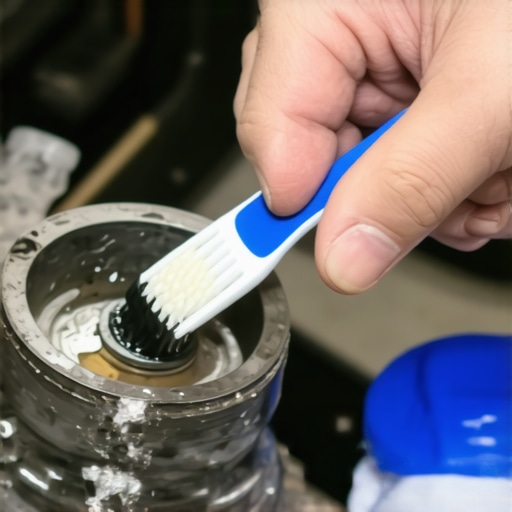
Reset the Idle Air Control Valve
While you’re cleaning the throttle body, don’t ignore the Idle Air Control (IAC) valve. This little motor manages your idle when your foot is off the gas. If it’s clogged, it can’t react fast enough to the load of the brakes or the A/C compressor, leading to erratic surges. Cleaning it is usually as simple as spraying the internal ports with the same cleaner you used on the throttle body.
Look for Clues in Your Transmission Fluid
If your engine stays steady but the car still feels like it’s trying to ‘leap’ over the brakes, the transmission might be refusing to disengage. This happens frequently when the fluid is old or low. Check your dipstick; if the fluid is dark brown or smells burnt, it’s a red flag. You might notice why your transmission slips when the engine is cold or hear why your car makes a clunking noise when shifting into drive. These are all signs that the internal pressure isn’t being regulated correctly, which forces the car to stay ‘pushed’ against the brakes even at a stop.Now, let’s pull back the curtain on a debate that divides even the crustiest old mechanics: the transmission flush. Most people think that if their car is lunging or shifting hard, the ‘golden cure’ is a high-pressure machine flush. I used to think so too, until I saw a perfectly drivable SUV go into the shop for a preventative flush and come out on a tow truck two days later. The reality is that on high-mileage vehicles, the truth about engine flushes for high mileage cars applies to transmissions as well. A high-pressure flush can dislodge ‘clutch mud’—the fine metallic particles and friction material suspended in the old fluid—and jam it into the tiny passages of your valve body.
Is Your Old Transmission Fluid the Only Thing Holding Your Gears Together?
This is the advanced nuance most DIYers miss. In a worn transmission, the gritty, old fluid actually provides the friction necessary for the clutches to grab. When you replace that with slick, detergent-rich new fluid, the clutches may start to slip. According to the experts at the Car Care Council, if your fluid is dark and has a high mileage history without previous service, a ‘drain and fill’ is significantly safer than a pressure flush. This subtle difference is why you might notice why your transmission shifts better when its hot, as the heat changes the fluid’s viscosity and how it interacts with that internal debris.  Another ‘trap’ I see constantly is the use of the wrong chemicals. If your car is lunging and you suspect a dirty Mass Air Flow (MAF) sensor, do not—I repeat, do not—use brake cleaner or carb cleaner. These are far too aggressive for the delicate platinum wire inside. I’ve seen people turn a $0 cleaning job into a $200 sensor replacement because they didn’t want to spend five bucks on a specific MAF cleaner. This kind of oversight is why why most libertyville shops misdiagnose a simple oil pan leak as a major repair; it’s easy to overlook the small details and jump to expensive conclusions. Proper maintenance is about precision, not just volume. While you should always aim to maximize your cars lifespan with regular tune ups, you have to be smart about the methods you use. Using essential car service tips for safe summer drives as a guide can help you avoid the ‘parts cannon’ and focus on what actually keeps you safe on the road. Have you ever fallen into this trap? Let me know in the comments.
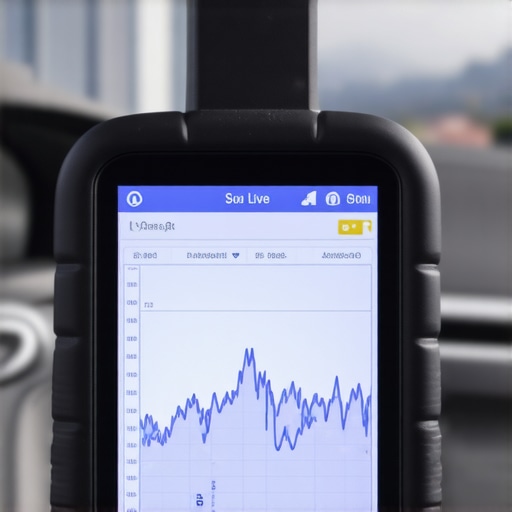
If you want to move beyond the “guess and check” method of fixing your car, you need to invest in a decent OBD-II scanner that supports live data streaming. I am not talking about the cheap twenty-dollar dongles that just clear codes; I am talking about a handheld unit that lets you see fuel trims and sensor voltages in real-time. This is the only way how to read live data to find a misfire or a laggy sensor before it even triggers a Check Engine Light. When your car lunges while braking, looking at the “Short Term Fuel Trim” can tell you instantly if the computer is compensating for a massive vacuum leak. If those numbers are spiking into the double digits, you have found your ghost without turning a single wrench.
Stop Throwing Parts at the Problem
I also swear by my infrared thermometer. It is the fastest way to see if your cooling system is failing under the pressure of a hot idle. By pointing it at different spots on your radiator, you can identify cold patches that signal internal clogs that a visual inspection would never catch. It is basically the $10 tool that saves your engine from overheating and prevents a catastrophic head gasket failure that could end your car’s life. I have used this trick dozens of times to prove to skeptical friends that their radiator was half-blocked, even though the coolant looked clean.
Why Live Data Is Your Best Friend
Looking forward, the way we maintain our vehicles is shifting rapidly from mechanical wrenches to software proficiency. Modern vehicles are essentially data centers on wheels, and future tune-ups will involve more laptop time than actual oily hands. We are already seeing manufacturers release over-the-air updates to fix transmission shift points and throttle response issues. To stay ahead of the curve, you will need to get comfortable with digital interfaces and understanding what your car’s computer is actually thinking.
How do I keep my transmission healthy for 200,000 miles?
The secret isn’t a magic additive or a “mechanic in a can”; it is heat management and consistent fluid refreshes. Most manufacturers suggest “lifetime” fluid in their manuals, but the Automatic Transmission Rebuilders Association (ATRA) technical documentation often points out that “lifetime” usually means the life of the warranty, not the actual life of the vehicle. To truly maximize your cars lifespan with regular tune ups, you should be performing a simple drain-and-fill of your transmission fluid every 30,000 to 50,000 miles. Don’t forget to check your fluid levels as part of your essential car service tips for safe summer drives, as high ambient temperatures are the primary killer of internal transmission clutches. If you notice a suspicious drip on the driveway, do not wait for a warning light—use a pressure tester to rule out leaks before they leave you stranded on the side of the highway. My challenge to you is this: buy a basic digital multimeter this weekend and test your battery’s resting voltage. It is the first step toward mastering your machine and ending the cycle of expensive, reactive repairs.
Hard Lessons from My Days Chasing Engine Ghosts
After years of turning wrenches, I’ve realized that the scariest car problems are often the simplest to fix—if you stop overthinking them. First, never underestimate the power of a deep clean. Before you order a new transmission, a $5 can of cleaner might be all you need to solve the reason your gas pedal feels sticky. Second, your car talks to you long before it screams. A slight variation in RPM or a tiny hiss is a signal, not a quirk. Third, electricity is often the silent culprit; if why your dashboard lights dim when you idle coincides with your surging, you likely have a charging or ground issue, not a mechanical one. Finally, trust your gut—if the car feels unsafe, it is. Don’t wait until you’re looking for top signs your car needs expert auto repair now to take action.
Build Your Own Diagnostic War Chest
You don’t need a professional shop to get professional results. Start with a Bluetooth OBD-II scanner. It turns your smartphone into a window into your engine’s brain, letting you see how to read live data to find a misfire before it ruins your commute. Next, keep an infrared thermometer in your glovebox; it is the $10 tool that saves your engine from overheating by spotting clogged spots in your radiator. I also recommend a digital multimeter for checking those pesky sensors. Lastly, if you ever feel stuck, don’t hesitate to reach out to the pros at our contact us page for guidance on complex repairs.
Take Back the Wheel from the Gremlins
Car trouble can feel like it’s draining your bank account and your sanity simultaneously, but every “unfixable” ghost in the machine has a logical explanation. By staying ahead of your car service schedule and paying attention to the small stuff—like why your engine temperature fluctuates while driving—you shift from being a passenger in your car’s demise to being the master of its maintenance. You have the tools and the knowledge now; all that’s left is to pop the hood and get to work.
Have you ever had a car that felt like it had a mind of its own at a stoplight? Let me know about your most terrifying “possession” stories in the comments below!