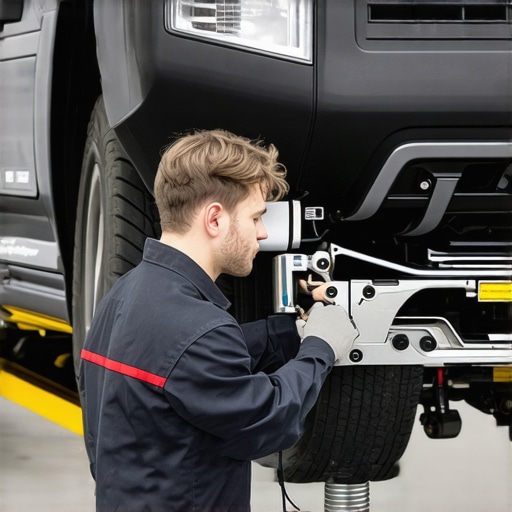
I still remember the first time I thought I’d gotten away with one. I was backing out of a tight spot at the grocery store and—crunch—I tapped a concrete pillar. It was just a ‘fender bender,’ or so I told myself. The bumper had a scuff, but nothing looked catastrophic. I went about my life for a month until I noticed my steering wheel felt ‘off’ and my tires were wearing down at a terrifying rate. I’d made the classic amateur mistake of assuming if it looks straight, it is straight. If you’ve ever felt that weird vibration or noticed your car pulling to the side, you know exactly the sinking feeling I’m talking about. Today, I’m going to help you skip the expensive mistakes I made and show you exactly how to verify your car’s structural integrity in your own driveway. We’re going to look at the gaps, the bolts, and the alignment clues that the insurance adjuster might have glossed over.
Stop Ignoring Those Weird Gaps in Your Bodywork
I’ve spent years under hoods and on lift racks, and if there is one thing I’ve learned, it’s that how to tell if your frame is bent after a fender bender isn’t always as obvious as a crumpled hood. Sometimes the damage is hidden deep within the unibody, lurking where you least expect it. One mistake I made early on was ignoring a door that required just a tiny bit more force to close. I thought it was just old age or a dry hinge. It wasn’t. It was a shifted pillar. If you are noticing that your car pulls or that your tires still wear unevenly after a professional shop alignment, you aren’t crazy—your frame is likely out of spec. When the skeleton of the car is crooked, no amount of new parts will fix the underlying geometry. You might think you just need a standard car service, but the problem could be much deeper.
Is a slightly bent frame really going to kill your car?
Many folks think a ‘tweak’ is just a cosmetic annoyance, but it’s actually a massive safety risk that shouldn’t be ignored. According to the Insurance Institute for Highway Safety (IIHS), even minor structural compromises can drastically change how a vehicle’s crumple zones perform in a secondary impact. Your car is engineered to fold in specific ways to save your life; if the frame is already kinked, it might not protect you next time. Beyond safety, a bent frame is a total budget killer. It puts constant stress on your suspension and leads to repeated, expensive repairs. Have you ever had a car that ‘just felt different’ after a minor accident, even though it looked fine? I’d love to hear about your experience in the comments. Before you call the tow truck, let’s dive into the simple visual checks you can perform right now to see if your car is actually tracking straight.
Measure the Gaps Like a Pro
Think of your car’s body panels like the buttons on a dress shirt. If you button the shirt wrong, the fabric pulls, and the gaps look uneven. Your car works the same way. Start by walking around the vehicle and comparing the spaces between the doors, the hood, and the fenders. These gaps should be perfectly uniform from top to bottom. If the gap at the top of the driver’s door is wide enough to stick your pinky in, but the bottom is tight against the jamb, you aren’t just looking at a loose hinge—you’re looking at a twisted unibody. 
Use Your Fingers to Find Hidden Shifts
You don’t need a laser-guided measuring system to find initial trouble. Run your hand along the seams where the bumpers meet the quarter panels. If one side feels flush and the other side has a sharp edge sticking out, the impact shifted the mounting points. This is exactly how to tell if your frame is bent after a fender bender without paying for a shop estimate first. I once inspected a used SUV that looked pristine on the surface, but the trunk required a literal hip-check to latch properly. The seller claimed it was a ‘temperamental lock,’ but a quick finger-run along the rear frame rails revealed a subtle ripple in the metal that shouldn’t have been there.
Spot the Clues Left by Mechanics
Pop the hood and look at the bolts that hold your fenders and radiator support in place. From the factory, these bolts are painted over. If you see silver metal showing or ’rounding’ on the edges of the bolt heads, it means a wrench has been there. Why would someone remove a fender on a car with ‘no accidents’? Often, it’s to hide structural repair work that wasn’t reported to insurance. If you notice these marks alongside signs your car needs expert auto repair, proceed with extreme caution.
The X-Pattern Test for a Square Frame
If you’re willing to get a little dirty, the ‘X-measurement’ is the gold standard for driveway diagnostics. Find four symmetrical points on the bottom of the chassis—usually large bolt heads where the suspension subframe meets the body. Measure diagonally: front-left to rear-right, and front-right to rear-left. If those two numbers aren’t within an eighth of an inch of each other, your car is a trapezoid, not a rectangle. This structural ‘diamonding’ is a primary reason your tires still wear unevenly after a professional shop alignment. A tech can adjust your toe and camber all day, but they can’t fix a crooked foundation with a simple wrench turn.
Listen for Mechanical Groans and Snaps
A bent frame acts like a tuning fork for bad vibrations. When the skeleton is out of alignment, every rotating part—from your driveshaft to your axles—is forced to work at an angle it wasn’t designed for. If you ignore this, you might eventually wonder why your car makes a popping sound when you go over curbs. The stress travels down the line, meaning you’ll need to know how to spot a bad cv joint before it snaps because the frame is literally pulling the axle out of its socket. Even if you keep up with regular tune ups, a structural issue will eventually grind your mechanical components into dust.
Stop trusting the ‘Standard Tune-Up’ to solve structural issues
Many drivers believe that if they just stick to their regular tune ups, any post-accident ‘quirks’ will eventually work themselves out. In my experience, this is the most common trap for car owners. People assume that ‘drivability’ issues like vibration or pulling are strictly related to maintenance or simple parts replacement. But here is the contrarian truth: you can throw a thousand dollars at new struts and an essential car service, but if your chassis is out of square, you are just masking the symptoms of a terminal illness. A bent frame changes the load points of your entire vehicle. The industry standard, often cited by the Society of Automotive Engineers (SAE), suggests that structural deviations as small as 3 millimeters can significantly alter suspension dynamics and load distribution. If the skeleton is wrong, the mechanical components are doomed to fail prematurely. Have you ever fallen into this trap of replacing part after part only to have the problem return? Let me know in the comments below.
Why your transmission might be the first victim of a bent frame
One of the ‘oops’ factors that even seasoned DIYers miss is how a shifted frame affects the drivetrain. Your engine and transmission sit on mounts that are bolted directly to the frame or subframe. When a collision tweaks the frame, those mounts are no longer in their factory-specified positions. This slight shift can put immense stress on the input shaft or the CV axles. If you find yourself wondering why your car makes a clunking noise when shifting into drive, don’t just blame the gearbox. It might be that the frame has shifted enough to pull the transmission out of its natural alignment, causing internal wear that no fluid flush can fix. 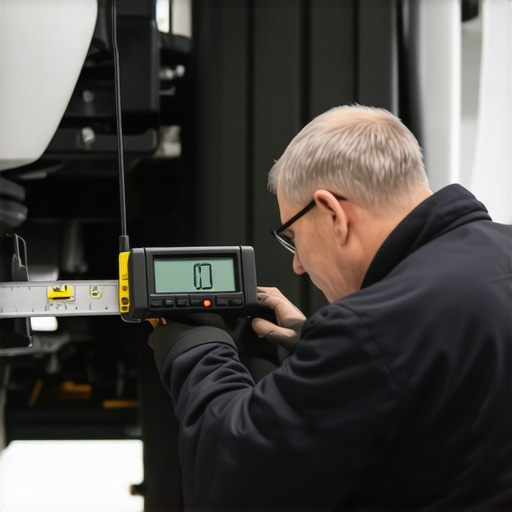
Can a computerized alignment actually hide frame damage?
This is a sophisticated question I get from readers who have already been to a shop. The answer is a frustrating ‘yes.’ A skilled technician can sometimes adjust the toe, camber, and caster to get the wheels within ‘acceptable’ alignment specs, even if the frame is diamonded or swayed. However, this is a band-aid. While the car might track straight for a few weeks, the suspension is operating at the extreme ends of its adjustment range. This is often the hidden reason your tires still wear unevenly after a professional shop alignment. You aren’t just looking for signs your car needs expert auto repair; you are looking for a specialist who understands that a straight alignment rack doesn’t always mean a straight car. Sometimes, you need to consider how transmission overhauls or structural pulls are the only way to save a vehicle that ‘feels’ wrong despite a clean bill of health from a standard shop.To truly know if your car is back to 100%, you have to move past the visual checks and start using the tools that the pros keep in their locked chests. I don’t mean a basic socket set from a big-box store. If you are serious about maintaining a vehicle that’s been through a ‘fender bender,’ you need a self-centering tram gauge. This is a telescoping metal rod with adjustable pointers that allows you to measure the distance between two points on the chassis with millimeter precision. I use mine to verify that the shock towers haven’t migrated inward, a common issue that causes your steering wheel to shake at exactly 60 mph. Even if you aren’t doing the heavy pulling yourself, owning one of these allows you to audit the work of the shop you just paid thousands of dollars to. I’ve seen ‘certified’ repairs where the front end was still a quarter-inch out of square, leading to a car that felt like it was constantly fighting the road.
The Cheap Tram Gauge That Beats Your Measuring Tape
A standard tape measure is too flexible and prone to sagging over long spans, which is why I always reach for a dedicated tram. According to technical documentation from I-CAR (the Inter-Industry Conference on Auto Collision Repair), structural measurements must be accurate within 3mm to ensure the ADAS (Advanced Driver Assistance Systems) like lane-keep assist work correctly. If your frame is off, your sensors are looking at the wrong part of the road. Beyond the frame, I highly recommend picking up a basic infrared thermometer. It’s essentially the $10 tool that saves your engine from overheating because it lets you find cold spots in your radiator that suggest a clog or air pocket after a front-end impact. 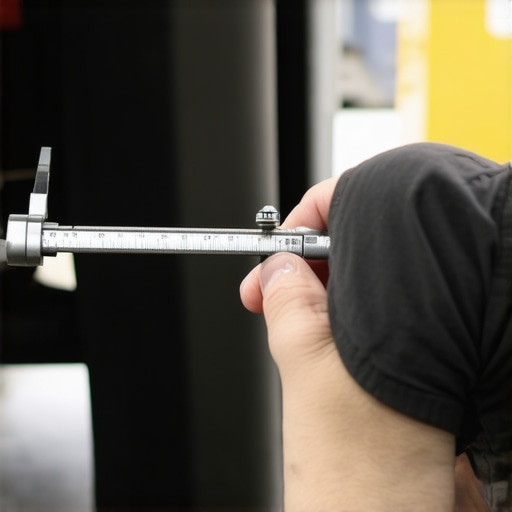
How can I keep my car straight for the long haul?
Long-term maintenance on a repaired car isn’t just about regular tune ups; it’s about watching the wear patterns like a hawk. Every 5,000 miles, I pull my front wheels and look for ‘feathering’ on the tread. If you see it, your toe alignment is shifting, likely because a stressed frame rail is settling. You should also be proactive with your essential car service routines. Don’t wait for a light on the dash to check your fluids. A post-collision car often develops ‘micro-leaks’ in the transmission cooling lines. If you ignore these, you’ll eventually need to know how transmission overhauls save you money because you’ll be replacing the whole unit instead of a five-cent O-ring.
Why Live Data Is Your Best Friend After a Hit
Modern cars are essentially rolling computers, and the best tool in my arsenal is a mid-range OBDII scanner that supports live data streaming. I’m not talking about just reading codes; I mean knowing how to read live data to find a misfire or monitoring your fuel trims in real-time. Often, a collision can cause a tiny vacuum leak or a pinched wire that doesn’t trigger a Check Engine Light immediately but makes the car run lean. If the car feels sluggish, don’t just assume it’s ‘getting old.’ Looking at the data can tell you if the computer is pulling timing because of a vibration the knock sensor is picking up from a bent engine mount. I predict that within the next five years, we will see smartphone apps using LiDAR to do these frame checks for us, but for now, the data stream is your best source of truth. If you’ve got a scanner, I challenge you to go out today and check your ‘Long Term Fuel Trims’—if they are higher than 10%, you’ve got a hidden issue waiting to be solved. You can find more signs your car needs expert auto repair by simply listening to what the computer is trying to tell you.
Three Costly Myths About Bent Frames That I Learned the Hard Way
After years of turning wrenches and inspecting salvage titles, I’ve realized that most drivers are operating on outdated information. First, don’t believe the lie that ‘if the airbags didn’t deploy, the frame is fine.’ Airbag sensors measure deceleration, not structural displacement; a slow-speed curb strike can twist a rail without ever popping a bag. Second, an alignment printout that shows all ‘green’ doesn’t mean your car is square. As we discussed, technicians can often compensate for a swayed frame by maxing out adjustment bolts, leaving you with a car that eats tires every six months. Finally, never assume that an essential car service will catch structural issues. Most lube techs are looking at oil and filters, not the symmetry of your unibody welds. You have to be your own advocate.
Tools I Actually Use to Audit a Body Shop’s Work
If you want to move beyond guesswork, you need a few specific items in your garage. I personally swear by a telescoping tram gauge for checking shock tower distance. It’s the only way to know if your suspension geometry is actually back to factory spec. I also keep a high-quality OBDII scanner handy because reading live data to find a misfire can sometimes lead you back to a pinched wiring harness caused by a shifted frame rail. For cooling issues that pop up after a front-end hit, I always reach for the $10 tool that saves your engine from overheating—an infrared thermometer—to check for radiator flow restrictions. These tools allow you to verify a repair rather than just taking a shop’s word for it. Knowing these signs your car needs expert auto repair before you sign off on the insurance paperwork can save you thousands in the long run.
Stop Guessing and Start Measuring
Your car is more than just a mode of transport; it’s a protective cage for you and your family. Taking the time to understand how to tell if your frame is bent after a fender bender isn’t just about saving money on tires—it’s about ensuring the vehicle’s safety systems will work when you need them most. Whether you’re looking into regular tune ups or considering how transmission overhauls might be necessary due to a shifted drivetrain, staying proactive is the key to longevity. Don’t be afraid to get under there with a flashlight and a tape measure. Have you ever discovered a hidden structural issue on a car that looked perfectly fine from the outside? Let me know in the comments below!