
I’ll never forget the first time it happened to me. I was merging onto the highway in my old sedan, pushing the pedal down to find that sweet spot of acceleration, when suddenly, a wave of pure, unadulterated sulfur hit me like a physical wall. It smelled like someone had hidden a dozen rotten eggs under my passenger seat and left them to ferment for a month. I actually pulled over and checked my groceries, convinced I’d forgotten a carton of eggs in the trunk. But no, the groceries were fine. The car, however, was trying to tell me something expensive was about to break. [image_placeholder]
That Stink Isn’t Just Your Imagination
If you’re smelling that sulfurous stench every time you hit the gas, you aren’t crazy. It’s a visceral, disgusting reminder that your car’s chemistry is out of whack. Early in my DIY journey, I made the mistake of thinking I just needed a bottle of fuel injector cleaner and a cheap tank of premium gas. I ignored the top signs your car needs expert auto repair now and kept driving for three more weeks. That delay turned a manageable part replacement into a full-blown exhaust system nightmare. Today, I’m going to help you pinpoint exactly where that smell is coming from so you don’t end up on the side of the road with a melted exhaust. Most of the time, this points directly to your catalytic converter failing to process hydrogen sulfide into sulfur dioxide, but we also need to look at your fuel pressure regulator and even your battery.
Is My Car About to Catch on Fire?
It’s the first thing everyone asks when their car starts smelling like a chemistry experiment gone wrong. While your car likely isn’t going to explode this second, that smell is a warning that something is overheating or chemically imbalanced. According to the Car Care Council, a failing catalytic converter is the most common culprit, often caused by unburned fuel entering the exhaust system. If you’ve been noticing that your car struggles to climb hills lately, the two problems are almost certainly linked. It’s all about how your engine breathes. When you maximize your cars lifespan with regular tune-ups, you usually catch these things before the smell starts, but if you’re already at the “rotten egg” stage, we need to act fast. Have you ever had to roll your windows down at a red light just to escape the stench? Let me know, because you’re definitely not alone in this. We need to figure out if you’re dealing with a simple sensor swap or if it’s time to learn how to tell if your catalytic converter is actually failing.
Stop the Sulfur Before it Kills Your Fuel Economy
The first thing you need to do is treat your car like a patient in a triage unit. When that smell hits, your catalytic converter is usually the one screaming for help. Think of your converter as a high-heat chemical oven. Its job is to take the hydrogen sulfide produced during combustion and bake it into odorless sulfur dioxide. When the converter gets clogged or poisoned by old oil or bad fuel, that baking process stops. Instead of a clean exhaust, you get a concentrated blast of rotten eggs. I remember back in 2016, I was driving a beat-up truck and decided to ignore the smell because the truck still ran fine. Within a week, the converter had melted internally, essentially corking my exhaust pipe. It felt like I was trying to run a marathon while breathing through a cocktail straw. If you want to avoid a massive repair bill, you need to learn how to tell if your catalytic converter is actually failing before the internal honeycomb structure completely collapses. You can sometimes test this by giving the converter a light tap with a rubber mallet; if it sounds like a box of gravel, the ceramic inside has shattered. 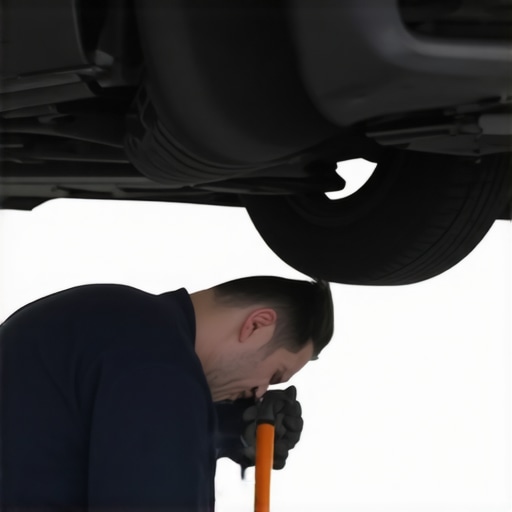
Stop Flooding Your System with Raw Gas
Sometimes, the smell isn’t actually the converter’s fault—it is just the victim of a bad fuel pressure regulator. If the regulator fails, it sends way too much gasoline into the engine. This rich mixture creates more sulfur than the converter can possibly handle, effectively drowning it. It is a lot like trying to drain a swimming pool with a kitchen sink drain; eventually, things are going to overflow. This is often why your car smells like rotten eggs when you accelerate specifically, because that is when the fuel demand is highest. If you have noticed that your car feels sluggish even after a new air filter, the regulator is a prime suspect. I once spent a whole Saturday tearing apart an exhaust system only to realize a $30 vacuum line to the regulator had snapped off. Check your vacuum lines first; it is a five-minute fix that saves hours of frustration.
How to Spot a Boiling Battery
If the smell is present even when the engine is relatively cool, or if it seems to be coming from under the hood rather than the tailpipe, your battery is likely the culprit. When an alternator overcharges a battery, it can actually boil the sulfuric acid inside. This releases hydrogen sulfide gas—the exact same stuff that makes the exhaust stink. I once had a voltage regulator go haywire on a road trip. The smell was so intense I thought the car was melting. When I popped the hood, the battery was actually bulging at the sides. If you see white crusty buildup while investigating, you can use the secret to cleaning battery terminals with baking soda to neutralize the acid, but you still need to test your charging system. Often, a simple wiring issue is at play, and you can how to diagnose a bad ground wire in minutes to see if your alternator is getting the wrong signals. Keep an eye on your dashboard voltmeter; if it is pinned past 15 volts, pull over immediately before you fry your electronics.Everyone tells you that a ‘tune-up’ is the solution to every engine woe. In reality, modern cars don’t even have tune-ups in the classic sense. If you think changing your plugs will stop that sulfur blast, you’re likely wasting money. I’ve seen people spend hundreds on ‘maintenance’ while ignoring the real culprit: a lazy O2 sensor that hasn’t quite failed enough to trigger a light. This is why you need to learn how to read live data to find a misfire or a sensor lag before you start throwing parts at the problem. According to ASE (Automotive Service Excellence), over 60% of exhaust-related issues are misdiagnosed because technicians rely on error codes instead of analyzing the actual gas-air mixture in real-time.
Why Your New Spark Plugs Won’t Fix a Stinky Exhaust
Most drivers think that replacing plugs and wires is the ultimate reset button. It’s a common belief, but in my experience, it’s a surface-level fix for a deeper chemical imbalance. When you maximize your cars lifespan with regular tune-ups, you’re usually just performing preventative maintenance. If the smell is already there, your problem is likely ‘upstream’—like a leaking fuel injector or a failing coolant temperature sensor that’s tricking the computer into dumping too much fuel. These components can fail ‘within range,’ meaning they provide data that is technically possible but functionally wrong. I’ve seen temperature sensors that tell the computer the engine is -40 degrees when it’s actually at operating temperature, causing a massive fuel dump that reeks of rotten eggs.
Does a Rotten Egg Smell Always Mean a Dead Converter?
Not necessarily. This is where most people get it wrong. They assume the smell equals a death sentence for the catalytic converter. However, a converter can be ‘surface-loaded’ with sulfur if you’ve been using low-quality fuel or if the car has been idling excessively. Before you drop $1,200, try a ‘de-sulfurization’ run: drive at highway speeds for 20 minutes to get the converter up to its full operating temperature. If the smell persists, then you investigate further. AAA reports that many ‘failed’ converters are actually just carbon-fouled and could have been saved with a proper hard-driving session or a professional fuel system cleaning if caught early enough. 
The Hidden Cost of Waiting for a Warning Light
The ‘oops’ factor here is huge. Many DIYers wait for the Check Engine light to start flashing before they take action. But here is the nuance: your car’s computer has ‘tolerance windows.’ It might see a fuel-rich condition that is melting your converter but doesn’t quite cross the threshold for a fault code. By the time the light hits, the damage is physical, not just chemical. This delay is why most libertyville shops misdiagnose a simple oil pan leak as a major repair or overlook the cascading failure of the exhaust. Even your transmission can play a role; if it makes a whining sound in first gear, it might be slipping, causing the engine to rev higher and overheat the exhaust. Understanding how transmission overhauls save you money in the long-run helps you see the car as a single, connected system rather than a collection of separate parts. Don’t wait for the top signs your car needs expert auto repair now to become a roadside emergency. Have you ever fallen into this trap—waiting for a light that never came? Let me know in the comments.
I have spent a lot of time in the weeds of engine diagnostics, and I have learned that the biggest mistake isn’t a lack of effort, it is a lack of high-quality information. If you want to stop guessing why your car smells like a sulfur plant, you need gear that does more than just read error codes. In my personal garage, I stopped using those cheap Bluetooth dongles years ago and upgraded to a bi-directional scan tool. These tools allow you to actively command the car’s computer to perform tests, such as opening a fuel injector or cycling the cooling fans. When you how to read live data to find a misfire, you aren’t just looking for a ‘yes’ or ‘no’ answer; you are watching the engine’s pulse in real-time. I specifically look at short-term fuel trims; if they are spiking into the double digits while you’re idling, your engine is compensating for a massive air or fuel imbalance that will eventually cook your exhaust components.
Get a Scanner That Actually Talks Back
The difference between a basic code reader and a pro-level diagnostic tool is like the difference between a thermometer and an MRI. According to technical documentation from Mitchell1, modern engine management systems can adjust fuel delivery thousands of times per second. If you aren’t using a tool that can keep up with that data stream, you’re essentially blind. I always recommend having a high-quality multimeter on hand as well. Sometimes that ‘dead’ catalytic converter is actually just a victim of a bad electrical connection. For instance, finding the 5 fuse that acts like a dead alternator can save you from replacing an entire charging system when the only real issue was a tiny piece of plastic. I once saw a guy replace his entire exhaust because of a sulfur smell, only to find out a ground wire was loose, causing the spark plugs to fire weakly and dump raw gas into the pipes.

Cure the Core Problem Instead of Chasing Symptoms
Maintenance is an ecosystem, not a checklist. When you think about how transmission overhauls save you money in the long-run, you have to realize that a struggling transmission puts extra load on the engine, which in turn changes the exhaust temperature. It is all connected. I’ve seen cars that smelled like rotten eggs purely because the transmission wouldn’t shift into overdrive, forcing the engine to run at high RPMs for too long. This is why I advocate for a holistic approach to service. Following essential car service tips for safe summer drives isn’t just about the AC; it’s about ensuring every system from the radiator to the tailpipe is operating within its designed thermal window. In the near future, I predict we will see even more AI-integrated diagnostics built into our dashboards that will warn us about chemical imbalances before we ever smell that first hint of sulfur.
How can I keep my car running smooth for the next decade?
Long-term reliability comes down to what I call ‘predictive maintenance.’ This means you aren’t just waiting for the top signs your car needs expert auto repair now to appear. Instead, you are looking at the health of your fluids and sensors every six months. For example, if you know how to tell if your catalytic converter is actually failing by monitoring its operating temperature with an infrared thermometer, you can catch a rich-running condition before it becomes a permanent failure. My best advice? Go out this weekend, plug in a scanner, and record your car’s normal operating data. Having that baseline is the only way you’ll truly know when something starts to drift. Don’t just drive—actually listen and feel what your machine is telling you.
The Hardest Lesson I Learned About Chasing Phantom Exhaust Smells
I once spent an entire weekend replacing a perfectly good catalytic converter because I was convinced it was the source of my car’s sulfur stench. It was a $400 mistake that taught me a vital lesson: the smell is often just the messenger. In my case, a slightly leaking fuel injector was tricking the engine into running rich, which eventually overwhelmed the exhaust system. If I had known how to read live data to find a misfire or fuel trim imbalance, I would have saved myself a lot of sweat and money. Don’t fall for the ‘parts-cannon’ trap where you replace expensive components before checking the simple stuff like vacuum lines or sensors that haven’t quite failed yet. Sometimes, the fix is as simple as realizing the 5 fuse that acts like a dead alternator can actually be the root of a charging issue that causes your battery to boil and stink.
My Essential Gear for Killing the Sulfur Stench
If you are serious about diagnosing this yourself, you need more than a basic toolkit. I never step into the garage without my bi-directional scan tool; it allows me to see exactly what the computer is seeing in real-time. I also highly recommend keeping a dedicated maintenance log so you can maximize your cars lifespan with regular tune-ups and spot patterns before they become emergencies. For physical inspections, an infrared thermometer is a lifesaver for checking the temperature differential across your exhaust. If you catch a problem early, you can learn how to tell if your catalytic converter is actually failing without needing to wait for a tow truck. These tools give you the confidence to talk to a mechanic as an equal, rather than a victim of circumstance.
Take the Wheel Before the Stink Takes Your Wallet
Fixing a sulfur smell isn’t just about making your commute more pleasant; it is about protecting the massive investment sitting in your driveway. When you stay ahead of these chemical warnings, you avoid the cascading failures that turn a simple sensor swap into a multi-thousand dollar repair bill. Whether you’re following essential car service tips for safe summer drives or doing a deep dive into your engine’s health, your proactive approach is what keeps you on the road. Don’t ignore the top signs your car needs expert auto repair now, especially when your car is literally trying to tell you something is wrong through your nose. You have the knowledge now—go out there and clear the air. Have you ever had a weird car smell turn out to be something completely unexpected? Let me know in the comments below!