
I remember the first time it happened to me. I was merging onto the I-77, pushing my old sedan just a little too hard to catch a gap in traffic. Suddenly, it hit me—a wave of sulfur so thick I thought I’d run over a skunk that had been living in a dumpster full of hard-boiled eggs. I rolled down the windows, gasping for air, while my kids in the back seat looked at me like I’d just committed a social crime. It is a visceral, nauseating moment that makes you want to pull over and walk home. If you are experiencing that same stench today, I want you to know you aren’t crazy, and your car isn’t just ‘getting old.’ It is sending you a smelly SOS signal that something is seriously wrong under the hood.
Your Car Is Trying to Tell You Something Gross
You are likely here because your nose is in revolt every time you floor it. I have been exactly where you are. In fact, I made a massive, expensive mistake early on in my DIY journey by assuming it was just a ‘stinky car’ issue. I wasted nearly a hundred dollars on high-end air fresheners and even a professional interior detail before realizing the problem was mechanical, not a hygiene issue. Usually, that rotten egg smell is hydrogen sulfide, and it often points toward a failing catalytic converter or a battery that is being overcharged. If you are wondering how to tell if your catalytic converter is actually failing, you need to look at more than just your sense of smell, though that’s a pretty strong clue. Today, we are going to dive into why this happens specifically during acceleration and how to fix it before it turns into a repair bill that makes you want to weep.
Is this stink going to leave me stranded on the side of the road?
It is the question everyone asks when their car starts smelling like a chemistry lab explosion. While a smell alone won’t usually stop the engine dead in its tracks immediately, the underlying cause certainly can and will. If your converter is clogged, you will soon feel like your car feels like its dragging an anchor. According to the Environmental Protection Agency, a malfunctioning catalytic converter can increase harmful emissions by over 10 times the legal limit, which is why your car will definitely fail its next emissions test. Ignoring the scent of sulfur is basically like ignoring a fire alarm in your kitchen. I have seen folks wait until their car completely loses power while trying to climb a steep driveway because they didn’t want to deal with a little ‘smell.’ You can check out these essential car service tips for safe summer drives to see how high temperatures can actually make these sulfur issues even more aggressive and noticeable.
Have you ever had a passenger give you ‘the look’ because your car smelled like a swamp? Have you tried to mask it with those little pine tree air fresheners only to make it smell like a minty landfill? If you’re tired of the embarrassment, you can always reach out to us for advice on finding a local pro. In the next section, we’ll break down the three most common culprits behind the egg smell and how to diagnose them in your own driveway without specialized tools.
First thing you need to do is stop guessing and start testing. It’s tempting to just buy a new catalytic converter, but that’s like buying a new house because your stove is smoking. I remember helping a buddy with his truck; it smelled like a literal volcano every time he hit the gas. He was convinced he needed a $1,200 exhaust job. We hooked up a scanner and saw his long-term fuel trims were through the roof. Turns out, he just had a leaking fuel pressure regulator. We swapped it in twenty minutes, and the smell vanished. If you want to avoid his near-miss with a massive bill, you need to maximize your cars lifespan with regular tune-ups to catch these small leaks before they cook your expensive exhaust components.
Check the Battery for Cooking Odors
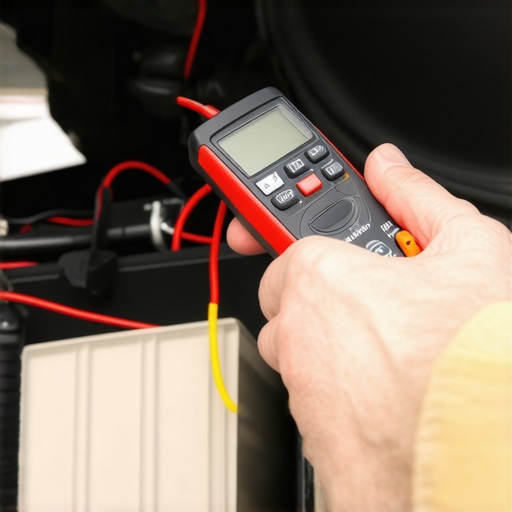
Believe it or not, that egg smell isn’t always coming from the tailpipe. If your alternator’s voltage regulator fails, it can pump too much juice into the battery. This “cooks” the sulfuric acid inside, venting a nasty gas that smells exactly like a rotten egg. Open your hood after a drive—if the smell is stronger at the front than the back, or if you see white crusty buildup, you’ve found the culprit. You should learn how to clean battery terminals so they never corrode again to ensure a good connection, but you’ll also need to test that alternator. A failing alternator can sometimes be masked by a simple electrical glitch, like the 5 fuse that acts like a dead alternator.
Is Your Fuel System Flooding the Exhaust?
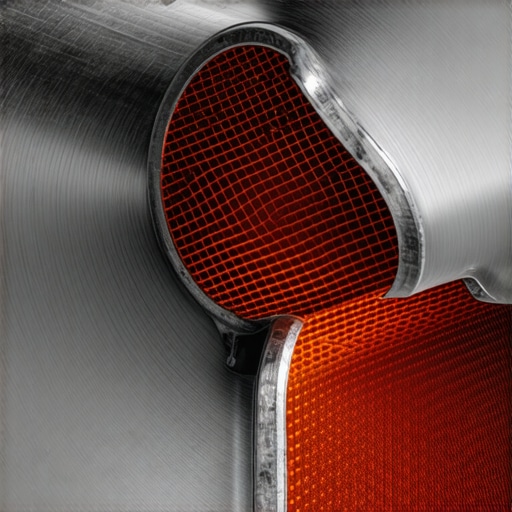
The most common reason for that sulfur stench during acceleration is a “rich” fuel mixture. Think of your catalytic converter like a small oven designed to burn off leftover pollutants. When you floor it, if your injectors are leaking or your air filter is clogged, you’re dumping more “raw” fuel into that oven than it can handle. This overload creates hydrogen sulfide. If you notice the reason your car struggles to climb hills is accompanied by that smell, your engine is likely gasping for air or drowning in fuel. You can use an OBD2 scanner and learn how to read live data to find a misfire to see which cylinder is causing the drama.
The Paper Test for Clogged Converters
If you suspect the converter itself is the problem, try the exhaust flow test. Have a friend rev the engine while you hold a piece of paper a few inches from the tailpipe. If the paper barely flutters even at high RPMs, your exhaust is restricted. This backpressure is one of the top signs your car needs expert auto repair now. A clogged converter doesn’t just smell; it kills your gas mileage and can eventually lead to your engine overheating. Before you spend a dime, make sure you know how to tell if your catalytic converter is actually failing by checking for that telltale rattling sound when you tap it with a rubber mallet. I once spent a whole weekend replacing a muffler only to realize the converter was the real bottleneck; don’t be like me—diagnose first.
The biggest mistake I see DIYers make is assuming that the smell is the disease rather than the symptom. In the world of auto repair, the catalytic converter is rarely the criminal; it is almost always the victim. If you simply replace the converter because of a stench, you are treating the symptom while the murderer—often a rich fuel mixture or a mechanical timing issue—is still at large under your hood. If you do not address the source, your shiny new $1,200 part will be destroyed within a week. For instance, I have seen cases where the common BMW oil leak spot was actually the culprit, dripping oil into the combustion chamber where it eventually cooked the exhaust, creating that distinct sulfurous char.
Don’t Blame the Converter First
Everyone tells you to just swap the O2 sensors or the catalytic converter the moment your nose detects eggs, but in my experience, investigating the fuel trim is far more effective. A ‘lazy’ sensor might not trigger a check engine light, but it can still dump enough raw fuel into the exhaust to cause a chemical meltdown. This is why you need to be careful with quick fixes. I always warn my clients that the truth about high mileage oil additives is that some contain phosphorus levels that can ‘poison’ the catalyst’s precious metals. If your car is burning oil through leaky seals, those additives can turn into a glaze that chokes your exhaust flow. If you are noticing why your car feels sluggish even after a new air filter, you should check your fuel injectors before you touch the exhaust pipes.
Why does my car only stink when I am pushing it hard?
It essentially boils down to duty cycles and ‘open loop’ engine management. Under light load, your engine’s computer is a micromanager, constantly adjusting fuel. But when you merge onto a highway or climb a hill, the computer switches to pre-set maps that ignore certain sensor inputs to prioritize power. A study by the Society of Automotive Engineers (SAE) found that even a 5% deviation in fuel pressure during these high-load scenarios can lead to a 50% increase in hydrogen sulfide production. This is also when your car’s timing is most critical; if your spark is weak, fuel hits the cat raw. Knowing how to tell if your timing belt is about to snap or if your ignition system is failing is vital here, as poor timing is a leading cause of ‘cat poisoning.’
The real nuance that most shops miss is how heat interacts with these systems. For example, why your transmission shifts better when it’s hot is a common observation, but your converter also needs to reach a ‘light-off’ temperature of about 600°F to function. If it is getting blasted by unburnt fuel, it can reach 2,000°F, literally melting the ceramic honeycomb inside. If you see your floorboards getting hot or notice top signs your car needs expert auto repair now, stop driving immediately. Have you ever fallen into the trap of replacing an expensive part only to have the same smell return a week later? Let me know in the comments. If you’re overwhelmed by the diagnosis, don’t forget you can always contact us to find a specialist who knows how how transmission overhauls save you money in the long run when compared to endless small, misdiagnosed part swaps.
If you’re serious about never smelling that sulfur stench again, you have to stop ‘parts cannoning’ your car. I used to think a cheap $20 code reader was enough, but it really isn’t. To find the root cause of a rich fuel condition, I rely on an OBD2 scanner that can graph live fuel trim data. If your Short Term Fuel Trim (STFT) is constantly pulling fuel—meaning it’s a negative number—your computer is trying to compensate for a leak or a lazy sensor. I personally use a bidirectional Autel unit because the refresh rate is fast enough to catch a misfire that a basic handheld tool would miss entirely. If you are struggling with a car that feels sluggish, you might find that why your car feels sluggish even after a new air filter is actually a hidden fuel pressure issue that only a live data stream can reveal.

How can I keep my catalytic converter healthy for another 100k miles?
The secret isn’t a ‘magic’ bottle of cleaner you pour in the gas tank; it’s keeping the combustion process perfect. According to the Robert Bosch GmbH Automotive Handbook, the ‘light-off’ efficiency of a catalyst depends almost entirely on the air-fuel ratio being held within a very narrow window (Lambda 1.0). To stay in that window, you need to maximize your cars lifespan with regular tune-ups. I change my spark plugs every 50,000 miles regardless of what the manual says, because a slight ‘weak’ spark creates unburnt hydrocarbons that slowly coat the converter’s ceramic interior. If you ignore this, you’ll soon see the top signs your car needs expert auto repair now, like a glowing red exhaust manifold or a sudden drop in fuel economy.
The Future of Smart Exhaust Monitoring
Looking ahead, I predict we are moving toward ‘predictive exhaust modeling.’ Newer BMW and Mercedes models already use secondary O2 sensors to measure heat-up times to the millisecond to predict when a catalyst is beginning to foul. Soon, your car won’t just tell you there’s a smell; it will tell you exactly which fuel injector is leaking before you even notice the performance dip. If you’re currently dealing with a car that’s running rough, I highly recommend performing a ‘cylinder balance test’ using a professional-grade scanner. It’s an advanced move, but it will save you from an how transmission overhauls save you money in the long run type of scenario where ignoring one system leads to the total failure of another. Don’t wait until you’re stranded; check those fuel trims this weekend. If things get too complicated, you can always contact us to get pointed toward a specialist who can handle the heavy lifting.
Hard Truths from a Decade Under the Hood
After years of chasing phantom odors, I have realized that a car smelling like sulfur is usually a cry for help that goes ignored until it is too late. One of the biggest mistakes I see is people jumping straight to the most expensive repair without checking the basics. I once saw a customer ready to scrap their car because they thought the engine was toast, but it turned out they just needed to how to clean battery terminals so they never corrode again to fix a weird charging issue that was boiling the battery. Always remember that your exhaust is a window into your engine’s soul; if it smells bad, the engine is likely unhappy with its fuel or air mix. Another lesson I learned the hard way: never assume a part is good just because it is new. I have seen ‘fresh’ oxygen sensors fail right out of the box, leading to a rich condition that mimics a dying converter. To keep things running smooth, you must maximize your cars lifespan with regular tune-ups rather than waiting for the stench to start.
My Personal Troubleshooting Kit
If you are tired of guessing, you need the right tools to confirm your suspicions before you open your wallet. I never start a diagnostic without these three things: a high-quality OBD2 scanner like an Autel for live data, a digital multimeter for checking the alternator, and an infrared thermometer to measure the temperature differential between the inlet and outlet of the catalytic converter. If the outlet isn’t significantly hotter than the inlet, the catalyst isn’t ‘lighting off’ correctly. These tools help you spot the top signs your car needs expert auto repair now before a small smell becomes a tow truck bill. I also recommend checking the simple things first, like the 5 fuse that acts like a dead alternator, because sometimes the fix for a ‘cooking’ battery is as simple as a fuse replacement.
#IMAGE_PLACEHOLDER_E#
Stop Holding Your Breath and Start Driving
You do not have to live with a car that makes you want to wear a gas mask every time you merge onto the highway. By understanding that the sulfur smell is a diagnostic clue rather than a permanent curse, you can tackle the issue with confidence. Whether it is a rich fuel condition, an overcharging battery, or a catalyst that has seen better days, identifying the root cause today prevents a total breakdown tomorrow. If you find that your vehicle is aging and the repairs are stacking up, sometimes understanding how transmission overhauls save you money in the long run can help you decide if the investment is worth it. Don’t let the technical jargon or the smell of rotten eggs intimidate you. Take it one sensor at a time, check your essential car service tips for safe summer drives, and get back to enjoying the road. If the diagnosis feels like too much, you can always contact us to get professional help. Have you ever had a mystery smell that turned out to be a simple five-minute fix? Let me know in the comments below!