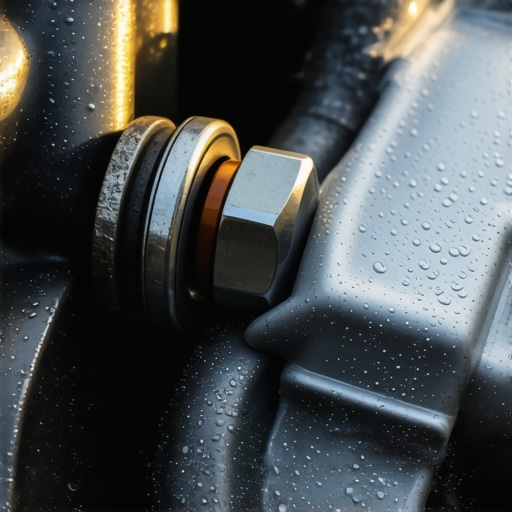
I remember one biting Tuesday morning back in February. I turned the key in my old sedan, and before the heater even kicked in, my nostrils were hit with a scent so sharp it could peel paint: raw gasoline. I brushed it off. “It’s just the cold,” I told myself. That was my first big mistake. I ended up driving around with a cracked fuel pressure regulator for weeks, literally trailing a fire hazard behind me. If you’re smelling fuel the moment you crank the engine, please, don’t ignore it like I did. [image_placeholder]
Stop Ignoring That Sharp Scent in Your Cabin
It is incredibly easy to get complacent with our vehicles. We often think cars are just naturally smelly, oily machines. But a modern fuel system is designed to be a closed loop. If you smell gas, it means something is escaping. Often, this issue is linked to why your car idles high when you first start it, as the computer dumps extra fuel into the combustion chamber to warm things up, which can magnify even a tiny leak. We are going to walk through the common culprits today—from five-dollar gaskets to worn-out injectors—so you can breathe easy and keep your garage safe.
Could This Actually Be a Dangerous Fire Hazard?
You might be wondering if your car is a ticking time bomb the moment that smell hits your nose. The short answer? It is not likely to explode like a scene from a Hollywood movie, but it is a serious risk that requires expert auto repair if you can’t find the source. According to the National Fire Protection Association, mechanical or electrical failures cause the vast majority of highway vehicle fires, and fuel leaks are a leading contributor. My own close call involved a tiny O-ring that I misdiagnosed as “normal old-car behavior.” Have you ever sat in your driveway, nose wrinkled, wondering if it was even safe to pull out into traffic?
Why the Smell Disappears After the Engine Warms Up
This is the most confusing part for many of us. You start the car, it reeks of a gas station, and ten minutes later, everything seems perfectly fine. This usually happens because metal components and rubber seals expand as they heat up. This expansion often seals those tiny gaps in your fuel rail or injectors that were wide open when the engine was cold. Catching these early is a vital part of the regular tune-ups that keep your car out of the scrapyard. If the smell persists or returns when you’re idling at a red light, you might need to revisit some essential car service tips to ensure your fuel lines aren’t dry-rotting under the hood. It is a frustrating puzzle, but one we can definitely solve together.
Start With a Visual Sweep of the Fuel Rail
To find a fuel leak, you have to be faster than the evaporation rate of gasoline. Gasoline is highly volatile, meaning it turns into a gas almost instantly when it hits warm air. Pop your hood before you even put the key in the ignition to catch the leak while it is still liquid. You are looking for “dampness” or dark, stained areas around the fuel rail—the long metal pipe that feeds your injectors. Often, the culprit is a tiny rubber O-ring that has shrunk or cracked over time. It is a frustratingly small part, much like the $15 gasket that stops your slow oil leak, where a cheap piece of rubber causes a massive headache and a dangerous fire risk. If you see any wetness or a “clean” spot on a dirty engine where the injectors meet the rail, you have likely found your leak. 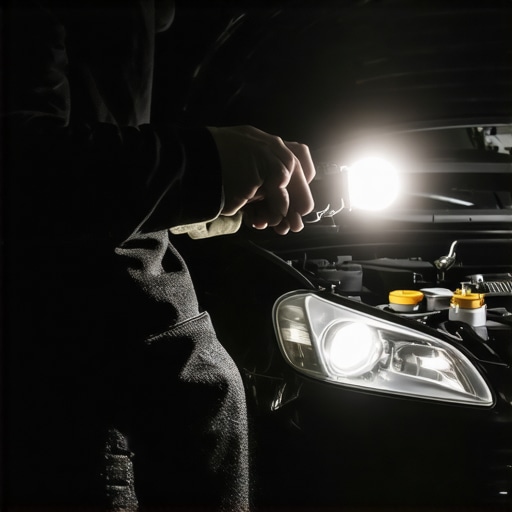
Inspect Your Injectors on a Stone-Cold Engine
I once spent three agonizing days chasing a phantom fuel scent on an old 4Runner. Every time I drove it to a professional shop, the smell vanished because the engine heat expanded the rubber seals. I finally had to go out at 6:00 AM with a high-lumen flashlight and a small inspection mirror. I found a single, tiny bead of gasoline weeping from the base of the third injector. It looked like a tiny bead of sweat, but it smelled like a refinery. This “cold-leak” phenomenon is incredibly common; as metal and rubber parts warm up, they swell and temporarily mask the problem. If your car is also running rough during this period, you might need to learn how to read live data to find a misfire to see if that leaking injector is also causing a specific cylinder to flood or run lean.
Stop Topping Off Your Gas Tank to Save Your EVAP System
If the smell is coming from the back of the car or specifically near the rear wheel well, the issue might be your own fueling habits. Many of us try to squeeze every last drop of gas into the tank after the pump clicks off, aiming for that even dollar amount. This “topping off” sends liquid raw fuel directly into your charcoal canister, which is only designed to handle fuel vapors. Once that charcoal “sponge” is saturated with liquid, it cannot do its job, and the scent of raw gas will waft into the cabin through the fresh air intakes. Keeping your EVAP system healthy is one of those essential car service tips for safe summer drives because high temperatures cause fuel to expand even more, pushing those odors into your face.
Test the Fuel Pressure Regulator Without Special Tools
Another common failure point for that morning gas smell is the fuel pressure regulator. Inside this small metal puck is a sensitive rubber diaphragm that can eventually tear. When it fails, fuel gets sucked directly through the vacuum line and dumped straight into the intake manifold. To test this yourself, simply pull the small vacuum hose off the top of the regulator while the engine is off but has recently been running. If you see even a single drop of gasoline inside that vacuum hose, the regulator is toast. Replacing it is a fundamental part of the maximize your car’s lifespan with regular tune-ups mindset. It is a ten-minute fix that can stop your car from smelling like a gas station and drastically improve your fuel economy by preventing the engine from running too rich during warm-up.Let’s dig deeper into the nuances that separate a weekend tinkerer from an experienced technician. Most people assume that a sharp gas smell always points to a physical hole in a line or a dripping tank. In my experience, however, the computer is often the real culprit. This is the heart of the “rich condition” myth. If your engine coolant temperature sensor is failing, it might tell the car it is -40 degrees outside when it is actually a balmy spring afternoon. The computer then floods the engine with gas to compensate, creating a stench so strong you would swear there is a puddle under the chassis. According to the Society of Automotive Engineers (SAE), unburned hydrocarbons during an inefficient cold-start enrichment cycle can produce cabin odors that are indistinguishable from a pressurized liquid leak to the human nose. This confusion is often why your car feels sluggish even after a new air filter, as the air-fuel ratio is completely out of sync with reality. 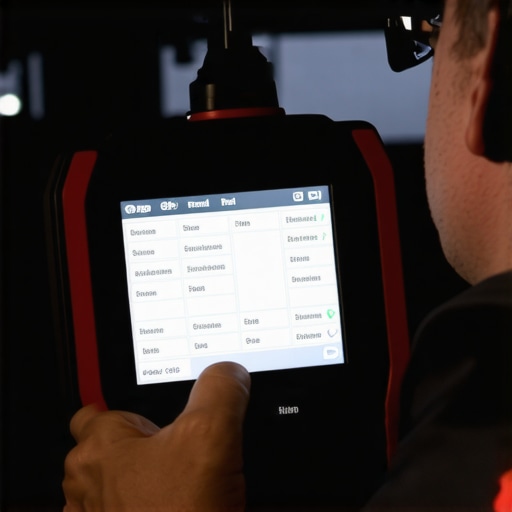
Why Your Sensors Might Be Lying to Your Nose
Before you start tearing out fuel lines or replacing the entire rail, you need to verify that your “leak” isn’t actually coming out of the tailpipe in the form of raw vapor. I have seen owners spend hundreds on high-end injectors when they really only needed a twenty-dollar sensor. Verifying sensor data is a vital part of how we maximize your car’s lifespan with regular tune-ups. If you have a basic scan tool, look at your Short Term Fuel Trims (STFT). If they are pegged at -20% or lower, your car is desperately trying to cut back on fuel because it thinks it is drowning. Learning how to read live data to find a misfire can help you determine if a single cylinder is the source of the raw fuel smell or if the entire bank is running rich due to a vacuum leak or a faulty MAF sensor.
Watch out for the dangerous spray and pray diagnostic trap
Here is a major “oops” factor I see constantly in DIY forums: people spraying carb cleaner or brake cleaner around the intake manifold to find a vacuum leak that might be causing a fuel-heavy scent. Please, stop doing this immediately. In a modern engine bay packed with high-voltage ignition coils and plastic connectors, you are exactly one tiny spark away from a catastrophic flash fire. If you suspect a leak but cannot see it with a flashlight, use a dedicated UV dye kit or a professional smoke machine. These are the top signs your car needs expert auto repair now, especially if you lack the specialized safety gear to handle pressurized flammable liquids in a confined space.
Can a transmission issue actually mimic a fuel system failure?
It sounds bizarre, but a car that refuses to shift correctly can actually produce a phantom fuel odor. When why your transmission slips when the engine is cold, the engine often revs significantly higher than intended to compensate for the lack of forward momentum. This high-RPM, low-load state can confuse older ECU maps, leading to a temporary rich condition and that tell-tale gas smell that disappears once the car finally catches a gear. It is a complex puzzle where one system’s failure creates a ghost symptom in another. Have you ever fallen into this trap and replaced the wrong part? Let me know in the comments.
I am a firm believer that the best tool in your garage isn’t a heavy-duty lift; it is a high-quality fuel pressure tester kit. For years, I tried to diagnose fuel smells by just ‘eyeballing’ the lines, but that is a fool’s errand. When you are dealing with a system that operates under 40 to 60 PSI, a tiny pinhole can spray a mist so fine you can’t see it, but you can certainly smell it. This is where I recommend investing in a gauge with a long enough hose to reach your windshield. I often duct-tape the gauge to the outside of the glass so I can monitor fuel pressure while driving—this is how I caught a failing fuel pump that only acted up under heavy load, a classic symptom of why your car struggles to climb hills.
Stop Buying Parts Until You Buy a Pressure Gauge
Most DIYers jump straight to replacing the fuel pump because it is the most expensive part, assuming that must be the problem. But using a pressure gauge allows you to perform a ‘leak-down test.’ If you prime the system and the pressure drops the moment the pump stops, you know you have a leak, likely at a check valve or an injector. According to the Robert Bosch GmbH technical series on Gasoline-Engine Management, even a 5 PSI drop in fuel rail pressure can significantly impact atomization patterns, leading to the exact rich-smell conditions we have been discussing. This precision is part of how we maximize your car’s lifespan with regular tune-ups without wasting money on ‘parts-cannon’ diagnostics.
How do I maintain my fuel system’s integrity over time?
Maintenance is not just about fixing what is broken; it is about preventing the rubber from becoming brittle in the first place. I have found that the ethanol in modern pump gas is the number one enemy of older fuel systems. It eats through soft rubber lines and O-rings that were never designed for alcohol. To combat this, I use a fuel stabilizer with a high concentration of Polyetheramine (PEA). This chemical is one of the few that survives the combustion process to actually clean the tips of your injectors. If you are already noticing a loss of power, it might be worth investigating the truth about engine flushes for high-mileage cars to see if your internal deposits are contributing to poor fuel delivery and those annoying morning odors.
The Shift Toward High-Pressure Direct Injection
As we look toward the future, the way we diagnose these smells is changing. Modern Gasoline Direct Injection (GDI) systems operate at thousands of PSI, not dozens. This means a leak is no longer a ‘damp spot’; it is a high-pressure jet that can be incredibly dangerous. We are seeing a trend where computer-controlled ‘leak detection’ pumps are becoming the standard, often triggering a CEL before you even smell the gas. If your car is newer and you are getting a gas smell without a light, it might be one of the top signs your car needs expert auto repair now, as GDI leaks can lead to rapid oil dilution and engine failure. I highly suggest learning how to read live data to find a misfire now, because as these systems get more complex, the computer’s data will be your only reliable witness. Don’t wait for a puddle to form; go out to your car tomorrow morning, pop the hood, and do a five-minute visual sweep of your fuel rail before you even put the key in the ignition.
The Brutal Truth I Learned After Chasing Ghost Leaks for Years
If there is one thing I’ve learned from decades under the hood, it’s that a fuel smell is rarely where you think it is. I once spent an entire Saturday replacing fuel lines when the real culprit was a tiny hairline crack in the plastic housing of the fuel pump itself. Temperature is your ultimate diagnostic tool; if the smell only happens on cold starts, you aren’t looking for a rust hole, you’re looking for a shrinking seal. Remember that your car’s computer might be overcompensating, which is often why your car idles high when you first start it. Never ignore the simple stuff, like a loose gas cap or a saturated charcoal canister, before you dive into the expensive repairs. Most importantly, trust your gut—if the scent is sharp and chemical, it’s raw fuel; if it’s heavy and sweet, it’s likely exhaust from a rich condition.
The Gear That Saved My Sanity and My Wallet
You don’t need a professional shop to get professional results, but you do need the right kit. My personal ‘must-haves’ include a fuel pressure test kit with a long hose—this is non-negotiable for anyone who wants to maximize your car’s lifespan with regular tune-ups without guessing. I also swear by a simple UV leak detection dye; it’s the only way to see those microscopic mists that evaporate before you can touch them. Lastly, keep a reliable OBD-II scanner handy to check those fuel trims. Knowing how to interpret that data is one of the essential car service tips for safe summer drives, especially when the heat starts stressing your EVAP system. #IMAGE_PLACEHOLDER_E#
Protect Your Investment and Your Family
At the end of the day, a car that smells like gasoline isn’t just an annoyance—it’s a signal that your vehicle needs a little extra care. Taking the time to hunt down that leak or faulty sensor prevents bigger headaches down the road, like how transmission overhauls save you money in the long run by keeping the entire powertrain operating in harmony. Don’t be intimidated by the complexity of modern fuel systems. With a flashlight, a bit of patience, and the right data, you can keep your car safe and efficient for years to come. If you find yourself overwhelmed, don’t hesitate to look for top signs your car needs expert auto repair now to ensure a professional handles the high-pressure components. Which part of the fuel system gave you the most trouble during your diagnosis? Let me know in the comments!