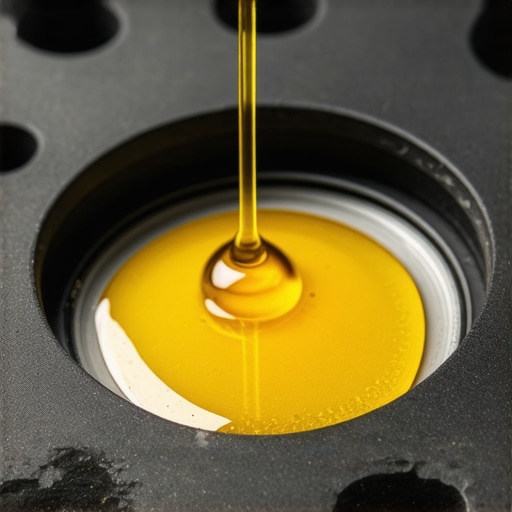
I still remember the feeling of absolute defeat staring at that fresh black puddle on my pristine driveway. I’d just finished a weekend project, feeling like a backyard mechanic king, only to realize my engine was bleeding out slowly. For months, I just kept a 5-quart jug in the trunk and pretended it was fine, adding a splash every few days like I was watering a plant. I even went as far as thinking I needed a full transmission overhaul because the fluid looked so dark and messy near the bell housing, and I was panicking about the cost. I wasted nearly $200 on ‘stop leak’ additives that did absolutely nothing but gunk up my internals and make the engine run hotter. It was a classic rookie mistake—trying to fix a mechanical gap with a chemical band-aid when what I really needed was a simple wrench. But then I found the culprit. It wasn’t a cracked block or a dying engine. It was a rubber ring no bigger than a silver dollar that had simply given up the ghost after a decade of heat. Today, I’m going to show you how to find that needle in the haystack so you don’t have to keep a bag of kitty litter in your garage forever.
Stop Chasing Puddles and Start Checking the Seals
Most of us assume the worst when we see oil. We start Googling the cost of a new car or looking for expert auto repair now before the engine seizes entirely. But here is the reality: many ‘catastrophic’ leaks are just the result of a dried-out gasket that costs less than a fast-food lunch. In my early days, I was convinced I had a blown head gasket because I saw moisture near the top of the block, but the coolant was clean and the car ran perfectly. It was just messy. After crawling under the chassis with a high-lumen flashlight and a bottle of degreaser, I realized the oil was spray-patterning from a specific housing, not the head. It’s a common story: a tiny component causes a massive headache. If you catch it early, you avoid the smoke, the smell, and the environmental guilt of leaving a trail wherever you park.
Can a cheap piece of rubber really save your engine?
You might be skeptical. How can a 15 dollar gasket outperform the expensive repairs your local shop quoted? It comes down to common failure points like the oil cooler seal or the VVT solenoid gasket. These parts are under constant heat cycles and high pressure. According to AAA, the average cost of a car repair is between $500 and $600, yet so many of those bills could be slashed if we just knew where to look for the simple fixes first. I learned the hard way that regular tune-ups aren’t just about spark plugs and air filters; they are about inspecting these tiny rubber components before they turn your driveway into an oil slick. Have you ever spent a fortune on a repair only to find out it was a five-minute fix? I’d love to hear your ‘parts store victory’ stories—drop a comment or reach out via our contact page if you’re stuck. We are going to walk through exactly how to spot this specific leak and why ignoring it is the fastest way to kill your alternator or starter motor. It is time to stop the bleeding and get your car back to being leak-free without breaking the bank.
Wash Away the Grime to See the Truth
The biggest mistake most DIYers make is trying to find a leak on an engine that is already covered in a decade of road salt and old grease. You can’t see a fresh trail if the entire map is already stained. I remember my old 2008 sedan; the entire bottom of the block was soaked. I was convinced I needed an expensive transmission overhaul because the fluid pooling on the bell housing looked so dark. But then I spent six bucks on a few cans of heavy-duty degreaser and spent twenty minutes at the self-service car wash. Once the metal was actually silver again, I drove it for exactly ten miles and popped the hood. The ‘catastrophic’ leak wasn’t coming from the transmission at all; it was a tiny, weeping trail starting from the very top of the engine. If I hadn’t cleaned it, I would have spent thousands fixing a part that wasn’t even broken.
The Brake Cleaner and Flashlight Method
Once the engine is reasonably clean, grab a high-lumen flashlight and a can of brake cleaner. Brake cleaner is like a magic eraser for oil; it evaporates instantly and leaves the surface bone-dry. Spray down the suspected area and wait. Use your flashlight to look for the ‘shimmer.’ Oil has a specific way of catching light that water doesn’t. If you see a wet spot forming near the top, it is almost certainly a valve cover or a VVT solenoid. If it’s coming from the middle, check the oil filter housing. I once struggled with a leak that looked like a blown head gasket, but after the brake cleaner test, I realized it was just a loose oil pressure sensor. Finding the highest point of the wetness is the golden rule because gravity always wins.
Why Gravity Is Your Best Friend and Worst Enemy
Oil doesn’t just sit there; it travels. It follows the path of least resistance, often running along wires or hoses before dripping onto the ground. This is why a leak on the passenger side of the driveway might actually be coming from a seal on the driver’s side of the engine. I’ve seen people replace perfectly good power steering pumps when all they really needed was a 5 dollar hose clamp fix because the fluid was running down the line and dripping off the pump housing. Always trace the ‘wetness’ upward until you hit dry metal. That transition point is where your culprit lives.
Replace the Seal Before It Destroys Your Electronics
The real danger of a ‘slow’ leak isn’t just the mess on your driveway; it’s what the oil touches on its way down. Engine oil is a solvent, and it loves to eat through the insulation on your wiring harness or soak into the brushes of your alternator. I ignored a small leak on a VVT solenoid for six months until one morning my car wouldn’t start. The oil had dripped directly into the alternator, gunking up the internals and killing the charging system. That 5 dollar gasket I ignored turned into a $400 repair bill for a new alternator and a tow. If you see oil near your starter or alternator, you are on a ticking clock. This is why regular tune-ups should always include a visual inspection of your accessory drive components for any signs of fluid contamination. Don’t wait for a dashboard light to tell you something is wrong when your nose and eyes can tell you today.Most mechanics will tell you to follow the manual, but here is a secret: the manual is often written by the marketing department, not the engineers. We see this most often with the myth of ‘lifetime’ fluids. Many modern manufacturers claim their transmissions are sealed for life, implying you never need to crack that drain plug. In my experience, ‘lifetime’ usually means ‘until the warranty expires.’ If you actually want to maximize your car’s lifespan with regular tune-ups, you have to ignore that advice. The Society of Automotive Engineers (SAE) has published various studies highlighting that thermal degradation and sheer stress break down oil viscosity regardless of a ‘sealed’ environment. This is the truth about lifetime gearbox fluids—they don’t exist if you plan on keeping the car past 100,000 miles. Ignoring this leads to the very metal-on-metal wear that eventually forces a massive repair bill. Have you ever fallen into this trap? Let me know in the comments.
Stop Crushing Your Gaskets Before They Start Working
Once you identify that 15 dollar gasket as the source of your leak, the biggest ‘oops’ factor is the temptation to over-tighten it. I see it all the time with DIY valve cover jobs. You think that an extra quarter-turn with the ratchet will ensure a tighter seal, but most of these small rubber gaskets are designed to sit in a specific groove and compress only a few millimeters. When you over-torque the bolts, you actually ‘mushroom’ the rubber out of the channel or, worse, crack the plastic housing. This creates a new, even more aggressive leak that didn’t exist before. If you’re doing your own 100k mile service, use a torque wrench and stick to the inch-pound specs. Don’t let a ten-minute victory turn into a weekend of regret because you wanted it ‘extra tight.’
Can switching to synthetic oil actually ruin your older seals?
This is the ultimate ‘old school’ debate. The common belief is that switching a high-mileage car to full synthetic will cause it to start leaking like a sieve. The nuance here is that synthetic oil doesn’t ‘create’ leaks; it simply finds the ones you already had. Because synthetic molecules are more uniform and smaller, they can slip through microscopic cracks in a dried-out seal that thicker, sludge-heavy conventional oil was plugging up. Understanding the real difference between full synthetic and blends is vital here. If your car is already weeping oil, a synthetic swap might accelerate the drip, but it’s also providing better protection for your internals. Instead of blaming the oil, see it as a diagnostic tool telling you it’s time for expert auto repair now to replace those brittle seals. If you’re feeling overwhelmed by a transmission that’s acting up after a fluid change, it might just be the computer relearning your driving habits, not a sign you need how transmission overhauls save you money in the long run. Knowledge is the difference between a cheap fix and a car payment you weren’t ready for.
I used to be the guy who would throw a new set of spark plugs at a car just because it hesitated for half a second at a stoplight. I’d convince myself I was performing a regular tune-up, but in reality, I was just guessing and draining my bank account. The turning point for me was when I realized that my eyes and ears, while useful, couldn’t compete with a decent bidirectional scan tool. If you are serious about DIY maintenance, you need more than a basic code reader that just clears the check engine light. I personally use a Bluetooth-enabled OBD2 adapter paired with a dedicated diagnostic app because it allows me to graph live data in real-time. This is how I caught a tiny vacuum leak that only appeared when the engine reached a specific operating temperature—a problem no visual inspection would ever find.
Ditch the Guesswork with a Real Scanner
The reason I recommend a bidirectional tool over the cheap $20 scanners is the ability to perform ‘active tests.’ You can tell the car’s computer to turn on the fuel pump or cycle the ABS valves while you are standing right there. This saves you from the nightmare of chasing weird electrical ghosts that usually lead people to seek expert auto repair now for things they could have solved at home. According to the Auto Care Association, the ‘Right to Repair’ movement is currently fighting to ensure that as cars become more software-dependent, we still have access to this critical data. Without these tools, you are essentially flying blind, which is why your local shop can charge $150 just for a diagnostic fee. Investing that money into your own hardware pays for itself the first time you identify a faulty sensor instead of replacing an entire component.
How can I keep my car healthy for another decade?
Long-term results come down to more than just oil changes; it’s about fluid chemistry and preventative testing. One of my favorite ‘pro’ moves is sending an oil sample to a lab like Blackstone Laboratories once a year. For about $30, they can tell you if there are microscopic traces of coolant or bearing metal in your oil. This is the ultimate early warning system. It tells you if you’re looking at a blown head gasket months before the car starts overheating. It’s the same logic for your drivetrain; knowing how to tell if your differential needs new fluid by checking for metal shavings on the magnetic drain plug can save you from a catastrophic failure at 70 mph. If you treat your car like a patient that needs regular blood work, you’ll never be surprised by a breakdown during safe summer drives.
Software is the New Wrench
Looking ahead, the ‘trend’ in auto repair is shifting entirely toward software-defined vehicles. We are moving toward a future where your car will likely self-diagnose and order its own parts. However, that also means manufacturers are trying to lock down access. My prediction is that within the next five years, the most valuable tool in your garage won’t be a socket set, but a laptop with a pass-through interface. We are already seeing this with EVs and hybrids where even a simple brake job requires a ‘service mode’ command from a tablet. If you aren’t comfortable with a touchscreen, you’re going to find it harder to maintain your own vehicle. I want you to try this one advanced tip tonight: plug in your scanner and look at your ‘Fuel Trim’ data. If the numbers are more than 10% away from zero, you have a hidden issue—either a leak or a failing sensor—that hasn’t triggered a light yet. Catch it now, and you’ll save the engine. If the repair feels too big, or if you’ve realized your current car is a lost cause, you can always check out what a scrap car is worth to start fresh with a more reliable project.
Lessons Bought with Scrapped Knuckles and Wasted Cash
The most important thing I’ve learned in twenty years under the hood is that fear is usually more expensive than the actual repair. Nine times out of ten, that terrifying black puddle is caused by the cheapest part on the engine. Before you assume you need a transmission overhaul, always look for that 15 dollar gasket hidden behind the oil cooler or filter housing. Cleanliness isn’t just about aesthetics; it is a vital diagnostic tool. A six-dollar can of degreaser reveals the truth that grime hides. Lastly, remember that while software is becoming the new wrench, mechanical leaks still require a physical fix. Use your scanner to check fuel trims early to catch vacuum leaks before they cause a breakdown.
Tools That Saved My Sanity More Than Once
I don’t advocate for a garage full of dust-gathering equipment, but three things are non-negotiable for my personal fleet. A bidirectional scan tool is my first choice because it allows me to command the car to test its own systems. For any serious 100k mile service, a calibrated torque wrench is essential to avoid the nightmare of stripped threads in an aluminum block. Finally, I rely on Blackstone Laboratories for annual oil reports. This ‘engine blood work’ can spot a blown head gasket or failing bearings months before they become catastrophic. These tools turn guesswork into science. #IMAGE_PLACEHOLDER_E#
Reclaim the Joy of a Leak-Free Driveway
There is a unique satisfaction in looking at your driveway and seeing nothing but clean, dry pavement. By tackling these small drips today, you ensure you won’t be frantically searching for expert auto repair now when you should be enjoying your weekend. Commit to regular tune-ups and keep a close eye on the fluid levels and colors. Your vehicle is a complex machine, but it isn’t a mystery if you have the right mindset. If you ever find yourself stuck on a tricky diagnosis, feel free to reach out via our contact page. What’s the smallest, cheapest part you’ve ever replaced that solved a massive-looking mechanical problem? Let me know in the comments below!