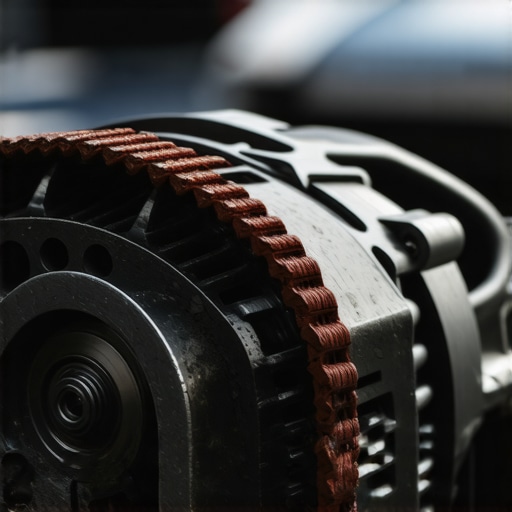
It was a Tuesday night, raining just enough to make the pavement slick, when I noticed my wipers were moving like they’d just woken up from a three-year nap. They were slow. Painfully slow. I figured it was just the heavy rain or maybe a tired motor, but then I smelled it: a faint, acrid scent like burning wires. I ignored it, thinking I’d check it in the morning. Ten minutes later, my headlights dimmed to the strength of a dying flashlight, and my car sputtered to a halt right in the middle of a busy intersection. No battery light had ever flickered on. Not once. That was the night I learned the hard way that your car’s dashboard is often the last one to know when things are going south.
Don’t Wait for the Warning Light to Save You
We’ve been conditioned to believe that if the little red battery icon isn’t glowing, our charging system is perfectly fine. But let me tell you, that light is a procrastinator. By the time it pops up, your alternator has usually already packed its bags and left for vacation. If you want to avoid a late-night tow truck bill, you have to start listening to the “whispers” your car gives off before it starts screaming. Today, I’m going to show you how to read those subtle signs—the dimming lights, the weird smells, and the ghostly electrical gremlins—so you can catch a failing alternator while you’re still safely in your driveway. Have you ever been stuck in a parking lot because your car “felt” fine five minutes ago, but now it won’t even click? Tell me about your most frustrating breakdown in the comments!
Is Your Car Just Getting Old or is the Alternator Dying?
It’s easy to write off a slow window motor or flickering dash lights as “just a thing old cars do.” I made that exact mistake with my first truck. I thought the high-pitched whistle under the hood was just a loose belt. I even spent money on a new battery I didn’t need because I didn’t realize the charging system was actually the culprit. According to data from the Car Care Council, electrical system failure is one of the top reasons for roadside breakdowns, yet many of these could be prevented by a simple visual and auditory check. If you’re seeing the top signs your car needs expert auto repair, it’s time to dig deeper. Sometimes the problem isn’t the alternator itself, but a bad ground wire messing with the signals. But either way, your car is starving for voltage and you need to act fast.
Run Your Own Electrical Health Check
You do not need a PhD in electrical engineering to find out if your alternator is toast. Think of your car’s electrical system like a garden fountain. The battery is the pool at the bottom, and the alternator is the pump that keeps the water cycling back up to the top. If the pump is weak, the pool eventually dries up, and everything stops. To see if your pump is actually pumping, you need a basic digital multimeter. Before you even touch the meter, make sure you clean battery terminals so you get an accurate reading. Corrosion is like a layer of insulation that lies to your tools.
Check the Resting State of Your Battery
Set your multimeter to 20V DC. With the engine and all lights turned off, touch the red probe to the positive terminal and the black probe to the negative. You are looking for about 12.6 volts. If you see something significantly lower, like 12.2 or less, your battery is already starving. This is a common reason why your car won’t start even though the lights turn on. A low resting voltage means the alternator hasn’t been doing its job during your previous drives, or the battery itself can no longer hold a charge.
Watch for the Voltage Jump When the Engine Cranks
This is the moment of truth. Have a friend start the car while you keep your eyes on the multimeter. As soon as the engine fires up, that number should jump. A healthy alternator immediately starts pushing out between 13.8 and 14.4 volts. If the number stays at 12.6 or, even worse, starts dropping while the engine is running, your alternator has officially clocked out.
Stress the System to Reveal Hidden Weaknesses
I once spent three hours chasing a ‘ghost’ in a client’s SUV. At idle, the alternator looked perfect—a rock-solid 14.1 volts. But as soon as we hit the road and the AC kicked in, the headlights started flickering. I realized I hadn’t tested it under load. To do this yourself, turn on every high-draw accessory you have: the high beams, the rear defroster, the blower motor on high, and the radio. If your voltage drops below 13.0 volts during this test, your alternator is failing its performance review. This lack of power is often the culprit behind why your engine stalls when you turn on the ac because the electrical load is literally dragging the engine down.
Rule Out the Wiring Before You Buy Parts
Don’t run to the parts store just yet. Sometimes the alternator is fine, but the electricity can’t find its way home. You should diagnose a bad ground wire in minutes by checking the resistance between the alternator case and the negative battery terminal. If there is a disconnect here, a brand-new alternator won’t fix a thing. Ensuring these connections are tight and clean is a vital part of a regular tune-up that most people overlook until they are stranded on the side of the highway.Sometimes, the DIY guides make it seem like a binary choice: it is either the battery or the alternator. But if you have been under a hood long enough, you know that cars love to live in the grey areas. In my experience, one of the biggest myths in auto repair is that a brand-new part is a guaranteed fix. I have seen enthusiasts swap in a store-bought alternator only to have it fail 48 hours later. Why? Because they fell into the trap of ignoring the supporting cast of the charging system. Have you ever fallen into this trap? Let me know in the comments.
Why Does My Brand New Alternator Still Fail the Load Test?
The nuance most people miss is ‘voltage drop.’ You can have a perfect alternator and a brand-new battery, but if the wire connecting them has internal corrosion, the electricity simply cannot get through. It is like trying to push a fire hose’s worth of water through a drinking straw. Professional technicians use a voltage drop test to see how much power is being lost as heat while traveling through the cables. According to a technical brief by the National Institute for Automotive Service Excellence (ASE), excessive resistance in the positive battery cable is one of the most frequently overlooked causes of ‘ghost’ charging issues. If you are seeing top signs your car needs expert auto repair now, don’t just throw parts at it—test the cables.
Stop Trusting the Bench Test at the Parts Store
We have all done it: we pull the alternator, take it to the local shop, and they put it on the machine. The guy behind the counter says, ‘It passed!’ and you go home confused. Here is the secret: those bench tests don’t simulate the heat of an engine bay. Heat increases electrical resistance. An alternator might work fine when it is room temperature on a metal stand, but once it gets up to 200 degrees under your hood, the internal diodes can start to fail. This is often why your car won’t start even though the lights turn on when the engine is hot, but it cranks fine in the morning.
The Specific Trap of Over-Tightening the Belt
In an effort to stop a squeal, many DIYers tighten the serpentine belt until it is as stiff as a guitar string. This is a massive mistake. Over-tensioning puts incredible lateral pressure on the alternator’s front bearings. You might fix the noise, but you are effectively timing how long it takes for the bearings to melt. It is the same kind of logic where people think more chemicals are better, like the truth about engine flushes for high mileage cars—sometimes, less is more. Always check the tensioner marks.
Check the Five Dollar Part Before the Two Hundred Dollar One
Before you commit to a full replacement, check the field circuit. I have seen people spend hours on a swap when it was actually the 5 dollar fuse that acts like a dead alternator. Some modern cars use a dedicated fuse to ‘wake up’ the alternator. If that fuse is blown, the alternator will sit there spinning, doing absolutely nothing, while you pull your hair out. A regular tune-up should always include a quick scan for stored electrical codes, which can point you to these tiny fuses before you spend big money on heavy hardware.If you’re serious about checking the field circuit or any complex wiring, you have to move past the $10 test light. I’ve relied on a Fluke 88V for nearly a decade because of its ‘Peak Min/Max’ recording function. Most people don’t realize that electrical spikes happen in milliseconds—faster than your eyes can register on a standard screen. By recording these peaks, I’ve caught failing voltage regulators that only glitched for a fraction of a second. This level of precision is exactly what separates a ‘parts changer’ from a real technician. It’s the difference between guessing and knowing.
How Can You Keep the Electrical System Healthy for Years?
Maintaining your electrical health isn’t just about the alternator; it’s about reducing the ‘work’ the system has to perform. Heat is the ultimate enemy. According to the Bosch Automotive Handbook (10th Edition), the efficiency of a claw-pole alternator drops significantly as the internal temperature exceeds 100°C, which is a common temperature in cramped modern engine bays. To fight this, I make it a habit to inspect plastic cooling ducts that lead to the alternator. If they are cracked or missing, your alternator is essentially baking in its own skin. This is a core part of maximizing your car’s lifespan with regular tune-ups that most people miss. You should also ensure that your engine splash shields are intact; water splashes on a hot alternator can cause the housing to crack or the internal diodes to short. Just as transmission overhauls save you money in the long run, preventing heat damage to your charging system saves you from a $600 repair bill down the road. If you are preparing for essential car service for safe summer drives, checking these cooling components is just as vital as checking your coolant levels.
The End of the Alternator as We Know It
We are rapidly moving toward a world where the traditional alternator might become a relic of the past. In many modern hybrids and EVs, the 12V system is maintained by a DC-to-DC converter that draws power from the high-voltage traction battery. These systems are much more efficient but require even more sophisticated diagnostic tools. You won’t be checking for a slipping belt; you’ll be reading live data to find a misfire or monitoring CAN-bus communication protocols to see why the converter isn’t talking to the battery management system. Even if you aren’t driving an EV yet, your current car likely has an ‘intelligent’ charging system that varies voltage based on fuel economy needs. If you notice the top signs your car needs expert auto repair now, it might be a software glitch rather than a mechanical failure. Don’t let the technology intimidate you. Grab your multimeter this weekend and perform that load test I mentioned earlier. It takes five minutes and could save you from being the person waiting for a tow truck in the rain.
Hard-Earned Lessons from the Engine Bay
In my years of wrenching, I’ve learned that the alternator is a bit of a diva—it needs the perfect environment to perform. Here are the lightbulb moments I wish I’d had sooner:
- New doesn’t always mean perfect. I once spent an entire Saturday morning swapping an alternator only to find the “new” unit was dead on arrival. Always ask for a bench test before you leave the store, even if it’s brand new.
- Heat is a silent killer. If your engine is running hot or you’re missing plastic air ducts, your alternator is on borrowed time. Cooling is just as vital as the belt spinning it.
- Your nose knows more than the dash. If you smell burning ozone or a “hot electric” scent, stop immediately. It’s often the internal diodes melting before the battery light even thinks about turning on.
- Cleanliness is electrical godliness. A tiny bit of oil spray or road salt on the casing can trap heat and cause surface tracking, slowly draining your power.
Gear That Actually Makes a Difference
If you want to move beyond guessing, you need a few specific items in your garage. These aren’t just tools; they are your eyes and ears for your car’s invisible electrical world.
- A Multimeter with a ‘Peak’ Setting. Standard meters might miss a split-second voltage drop. I recommend a mid-range unit that can capture minimum and maximum readings while you’re cranking the engine.
- Electrical Contact Cleaner. Before you condemn a part, spray down the connectors. It’s amazing how many “dead” alternators are just victims of a little oxidation.
- A Battery Terminal Brush. It’s a five-dollar tool that solves half of all starting problems. Using one is a key part of essential car service for safe summer drives.
- The Factory Service Manual. Whether it’s a physical book or a digital subscription, knowing the exact voltage specs for your specific year and model is priceless.
Take Control of Your Car’s Electrical Fate
The beauty of modern auto repair is that you don’t have to be at the mercy of a breakdown. By performing these simple tests and staying alert to the “whispers” of your car, you’re doing more than just fixing a part—you’re ensuring your freedom on the road. Whether you’re preparing for a cross-country trip or just want to make sure you get to work on Monday, staying on top of your charging system is a cornerstone of how to maximize your car’s lifespan with regular tune-ups. If things ever feel truly overwhelming, don’t hesitate to look for top signs your car needs expert auto repair now and call in a pro. Now that you know the secrets of the load test and the multimeter, you’re ahead of 90% of the drivers on the road. Have you ever been convinced your alternator was dead only to find out it was a simple fuse or a loose wire? Let me know your story below!#IMAGE_PLACE_HOLDER_E#