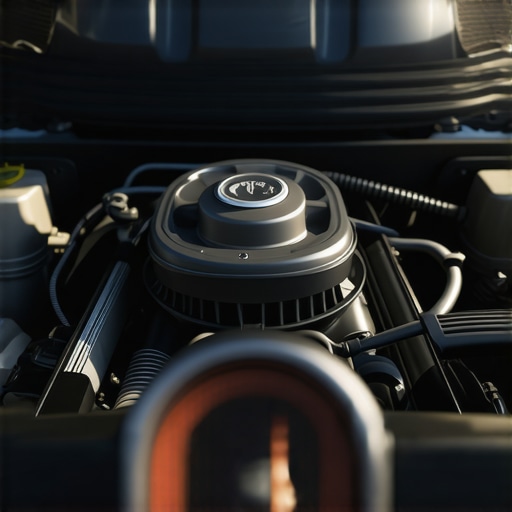
There I was, sweating through my favorite shirt in a drive-thru line that seemed miles long, surrounded by hungry drivers. I reached out, clicked the AC dial to “Max,” and—*click*—silence. My engine didn’t just stumble; it completely quit. The line moved, but I didn’t. I had to turn the key, listen to it struggle, and eventually limp home with the windows down and my pride bruised. If you’ve ever felt that heart-sinking moment where your car refuses to handle the simple task of cooling you down, you’re not alone. I’ve been in those grease-stained shoes more times than I’d like to admit.
The Day My Sedan Gave Up at the Red Light
It’s one of those problems that makes you feel like your car is gasping for air. You expect a little drop in RPM when the compressor kicks in, but a total stall? That’s a cry for help. Early in my DIY days, I made the classic rookie mistake: I assumed my battery was toast. I spent eighty bucks on a new one only to have the car stall again five minutes later. Talk about a facepalm moment. What I eventually learned was that your engine and AC system are in a constant, delicate dance. When that dance goes out of sync, your car decides it’s easier to just stop working. Today, we’re going to get to the bottom of why this happens so you don’t waste money like I did.
Is this repair going to drain my bank account?
It’s the fear we all have. We see the “Check Engine” light or feel a stall and assume the worst. But more often than not, it’s a simple fix that’s been neglected. According to the National Institute for Automotive Service Excellence (ASE), many driveability issues stem from minor sensors or dirty valves rather than catastrophic engine failure. Sometimes, you just need to maximize your cars lifespan with regular tune-ups to keep the idle stable. We’re going to look at the parts that usually fail first so you can walk into a shop with confidence.
Your Engine is Struggling to Balance the Load
Think of your engine like a professional runner. When you turn on the AC, you’re essentially handing that runner a twenty-pound backpack mid-stride. If the runner is healthy, they adjust their breathing and keep their pace. If they have a “clogged lung” or a “weak heart,” they’re going to trip. Your AC compressor draws a significant amount of power—sometimes up to 5 or 10 horsepower depending on the size of your vehicle. This is why you feel that slight ‘thud’ or vibration when the compressor engages. To compensate for this sudden drag, your car’s computer uses an Idle Air Control (IAC) valve or adjusts the electronic throttle plate to bump up the RPMs. If that valve is gunked up with carbon, it can’t open far enough or fast enough, and the extra weight of the AC kills the engine. It’s a classic sign that points toward top signs your car needs expert auto repair now. I remember cleaning my first throttle body with a rag and some spray; the amount of black soot that came out was staggering, but the stalling stopped immediately. Have you ever had your car just die on you the second you tried to get comfortable? Let me know, because I’ve definitely lived through that frustration. Following essential car service tips for safe summer drives often prevent this exact scenario before the first big heatwave hits. If you’re also noticing that your AC blows warm air while sitting in traffic, these issues are usually cousins, both pointing back to how your car handles temperature and mechanical load.
Stop the Stall Before it Starts
First, we need to address the most common culprit: the Idle Air Control (IAC) valve. Think of this little motor as your car’s personal breathing coach. When you’re at a stoplight and you click that AC button, the engine needs more air to keep spinning against the drag of the compressor. The IAC opens up to let that air in. If it’s stuck because of carbon buildup, your engine essentially suffocates. I remember my old 2002 truck used to dip so low in RPMs that the dash lights would flicker every time the compressor kicked in. I pulled the IAC, sprayed it with a five-dollar can of intake cleaner, and watched a river of black liquid pour out. After bolting it back on, the idle stayed rock solid. It’s a great way to maximize your cars lifespan with regular tune-ups without needing a lift or fancy tools.
#IMAGE_PLACE_HOLDER_B#
Clean the Gunk Out of Your Idle Air Control Valve
To do this yourself, locate the valve near the throttle body—it’s usually held on by two bolts. Once it’s off, don’t just soak the whole thing; you want to spray the internal passages and the pintle, which is the little plunger part. If you’ve never done this, you’ll likely see a massive improvement in how your car reacts to loads. If you’re seeing other weird symptoms, like how your car dies when you turn the steering wheel, the IAC is almost certainly the shared villain in both stories. Use a soft brush to agitate the soot, but be careful not to damage the delicate motor housing inside.
Listen for the Screech of a Dying Compressor
Sometimes the problem isn’t the engine’s ability to breathe, but the compressor itself fighting back too hard. A compressor that is starting to seize will act like a physical brake on your engine. If you hear a high-pitched squeal or a grinding sound the second the AC turns on, the internal bearings might be toast. It’s worth investigating what that high-pitched whistle under your hood really means before the part completely locks up and snaps your serpentine belt, leaving you stranded on the side of the road. I once ignored a slight rattle in my compressor for a month until it finally seized at 70 mph, sending smoke everywhere and costing me three times as much in repairs.
Find the Tiny Holes Killing Your Engine Vacuum
Vacuum leaks are the silent killers of a smooth idle. Your engine relies on a constant, predictable vacuum pressure to manage its fuel mixture. If a rubber hose has a tiny crack, it’s like trying to drink a thick milkshake through a straw with a hole in it—you have to work twice as hard for half the result. When the AC adds load, the lean fuel mixture caused by the leak can’t keep the engine running. You can often find these leaks by listening for a faint hissing sound or by using an OBD-II scanner to how to read live data to find a misfire or lean condition. If the fuel trims are way off, start hunting for those brittle plastic lines that have baked under the hood for years.
Give Your Electrical System a Fighting Chance
Finally, don’t overlook the electricity. The AC blower motor and the cooling fans pull a massive amount of current. If your battery terminals are fuzzy with white or green corrosion, that resistance prevents the alternator from effectively powering the ignition coils while the AC is blasting. Learning how to clean battery terminals so they never corrorode again is a five-minute job that can prevent the voltage drops that lead to stalling. I once spent two days chasing a “fuel issue” that turned out to be a loose ground wire near the battery that vibrated just enough to cut the spark when the cooling fan kicked on. Always check the simple connections first before you start replacing expensive sensors.
Most DIYers and even some shops jump straight to the alternator the moment they see why your dashboard lights dim when you idle with the AC on. They assume the electrical draw is simply too much for the charging system. But here is the reality: if your car starts fine every morning, your alternator is likely producing plenty of juice. The hidden nuance isn’t the total power output; it’s the speed at which the engine reacts to the mechanical drag of the compressor. According to research from SAE International (Society of Automotive Engineers), modern engine control units (ECUs) rely on a pre-emptive strategy to maintain idle. The computer should actually increase fuel and air before the compressor clutch even engages. If there is a micro-second delay in that signal, the engine is already behind the curve, and it stalls.
Why Does Your ECU Struggle with the AC Load?
When the engine is healthy, this adjustment happens so fast you do not even feel it. But as your car ages, small delays creep in. It might not be a broken part, but rather a set of tired parts working together. This is why you might find that your car feels sluggish even after a new air filter. The ECU is trying to compensate for a slightly lazy sensor or a throttle body that is not as snappy as it used to be. It is a game of milliseconds. If you want to see exactly what is happening, you should learn how to read live data to find a misfire or to check the fuel trim levels when the AC kicks in. This tells you if the computer is actually trying to help or if it is flying blind.#IMAGE_PLACE_HOLDER_C#
Don’t Fall for the Battery Reset Trap
Here is the Oops factor that bites even seasoned hobbyists. You decide to refresh the system by disconnecting the battery for thirty minutes. You think you are clearing out glitches, but you are actually deleting the Learned Idle memory. Over thousands of miles, your car’s computer learns exactly how much to open the throttle to compensate for carbon buildup and wear. When you wipe that memory, the car goes back to its factory fresh settings. It tries to idle as if the engine were brand new. If your intake is even slightly dirty, the factory settings will not provide enough air, and the car will stall at every single stoplight until it re-learns the wear—or until you perform a proper cleaning. I have seen people spend hundreds on sensors when they actually just needed to maximize your cars lifespan with regular tune-ups and a simple throttle relearn procedure.
Check the Simple Pressures First
Sometimes, the issue is even more deceptive. You might think you have a massive mechanical failure when it is actually the 5 dollar fuse that acts like a dead alternator. I once helped a neighbor who was about to junk a car because of this exact stalling issue. We found a blown fuse for the electric cooling fan. Because the fan was not spinning, the AC high-side pressure was skyrocketing, making the compressor nearly impossible for the engine to turn. It was not an engine problem; it was a cooling system pressure problem that led to top signs your car needs expert auto repair now. Have you ever fallen into the trap of replacing an expensive part only to find it was something tiny? Let me know in the comments, I would love to hear your facepalm stories.After years of being the “car guy” in my neighborhood, I’ve realized that the difference between a successful DIYer and someone who just throws parts at a problem is data. I don’t guess anymore. I use an OBD-II scanner that supports live data streaming, which is the only way to see what the computer is thinking in real-time. Being able to see the “Long Term Fuel Trim” and the “Idle Air Control Steps” is like having X-ray vision for your engine. If I see the IAC counts maxed out while the car is struggling to stay alive at a red light, I know for a fact the valve is either physically blocked or the motor has failed. This is why I always tell people to maximize your cars lifespan with regular tune-ups by looking at the numbers rather than just waiting for a check engine light to appear. According to technical documentation from Mitchell 1 ProDemand, most modern engine control modules require an idle correction of +/- 50 RPM within 100 milliseconds of the AC clutch engagement. If your car is lagging behind that window, you are looking at a dirty intake or a sensor that is starting to drift out of calibration. #IMAGE_PLACE_HOLDER_D#
How can I prevent my AC from killing the engine next summer?
The secret isn’t a magic chemical or a expensive performance part; it is consistency and cleanliness. Every spring, before the humidity hits ninety percent, I perform a “spring cleaning” of the engine bay that focuses on the cooling stack. I use the best way to clean your engine bay without shorting wires to clear out road grime and salt from the radiator and condenser fins. If air cannot flow through the condenser, the refrigerant pressure skyrockets, making the compressor nearly impossible for the engine to turn. It is a chain reaction that kills your idle. These essential car service tips for safe summer drives are the difference between a reliable commuter and a lawn ornament. I also keep a close eye on my voltage; I use a high-quality multimeter to hunt for the hidden drain that kills your battery overnight because a weak electrical system makes the AC load feel twice as heavy to the engine. We are moving toward a world where this specific problem will vanish, as electric compressors in hybrids and EVs do not rely on engine belts at all. Instead, we will be worried about thermal management and inverter cooling. But for those of us still driving traditional internal combustion engines, the mechanical load is king. My challenge to you is this: This weekend, don’t wait for your car to act up. Connect a scan tool, check your live data while toggling the AC, and see if your engine is struggling. If you find that why your transmission shifts better when its hot is your only other symptom, you might be surprised how a simple cleaning can transform your entire driving experience.
Hard Lessons from My Days of Sweating in Drive-Thrus
Over the years, I’ve realized that car trouble is rarely about one ‘broken’ part; it’s about a system that has lost its rhythm. Here are the lightbulb moments that changed how I approach auto repair forever.
- The Battery Myth: I used to think a stalling car always needed a new battery. I was wrong. If your car starts easily but dies at a stoplight, you likely have a load management issue, not a charging one.
- Cleaning Over Replacing: I have seen people spend hundreds on a new throttle body when a five-dollar can of cleaner and ten minutes of work would have fixed the idle surge.
- Listen to the Fans: If your electric fans aren’t pulling air, your AC pressure spikes, making the compressor act like a lead weight. Checking if your radiator fan won’t stop running or isn’t running at all is a vital first step.
The Three Tools I Never Leave My Garage Without
You don’t need a professional shop to get professional results. I rely on a few specific resources to keep my vehicles running smoothly during the brutal summer heat. First, an OBD-II scanner that provides real-time feedback is non-negotiable. You need to know how to read live data to find a misfire before you start throwing parts at the problem. Second, a simple cooling system pressure kit. Knowing how to test for a clogged radiator without taking it apart will save you hours of teardown time. Finally, I always keep a dedicated terminal cleaning kit on hand; it’s the easiest way to how to clean battery terminals so they never corrode again, ensuring your electrical system can handle the massive AC draw.
#IMAGE_PLACE_HOLDER_E#
Drive with the Confidence of a Professional Mechanic
There is a specific kind of peace that comes from knowing exactly how your car is breathing and cooling. By taking these small steps to maximize your cars lifespan with regular tune-ups, you aren’t just fixing a stall—you’re preventing a future breakdown. Don’t wait for the top signs your car needs expert auto repair now to become a reality on a 100-degree afternoon. Take a look under your hood this weekend, clean that intake, and enjoy the ice-cold air without the fear of your engine giving up. Have you ever been stuck in a drive-thru or at a busy intersection when your car decided to quit because of the AC? Let me know your story in the comments below!