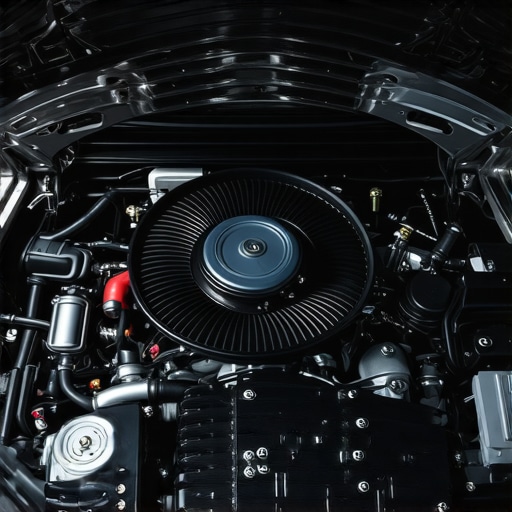
It’s midnight, the house is quiet, and yet there’s a persistent whirring coming from your driveway. You know that sound. It’s the radiator fan. It should have stopped ten minutes ago when you pulled the key out of the ignition. Instead, it’s spinning away like it’s trying to cool down a jet engine in the middle of a blizzard. I’ve stood there in my pajamas more than once, staring at my hood, wondering if I should just disconnect the battery or pray it stops before sunrise. Most of us assume the worst, but usually, your car is just having a bit of an electrical identity crisis.
The Ghost in the Machine That Kills Your Battery
I’ll be the first to admit I’ve made the ‘expensive’ mistake early on. My first old sedan had a fan that just wouldn’t quit. I panicked, assumed the engine was melting from the inside out, and dragged it to a shop for a full cooling system overhaul. I spent hundreds only to find out it was a $15 relay that had simply fused shut. That’s why we’re talking about this today. If that fan doesn’t stop, you aren’t just wasting electricity; you are setting yourself up for a morning of jumper cables and frustration. Knowing how to find a parasitic battery drain with a simple multimeter is a great skill, but stopping the drain at the source is even better. We want to identify the glitch before it leaves you stranded in your own driveway.
Can a Constant Fan Actually Damage My Engine?
This is the biggest fear I hear from neighbors and friends. They worry that if the fan is running, the car must be dangerously hot. While why your engine temperature spikes while idling is a serious concern, a fan that refuses to shut off with the engine cool is almost always an electrical hiccup rather than a mechanical meltdown. However, you can’t just ignore it. A fan motor isn’t designed to run 24/7, and you’ll burn the motor out long before you ‘over-cool’ the engine. According to data from ASE (Automotive Service Excellence), the majority of ‘always-on’ fan complaints are eventually traced back to a faulty coolant temperature sensor or a stuck relay. Have you ever walked away from your car only to realize the fan was still screaming five minutes later? If so, you’re exactly where you need to be.
Why Your Car Thinks it is Still Middle-of-August Hot
Usually, the culprit is a sensor that has lost its ability to tell the truth. Your car relies on a coolant temperature switch to know when to kick the fans on. When that sensor fails, it often fails in the ‘on’ position as a fail-safe to prevent the engine from melting down. It’s a bit like a fire alarm that won’t stop ringing even after the toast is cleared. In other cases, it’s a simple mechanical failure of a relay—a tiny plastic box in your fuse panel that has literally melted its internal contacts together. Using the 10-tool that saves your engine from overheating can help you monitor temps, but today we are going to focus on the electrical side of the house to get that peace and quiet back.
Pull the Relay to Kill the Noise
Think of your fan relay as a high-voltage gatekeeper. When you turn the car on, it snaps shut to let power flow to the fan motor. When you turn it off, a spring should pull it back open. But heat and age can cause those internal points to arc-weld themselves together, keeping the circuit closed indefinitely. I remember standing in a rain-slicked gas station parking lot at 2 AM with a 2005 sedan that sounded like a high-powered vacuum cleaner. I didn’t have tools, but I knew the fan relay and the horn relay were identical. I swapped them, and the fan finally went silent—though I had to drive home without a horn. To avoid these sudden failures, you should maximize your cars lifespan with regular tune-ups that include checking for brittle plastics and corroded contacts in the fuse box. If pulling the relay stops the fan, you’ve found your $15 fix. If it doesn’t, you might be dealing with the hidden ground strap that causes weird electrical ghosts across your entire wiring harness.
How to Tell if Your Sensor is Lying
Your car’s Engine Control Module (ECM) is only as smart as the data it receives from various probes. If the coolant temperature sensor (CTS) is sending a ‘hot’ signal—even if the engine block is stone cold—the computer will run that fan until the battery dies to protect the heads from warping. A quick way to test this is to look at your dashboard gauge before you start the car. If it’s already reading mid-range or high on a frosty morning, your sensor has checked out. This is one of the top signs your car needs expert auto repair now before a simple sensor failure leads to a stranded morning or a completely flat cell.
Locate the Parasitic Drain Before Morning
If you’ve swapped the relay and the sensor seems fine, but the fan still pulses or runs sporadically, you need to get technical. You’ll want to know how to find a parasitic battery drain with a simple multimeter to see exactly how much current that fan is pulling while the ignition is off. Usually, any draw over 50 milliamps is a red flag. In my experience, a radiator fan that stays on often pulls 20 to 30 amps—enough to flatline a healthy battery in under two hours. Using the 10-tool that saves your engine from overheating can help you verify the actual liquid temperature versus what the car computer *thinks* the temperature is, effectively narrowing down the search between a mechanical clog and a purely electrical glitch.
Stop Trusting Your Dashboard Scanner Blindly
Most DIYers—and even some pro shops—think that if an OBDII scanner throws a ‘Coolant Temperature High’ code, they automatically need a new radiator or a thermostat. In my years under the hood, I’ve seen this lead to thousands of dollars in wasted parts. The nuance that many miss is that the computer doesn’t ‘see’ the temperature; it only sees voltage. If you have the hidden ground wire that ruins your sensors, that voltage will fluctuate wildly, making the car think it’s 250 degrees when it’s actually 180. The fan stays on because the computer is reacting to a lie, not a heat problem. Don’t replace the hardware until you’ve verified the electrical integrity of the signal path.
Why do my fan speeds change even when the engine is cold?
If you notice your fan surging or pulsing rather than just running at a steady high speed, you aren’t dealing with a simple ‘on/off’ relay anymore. Modern vehicles use Pulse Width Modulation (PWM) controllers. Think of it as a dimmer switch for your fan. When these controllers fail, they often default to a ‘limp mode’ where they run at 100% duty cycle to prevent engine damage. According to a technical study by the International Automotive Technicians Network (IATN), nearly 30% of cooling fan assembly replacements are performed unnecessarily because the technician misdiagnosed a failing PWM module as a bad motor. Identifying the one electrical fault that most mechanics misdiagnose as a dead battery is often the first step in realizing your fan controller is actually the one sucking the life out of your alternator.
Don’t Drown Your Sensors in a Quest for a Clean Engine
Here is the ‘Oops’ factor that catches almost everyone. I’ve had many clients come in with fans that won’t stop after they tried to ‘detail’ their own engine bay. People assume that because an engine is metal and plastic, it’s waterproof. It’s not. High-pressure water can force its way past the weather-pack seals on your coolant temperature sensor. Once moisture is inside that connector, it creates a bridge that lowers resistance. To the car’s computer, lower resistance equals higher heat. Suddenly, your fan is screaming because you wanted your valve covers to shine. If you must tidy up, you need to know the best way to clean your engine bay without shorting wires or you’ll be chasing electrical ghosts for weeks.
The Nuance of Modern Fan Duty Cycles
Everyone says a fan running after the car is off is a ‘problem,’ but in some turbocharged vehicles, this is actually a designed feature called an ‘after-run’ cycle. However, the trap is assuming *your* car has this. If your car didn’t do it last month, and it’s doing it now, it’s not a feature; it’s a fault. If you want to maximize your cars lifespan with regular tune-ups, you have to look past the oil dipstick and check the health of your cooling system’s electrical harness. Neglecting these small connections is how a $20 sensor turns into a $2,000 transmission overhaul because the engine was running too hot for too long, thinning out the trans fluid. Have you ever fallen into this trap and replaced a part that wasn’t actually broken? Let me know in the comments. Keeping a few essential car service tips for safe summer drives in mind can prevent these ‘ghost’ issues from ruining your road trip.
Stop Corrosion Before It Reaches Your Wallet
I’ve learned the hard way that most ‘catastrophic’ failures aren’t actually sudden; they are the result of years of invisible neglect. When your fan stays on, it’s often the final scream of a wiring harness that has been fighting corrosion for a decade. To prevent this, I make it a habit to use electrical contact cleaner and a dab of dielectric grease on my sensor connectors every time I maximize your cars lifespan with regular tune-ups. This prevents moisture from bridging those pins and sending ‘ghost’ signals to your computer. If you skip this, you’re eventually going to be hunting for the hidden ground strap that causes weird electrical ghosts across your entire dashboard. It’s a five-minute maintenance step that saves you a five-hour diagnostic nightmare later.
How do I keep my cooling system’s electronics healthy over time?
Consistency is your best friend here. Don’t wait for a dead battery to check your fan’s behavior. Every few months, after a long drive, pop the hood and listen. The fan should cycle off within a minute or two of the engine stopping (unless you have a specific turbo after-run feature). If it lingers, you need to investigate. I personally use a non-contact infrared thermometer—which is essentially the 10-tool that saves your engine from overheating—to verify that the radiator is actually cool while the fan is spinning. If the radiator is at 120 degrees but the fan is on high, you’ve caught a failing sensor before it leaves you stranded. This proactive approach is one of the essential car service tips for safe summer drives that I swear by.
My Secret Weapon for Chasing Electrical Ghosts
If you really want to stop guessing, you need a decent digital multimeter with a ‘Min/Max’ function. Most people just check for 12 volts and call it a day, but that’s not enough. You need to see if the voltage is dropping when the fan kicks in. This is how you identify the one electrical fault that most mechanics misdiagnose as a dead battery. I personally use a Fluke 88V because of its accuracy, but even a mid-range unit will work if you know how to find a parasitic battery drain with a simple multimeter. According to the SAE International J1939 standard documentation, signal integrity in automotive networks is highly sensitive to resistance fluctuations; even 0.5 ohms of extra resistance in a ground wire can trick an ECU into thinking the engine is overheating.
The Future of Your Car’s Cooling Logic
We are moving away from simple ‘on/off’ switches and toward complex, networked sensors. Newer vehicles use the SENT (Single Edge Nibble Transmission) protocol, which allows sensors to send much more data than just a voltage level. This means in the future, your car won’t just know it’s hot; it will know *why* it’s hot. However, this also means your local expert auto repair shop will need more advanced scanners to talk to these components. If you ignore a simple fan glitch now, you’re not just risking a battery; you’re risking a cascade of errors that could eventually lead to an expensive transmission overhaul due to thermal stress on the cooling lines. My advanced tip for you today: Locate your fan relay tonight and see if it’s hot to the touch after a drive. If it’s scorching, replace it immediately, even if the fan is working—it’s a sign of internal resistance that will eventually fuse it shut.
What Years Under the Hood Taught Me About Cooling Ghosts
I’ve learned that the most expensive part of a car isn’t the engine—it’s the bad diagnosis. When I first started, I assumed a fan that wouldn’t stop meant the car was essentially on fire internally. The reality? Most ‘ghost’ fans are just the result of a tired relay or a confused sensor. One major lightbulb moment for me was realizing that why your car battery dies every time it rains often links back to moisture hitting these very sensors we’ve been discussing. If you can stop the moisture, you stop the ‘on’ signal. #IMAGE_PLACE_HOLDER_E#
Tools That Saved Me From a Dead Battery
- A Reliable Digital Multimeter: You don’t need a professional lab, but you do need to know how to find a parasitic battery drain with a simple multimeter. It’s the difference between guessing and knowing.
- Infrared Temperature Gun: I use this to verify if the radiator is actually hot. If the car says 220 degrees but the gun says 140, you’ve caught your lying sensor in the act.
- Baking Soda and Water: While it sounds like a middle-school science project, knowing the trick to cleaning battery corrosion with baking soda and water ensures your electrical system has a clean slate to work from.
Take Back Your Silent Nights
Dealing with a car that refuses to ‘go to sleep’ is frustrating, but it’s a problem you are now fully equipped to solve. Don’t let the fear of a massive repair bill keep you from checking that $15 relay tonight. A proactive approach is the core of any regular tune-up, and your battery will thank you for the effort. If you’re still feeling overwhelmed, knowing the top signs your car needs expert auto repair now can help you decide when it’s time to call in the pros. Your car should work for you, not keep you up at night staring at the driveway.
Have you ever had a car that felt like it had a mind of its own? Let me know in the comments below!