I still remember the first time I tried to be a responsible car owner. I popped the hood of my old sedan, saw ten years of accumulated gunk, and decided a high-pressure hose at the local car wash was the solution. Spoiler alert: it wasn’t. Three miles down the road, my dashboard lit up like a Christmas tree, and the car sputtered to a pathetic halt. I’d managed to soak my alternator and drown a couple of sensors. It was an expensive, embarrassing lesson in what happens when you treat a modern engine like a muddy pair of boots. Since then, I’ve learned that a pristine engine bay isn’t just for show car obsessives; it’s a vital part of a regular tune up routine. Today, I’m going to show you exactly how to get that factory-fresh look without risking a single wire or sensor.
Why a Clean Engine is More Than Just Eye Candy
A dirty engine bay is more than an eyesore. It’s a thermal blanket. Layers of grease and road salt trap heat, which is the natural enemy of your hoses and plastic connectors. When everything is covered in black sludge, it’s nearly impossible to spot a slow oil leak before it turns into a puddle on your garage floor. I used to think a little grime was harmless until a hidden leak rotted out a coolant hose I couldn’t even see. Cleaning the bay allows you to inspect the health of your vehicle properly. Have you ever avoided opening your hood because the sheer amount of dirt was too much to handle? You aren’t alone, but ignoring it only leads to bigger headaches.
Is this just a vanity project for car shows?
Skepticism is healthy here. You might wonder if poking around with brushes and cleaners is actually worth the risk of a dead car. The short answer is yes, provided you do it with a plan. According to data from CarFax, a clean engine bay allows for better heat dissipation and makes it significantly easier to identify failing components during a routine car service. The mistake I made years ago was thinking water was the primary tool. It’s not. Water is just the final rinse. The real work is done by degreasers and patience. You also have to know your enemy—modern cars are packed with sensitive sensors that hate moisture. Before you even think about touching a hose, you need to learn the trick to cleaning battery corrosion safely so you don’t spread acid everywhere. We are going to walk through the exact shielding techniques I use now to prevent those weird electrical ghosts from ever haunting your commute. It’s time to stop being afraid of the grime and start taking control of what’s under the hood.
Stop the Engine and Wait for the Cool Down
The biggest mistake you can make is starting while the block is scorching. I once rushed this part on a humid July afternoon; I figured the engine was cool enough, but when the cold water hit the exhaust manifold, I heard a metallic ‘clink’ that signaled a hairline crack. That impatience turned a $20 cleaning job into a $600 part replacement. Now, I don’t even touch the degreaser until the valve cover is cool enough to rest my hand on comfortably. This isn’t just about safety; it’s about chemistry. Degreasers evaporate instantly on a hot engine, leaving behind nasty streaks and potentially damaging your plastic trim. While you wait for things to cool, use this time to check for top signs your car needs expert auto repair now, such as brittle hoses or frayed belts that are much easier to see when the bay is still dry.
Wrap Up Your Electrical Gremlins
Modern cars are essentially rolling computers. Before a single drop of water touches the bay, you need to play defense. Grab some plastic grocery bags and painter’s tape. You want to cover the alternator, any exposed spark plug holes, the fuse box, and the air intake. Think of these parts like the ‘brain’ and ‘lungs’ of your car—they don’t handle moisture well. I make it a point to specifically protect the hidden ground wire that ruins your sensors if it gets corroded. If you see white crusty buildup on the terminals, this is also the perfect moment to apply the trick to cleaning battery corrosion with baking soda and water. By isolating these sensitive areas first, you eliminate the risk of a short circuit that could leave you stranded.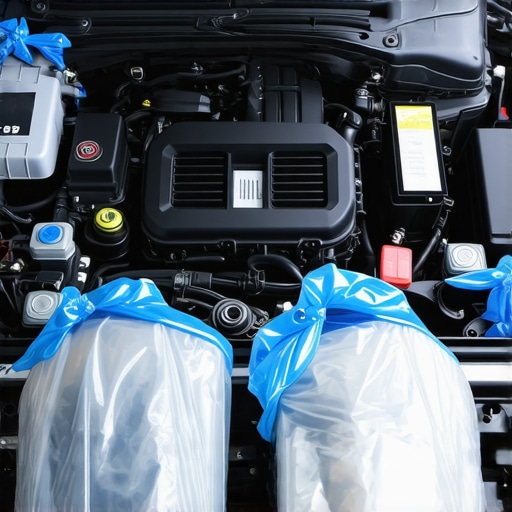
Let Chemical Science Do the Hard Work
Once the sensitive bits are shielded, it’s time to apply a high-quality engine degreaser. Start from the bottom and work your way up. This prevents the cleaner from dripping and creating ‘clean streaks’ that are impossible to even out later. Avoid using harsh industrial solvents that can eat through rubber; stick to citrus-based or water-based degreasers. While the chemicals dwell, you might notice the 15 dollar gasket that stops your slow oil leak starting to weep. This is a good thing—finding these small issues now prevents a full-blown breakdown later. Give the degreaser about five to ten minutes to penetrate the layers of dust and baked-on oil, but never let it dry completely on the surface.
The Soft Touch That Actually Removes Dirt
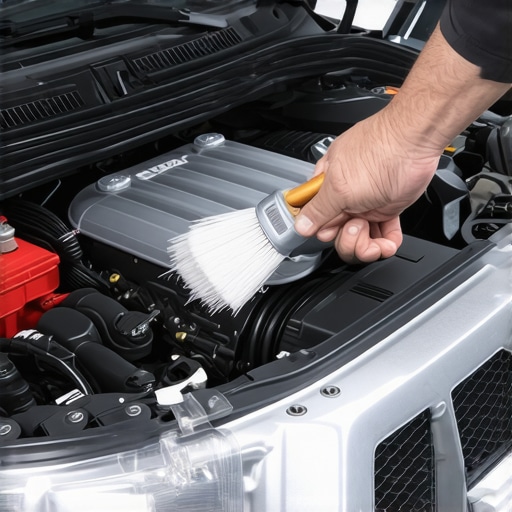
You don’t need a pressure washer for this. In fact, a high-pressure stream is the fastest way to force water into places it was never meant to go, like past the seals of your fuel injectors. Instead, use a soft-bristle detailing brush to agitate the heavy areas. I keep a variety of sizes handy—a large one for the top of the engine cover and a tiny one to get into the crevices where the tiny vacuum leak that causes a rough idle often hides behind a wall of gunk. Scrubbing is like brushing your teeth; you aren’t trying to grind the surface down, you’re just lifting the debris so the water can carry it away. When you finally rinse, use a gentle mist. If you’ve done the prep work correctly, the dirt should simply slide off, revealing the metal and plastic beneath.
I often hear people say they don’t want to mess with their engine or gearbox because the owner’s manual claims certain parts are ‘maintenance-free.’ Here is the contrarian truth: ‘Lifetime’ usually just refers to the life of the manufacturer’s warranty, not the actual lifespan of the vehicle. If you want to maximize your cars lifespan with regular tune ups, you have to look past the marketing fluff. Data from the Car Care Council suggests that excessive heat is the primary cause of mechanical failure, accounting for nearly 90% of all transmission breakdowns. When we talk about a clean engine, we aren’t just talking about aesthetics; we are talking about thermal management. A thick layer of grime acts as an insulator, and if you combine that with degraded fluid, you’re creating a pressure cooker under your hood.
Does a ‘Sealed’ Transmission Really Mean You Should Never Touch It?
The short answer is a resounding no. Many modern vehicles ship with sealed gearboxes, leading owners to ignore the truth about lifetime gearbox fluids. In reality, these fluids lose their viscosity and collect microscopic metal shavings over thousands of miles. If you wait until you notice the 5 signs your transmission is silently overheating, the internal friction has likely already done permanent damage. This is the ‘Oops’ factor many DIYers miss—they spend hours polishing the plastic covers while the lifeblood of the car is turning into burnt sludge. 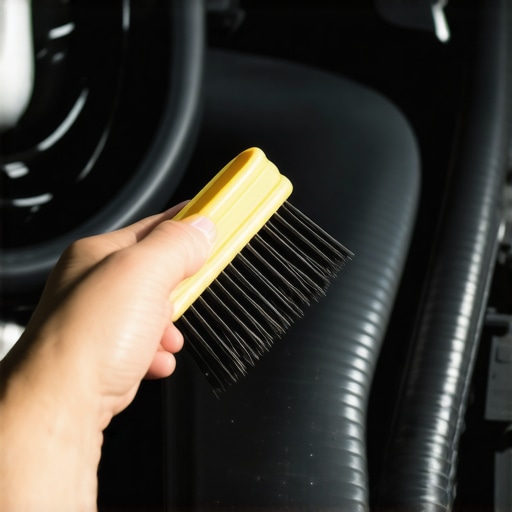 One major trap to avoid is the ‘clean-it-all’ mentality. While you are scrubbing away, be extremely cautious around your CV axle boots. I have seen enthusiasts use industrial-strength degreasers that eventually dry out the rubber, causing it to crack prematurely. This leads to grease leaking out and grit getting in, which makes it much harder to use the secret to identifying a failing cv joint early before it snaps on the highway. Always apply a dedicated rubber protectant after cleaning to keep those seals supple and hydrated. Remember, an essential car service isn’t just about what looks good; it is about preserving the chemical and structural integrity of every component. Have you ever fallen into this trap where you focused so much on the shine that you missed a mechanical red flag? Let me know in the comments.
I used to think a basic socket set and a can of degreaser were all a DIYer needed. That was before I spent three hours searching for a dropped 10mm bolt in the dark recesses of a subframe. Now, my garage looks a bit different. If you want to scale your maintenance from ‘weekend hobby’ to ‘bulletproof reliability,’ you need the right kit. I personally swear by a magnetic parts tray and a high-lumen rechargeable work light. It sounds simple, but you cannot fix what you cannot see, and you certainly cannot finish a regular tune up if you’re missing the fasteners that hold the intake manifold together. Beyond the basics, the single most important tool I’ve added to my arsenal is a bidirectional OBD-II scan tool. Unlike the cheap readers that just give you a code, a bidirectional tool allows you to command the car’s computer to toggle cooling fans or test fuel injectors. This is exactly how to find a parasitic battery drain or a failing solenoid without blindly replacing expensive components. 
How can I keep my car running like new for the next decade?
The answer lies in the ‘middle miles.’ Most people pay attention to their car when it is new or when it is breaking down, but the real magic happens between 60,000 and 100,000 miles. This is the window where you need to know how to save money on your 100k mile service by being proactive rather than reactive. According to technical standards from SAE International (Society of Automotive Engineers), fluid degradation is non-linear; once a lubricant passes its thermal threshold, its ability to protect metal surfaces drops off a cliff. This is why I ignore ‘lifetime’ labels and stick to a strict 50,000-mile interval for gearboxes and differentials. It is the secret to longevity for high mileage engines that the dealerships rarely talk about. Looking ahead, I predict the next five years will shift car maintenance entirely toward predictive telematics. We are moving toward a world where your car’s internal AI will analyze vibration patterns in your wheel bearings and alert you to a failure before you even hear a hum. Until then, you have to be the sensor. If you aren’t sure where to start, you should learn how to spot an honest mechanic who respects your desire to do the preventive work yourself. My advanced tip for you this week: grab a simple multimeter and check the voltage drop across your main engine ground; it’s the easiest way to prevent 90% of the ‘phantom’ electrical issues that plague modern cars.
What Decades of Grimy Hands Taught Me About Maintenance
Over the years, I’ve realized that the biggest barrier to a reliable car isn’t a lack of tools, it’s a lack of familiarity. When you clean your own engine, you aren’t just washing away dirt; you’re performing a tactile inspection of every hose and wire. This hands-on approach is exactly how you can save money on your 100k mile service because you’ll spot that tiny coolant crust or the early signs of a fraying belt long before they leave you stranded. One lightbulb moment for me was realizing that a clean engine bay actually runs cooler, extending the life of those expensive plastic connectors that usually get brittle and snap. Another hard-earned lesson: never trust a ‘lifetime’ fluid label. If it moves and creates friction, it needs to be changed. Ignoring these details is one of the top signs your car needs expert auto repair now before a minor leak becomes a major catastrophe.
The Gear I Trust When the Hood Stays Open
I don’t believe in buying every gadget on the shelf, but a few specific tools changed my life. First, a magnetic parts tray is non-negotiable; it’s the only thing standing between you and a lost 10mm bolt in the subframe. Second, I always keep a high-quality bidirectional scan tool handy. It’s like having a conversation with your car’s brain, allowing you to see how transmission overhauls save you money in the long run by catching electronic glitches before they turn into mechanical failures. Finally, invest in a set of Boar’s hair detailing brushes. They are soft enough to use on sensitive sensors but stiff enough to lift that stubborn grease during a car service. I trust these tools because they focus on precision and prevention, which are the hallmarks of any great DIY mechanic. #IMAGE_PLACEHOLDER_E#
Your First Step Toward a Million-Mile Engine
Taking care of what’s under the hood shouldn’t feel like a chore; it should feel like an investment in your freedom. A well-maintained vehicle provides a level of peace of mind that no new-car smell can match. By following these steps for a regular tune up and staying on top of the grime, you are ensuring that your car remains a loyal companion for years to come. Don’t be afraid to get your hands a little dirty today to keep your commute stress-free tomorrow. Have you ever discovered a hidden mechanical problem while you were just trying to clean up your engine bay? Let me know in the comments below!