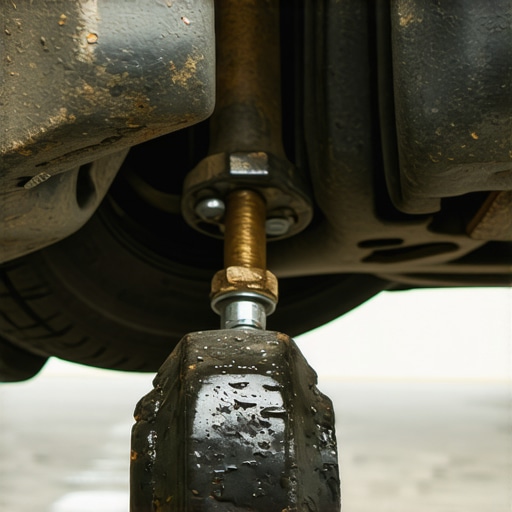
I still get a pit in my stomach every time I hear a metallic ‘pop’ while turning into a driveway. Years ago, I ignored a rhythmic clicking and a slight wandering in my steering because I was too focused on saving money. I figured if the car still moved, it was fine. That arrogance ended with my front tire tucked into the wheel well and me stranded on a busy intersection. I didn’t realize that knowing if your ball joints are dangerously loose is the difference between a simple maintenance afternoon and a $3,000 insurance claim. If you have noticed your car drifting on the highway like it has a mind of its own, you aren’t just fighting the wind; you are likely dealing with a pivot point that is about to shear off. Today, we are going to dive into the exact sounds, feels, and visual cues that mean your car is no longer safe to drive. Have you ever felt that weird ‘jerk’ in the steering wheel and just hoped it would go away?
Recognize the Warnings Your Suspension is Screaming
If you are hearing a persistent protest from your front end, you might think it is just a suspension squeak over speed bumps that can wait until your next oil change. It cannot. A ball joint is essentially a steel ball sitting in a socket, cushioned by grease. When that grease leaks out or dirt gets in, the metal starts grinding against metal until the ball literally pops out of the socket. According to data from the National Highway Traffic Safety Administration, mechanical failures related to steering and suspension are a leading factor in vehicle-related crashes that involve component failure. Ignoring these signs is a gamble where the stakes are your steering control. I made the mistake of thinking a regular tune-up would cover suspension parts, but these require their own specific inspection.
Is This Noise Just a Normal Part of Car Aging?
You might be skeptical and think that an old car is just naturally loud. While some rattles are benign, a heavy ‘clunk’ when you hit a pothole is a massive red flag that demands expert auto repair. I once misdiagnosed a failing joint as a loose brake caliper and spent a whole weekend tightening the wrong bolts while the real culprit was slowly grinding itself to dust. It is vital to distinguish between a simple interior rattle and the structural thud of a failing joint before you find yourself looking at your own car’s underbelly from the side of the road.
How to Actually Check Your Suspension Without a Lift
To get a real answer, you have to take the weight off the wheels. Imagine trying to check a door hinge for play while someone is leaning their entire body weight against the door—you won’t feel a thing. You need a floor jack and, more importantly, sturdy jack stands. I once learned the hard way that a hydraulic jack is not a safety device. I was working on an old truck, skipping the stands because it would only take a minute, and the jack started to slowly weep fluid. By the time I noticed, the brake rotor was inches from my chest. Now, I never touch a lug nut without stands in place. Once the car is up, your first move is the 12 and 6 o’clock shake. Grab the tire at the very top and the very bottom and try to rock it vertically. If you feel a distinct thunk or see the wheel move independently of the control arm, your ball joint has left the chat. This is a much more critical find than just a simple test to see if your shocks are actually blown; this is about mechanical integrity.
Put Your Muscle Into the Pry Bar Test
Sometimes the 12 and 6 shake isn’t enough because the internal spring in the joint is still fighting you. This is where you use leverage. Slide a pry bar between the lower control arm and the steering knuckle. If you can pry them apart and see even a quarter-inch of vertical movement, that joint is a ticking time bomb. This isn’t like a 15 dollar gasket that stops a leak; a failed joint can lead to a catastrophic wheel separation. If you find movement here, you might also want to check for other issues, like how to spot a bent frame if you recently hit a curb, as these components often fail in groups. Think of your suspension like a house of cards; once the foundation pivot point goes, the rest follows quickly. This is why a 100k mile service usually includes a rigorous shake-down of these parts.
Listen for the Tell-Tale Dry Socket Sound
If you can’t get the car in the air yet, pay attention to the sound when you turn the wheel while parked. A dry, protesting creak—like an old wooden ship—is the sound of a ball joint that has lost its lubrication. It is different from the whine of a failing power steering pump or the grind of a transmission issue. When you hear this, you are hearing metal-on-metal wear that is actively carving out the socket. I’ve seen people ignore this and end up needing expensive repairs because the vibration from the broken suspension eventually shook other components loose. For those in a high-stress environment, understanding how transmission overhauls save you money is great, but preventing the damage via suspension checks is better. Taking these essential car service tips seriously is the only way to avoid a ride on a flatbed.
But here is the nuance that most ‘weekend warriors’ miss: the temptation to fix only what is broken. Everyone says to save money by just replacing the failed side, but in my experience, that is the fastest way to end up back on jack stands a month later. If one side has survived 100,000 miles of abuse, the other is a ghost walking. According to research by the National Institute for Automotive Service Excellence (ASE), suspension components are designed as a system; when one part loses its tolerances, it creates a ‘harmonic’ stress that accelerates wear on its twin. If you do not replace them in pairs, you are not saving money; you are just scheduling your next breakdown. There is also a massive trap involving ‘parts store specials.’ We often think a new part is a good part, but that is not always the case. This is where the truth about cheap aftermarket parts hits home—using a low-grade ball joint is like putting a plastic bolt in a steel bridge. These budget options often lack the grease fittings or high-density boots found in premium brands. If that boot fails, you will be looking for expert auto repair again before your next oil change. I have seen ‘new’ joints fail in 3,000 miles because the owner saved $20 on the part but forgot that labor (or their own time) is the real cost.
Why does my steering still feel ‘off’ after the repair?
Sometimes, the ball joint is just the tip of the iceberg. If you have been driving on loose joints, the vibration has likely already compromised your wheel bearings. You should know how to diagnose a bad wheel bearing by sound alone because the two symptoms often mask each other. Similarly, a ‘loose’ feeling can persist if you have ignored identifying a failing CV joint early. All these parts dance together; if one steps on the other’s toes for too long, they all start to limp. 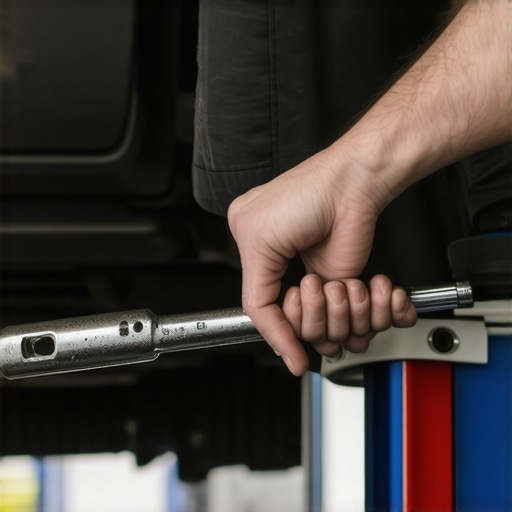 The most common ‘oops’ I see is torquing the bolts while the car is in the air. If you tighten everything down with the wheels hanging, you lock the bushings in a ‘twisted’ position. When the car hits the ground, those bushings are under constant, unintended tension and will tear in months. Always perform the final tighten with the car’s weight on the suspension. And never skip the alignment. If your steering feels loose after hitting a pothole, a new joint is only half the fix—the alignment is the ‘handshake’ that makes the new part work with the rest of the car. Have you ever fallen into this ‘one-part-leads-to-another’ trap? Let me know in the comments.If you are tightening these parts by ‘feel,’ you are asking for another disaster. I have seen too many DIY jobs end in a snapped stud because someone used a ‘cheater bar’ instead of a calibrated tool. My go-to is always a high-quality split-beam torque wrench. Unlike the old-school clicker types, the split-beam design doesn’t need to be dialed back to zero after every use, which is a massive time-saver when you are covered in grease and just want to finish the job. When you are performing expert auto repair on your own driveway, precision is your only insurance. According to the SAE International Technical Paper 2001-01-3323, the friction characteristics within a ball joint socket change drastically based on initial torque settings; get it wrong, and you are inviting premature wear before you even pull out of the driveway.
How can I make my new suspension parts last forever?
The secret isn’t a magic brand; it is the grease. Many modern ‘OEM-style’ parts are sealed for life, which is just marketing speak for ‘it will die the moment the boot cracks.’ I always look for parts with ‘Zerk’ fittings—those tiny metal nipples that allow you to pump in fresh grease. Every time you go in for regular tune-ups, you should be hitting those joints with a few pumps of high-pressure lithium grease. This flushes out the microscopic grit that acts like sandpaper inside the socket. Integrating this into your essential car service tips will easily double the lifespan of your chassis components. It is the same logic behind why transmission overhauls save you money; it is all about maintaining the lubrication barrier that keeps metal from touching metal. Looking ahead, we are moving toward ‘smart’ chassis systems where sensors will actually monitor the internal play of a joint and alert your dashboard before you ever hear a clunk. But until we are all driving those, your ears and a grease gun are your best defense. If you have been ignoring a vibration, I challenge you to go out this weekend and perform the 12 and 6 o’clock shake on your front wheels. If you find even a tiny bit of play, don’t wait for a 100k mile service to fix it. Catching it now is the difference between a cheap DIY Saturday and a dangerous mechanical failure.
The Heavy Price I Paid for Ignoring a Simple Squeak
One thing most ‘how-to’ guides miss is the mental toll of driving a compromised vehicle. Every time I hit a bridge expansion joint in those days, I used to cringe, wondering if that would be the ‘pop’ that finally sent me into a ditch. I’ve since learned that a failing ball joint doesn’t just ruin your steering; it destroys your tire tread through aggressive inside-edge wear that no alignment can fix. If you find yourself needing to correct your steering path every few seconds, you aren’t just fighting the road—you are fighting a mechanical failure. Knowing if your ball joints are dangerously loose is about more than just parts; it’s about reclaiming your confidence behind the wheel. #IMAGE_PLACEHOLDER_E#
The Tools That Keep My Personal Fleet Safe
When I am working in my own driveway, I never cut corners on the equipment that verifies my work. I personally swear by a split-beam torque wrench because it stays accurate even in the heat of a summer garage without needing constant recalibration. For those of you wanting to deep-dive into DIY, I always recommend the official factory service manuals for your specific year and model—they contain the specific torque sequences that generic YouTube videos often skip. If you ever find yourself overwhelmed or happen to notice a bent frame during your inspection, do not hesitate to contact us for a professional perspective. These resources, paired with essential car service tips, are what separate a simple weekend project from a professional-grade repair.
Your Journey to a Safer Drive Starts Today
Maintaining your suspension is a commitment to everyone else on the road as much as it is to yourself. Whether you are checking your car before a long family road trip or performing a routine 100k mile service, your attention to detail is your best safety feature. Don’t let the small clunks turn into big headaches; keep an eye out for the top signs your car needs expert auto repair now and act before the choice is taken away from you at 70 mph. Have you ever felt that terrifying ‘steering wander’ while driving on the highway? Let me know how you handled it in the comments below!