
I was driving my old ’08 truck down a backroad last Tuesday when it happened again. The engine sounded great, the road was fresh asphalt, but the moment my needle hit exactly 45 mph, the steering wheel started dancing in my hands like a caffeinated jackhammer. It wasn’t a subtle hum. It was a rhythmic, frustrating shudder that made me want to pull over and check if my wheels were still attached. I’ve been there before, and I know exactly how unnerving it is when your car feels like it’s about to shake itself apart at one very specific speed. Today, we are going to dive deep into that annoying 45 mph vibration and get your smooth ride back without draining your savings account.
Stop the Steering Wheel Shimmy Before it Costs a Fortune
Years ago, I made the expensive mistake of assuming a shake like this meant I needed four brand new tires. I dropped nearly five hundred bucks only to realize the vibration was still there. It turned out to be a simple wheel balance issue that cost twenty dollars to fix. Since then, I’ve learned that top signs your car needs expert auto repair now often start with these rhythmic vibrations. If your car is acting up only between 40 and 50 mph, it is usually a sign of a resonance issue—where a part of your car is spinning at the exact frequency that causes a vibration to amplify. According to the Car Care Council, something as small as an ounce of weight missing from a wheel can cause a noticeable shake at highway speeds. This is why a regular tune up for your tires and suspension is so critical. Have you ever felt that specific, rhythmic ‘thump-thump’ right as you hit the speed limit on a local road?
Is a tiny vibration actually worth the headache of a shop visit?
It is tempting to just drive faster or slower to avoid the shake, but I can tell you from experience that ignoring it is a recipe for disaster. That vibration is literally pounding away at your ball joints and wheel bearings. If you have ever felt why your brake pedal pulses when you arent moving or noticed why your steering wheel shakes at exactly 60 mph, you know that these issues rarely fix themselves. Usually, we are looking at tire balance, a bent rim, or perhaps a CV axle that has seen better days. I remember one neighbor who ignored a 45 mph shudder until his entire front-end assembly gave out in a grocery store parking lot. Don’t be that guy. Identifying the root cause now saves you from the much higher how transmission overhauls save you money in the long run scenarios later down the road.
Check Your Tire Balance First
Think of a tire balance like a ceiling fan with one blade that is slightly heavier than the others. At low speeds, it spins fine. But as you speed it up, that one heavy spot starts pulling the whole unit off center. By the time you hit 45 mph, that tiny weight discrepancy becomes a rhythmic hammer hit against your suspension. First, check your tire pressure. Sometimes a low tire mimics a vibration, and you should know how to tell if your tire pressure sensor is actually broken before you start buying parts. If the pressure is fine, you likely have a lost wheel weight. These are small lead or steel pieces clipped to the rim that often fly off when you hit a pothole. Any reputable shop can rebalance a tire in fifteen minutes, and it is the most common fix for a steering wheel shimmy.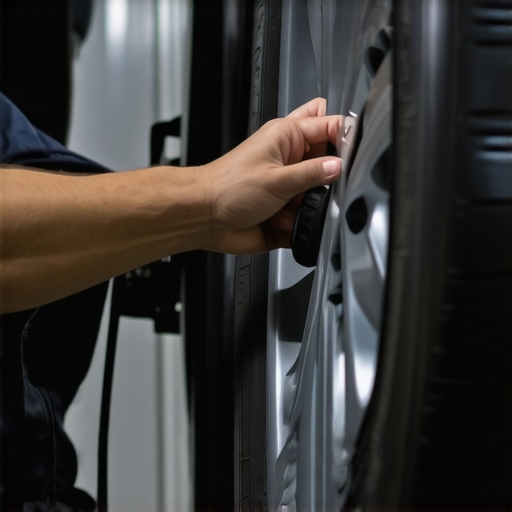
Spot a Bent Rim Without Specialized Tools
If your balance is perfect but the shake remains, you need to look at the metal itself. A bent rim acts like a wobbling top. You can often diagnose this in your driveway by jacking up the front of the car (using jack stands for safety) and spinning the wheel by hand. Watch the edge of the rim as it rotates. If you see it ‘hop’ up and down or move side-to-side, it is bent. This is a common consequence of ‘curbing’ a tire or hitting a deep pothole. While a bent rim is frustrating, it is far less serious than frame damage; however, it is still wise to know how to check if your frame is straight after a fender-bender if the impact was hard enough to deform the wheel.
The Time a Failing CV Axle Fooled Me
I once spent three days chasing a vibration on my cousin’s old sedan. We balanced the tires twice and even swapped the front wheels to the back, but the 45 mph shake persisted. It wasn’t until I noticed why your car makes a clunking noise when shifting into drive that I realized the inner CV joint was the culprit. The joint had lost its grease and was ‘binding’ at specific rotations, sending a vibration straight up the steering column. If you feel the vibration more in your seat than in your hands, or if it happens only when you are accelerating, crawl under the car and check the rubber boots on your axles. If they are torn or leaking grease, that axle is likely toast.
Listen for the Tell-Tale Hum of a Hub
Sometimes a vibration is actually a mechanical resonance from a failing bearing. If the shake is accompanied by a low growl that gets louder as you turn the wheel, you can learn how to diagnose a bad wheel bearing by sound alone to rule out the hub assembly. Additionally, keep an eye on your steering response. If you notice why your car pulls to the side only when you hit a bump, you likely have a worn tie rod or a loose bushing that is allowing the wheel to oscillate at certain speeds. Always look for the sign your ball joints are about to snap during your inspection, because a vibration is annoying, but a wheel folding inward while you are driving is a genuine emergency.Most people walk into a shop and ask for an alignment the second their steering wheel starts vibrating. Here is the truth: alignment almost never causes a rhythmic shake. It makes your car pull to one side or causes why your tires still wear unevenly after a professional shop alignment, but a vibration is almost always a rotating mass issue. I’ve seen folks waste hundreds on alignments when they really needed a specialized ‘Road Force’ balance. Traditional balancers spin the tire in the air, but Road Force machines press a roller against the tread to simulate the weight of the vehicle. The National Institute for Automotive Service Excellence (ASE) notes that ‘radial force variation’—basically a hard spot in the tire’s sidewall—can cause a vibration that a standard balancer simply cannot detect. If you have balanced your tires twice and the 45 mph shimmy remains, your tire might be ‘out of round’ internally even if it looks perfect to the naked eye. 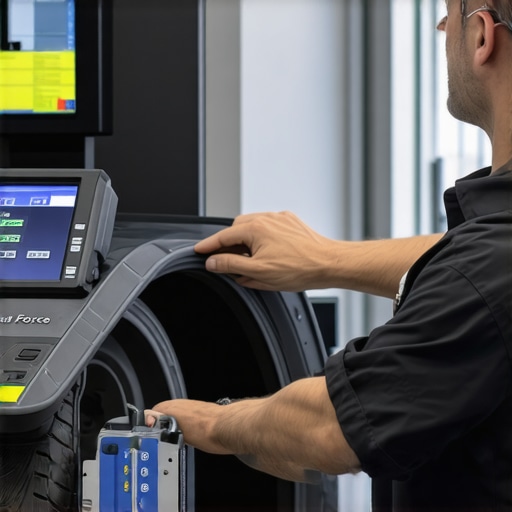
Could your ‘wheel’ shake actually be a hidden transmission shudder?
This is the advanced nuance that separates DIYers from masters. Sometimes what feels like a front-end shake is actually a ‘torque converter shudder.’ This happens when the transmission fluid is degraded or the internal clutches are struggling to lock up properly. If the vibration disappears the moment you take your foot off the gas, you aren’t looking at a tire issue; you are looking at why why your transmission feels like its neutralizing or failing to hold gear. This is exactly why how transmission overhauls save you money in the long run by catching these subtle shudders before the torque converter destroys the entire unit. Another common trap is over-tightening lug nuts with an impact wrench. If a shop gets lazy and doesn’t use a torque wrench, they can actually warp the brake rotor right onto the hub, creating a phantom vibration that feels like a bad tire. Always ensure you get a regular tune up that includes a proper hand-torquing of your wheels. Have you ever fallen into this trap of replacing parts only to find the problem was something completely different? Let me know in the comments. Knowing the top signs your car needs expert auto repair now can save you from the expensive ‘parts-cannon’ approach.I don’t just rely on ‘feel’ anymore when my truck starts acting up. To truly diagnose a mystery shake, I use a high-quality OBDII scanner with live graphing capabilities. If you know how to read live data to find a misfire, you can quickly rule out engine-related stumbles that often mimic a mechanical vibration. I personally keep a split-beam torque wrench in my toolbox because clicking every lug nut to exactly 100 ft-lbs is the only way to be 100% sure the brake rotors won’t warp over time. According to the Society of Automotive Engineers (SAE) Technical Paper 2002-01-1239, driveline vibrations are often a ‘stack-up’ issue where several tiny imbalances in the drivetrain hit a specific frequency together. To stay ahead of this, check your essential car service tips for safe summer drives to ensure high road temperatures aren’t degrading your CV joint grease. 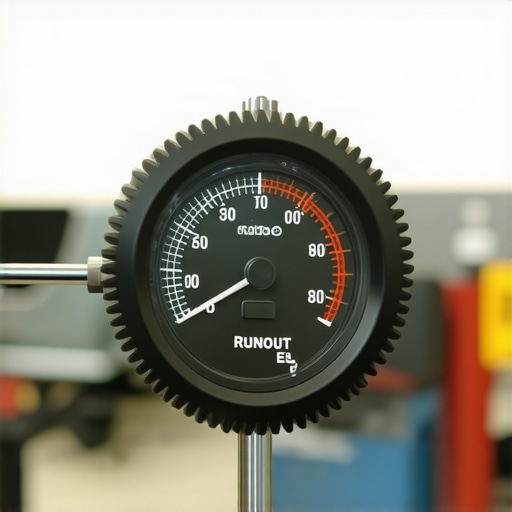
How do I keep my car vibration-free for the long haul?
The secret isn’t just fixing what is already broken; it is monitoring the ‘health’ of your rotating assemblies before they fail. Every 5,000 miles, I run my hand across the tread of my tires. If the rubber feels like a saw blade—a condition called feathering—I know my suspension bushings are wearing out. This is a vital part of how you maximize your cars lifespan with regular tune-ups. I predict that in the next few years, we will see consumer-grade acoustic health sensors that plug into your car’s frame and tell your smartphone exactly which bearing is starting to pit before you even feel the first shudder. For now, try this: next time you have the car up for an oil change, grab a digital dial indicator—they are surprisingly affordable—and check your hub runout. If the needle moves more than three-thousandths of an inch, your vibration isn’t coming from your tire; it is your hub assembly itself. Knowing the sign your ball joints are about to snap or why your car loses power on hills but idles fine allows you to separate fuel delivery issues from mechanical shakes. Don’t wait for the steering wheel to jump out of your hands; get a regular tune up and keep those tolerances tight.
The Hardest Lesson I Learned About Chasing Phantom Shudders
After years of turning wrenches, I realized that the most expensive repairs usually start as small, ignored vibrations. One of the biggest myths is that an alignment will fix a shake; in reality, alignment issues cause pulling or why your tires still wear unevenly after a professional shop alignment, not rhythmic bouncing. I’ve also learned that the order of operations matters more than the parts you buy. Start with the cheapest fix—like checking if how to tell if your tire pressure sensor is actually broken—before assuming your CV axles are shot. Finally, never underestimate the power of a clean hub surface. A tiny bit of rust between the rotor and the wheel can create a vibration that feels like a massive mechanical failure.
My Go-To Gear for a Glass-Smooth Ride
If you want to stop guessing and start fixing, you need a few specific tools in your garage. I swear by a digital dial indicator to check for hub runout; it’s the only way to know if your vibration is coming from a warped part or a balancing issue. I also recommend a high-quality split-beam torque wrench. Using an impact gun without a torque stick is how you end up needing how to fix a stripped oil pan drain plug or dealing with warped rotors. For deeper issues, a scanner that shows how to read live data to find a misfire is invaluable for separating engine stumbles from tire shakes. Lastly, keep a pressure tester handy; you can how to find a hidden coolant leak with a pressure tester and stay ahead of cooling issues while you are already under the hood.
Stop Living with the Shake
Driving should be a relaxing experience, not a workout for your forearms. That 45 mph vibration is your car’s way of asking for help, and now you have the roadmap to provide it. Whether it’s a simple balance or a failing bearing, catching it now is how you maximize your cars lifespan with regular tune-ups and keep your bank account healthy. Don’t be afraid to get your hands dirty or to ask a pro when the data doesn’t add up. Your car—and your sanity—will thank you on the next long highway stretch. Have you ever replaced a part thinking it was the culprit, only to find the real issue was something completely different? Let me know in the comments below!