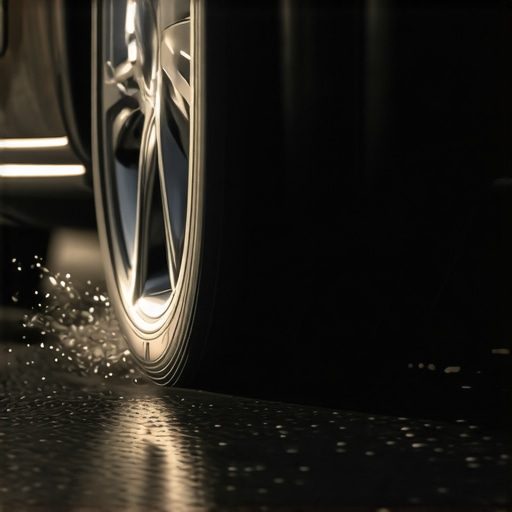
I remember the first time it happened to me. I was driving my old reliable sedan down a backroad, one hand casually on the wheel, when I clipped a manhole cover that sat just an inch too low. Instead of a simple thud, my car lunged toward the shoulder like it had a mind of its own. My heart skipped a beat, and I spent the rest of the drive white-knuckled, anticipating every crack in the pavement. It’s a visceral, unsettling feeling when your steering suddenly decides to take a vote on which direction you should be headed. I initially ignored it, chalking it up to “old car character,” a mistake that almost cost me a trip into a drainage ditch. If you’re feeling that same sideways tug every time you hit a pothole or an expansion joint, you aren’t crazy, and your car isn’t haunted. This phenomenon is a specific, solvable mechanical riddle that I’ve had to solve the hard way more than once. [IMAGE_PLACEHOLDER]
Stop Wrestling with Your Steering Wheel
We often ignore these little quirks because we’re afraid of what an expert auto repair shop might find on the invoice. We tell ourselves it’s just the road surface or that we can handle a little extra steering input for now. But here’s the reality: your car should maintain its line even when the ground gets uneven. When it doesn’t, you’re dealing with a specific suspension or steering geometry failure often triggered by weight transfer. Today, I want to help you understand why this happens and how to identify the broken link in the chain. Whether it’s a worn-out bushing or a bent tie rod, we’re going to get to the bottom of it so you can stop fighting your car and start enjoying the drive again. Have you ever felt that sudden, scary jerk in the wheel after a bump? Drop a comment and tell me what happened.
Is this dangerous or just an annoying quirk?
I’ll be honest with you—I once let this problem go for six months. I figured as long as it drove straight on smooth asphalt, I was fine. I was wrong. I eventually learned that my ball joints were about to snap, which could have sent my front wheel flying off at highway speeds. According to the National Highway Traffic Safety Administration, suspension failure is a leading cause of mechanical-related crashes, often because drivers ignore the early warning signs like “bump steer.” You might think you’re saving money by delaying a regular tune-up or inspection, but you’re actually putting yourself at risk of a much larger bill later. Before you go out and spend a fortune on a full front-end rebuild, there are ways to narrow it down. You can start by performing the simple test to see if your shocks are actually blown. Often, the culprit is much smaller and cheaper than a whole new steering rack. If you’ve noticed your tires still wear unevenly despite a recent alignment, that’s a massive red flag that something is shifting under load. It’s time to stop guessing and start diagnosing. Even if you’re prepping for safe summer drives, addressing this pull is the single best thing you can do for your peace of mind. Let’s look at what’s actually happening under your wheel arches when that suspension compresses and your alignment angles temporarily go haywire.
Check Your Tire Pressure Before You Panic
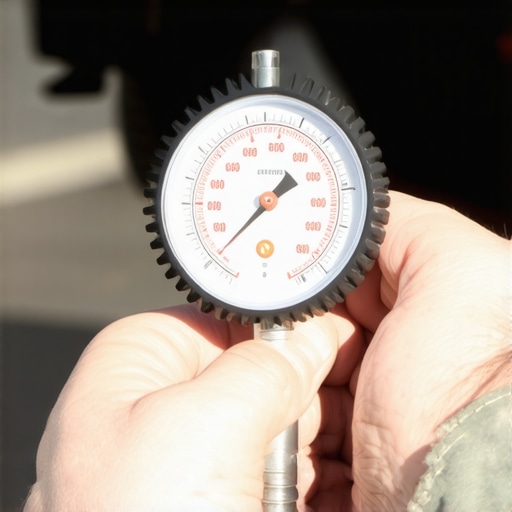
Before you start ordering expensive parts, we need to rule out the simplest variable: air. If one tire is significantly lower than the other, it creates more rolling resistance, effectively acting like a small anchor on that side of the car. If you’ve already checked the pressure and found your tires still wear unevenly, it’s a sign that the geometry is actually changing under load. Think of your tires like shoes—if one heel is worn down, you’re going to limp. Ensure they are balanced and inflated to the door-jamb spec before moving to the heavy metal components.
Hunt for the Ghost in Your Control Arms
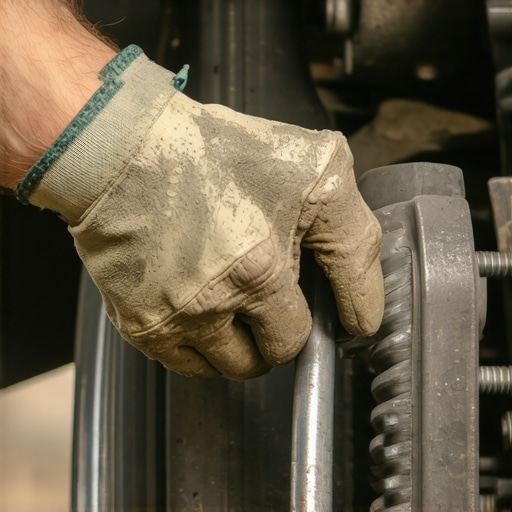
Once the tires are ruled out, it’s time to get under the car. You’re looking for play in the system. When your suspension compresses over a bump, the control arms should move in a predictable arc. If a bushing is torn or a ball joint is loose, that arc becomes a suggestion rather than a rule. I always look for the sign your ball joints are about to snap, which usually involves a brownish rust dust or visible movement when you pry on them with a bar. If the steering feels disconnected or twitchy, it’s often because a rubber bushing has turned into a sponge, allowing the whole wheel assembly to shift backward or forward when you hit a bump.
Listen for Clues Under the Wheel Arches
Sometimes you don’t need a lift to find the problem; you just need your ears. A metallic clack over small ripples is a dead giveaway for loose end links. However, if the pull is accompanied by a rhythmic drone, you might need to diagnose a bad wheel bearing by sound alone. A failing bearing creates friction, and friction creates pull. I remember a specific Saturday afternoon trying to track down a phantom jerk in my steering wheel. I was convinced my steering rack was dying because the steering feels heavy only in one direction. I spent hours prying on things only to realize a $20 part—specifically the 20-fix for a whining power steering pump—was actually the culprit, causing pressure drops that felt like mechanical resistance.
Watch for the Red Flags of Total Failure
There is a point where DIY diagnosis ends and safety begins. If you’ve replaced the obvious bits and the car still lunges toward the ditch, you might have a bent frame or an internal rack failure. These are the top signs your car needs expert auto repair now. Don’t gamble with your steering. I once tried to eyeball an alignment after changing tie rods, and I ended up scrubbing $400 worth of rubber off my front tires in a single weekend. Sometimes, the most actionable step is knowing when a professional alignment rack is the only way to sync your steering wheel back to the road. It’s better to pay for a 30-minute diagnostic than a 100-mile tow.
Stop Blaming the Alignment Rack for Everything
Most drivers assume that once their car is strapped onto a laser-guided alignment machine, the steering issues are magically solved. I’ve seen people spend $150 on a four-wheel alignment, only to find the car still drifts to the left before they even leave the shop parking lot. Here is the nuance most shops won’t tell you: an alignment is a static measurement. It measures how your car sits while it’s perfectly still. But as soon as you hit a bump or accelerate, the suspension becomes dynamic. If your bushings are soft—even if they aren’t torn—the force of the road pushes the wheel out of its ‘ideal’ position. This is why your tires still wear unevenly despite a ‘perfect’ printout from the mechanic. Don’t get trapped into thinking a computer screen knows more than the actual road feel.
The Dynamic Toe Trap You Need to Avoid
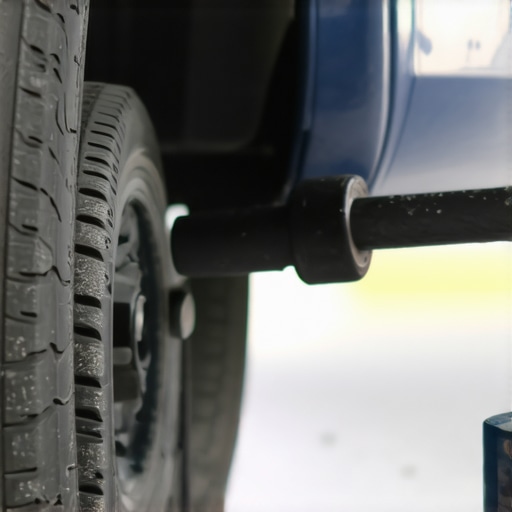
The biggest ‘oops’ factor I see involves ignoring the elastokinematics of the front end. According to a study by the Society of Automotive Engineers (SAE) on suspension deflection, even a 1mm shift in a control arm bushing can translate to a massive change in ‘toe’ when the car is under load. This is why you should prioritize a regular tune-up that includes a pry-bar test on every rubber component. If you just keep adjusting the tie rods to compensate for a squishy bushing, you’re essentially chasing a ghost. You aren’t fixing the geometry; you’re just masking a symptom until the part finally fails. Have you ever fallen into this trap where you paid for an alignment twice only to realize a $30 bushing was the real culprit? Let me know in the comments.
Could a transmission shudder be masquerading as a steering pull?
It sounds crazy, but I’ve seen it happen. If your transmission feels like its neutralizing or shifting erratically, the internal fluid pressure can cause a slight vibration or ‘tug’ through the axles that feels remarkably like a steering pull. People often misdiagnose this as a suspension issue, but the source is actually in the drivetrain. In these cases, understanding how transmission overhauls save you money in the long run is vital because fixing the steering won’t solve a torque-delivery problem. If the jerk in your wheel only happens during a gear shift, stop looking at your ball joints and start looking at your transmission fluid and mounts. These are the subtle top signs your car needs expert auto repair now, specifically from someone who understands how the engine and suspension interact under torque.
Stop Guessing and Grab a Dial Indicator
I’ve learned the hard way that a standard socket set only gets you halfway there. When I’m chasing a steering pull that won’t quit, I pull out my dial indicator. This tool measures ‘runout’ or movement down to the thousandth of an inch. If you suspect your steering rack is moving or a hub is slightly out of true, this is the only way to prove it. I personally use a magnetic base indicator to check the lateral play in my control arm bushings. If I see more than 0.05 inches of deflection under a load from a pry bar, those bushings are trash. This level of precision is exactly how you maximize your cars lifespan with regular tune-ups without replacing parts that are still perfectly fine.
How do I keep my front end tight for the long haul?
Maintaining a car’s geometry isn’t a ‘one and done’ task; it’s an ongoing relationship with your chassis. I recommend a thorough ‘shake test’ every six months or before you head out on those essential car service tips for safe summer drives. Get the front wheels off the ground, grab the tire at the 9 and 3 o’clock positions, and give it a firm wiggle. Any clicking or movement means a tie rod is failing. Then, move to 12 and 6 o’clock for the ball joints. This prevents the nightmare scenario where your steering feels heavy only in one direction because of a seized joint. I also swear by the ‘dry-park test.’ It’s a two-person job where one person saws the steering wheel back and forth while the other watches the tie rods for any delay. According to technical documentation from Hunter Engineering, the leading manufacturer of alignment systems, even minor steering linkage wear can lead to ‘scrub radius’ issues that overheat your tires in minutes. If you catch these small variances early, you’ll avoid the top signs your car needs expert auto repair now later down the road.
The Future of Digital Steering is Almost Here
I’ve been watching the industry closely, and the trend is moving toward ‘steer-by-wire’ systems where there is no physical connection between your hands and the wheels. While this sounds like sci-fi, it means the computer will eventually be able to compensate for ‘bump steer’ and pulling automatically in real-time. Until then, we have to rely on mechanical health and proper drivetrain maintenance. Don’t forget that your transmission plays a role here too; sometimes how transmission overhauls save you money in the long run includes fixing the weird torque-steer issues caused by failing differentials. My advanced tip for you this weekend: get a can of silicone spray and lubricate your rubber bushings. It keeps them from cracking and drying out, saving you a fortune in the future. Go ahead, give those bushings some love and see if your steering feels just a bit crisper on Monday morning.
[IMAGE_PLACEHOLDER]
The Real Reason You Can’t Fix it with Just an Alignment
After years of wrenching, I’ve realized that the shiny laser alignment machine is often the last step, not the first. I spent hundreds of dollars chasing a straight wheel before I learned that a slightly worn control arm bushing behaves perfectly on the rack but fails miserably on the highway. I also learned that if your car pulls left only when you brake, you aren’t looking at a steering issue—you’re looking at a caliper or a suspension shift under load. My biggest lightbulb moment was realizing that steering health is about the ‘dynamic’ movement, not the static state. If you find that the steering wheel shakes only when you hit the brakes, you are dealing with a different beast entirely, likely rotors or hub runout. Don’t let a mechanic tell you it’s ‘just an old car.’
The Gear That Saved My Front End
To keep my cars tracking straight, I rely on a few non-negotiable tools. First, a high-quality magnetic dial indicator is essential for checking wheel hub runout. Second, I always keep a 24-inch pry bar handy; it’s the only way to truly test the stiffness of your bushings without guessing. I also recommend a digital torque wrench to ensure every bolt meets the manufacturer’s spec, as over-tightening can be just as bad as leaving things loose. For technical data, I frequently reference the Hunter Engineering technical library, which offers deep dives into scrub radius and steering axis inclination. If you suspect structural issues, you need to know how to tell if your frame is bent after a fender-bender, as no amount of parts-cannon-firing will fix a crooked chassis.
Reclaim Your Confidence on the Open Road
Dealing with a car that has a mind of its own is exhausting, but it is a problem you can solve. By paying attention to the small signs and staying on top of your regular tune-ups, you turn a potentially dangerous situation into a simple weekend project. Even if you’ve been researching how transmission overhauls save you money in the long run, don’t let the suspension fall by the wayside. Whether it’s a quick fix or one of the top signs your car needs expert auto repair now, taking action today keeps you safe tomorrow. Your car deserves to track true, and you deserve a stress-free drive during those essential car service tips for safe summer drives. What was the one ‘phantom’ pull or noise that drove you crazy before you finally found the fix? Let’s swap stories in the comments below.