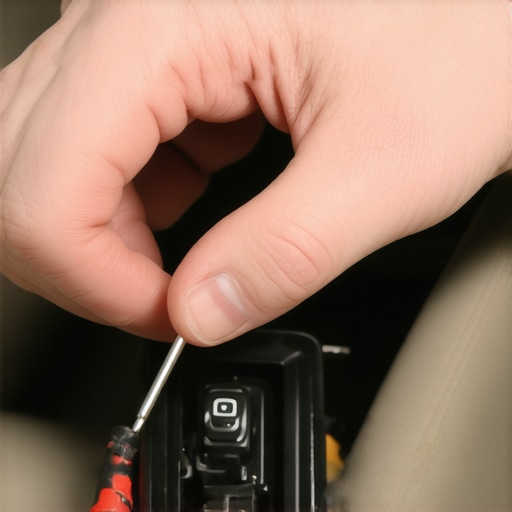
I was pinned. There is no other way to describe it. My chest was literally three inches from the horn, and as I fumbled for the seat adjustment switch, my stomach sank. Forward? Worked perfectly. Backward? Silence. Dead. Cold. It’s a special kind of panic when your car decides to turn into a mechanical vice. Most people think about the big stuff—like whether they need to maximize their car’s lifespan with a tune-up or if the transmission is slipping. But when your seat refuses to let you drive comfortably, it’s an immediate crisis. I spent twenty minutes sweating in my driveway, trying to look cool while neighbors walked by, before I realized this wasn’t going to fix itself.
Stop the Panic and Check the Tracks First
Look, I’ve been there. My first instinct was to grab a screwdriver and start ripping the seat apart. Big mistake. Years ago, I spent three hours diagnosing a ‘broken motor’ on an old truck only to realize a stray AA battery had rolled into the rail and jammed the whole mechanism. Talk about feeling like a total amateur. Before you assume you need a $500 replacement part, we are going to look for the simple, stupid stuff that actually causes 80% of these problems. Today, I’m going to walk you through the diagnostic steps that saved my ribs and my wallet. Whether it’s a dirty switch, a loose wire, or a literal coin in the gears, we’ll find it. Have you ever felt like your car was actively trying to keep you out? It’s a frustrating spot to be in, but we can fix this.
Does the motor always need a full replacement?
This is what every dealership wants you to believe. They see a seat that won’t move and immediately quote you for a brand-new assembly. But here’s the reality: electric motors are surprisingly resilient. Often, the motor is trying to turn, but a ‘limit switch’ or a dirty contact is telling it to stay put. It’s similar to how a $20 part can fix a car that won’t shift out of park; it’s rarely the most expensive component that fails first. Sometimes you just need the right $15 tool to find a short circuit in the system. According to data from the National Highway Traffic Safety Administration (NHTSA), electrical issues in cabin components often stem from simple connectivity failures rather than mechanical motor death.
The Truth About Those Relentless Clicking Sounds
If you hear a click but get no movement, the motor is getting power—it’s just stuck. If you hear nothing at all, we’re looking at an electrical break. We’re going to narrow this down together. I’ve learned the hard way that jumping to conclusions leads to a garage full of spare parts you don’t need. Instead, we’ll start with the ‘Neighbor’s Approach’: simple tests, a bit of cleaning, and a lot of patience. If your car is showing other weird electrical signs, like dash lights that flicker with the turn signal, you might have a broader ground issue, but usually, a one-way seat is a very specific, localized gremlin. Let’s dive into the guts of the seat and get you some legroom back.
Wipe the Grime Off Your Control Switch
First, let’s talk about the most common culprit: the switch itself. Every time you adjust your seat, tiny electrical arcs happen inside that plastic housing, eventually leaving behind a layer of carbon soot. It’s exactly like a clogged sink—the water wants to flow, but the gunk is in the way. I once spent an entire Saturday morning thinking a motor had died in a client’s sedan, only to realize their kid had spilled a soda months prior, and the sugar had effectively turned the internal contacts into insulators. You can often fix this without even taking the seat out. Use a dedicated contact cleaner or even a quick blast of compressed air while toggling the switch rapidly. If you hear a faint click but nothing moves, the signal is trying to get through, but the resistance is too high.
Track Down the Power with a Multimeter
If the cleaning doesn’t work, we have to see if the juice is actually reaching the motor. Think of your car’s wiring like a garden hose; if there is a kink in the line, you won’t get any pressure at the nozzle. This is where the $15 tool to find a short circuit becomes your best friend. You’ll want to locate the harness under the seat and probe the wires while someone else toggles the switch. If you see 12 volts when you press ‘forward’ but 0 volts when you press ‘backward,’ you’ve narrowed the problem down to the switch or the wiring harness. Sometimes, a simple blown fuse is the ghost in the machine, acting much like the $5 fuse that acts like a dead alternator. Always check the easiest, cheapest things first before you start ordering heavy mechanical assemblies.
The Hidden Stress Point in Your Seat Wiring
The wires under your seat are constantly being flexed and pinched every time the seat moves. Over a decade of use, those copper strands can snap inside the insulation, creating an intermittent connection. I’ve found that the most common break happens right where the harness clips to the metal frame. While you are down there with your flashlight, it’s also the perfect time to look for other cabin issues, like learning how to repair a cigarette burn in your car seat if you’re looking to refresh the whole interior.
Give the Motor a Gentle Wake-Up Call
If you have confirmed that power is reaching the motor but it still refuses to budge, it might be ‘flat-spotted.’ Electric motors have brushes that can get stuck in a dead zone. This is where ‘percussive maintenance’ actually has a scientific basis. While holding the switch in the direction you want to go, give the motor housing a few firm taps with the handle of a screwdriver. You aren’t trying to dent it; you’re trying to vibrate those internal brushes back into contact. I used this trick on a rainy night in a grocery store parking lot to help an elderly lady whose seat had pinned her against the steering wheel. One solid thud, and the motor hummed back to life like it had never skipped a beat.
Clear the Rails of Petrified Debris
Lastly, check the physical tracks. Power seats have massive torque, but they are surprisingly sensitive to small obstructions. I’ve pulled out everything from petrified French fries that had hardened like concrete to loose change wedged deep in the worm gear. If the motor groans but the seat doesn’t move, something is physically stopping the travel. Use a shop vac to pull out any grit and a small brush to clear the gear teeth. If your car is showing signs of broader wear, like top signs your car needs expert auto repair now, a jammed seat is often the first domino to fall in a neglected interior.I’ve spent years under hoods, and if there’s one thing I’ve learned, it’s that the ‘parts-cannon’ approach is the fastest way to drain a bank account. Most people assume that if a car is acting up, you need to replace the biggest, most expensive component you can find. But in my experience, the biggest repairs often stem from the smallest oversights. Take transmissions, for example. Everyone says a ‘sealed’ transmission never needs a service, but that is a mechanical fairy tale designed to lead you straight toward needing how transmission overhauls save you money in the long run.
The Dangerous Myth of the Life-Long Transmission Fluid
Manufacturers love the term ‘filled for life,’ but they don’t define what ‘life’ means. Usually, it just means the warranty period. If you ignore your fluid, you’ll eventually find why your transmission slips when the engine is cold. The contrarian truth? Changing fluid too late can sometimes be worse than not changing it at all if the friction material is already suspended in the oil. It’s a delicate balance that requires a nuanced eye, not just a standard ‘tune-up’ checklist. We often think we need to maximize your car’s lifespan with regular tune-ups, but a tune-up won’t save a gearbox that’s been neglected for 100,000 miles.
Why More Parts Usually Means a Worse Repair
Here is the ‘Oops’ factor most DIYers miss: over-diagnosing. I’ve seen people replace entire valve bodies when the $20 part that fixes a car that won’t shift out of park was the actual culprit. We get blinded by the complexity of modern cars. According to the Car Care Council, an industry leader in automotive advocacy, neglecting simple preventative maintenance is the leading cause of premature vehicle scrap. This isn’t just about oil; it’s about understanding the specific failure points of your model.
Does a slipping gear always mean the transmission is dead?
Not even close. Often, a computer is getting bad data. If your car is doing weird things like why your transmission jumps out of gear on bumps, it might be a loose ground or a failing speed sensor rather than a mechanical internal failure. Before you let a shop talk you into a four-figure rebuild, check the electrical health of the vehicle. If you’ve been seeing top signs your car needs expert auto repair now, start with the sensors. Have you ever fallen into this ‘expensive component’ trap? Let me know in the comments below.It’s one thing to find a loose wire; it’s another to know why it keeps breaking. In my shop, I stopped using old-school test lights years ago because they simply don’t tell the full story. If you’re serious about taking care of your vehicle, you need a scanner with bi-directional control. This allows you to command the car’s computer to move the seat, fire an injector, or cycle a cooling fan manually. When you can read live data to find a misfire, you aren’t just a parts-changer anymore—you’re a technician. I personally swear by the Autel MaxiCOM because it bridges the gap between ‘driveway enthusiast’ and ‘professional shop’ without requiring a second mortgage.
The Diagnostic Tech That Actually Pays for Itself
Most people think a scanner is just for clearing pesky codes, but the real power is in the Active Tests. If your seat won’t move, you can use the tool to tell the seat module to bypass the switch entirely. If the seat moves, you know the motor and wiring are perfect, and the switch is your only enemy. This level of precision is exactly how transmission overhauls save you money in the long run—by identifying the one failing solenoid instead of replacing the whole gearbox.
How do I maintain my car’s complex electrical systems over time?
Consistency is the only way to win the long-term game. I recommend a three-step routine every six months. First, treat your weather stripping with silicone spray; it keeps moisture out of the door-mounted switches where corrosion loves to hide. Second, use a terminal protectant on your battery to ensure a clean ground. Lastly, follow essential car service tips for safe summer drives, which include checking the health of your alternator under load. According to the Society of Automotive Engineers (SAE) J1939 standard, even minor voltage drops can cause ‘ghost’ errors in the communication bus, making your car think a perfectly good sensor has died.
Why Software Is Replacing the Wrench
We are moving toward a world where your car will tell you it’s sick before the check engine light even blinks. Predictive maintenance is the future. Soon, your onboard computer will analyze the top signs your car needs expert auto repair now before you even feel a vibration in the steering wheel. This shift means that the best tool in your box isn’t a hammer; it’s a diagnostic interface. If you’ve noticed your car acting sluggish, don’t wait for a total failure. I challenge you to pick up a basic ELM327 dongle this weekend and just look at your fuel trims. Seeing the math behind the machine changes how you drive and how you maintain your investment.
The Expensive Trap of Assuming the Worst
I’ve spent decades in the garage, and if there is one thing I’ve learned, it’s that the most expensive repair is usually the one you didn’t actually need. When that seat motor goes silent, our brains go straight to a thousand-dollar replacement, but the reality is often much kinder to your wallet.
- Trust the data, not the panic: Most electrical failures are just bad connections. If you find the $20 part that fixes a car that won’t shift out of park, you’ll realize that high-stress mechanical issues often have low-cost solutions.
- Small blocks cause big problems: A single penny in the right gear can mimic a burnt-out motor. Always clear your tracks before you buy parts.
- Software is your new best friend: Using a scanner to talk to your car’s modules isn’t cheating; it’s working smarter.
The Three Tools I Use to Save Thousands Yearly
You don’t need a professional-grade shop to get professional-grade results. If I were starting my tool collection from scratch today, I’d focus on items that solve the most ‘ghost’ problems. First, get a high-quality digital multimeter; it’s the only way to know if your wiring is lying to you. Second, never underestimate the power of specialized cleaners for your switches—corrosion is a silent killer of electronics. Lastly, keep a few oddball items on hand, like a length of heavy-duty nylon line. Believe it or not, I’ve used that same line to show people how to stop a sunroof leak with a piece of weed eater string, saving them a trip to the dealership for a ‘clogged drain’ repair. I trust these tools because they allow you to diagnose the root cause rather than just treating the symptoms.
Take Back the Reins of Your Automotive Future
Fixing a stuck seat is about more than just legroom; it’s about the confidence that comes with knowing how your machine works. Whether you are performing essential car service tips for safe summer drives or trying to maximize your car’s lifespan with a tune-up, you are the primary advocate for your vehicle’s health. Don’t let a small electrical gremlin keep you off the road. If you’ve checked the basics and you’re still seeing top signs your car needs expert auto repair now, you can at least walk into the shop with the knowledge to ensure you aren’t overcharged for simple fixes. You have the tools, the logic, and the plan—now it’s time to get that seat moving again. What is the strangest item you have ever found jammed in your car seat tracks? Let me know in the comments below!