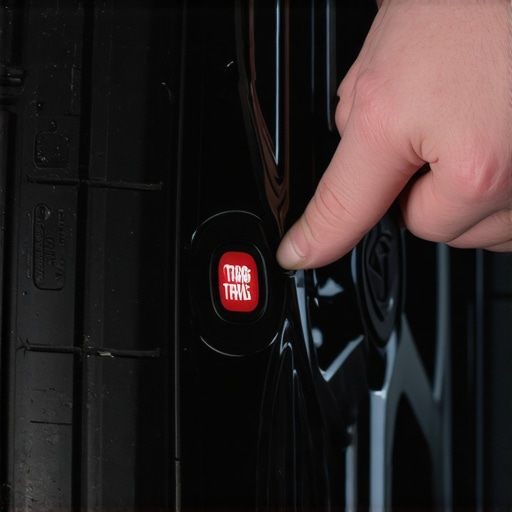
It’s 6:00 AM on a Tuesday, and I’m standing in a slushy puddle at the local gas station, holding a freezing metal tire gauge. All four tires are exactly where they should be: 32 PSI. Yet, that stubborn orange low pressure light on my dash—the one that looks like a panicked horseshoe—refuses to turn off. I remember the first time this happened to me years ago. I was so convinced my tires were the problem that I actually bought a whole new set of rubber, thinking I had a micro-leak that my eyes couldn’t see. I felt like a total amateur when the mechanic told me the tires were fine, but the battery in the sensor had simply given up the ghost. I essentially lit a few hundred dollars on fire because I didn’t know how to tell the difference between a flat tire and a flat sensor battery. Don’t be like me. Before you rush out for expert auto repair, we need to look at the facts. Today, I’m going to help you determine if your TPMS (Tire Pressure Monitoring System) is actually doing its job or if it’s just another electrical ghost haunting your commute. We’ll solve the mystery of why that light won’t go away, saving you time, stress, and a whole lot of cash at the shop. [IMAGE_PLACEHOLDER]
Trust Your Handheld Gauge Over the Dashboard Light
If your light stays on—or worse, starts flashing—after you’ve confirmed the pressure with a manual tool, you’re likely dealing with a sensor failure. I used to think these little plastic bits in the wheel were indestructible, but they are surprisingly fragile. They live in a harsh environment of heat, vibration, and centrifugal force. I once ignored a flashing light for weeks, thinking it was just a glitch, only to realize I was missing out on the essential car service tips for safe summer drives that keep your car from eating its own tires. If your car is over five years old, there is a very high probability that the lithium battery inside the sensor is simply dying. It’s a common issue that often gets rolled into a more expensive regular tune up recommendation by shops that aren’t looking out for your wallet.
Can I just ignore the light and keep driving?
It’s tempting to treat that orange light like a suggestion rather than a warning. You might even find yourself wondering if your car is just prone to weird beeps when there is no warning light. But here is the reality: according to the National Highway Traffic Safety Administration (NHTSA), proper tire pressure is one of the single most important factors in preventing high-speed blowouts. Ignoring the sensor means you lose that early warning system. Have you ever felt like your car was lying to you about its health? Let me know in the comments, because I’ve spent way too many hours arguing with my own dashboard. We are going to get to the bottom of this together, starting with the simplest tests you can do in your own driveway without any fancy tools.
Watch the Pattern of the Panic Horseshoe
The way that dashboard light behaves tells a story. If the light pops on and stays solid the moment you crank the engine, your car thinks the pressure is low. But if that light flashes for 60 to 90 seconds before staying solid, your TPMS is screaming that it has a malfunction—meaning it can’t talk to one of the sensors. This distinction saved me from a massive headache last winter. I had a solid light and, after checking the pressure, found a tiny nail. Had I ignored it, I would have been looking for top signs your car needs expert auto repair now on the side of the highway. If it flashes, though, the problem is likely a dead battery in the sensor or a broken antenna. It’s like a walkie-talkie with a dead battery; no matter how much you shout or pump air, the message isn’t getting through.
Try the Relearn Procedure Before Buying Parts
Most modern cars have a relearn or reset mode. Sometimes the computer just gets confused after a sudden temperature drop or a battery change. I remember working on an old SUV where the light was perpetually on. I spent an afternoon trying to find the hidden ground strap that causes weird electrical ghosts, only to find out I just needed to hold a button under the steering wheel for five seconds while the ignition was in the ‘on’ position. Check your owner’s manual for the specific sequence. Sometimes it involves cycling the locks or pressing the brake pedal a certain number of times. It feels like entering a cheat code in a video game, but it can resync the sensors without a trip to the shop.
Stop Using Those Cheap USB Chargers
This sounds like a conspiracy theory, but it’s true: cheap electronics can kill your TPMS signal. TPMS sensors transmit on a specific radio frequency. I once helped a friend who was convinced his transmission was failing because the dash was acting so erratic—he was even looking into how transmission overhauls save you money in the long run. It turned out he had a cheap cigarette lighter USB adapter that was leaking so much electronic noise it was blocking the tire sensors and confusing the car’s computer. We unplugged the charger, and the TPMS light vanished. If you’re chasing a ghost, start by unplugging everything from your 12V outlets.
Check for Corroded Valve Stems
If your car uses aluminum valve stems, they are prone to galvanic corrosion. This is where the metal literally bonds together because of road salt and moisture. I once tried to unscrew a plastic cap that had a metal liner, and the entire valve stem snapped off in my hand. Suddenly, my sensor issue became a completely flat tire issue. To avoid this, always use plastic caps and maybe a tiny dab of anti-seize. Keeping these components clean is a small but vital part of how you maximize your cars lifespan with regular tune ups. When you’re dealing with these systems, think of the TPMS sensor as a tiny radio station. If you have an older car and the battery dies, you can’t just replace the battery; the whole sensor usually has to go. This is a common part of essential car service tips for safe summer drives because heat is the ultimate enemy of those tiny lithium cells. Before you assume the sensor is toast, check your car’s main battery. A weak car battery can cause the computer to drop non-essential systems like TPMS first to save power, leading to the one electrical fault that most mechanics misdiagnose as a dead battery which might actually just be a failing alternator or a loose terminal. If the stem looks chalky or white, handle it with extreme care.Beyond the obvious sensor battery, there is a deeper level of diagnostic white noise that most drivers—and even some junior mechanics—completely miss. Everyone tells you to follow the owner’s manual like it is a sacred text, but in my experience, those service intervals are often designed for ideal conditions that do not exist in the real world of stop-and-go traffic and winter salt. I have seen people spend thousands on a how transmission overhauls save you money in the long run when all they really needed was a software update or a simple solenoid. The biggest oops factor I see is the dreaded transmission flush on a high-mileage vehicle. If you have not changed that fluid in 100,000 miles, a high-pressure flush can actually wash away the friction material that is keeping your gears engaging. It is one way to know how to tell if a transmission shop is lying about a rebuild versus a simple service.
The Maintenance Myth That Cost Me a Fortune
Most people believe that if the Check Engine or TPMS light is not on, their car is healthy. This is a dangerous trap. Modern ECUs are programmed with tolerance bands. Your car might be running poorly, but as long as the data stays within a specific and often wide range, the light stays off. This is often why your car feels sluggish even after a new air filter. A study by the Car Care Council found that a staggering number of vehicles fail basic safety inspections despite having no active dashboard warnings. You have to listen to the machine, not just watch the bulbs.
Why does my car feel sluggish even when the computer says it is fine?
Usually, this comes down to hidden data points like long-term fuel trims or aging oxygen sensors that have not quite died yet but are slow to respond. This is where maximize your cars lifespan with regular tune ups becomes about data analysis rather than just swapping parts. I once spent a week chasing what I thought was a fuel pump issue, but it turned out to be the one electrical fault that most mechanics misdiagnose as a dead battery—a corroded ground strap that was starving the ignition coils of juice. Have you ever fallen into this trap where you replaced a part only to find the problem was something much smaller? Let me know in the comments. If you are tired of the guessing game, you can always contact us for a second opinion that actually respects your budget.
Get Yourself a Tool That Actually Talks to Your Car
I finally stopped throwing parts at my dashboard when I bought a dedicated TPMS activation tool. A standard OBD-II reader is fine for checking why a check engine light is on, but it often won’t tell you which specific tire sensor has a weak battery. I use the Autel MaxiTPMS TS408 because it allows me to ‘ping’ each wheel individually. If the tool can’t get a response, I know exactly which corner of the car needs a new sensor before I ever break the bead on a tire. This kind of precision is what separates a frustrating weekend from a successful essential car service tips for safe summer drives session.
How do I prevent my car’s electronics from failing prematurely?
The secret isn’t just fancy sprays; it’s keeping the voltage stable. Your car’s computer system is incredibly sensitive to minor fluctuations. I make it a habit to clean my battery terminals every six months with a wire brush. If you see even a hint of blue-green fuzz, you’re looking at resistance that can cause ‘phantom’ codes. This is also a great time to check for the hidden ground strap that causes weird electrical ghosts. According to technical documentation from the Society of Automotive Engineers (SAE) regarding the J1939 protocol, signal integrity is paramount for modern CAN bus systems to communicate without latency. If your ground is weak, your sensors will ‘lie’ to the ECU, leading you to search for top signs your car needs expert auto repair now when you only needed a cleaning.
The Future of Your Driveway Diagnostic
We are moving into an era where cars are essentially rolling computers with a few mechanical parts attached. In the next five years, I predict that we will see ‘predictive’ sensors in every part of the drivetrain, not just the tires. You won’t just guess how to tell if your ball joints are dangerously loose; the car will send an alert to your phone before you even feel a vibration. This makes keeping up with maximize your cars lifespan with regular tune ups more about software updates and sensor calibration than just oil changes. If you’re dealing with a mystery noise or a shifting issue, don’t wait for a total breakdown. Knowing why your transmission slips when the engine is cold now can save you from a five-thousand-dollar how transmission overhauls save you money in the long run situation later. I challenge you to grab a simple multimeter and follow my guide on how to find a parasitic battery drain with a simple multimeter this weekend—it’s the single best way to truly master your car’s electrical health.
The Hardest Lesson I Learned About Chasing Electrical Ghosts
I’ve spent years under the hood, and the most expensive mistakes I’ve made were always the ones where I assumed a dashboard light meant a catastrophic failure. I once thought my engine was toast because of a persistent drip, only to realize it was just the $15 gasket that stops your slow oil leak. It’s a humbling lesson: always start with the simplest component first. If your TPMS is acting up, don’t immediately buy a set of new tires or a high-end control module. Look for the hidden ground strap that causes weird electrical ghosts first. Most of the time, the car isn’t actually broken; it’s just having a bad connection. This is a crucial part of essential car service tips for safe summer drives because electrical resistance often increases with heat, causing sensors to fail when you need them most. I’ve seen people sell perfectly good vehicles because they were tired of chasing a light that could have been fixed with a wire brush and five minutes of effort.
The Essential Gear for Your Driveway Diagnostic
You don’t need a professional garage to get answers, but you do need a few specific tools that provide the inside scoop. First, grab a dedicated TPMS tool like the Autel I mentioned earlier; it’s the only way to talk to the sensors directly without removing the tire. Second, learn how to find a parasitic battery drain with a simple multimeter. It is a skill that will save you from thousands in misdiagnosed alternator and battery replacements over the life of your vehicle. [IMAGE_PLACEHOLDER] Finally, I highly recommend keeping a small notebook in your glovebox to track when these lights appear. Patterns like only when it rains or only after 65 mph are worth more to a technician than a dozen vague guesses. These small investments in your own knowledge are what truly let you maximize your cars lifespan with regular tune ups without the usual dealership markup.
Stop Fearing the Dashboard and Start Listening to Your Car
That orange horseshoe doesn’t have to be a source of constant anxiety. Once you understand the language your car is speaking, you move from being a victim of the machine to being its master. Whether you are checking for top signs your car needs expert auto repair now or just cleaning a battery terminal, you are taking control of your safety and your wallet. Don’t be afraid to get your hands dirty this weekend—there is no better feeling than fixing a problem yourself for pennies on the dollar. If you ever feel stuck or aren’t sure if a shop is being straight with you, feel free to contact us for a second look. Have you ever had a dashboard light that turned out to be something completely unrelated to the actual sensor? Let me know in the comments below!