I remember sitting on the shoulder of I-77, the humid North Carolina air thick enough to drink, watching steam curl off my hood while my heart sank into my stomach. I’d heard a weird ticking sound for three days. I ignored it. I figured it was just an old car being an old car. Then, with a sound like a gunshot, everything went silent. My engine didn’t just stall; it committed suicide. That snapped timing belt turned my pistons into hammers and my valves into nails. I was looking at a bill that cost more than the car was worth, all because I didn’t know what to listen for. Today, I want to make sure that never happens to you. I am going to walk you through the subtle, often ignored warnings that your car gives you right before a catastrophic failure.
Your Engine is Giving You One Last Warning
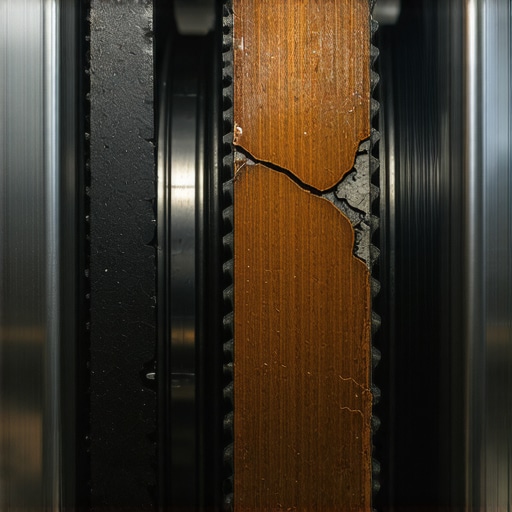
The timing belt is the unsung hero of your engine bay, keeping the top half of your motor in perfect harmony with the bottom. When it starts to fray, it doesn’t always scream for attention; sometimes it just whispers. I remember thinking my car felt a little off during acceleration, especially when it struggles to climb hills more than usual. I chalked it up to bad gas, but those were the first signs of the belt losing its grip. [IMAGE_PLACEHOLDER] You might also notice a ticking noise coming from the front of the engine. It sounds like a rhythmic, metallic tapping that speeds up as you rev. This is usually the sound of the belt starting to delaminate, hitting the plastic cover as it spins. If you hear this, you are on borrowed time. Recognizing these top signs your car needs expert auto repair is the difference between a simple maintenance day and a trip to the scrap yard.
Is this just a way for mechanics to pad the bill?
It’s a fair question. Every time you go in for a quick oil change, it feels like there’s a new list of suggested repairs. But the timing belt is one area where better safe than sorry is a literal life-saver for your vehicle. According to the Car Care Council, timing belt failure in an interference engine causes immediate and severe damage to the cylinder head and engine block. I once skipped a scheduled replacement because I thought the manual was being overly cautious. That mistake cost me thousands. Investing in regular tune-ups might feel like an annoyance, but it is nothing compared to the stress of a dead engine in the middle of rush hour. Have you ever had a noise you ignored turn into a major headache? I would love to hear your story. Let us look closer at the physical signs you can actually see if you are brave enough to pop the hood.
Peel Back the Plastic to See the Truth
To truly know if your engine is on the brink, you have to get your hands a little dirty. Think of your timing belt like the chain on a bicycle; if it slips or snaps, the pedals keep spinning but the wheels stop moving. In an engine, that lack of coordination is fatal. Most cars have a plastic or metal cover shielding the belt. With a simple socket set, you can often peel back the top of this cover just enough to peek inside with a flashlight. You aren’t looking for a broken belt—if it were broken, you wouldn’t be driving. You are looking for ‘glazing,’ where the smooth side of the belt looks shiny or plastic-like. This happens from extreme heat and means the rubber has lost its grip. 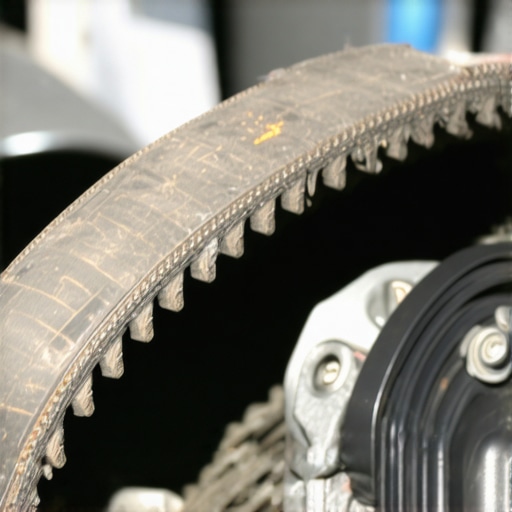
What Glossy Belts Tell You About Impending Failure
When I was helping a neighbor with his old sedan, he swore the car was fine despite a faint squeak. I pulled that cover back and the belt looked like a piece of polished obsidian. It was so slick it couldn’t possibly maintain the friction needed at high RPMs. This kind of wear is exactly the reason your car struggles to climb hills because the timing is micro-slipping under load. If you see cracks, even tiny ones the size of a hair, that belt is a ticking time bomb. High-quality regular tune-ups should always include a physical inspection of these drive components, not just a computer scan.
Don’t Ignore the Tapping of the Valve Train
Sometimes the belt isn’t the only thing screaming. If your belt has stretched even a millimeter, the valves and pistons start to lose their sync. This creates a sound that is hard to miss once you know it. It’s a rhythmic clicking. If you find that why your engine taps like a typewriter is becoming the soundtrack to your morning commute, you need to act immediately. I once ignored a similar sound in a project truck, thinking it was just a loose heat shield. It turned out the belt tensioner had failed, allowing the belt to slacken and slap against the housing.
Checking Your Records is the Easiest Maintenance Step
If you bought a used car and don’t know when the belt was last changed, assume it’s overdue. Most manufacturers recommend a swap every 60,000 to 100,000 miles. Waiting for a physical sign is a gamble where the house always wins. If you see oil leaking near the front of the motor, that’s another red flag. Oil breaks down rubber rapidly. A $15 gasket that stops your slow oil leak could literally save you a $4,000 engine rebuild by keeping your timing belt dry and functional. Checking for these fluid leaks is a core part of the essential car service tips for safe summer drives that keep you off the side of the interstate.Most people think that if the owner’s manual says a fluid is ‘lifetime,’ they never have to touch it. I’m here to tell you that ‘lifetime’ usually just means the lifetime of the warranty, not the lifetime of the car. If you want your vehicle to last 200,000 miles, you have to look past the marketing. In my years under the hood, I’ve seen more transmissions destroyed by this specific lie than by actual mechanical defects. When a manufacturer says you don’t need a service, they are banking on you trading the car in before the gears start grinding.
Stop Believing Your Gearbox is Maintenance-Free
The nuance that most drivers miss is that heat is the ultimate enemy of lubrication. No matter how synthetic or advanced a fluid is, it eventually shears down and loses its ability to protect moving parts. This is especially true if your vehicle frequently handles heavy loads or steep inclines. If you find that why your transmission slips when the engine is cold is becoming a recurring mystery, it is likely because the fluid has lost its cold-start viscosity. 
Can a simple fluid change actually destroy a worn-out gearbox?
This is the ‘trap’ I see DIYers fall into all the time. There is a common myth that if your transmission is acting up, a high-pressure flush will fix it. In reality, if you’ve neglected the service for 150,000 miles, the suspended friction material in the old fluid might be the only thing keeping the clutches from slipping. According to research from the Car Care Council, introducing high-pressure cleaning solvents into a neglected transmission can dislodge sludge that clogs sensitive valve bodies, leading to total failure within miles. Instead of a flush, a simple ‘drain and fill’ is often the safer, expert-level approach. Understanding how transmission overhauls save you money in the long run starts with knowing when it is too late for a basic service and when you need a professional to step in.
The Dangerous Gamble of High-Mileage Additives
I often get asked about ‘stop-leak’ products or performance boosters. While the truth about high-mileage oil additives is a mixed bag, for transmissions, they are usually a temporary bandage on a sucking chest wound. These chemicals often work by swelling old seals to stop a leak, but they can also soften the seals too much, causing them to disintegrate later. Real expertise means knowing that a $20 bottle of ‘fix-it-fast’ won’t replace the need for regular tune-ups and proper fluid intervals. Have you ever tried one of those ‘miracle’ additives only to have it backfire? I’d love to hear if it actually worked for you or if it made the problem worse.
Master the Art of the Preventive Peek
To avoid the ‘oops’ factor, don’t wait for a dashboard light. Check your fluid’s color and smell. It should be bright red and smell slightly sweet; if it’s dark brown and smells like burnt toast, the damage is already done. Recognizing these top signs your car needs expert auto repair now is the only way to stay ahead of a four-figure repair bill. If you aren’t sure where to start, looking at essential car service tips for safe summer drives will give you a checklist that goes beyond the basic oil change. Don’t let a ‘lifetime’ promise turn into a dead transmission. Stay proactive, stay skeptical of corporate manuals, and keep your car on the road longer than the engineers expected.If you really want to scale your car’s lifespan, you have to stop guessing. I used to be the guy who used a screwdriver as a stethoscope, pressing it against the block to hear a lifter tick. It worked, but it’s primitive. Nowadays, my go-to for anything electrical is a decent digital multimeter. I can’t tell you how many times I’ve used it to find a parasitic battery drain that three different shops missed. They just kept selling the customer new batteries until the warranty ran out.
The One Tool That Paid for Itself Ten Times Over
The tool that really changed the game for me, though, was a bi-directional scan tool. It’s not just about reading codes; it’s about telling the car’s computer to actually do something, like cycle the ABS pump or test an injector. This level of control is how you separate a guess from a guarantee. It’s also how you identify the one electrical fault that most mechanics misdiagnose as a dead battery when the issue is actually a high-resistance ground strap.
How do I keep my car running past the 200,000-mile mark?
The secret isn’t just oil; it’s heat management. I’ve started using a thermal imaging camera—even a budget-friendly one—to look at radiators and transmissions after a long drive. If I see ‘cold spots’ on a radiator, I know it’s partially clogged, even if the gauge looks fine. This is essentially why identifying the $10 tool that saves your engine from overheating matters, because catching a clog early prevents the head gasket from warping. According to the Society of Automotive Engineers (SAE) technical paper J306, the viscosity and protective properties of gear lubricants are highly dependent on maintaining specific temperature windows. If your cooling system is even slightly less efficient, your internal components are likely taking a beating. 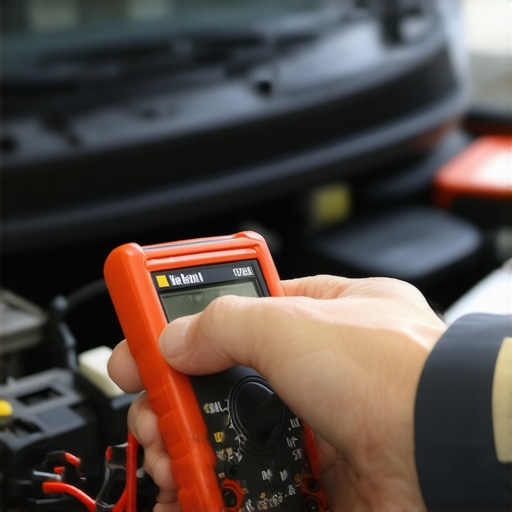
Stop Guessing and Start Measuring with Digital Tools
I’m also seeing a shift toward more integrated electronics. Even basic regular tune-ups now involve recalibrating sensors and updating software. If you’re driving a modern hybrid, don’t even think about doing it the old-fashioned way. You need to know the correct way to jumpstart a modern hybrid before you fry a $2,000 inverter. Looking ahead, I suspect we will see AI-driven diagnostics becoming the norm, where your car predicts its own failures based on vibration patterns. But until then, you are the chief engineer. My advice? Go out to your car tonight with a multimeter. Set it to DC volts and measure your battery at rest and while running. Knowing your car’s ‘baseline’ electrical health is the most powerful diagnostic tip I can give you. If it drops even half a volt below normal, you’ve caught a problem before it leaves you stranded.
Hard-Earned Lessons From My Days Under the Chassis
After decades of turning wrenches, I’ve realized that the best mechanics aren’t just good with tools; they are experts at listening to what a car isn’t saying. One of the biggest shifts in my perspective came when I realized that most “major” failures are actually the result of several tiny ones ignored over time. For instance, knowing how to tell if a transmission shop is lying about a rebuild is just as important as knowing how to check your own dipstick.
Another lightbulb moment for me was discovering that electrical gremlins are rarely the fault of the component itself. Often, the hidden ground strap that causes weird electrical ghosts is the true culprit, yet it’s the most overlooked part in the engine bay. Finally, I’ve learned that the cheapest part is usually the most expensive. If you buy a budget water pump and it fails six months later, you’re paying for the labor all over again. [IMAGE_PLACEHOLDER] Stick to OEM or high-quality aftermarket brands—your wallet will thank you in the long run.
Tools and Manuals That Saved My Sanity
If you want to move from a casual driver to a confident owner, you need more than just a basic socket set. I personally swear by a few specific resources that have kept my fleet on the road. First, get a factory service manual for your specific year and model; it’s the “bible” that the engineers wrote for your car. Second, a high-quality OBDII scanner is worth every penny because it translates those cryptic check engine lights into plain English. Third, I always keep a bottle of terminal cleaner and a wire brush handy. Many top signs your car needs expert auto repair now actually start with simple corrosion that you can fix yourself for five dollars.
Take Control of Your Commute Again
Car ownership doesn’t have to be a series of expensive surprises. By staying ahead of the maintenance curve and committing to regular tune-ups, you turn your vehicle into a reliable partner rather than a financial burden. It’s about more than just avoiding the tow truck; it’s about the peace of mind that comes with knowing your machine is healthy. Whether you are prepping for essential car service tips for safe summer drives or just trying to get through the winter, your attention to detail is what makes the difference. Have you ever caught a small mechanical issue before it turned into a massive repair bill? I’d love to hear about the “save” that you’re most proud of in the comments below.