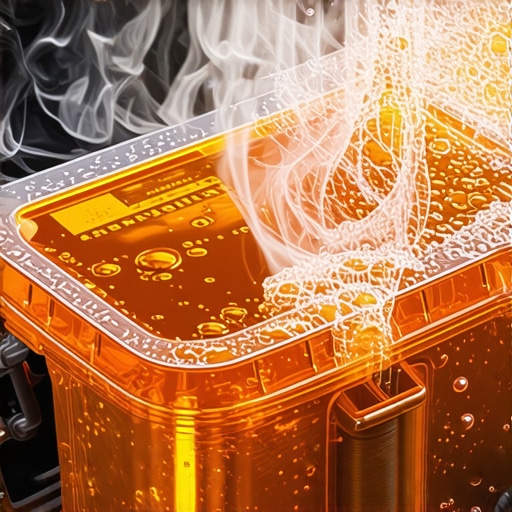
There I was, finally home after a grueling three-hour slog through stop-and-go traffic, and as soon as I turned the key off, my car started making a sound like a coffee percolator on steroids. My heart sank. I popped the hood, and there it was—the radiator overflow tank was bubbling and spitting like a frustrated teakettle. I remember thinking, ‘Well, there goes my savings account.’ It is a visceral, gut-wrenching moment for any driver. You see that steam or hear that gurgle and your brain immediately jumps to the worst-case scenario. But I have been through this dance enough times to know that while it looks like an internal combustion tantrum, it is usually your car trying to tell you that something in the pressure-cooker environment of your cooling system has finally given up. Today, we are going to dive into exactly why this happens and how you can figure out if you are looking at a ten-dollar fix or a weekend-long project.
Why Your Engine Is Throwing a Temper Tantrum After You Park
When I first started working on my own cars, I made a massive mistake that I still cringe about. I saw the bubbling, panicked, and just kept topping off the reservoir with garden hose water without ever checking the pressure cap. I learned the hard way that ignoring the root cause of a bubbling tank is the fastest way to a warped head. If you have been noticing your car acting up, you might also want to check out these top signs your car needs expert auto repair now before things get even steamier. Usually, that bubbling is caused by air getting into the system or the coolant boiling because it is no longer under enough pressure. According to the Car Care Council, cooling system failure is actually the leading cause of mechanical breakdowns on the highway. This often happens because people overlook essential car service tips for safe summer drives, like checking the boiling point of your mixture. Whether it is a tiny hole in a hose or a fan that decided to quit, we need to find that leak. If you suspect a slow drip, you can learn how to find a hidden coolant leak with a pressure tester to save yourself hours of guesswork.
Is This Always a Sign of a Blown Head Gasket?
This is the big fear, right? Every time someone sees a bubble, they think the engine is toast. While it is true that combustion gases leaking into the cooling system will cause bubbles, it is not the only culprit. Before you start mourning your engine, check the dipstick. If things look messy, you should read up on why your engine oil looks like a milkshake. If the oil is clean, you might just have a bad radiator cap or a radiator fan that is not pulling its weight. Have you ever sat in your driveway staring at a bubbling tank, wondering if you should call a tow truck or just go inside and cry? I have been there, and I can tell you that the fix is often simpler than you think. Let’s look at the most likely suspects behind that boiling reservoir.
Start with the $15 Plastic Cap That Most People Ignore
Before you start pricing out a engine rebuild, look at your radiator cap. Think of your cooling system like a pressure cooker; if the seal is broken, the liquid inside will boil at a much lower temperature. I once spent an entire Saturday replacing a water pump on an old sedan, convinced it was the culprit. I fired it up, and within five minutes, the overflow tank was screaming again. I felt like a total amateur when I realized the rubber gasket on the radiator cap was dry-rotted. That tiny seal was allowing pressure to escape, causing the coolant to boil over into the reservoir. This is one of those essential car service tips for safe summer drives that can save you hundreds. If the spring in that cap is weak, it simply cannot hold the 13 to 16 pounds of pressure required to keep your engine cool. 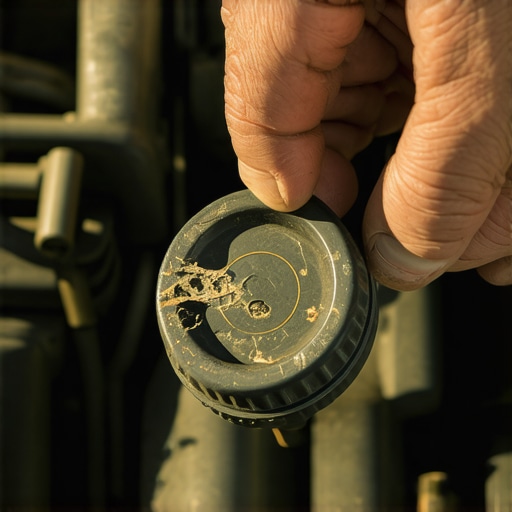
Bleed the Trapped Air Out of the System
If you recently had a hose replaced or even just topped off your fluids, you might have an air pocket. These pockets act like a dam, stopping the flow of coolant and creating localized hot spots. When that air heats up, it expands violently, pushing bubbles into your overflow tank. To fix this, you need to ‘burp’ the car. With a cold engine, remove the radiator cap and use a spill-proof funnel. Start the engine and let it reach operating temperature. You will literally see the air bubbles escaping. If you find you are constantly losing fluid during this process, you may need to learn how to find a hidden coolant leak with a pressure tester to ensure air isn’t being sucked back in through a pinhole.
Check if the Fan Is Actually Pulling Its Weight
Your car relies on airflow to shed heat. If you are sitting at a red light and hear that gurgling sound, but it disappears once you start moving, your radiator fan is the likely villain. If the fan isn’t spinning, the coolant in the radiator stays scorching hot and eventually boils over into the tank. You can perform the simple test for a failing fan clutch by checking for resistance when the engine is off, or simply checking if the electric fan kicks on when you engage the A/C. Sometimes, you might find your radiator fan won’t stop running, which is another sign the system is desperately trying to compensate for a blockage or a failing sensor.
Use a Block Tester to Rule Out the Worst Case
If you have bled the air and replaced the cap, but the bubbles keep coming like a carbonated soda, it is time for the ‘blue liquid’ test. A combustion leak tester (or block tester) sits on top of the radiator neck. You add a special blue fluid that turns yellow or green if it detects CO2. If that fluid changes color, it means exhaust gases are being forced into your cooling system—a classic sign of a head gasket failure. While this sounds terrifying, catching it early and performing regular tune-ups can prevent the engine from seizing entirely. If you notice your engine temperature fluctuates while driving, do not ignore it. You can also test for a clogged radiator without taking it apart by using an infrared thermometer to look for cold spots on the radiator fins, which indicate a blockage that could be causing your overflow drama.Most DIYers think that as long as the liquid in the reservoir is the right color, they are safe. This is a dangerous simplification that leads to expensive repairs. In my experience, relying on color alone is the fastest way to turn your cooling system into a corrosive battery. This brings me to the ‘Oops’ factor that kills more engines than actual mechanical failure: tap water. I have seen enthusiasts who pride themselves on doing a regular tune-up toss a half-gallon of hose water into their radiator without a second thought. Tap water contains minerals like calcium and magnesium that precipitate out once they hit operating temperatures. These minerals do not just clog your core; they facilitate electrolysis. According to the Mobile Air Conditioning Society (MACS) Worldwide, electrical currents can actually travel through degraded coolant, literally eating the aluminum out of your radiator and heater core from the inside out. 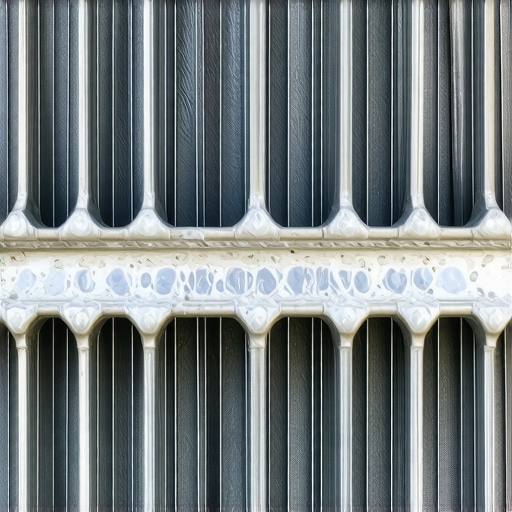
Why Does My Coolant Boil Even When the Gauge Reads Normal?
This is the nuance that separates the pros from the parts-changers. Your dashboard temperature gauge is often ‘buffered,’ meaning it stays in the middle unless things get catastrophically hot. You could have a localized steam pocket at the back of the cylinder head while the sensor near the thermostat thinks everything is fine. This usually happens when your coolant-to-water ratio is mathematically incorrect. If you have too much water, the boiling point drops significantly. If you have too much concentrate, the fluid becomes too thick to carry heat away efficiently. If you find that your engine temperature fluctuates while driving, you are not just looking for a physical leak; you are likely dealing with a chemistry problem.
The Myth of the Universal Coolant Flush
Everyone says you should flush your system every few years, but in my experience, a generic ‘chemical flush’ can sometimes do more harm than good on high-mileage vehicles. These harsh detergents can break loose scale and debris that was actually sealing tiny pinholes in your heater core. Instead of a chemical flush, a series of drain-and-fills with distilled water is often safer for older seals. If you are constantly chasing a disappearing fluid level, do not just keep adding more. Use a pressure tester to see if the system holds steady at 15 PSI. If it drops and you see no external drips, you might be looking at an internal leak, and you should immediately check if your engine oil looks like a milkshake. Lastly, do not assume your radiator fan won’t stop running just because of a bad relay; it might be fighting a losing battle against a partially clogged radiator that you can only find with an infrared thermometer. Have you ever fallen into this trap of using tap water or the ‘more is better’ concentrate approach? Let me know in the comments.
The Specialized Kit I Actually Carry in My Trunk
If you are serious about avoiding a roadside breakdown, you need more than just a spare tire and a prayer. I never leave home without an inexpensive infrared thermometer. This isn’t just for checking if your steak is done; it is the ultimate tool for diagnosing a radiator that is internally restricted. By scanning the surface of the radiator, you can find cold spots that indicate where sediment has blocked the flow, something you can’t see with the naked eye. I also swear by a basic OBD2 scanner that can pull live data. Being able to read live data to find a misfire or monitor your exact coolant temperature in degrees—rather than relying on a vague needle—gives you a massive head start on repairs. Most people wait for the ‘Check Engine’ light, but if you monitor your short-term fuel trims, you can often spot a vacuum leak before it ever leaves you stranded. 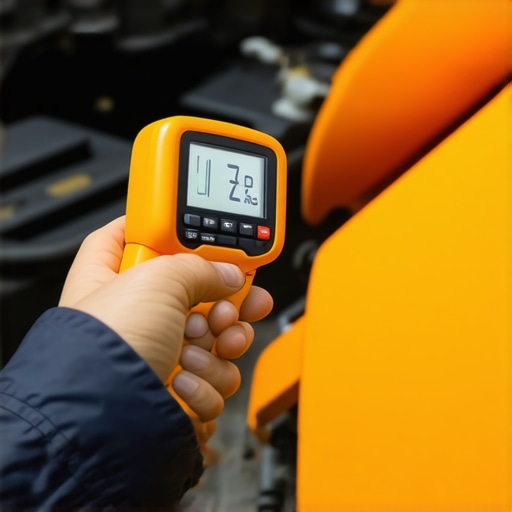
How can you keep your cooling system healthy for another decade?
Maintaining a car for the long haul isn’t about expensive additives; it is about consistency. You need to treat your cooling system with the same respect you give your oil. To maximize your cars lifespan with regular tune-ups, I recommend a coolant test strip kit. These strips measure the pH level and the freeze/boil protection of your fluid. If the pH drops below 7.0, your coolant has become acidic and is actively eating your engine’s internal seals. This is often where people get confused by the truth about engine flushes for high-mileage cars—you don’t necessarily need a high-pressure flush, but you do need to replenish the corrosion inhibitors that have worn out. According to technical documentation from the Gates Corporation, hose degradation often starts from the inside out due to electrochemical degradation (ECD), which is why feeling for ‘soft spots’ in your hoses is a vital monthly habit.
Why the Future of Cooling Looks More Like Your Laptop
As we move toward more hybrid and electric vehicles, the way we look at ‘overheating’ is shifting. Modern cars often use multiple electric water pumps and complex thermal management systems that can keep cooling the battery even after the car is off. This means that the old-school bubbling tank might become a rarity, replaced by digital sensors that put the car into ‘limp mode’ before you ever see steam. However, the mechanical basics still apply to the millions of internal combustion engines on the road today. Whether you are wondering how to tell if your timing belt is about to snap or why your how transmission overhauls save you money in the long run, the philosophy is the same: detect the heat before it causes the metal to warp. If you have been ignoring a small leak or a weird gurgling sound, I challenge you to go out today and spend fifteen minutes doing a ‘cold look’ under the hood. Check those hose clamps and look for the tell-tale white crust of dried coolant. Catching it now is the difference between a cheap DIY Saturday and a massive repair bill.
The Hardest Lessons I Learned Avoiding a Melted Engine
After years of turning wrenches, I have realized that the most expensive repairs usually start with a five-minute warning you chose to ignore. Here are a few lightbulb moments from my own garage: Always trust your nose before the dashboard. If you smell that sweet, maple-syrup scent of hot antifreeze, don’t wait for a warning light. Another big realization was that a pressurized system is a closed system; if you are adding fluid more than once a year, you have a leak, period. Finally, I learned that the radiator cap is the most overworked and under-appreciated part of your car—it is literally the only thing keeping your engine from a state of constant boiling. If you feel like your engine temperature fluctuates while driving, start with the cap before you start pulling the head.
Gear That Keeps My Temp Needle in the Middle
You don’t need a professional shop to diagnose a bubbling reservoir, but you do need the right data. I personally trust an Infrared Thermometer to hunt for cold spots in the radiator core, which is the easiest way to see if you need to test for a clogged radiator without taking it apart. Secondly, a Bluetooth OBD2 Scanner is non-negotiable; I use it to monitor the “real” temperature that the ECU sees, which is often 20 degrees higher than what the dashboard gauge shows. Lastly, I always keep a Spill-Proof Funnel in my kit. It makes “burping” air out of the system a clean, one-person job instead of a coolant-soaked nightmare. If you suspect the issue is deeper, using a pressure tester is the only way to be 100% sure.
Take Control Before the Steam Does
Don’t let a bubbling radiator overflow tank intimidate you into thinking your car is destined for the scrap yard. Most of the time, the solution is hidden in plain sight—a loose hose clamp, a tired plastic cap, or a simple air pocket. By staying proactive and following essential car service tips for safe summer drives, you can keep your commute stress-free. If you are ever in doubt, look for the top signs your car needs expert auto repair now to avoid a complete meltdown. Taking fifteen minutes today to inspect your hoses and fluids is the best way to maximize your cars lifespan with regular tune-ups and keep your wallet full. Have you ever found a surprisingly simple fix for a bubbling reservoir? Share your story in the comments below!