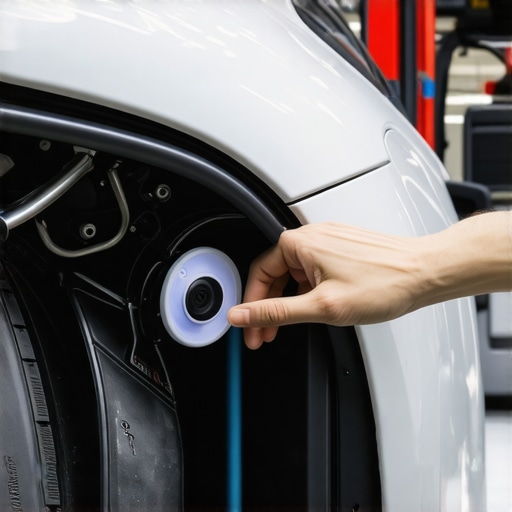
I’ll never forget the sinking feeling in my chest last Tuesday. I had just picked up my SUV from the shop after a minor parking lot scrape. The new paint job was shimmering, the panel gaps were tight, and for a moment, I thought I was back in the clear. Then, I put it in reverse. BEEP. BEEP. BEEEEEP. Nothing was behind me. My backup camera was clear, but the proximity sensors were convinced I was about to hit a brick wall that didn’t exist. It’s frustrating, right? You pay for a professional expert auto repair and end up with a car that’s noisier than before. Early in my DIY journey, I made the mistake of thinking these sensors were plug-and-play. I once tried to “re-seat” a sensor myself on an old sedan, only to realize I hadn’t checked if the frame was straight after the fender bender, which threw the whole alignment off. Today, I’m going to walk you through why your car’s brain is confused after a body shop visit and how we can silence those ghosts in the machine once and for all.
My Bumper Looks Great But My Car Is Beeping at Nothing
The reality of modern tune ups and repairs is that your bumper isn’t just a piece of plastic anymore; it’s a high-tech housing for ultrasonic eyes. When a shop takes that bumper off, they are disconnecting a nervous system. If those sensors aren’t recalibrated or if a single clip is a millimeter out of place, the system panics. According to the AAA Foundation for Traffic Safety, even a minor misalignment of just one degree in an ADAS sensor can significantly impact its effectiveness. It’s not just annoying; it can be a safety hazard. Have you ever felt like your car was gaslighting you with warning lights after a simple fix? Tell me I’m not the only one who has sat in a driveway staring at a dashboard in pure disbelief.
Are These High Tech Sensors Actually Worth the Headache?
You might be wondering if we’ve over-engineered our vehicles to the point of no return. It’s a fair skepticism. When you’re dealing with a broken tire pressure sensor or a finicky proximity alarm, it’s easy to wish for the days of simple chrome bumpers. But these systems save lives—provided they work. The problem usually isn’t the technology itself, but the “re-learning” process that happens after a physical disturbance. If your shop didn’t perform a dynamic calibration, your car is essentially trying to navigate a room with its glasses on crooked. Whether you’re worried about ignoring a cracked windshield that houses cameras or a bumper that’s gone deaf, getting the calibration right is the only way to find peace. Let’s dive into the common culprits, from paint thickness to pinched harnesses, that keep your sensors from doing their job.
Fix Your Ghost Beeping Without Tearing the Bumper Off
The first thing I do when a car acts possessed after a body shop visit is a simple physical audit. Think of your proximity sensors like a pair of high-end headphones. If there is even a tiny bit of grit or a hair-thin gap between the sensor and its housing, the sound waves bounce back prematurely. This is why your car thinks a mailbox is three inches away when you are in the middle of an empty parking lot. During a recent regular tune-up on my neighbor’s crossover, we found that a tiny piece of masking tape from the paint booth was still stuck over the sensor’s edge. It was enough to trigger a constant alarm. Before you assume the sensor is dead, take a microfiber cloth and some isopropyl alcohol to clean the surface. If the beep persists, you are likely dealing with one of three deeper mechanical issues.
Look for the Paint Thickness Trap
Modern shops often have to repaint the entire bumper to match the factory finish, but here is the catch: ultrasonic sensors are calibrated for a specific thickness of material. If the technician applied a heavy coat of primer, paint, and clear coat directly over the sensor face, the ‘eye’ is essentially looking through a thick fog. This is a common reason why your car beeps when there’s no warning light visible on the dash. Unlike a broken tire pressure sensor that usually just stops sending a signal, a painted-over proximity sensor sends a false positive. You can test this by gently (and I mean very gently) feeling the texture of the sensor. If it feels significantly thicker or rougher than the surrounding plastic, the paint is your culprit.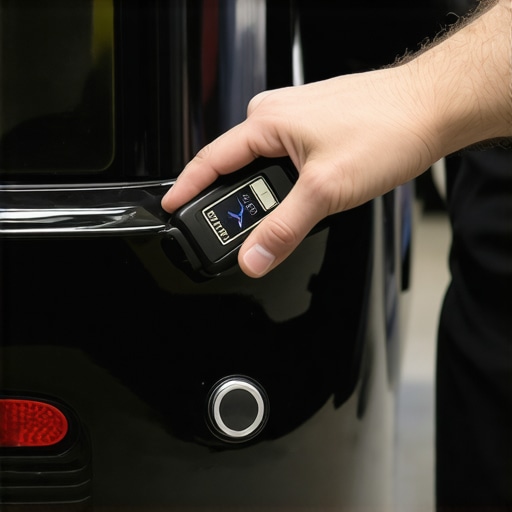
Check the Wiring for Hidden Pinches
When a bumper is reinstalled, the wiring harness has to be tucked perfectly into its plastic clips. If a technician was in a hurry to finish your expert auto repair, they might have pinched a wire between the bumper reinforcement and the frame. I once spent three hours chasing a sensor ghost on a truck only to find that a single wire had been crushed so tightly it was intermittently shorting against the metal. This is especially dangerous because a short can eventually fry the entire control module. If you’ve already confirmed the frame is straight after a fender bender, then your next step is to look behind the wheel well liner with a flashlight. Look for any wires that are stretched taut or flattened against the body.
The Final Step is a Digital Handshake
Sometimes, the hardware is perfect, but the software is stubborn. Your car’s computer needs to be told that its ‘eyes’ have been moved. This is what we call a dynamic calibration. It usually involves driving the car at a specific speed on a road with clear markings so the sensors can map their new environment. If you skip this after a repair, the system might stay stuck in a ‘safety mode’ that triggers alerts for everything. Just like ignoring a cracked windshield that houses ADAS cameras can lead to emergency braking glitches, ignoring a sensor calibration makes your parking aids useless. Ensure your essential car service includes a scan of the ADAS system to clear any lingering ‘blindness’ codes.Most people think that if the body lines match up and the paint is perfectly glossy, the collision repair job is done. But here is the contrarian truth that most shops won’t tell you: a car can look showroom-ready while being a total digital mess under the skin. I’ve seen countless drivers skip the precision frame rack because the damage ‘looked’ purely cosmetic. However, if you don’t check if your frame is straight after a fender bender with high-end laser measuring, those proximity sensors are basically pointing at the clouds or the pavement. The Insurance Institute for Highway Safety (IIHS) has conducted studies showing that even a variation of a few millimeters or a single degree in sensor placement can lead to autonomous emergency braking systems failing to recognize obstacles entirely. This means your safety net is effectively gone, even though the bumper looks brand new. One major ‘oops’ factor I see all the time is the ‘clear and disappear’ method used by budget garages. A technician will clear the error codes from the computer and send you on your way. But if the physical alignment or the paint thickness is off, the car’s Electronic Control Unit (ECU) eventually realizes the data doesn’t match the physics of the road. This mismatch often triggers a ‘fail-safe’ or reduced power state where your car feels like its dragging an anchor because the computer is trying to protect you from what it perceives as a constant imminent collision. It is a frustrating trap where you think you have an engine problem when you actually have a sensor mount problem.
Will Aftermarket Sensors Ever Play Nice with My Car’s Computer?
It’s a common question for those of us trying to keep repair costs down. While you can find cheap replacements on secondary markets, they often lack the internal electromagnetic shielding found in factory parts. Just like the process of how to tell if your tire pressure sensor is actually broken vs. just having a dead battery, you have to verify if the car is actually ‘talking’ to the sensor in real-time. Aftermarket units often suffer from higher ‘latency,’ meaning the warning beep happens a split second too late—and in a tight parking garage, a split second is the difference between a clean exit and a cracked tailgate. 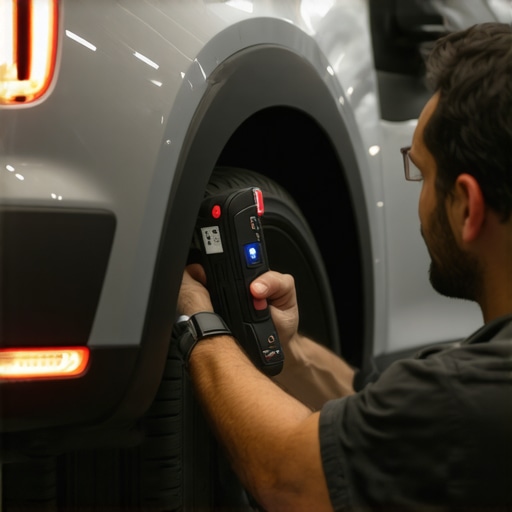 We also need to dig into the hidden link between your proximity sensors and your drivetrain. Modern vehicles are incredibly integrated; they use sensor data to help the transmission decide how aggressively to shift. If your car thinks it’s perpetually in a tight spot or a high-traffic environment due to a misaligned sensor, you might notice that your transmission shifts early into top gear as the car tries to limit your top speed and torque. This isn’t a gearbox failure; it’s a communication breakdown between the bumper and the brain. Getting a regular tune-up that includes a full ADAS system scan is the only way to catch these ‘ghost’ interactions before you end up paying for an expert auto repair that you don’t actually need. Have you ever fallen into this trap where a ‘simple’ fix led to a completely different performance issue? Let me know in the comments.
Get Yourself a Tool That Actually Talks Back
To stop chasing ghosts, you need to stop guessing. If you are serious about DIY or just want to hold your shop accountable, you need a bidirectional scan tool. I personally use an Autel MaxiSYS because it doesn’t just read codes; it lets me command the car to perform actions, like cycling a transmission solenoid or triggering a proximity sensor test. When you learn how to read live data to find a misfire, you aren’t just looking for a broken part; you are looking at the ‘heartbeat’ of the engine in real-time. This level of detail is exactly why some regular tune-ups feel like they transform the car while others do nothing. If your scan tool can’t tell the car’s computer to re-learn its idle position or reset a sensor’s baseline, you are only seeing half the picture.
How can I keep these high-tech systems working for years?
Maintenance in the age of ADAS (Advanced Driver Assistance Systems) is as much about software hygiene as it is about oil changes. First, never let a small chip in your bumper or windshield go unaddressed. As I’ve mentioned before, ignoring a cracked windshield can actually throw off the camera systems that control your lane-keep assist. Second, keep your battery healthy. Modern cars are incredibly sensitive to voltage drops; a dying battery can cause ‘phantom’ sensor errors that look like a mechanical failure. During your essential car service, have the shop check for software updates. Manufacturers frequently release ‘patches’ that improve how sensors filter out false positives from road spray or heavy rain. 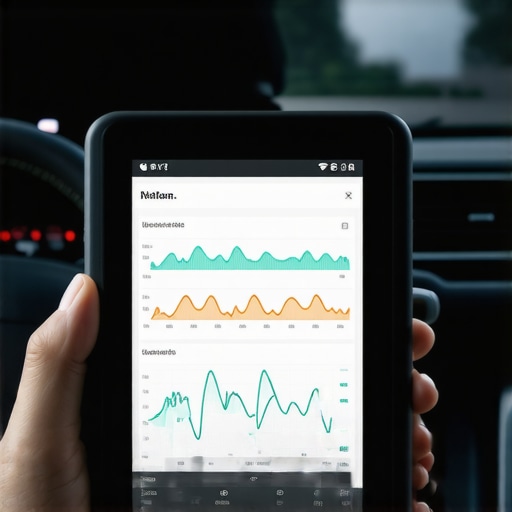
The Future is Self-Healing and Over-the-Air
We are moving toward a world where your car might fix its own sensor glitches. According to technical standards like SAE J3016, as we move into higher levels of automation, the redundancy in these systems will increase. We are already seeing ‘self-cleaning’ sensor lenses and software that can ‘vote out’ a sensor that is providing bad data. Eventually, you won’t need to visit a shop for a calibration; the car will perform a ‘dynamic self-calibration’ every time you drive down a well-marked highway. However, until that day comes, you must ensure that your expert auto repair includes a line item for ADAS recalibration. Even a high-quality mechanical fix like how transmission overhauls save you money in the long run can be undermined if the car’s computer isn’t told the work was done. My best advice? Go grab a basic OBD-II scanner that supports live data streaming tonight. Just seeing how your car ‘thinks’ will change the way you drive and maintain it forever.
What I Finally Realized About Digital Bodywork
After years of tinkering, I’ve learned that precision is not optional. If a shop tells you that the beeping will ‘go away on its own,’ they are usually wrong. Here are the core truths I live by now:
- The Paint Factor: You wouldn’t wear a blindfold and expect to see clearly; sensors can’t see through thick, non-factory paint layers.
- Alignment is King: If you didn’t check if your frame is straight after a fender bender, the most expensive sensor in the world will still point in the wrong direction.
- Cleanliness Matters: Sometimes the ‘fix’ is as simple as a 5-cent microfiber cloth. Always start with the simplest solution before paying for expert auto repair.
The Toolkit That Saved My Sanity
You don’t need a degree in computer science to handle these issues, but you do need the right gear. I trust these three resources implicitly:
- Bidirectional Scan Tools: Tools like the Autel MaxiCheck are worth their weight in gold because they let you talk back to the car’s computer.
- OEM Service Manuals: Sites like Alldata provide the exact factory specifications for sensor mounting—vital for any essential car service.
- A Digital Multimeter: Essential for finding those pinched wires that look fine but are failing internally.
Take Back Control of Your Dashboard
Modern cars are intimidating, but they are still just machines. By understanding how the ‘nervous system’ of your vehicle reacts to trauma, you can ensure that a minor accident doesn’t turn into a permanent headache. Don’t let a ghost in the machine ruin your driving experience. Regular maintenance and a bit of digital literacy will help you maximize your car’s lifespan with regular tune-ups that actually mean something. #IMAGE_PLACEHOLDER_E#
Have you ever had a car keep beeping at you even after a shop said it was fixed? Drop your story in the comments!