I will never forget the sinking feeling in my stomach when I saw that first dark, shimmering splotch on my garage floor. My trusty old truck had just crossed the 150,000-mile mark, and suddenly, it was marking its territory like a stray dog. I had been diligent about every regular tune up, but time is a cruel mistress to rubber gaskets and O-rings. I stood in the aisle of the local auto parts shop, eyeing those colorful bottles promising to “restore engine life” and “stop leaks instantly.” It is a tempting pitch when you are facing a potential thousand-dollar bill for a rear main seal. But as I have learned through years of grease-stained knuckles and a few “oops” moments I would rather forget, there is a very fine line between a genuine chemical fix and a bottle of expensive goop. Today, I am pulling back the curtain on high mileage oil additives to help you decide if they are a miracle in a bottle or a recipe for disaster. Have you ever stood in that same aisle, wondering if a ten-dollar bottle was the answer to your prayers or just a waste of a Saturday?
Stop the Leak Before It Stops Your Car
I have spent way too many weekends under a chassis to not share what I have found about these high mileage cures. We all want our vehicles to last forever, especially when we are trying to follow essential car service tips for those long summer road trips. However, not every additive is created equal. Some are designed to gently swell old seals, while others just thicken your oil until it is like molasses, which can actually starve your engine’s top end of vital lubrication. I am going to show you which ones are worth your hard-earned cash and which ones are just a band-aid on a bullet wound. If you are already noticing issues with how your car drives, it might even be time to check if your transmission needs an overhaul instead of just focusing on the oil.
Do these stop leak bottles actually work or is it all marketing?
Early in my DIY journey, I made the mistake of thinking I could fix a gushing leak by dumping two different cans of thickener into my crankcase. It stopped the leak for a week, sure, but it also turned my oil into a sludge-filled mess that eventually led to a massive expert auto repair bill. It was a rookie move that I still kick myself for today. According to research by the Society of Automotive Engineers (SAE), while certain seal swellers can temporarily reduce seepage in pliable rubber, they cannot replace the structural integrity of a dry-rotted or cracked component. Sometimes, the best fix is a simple 15-dollar gasket rather than a chemical cocktail.
Why Your Engine Actually Starts Drinking Oil
It usually starts subtly. Maybe you notice the level is a quart low between changes, or perhaps you see a puff of blue smoke when you start the car. This happens because the rubber seals—like valve stem seals or oil pan gaskets—get hard and brittle over thousands of heat cycles. High mileage oil additives usually contain plasticizers that are supposed to soak into that old rubber and make it pliable again. If your leak is just a tiny “weep,” these can be a lifesaver. But if you are seeing puddles, you might be dealing with a misdiagnosed oil leak that requires a wrench, not a bottle. You need to be realistic about what a liquid can do for a mechanical failure before you drop your keys at the shop. I want to hear from you: have you ever tried an additive that actually worked, or did it just make the mess worse?I remember helping my younger brother with his beat-up 2002 Civic that was trailing a faint scent of burning grease everywhere it went. He wanted to dump the thickest, cheapest stop-leak he could find into the crankcase. I stopped him because I’d seen that movie before; it usually ends with a clogged oil pickup screen and a seized motor. Instead, we took a systematic approach that actually kept that car on the road for another two years. If you want to use an additive correctly, you have to treat it like surgery, not a magic trick.
Stop the Guesswork and Start with a Clean Surface
Before you even think about additives, you need to identify exactly where the oil is escaping. I once spent an hour trying to diagnose a leak only to realize it was just a loose filter. If you are struggling with a routine change, knowing how to remove a stuck oil filter without special tools can save you a lot of frustration before you start adding chemicals. Wipe down the entire underside of the engine with a degreaser and a shop rag. You need to see if the oil is weeping from a gasket or if it’s a high-pressure spray. 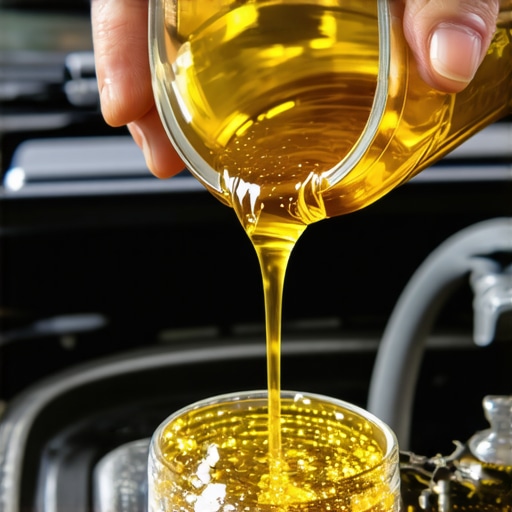
Identify the Difference Between a Weep and a Blowout
An additive is designed to treat ‘weeping’—that slow, steady dampness that never quite drips but makes everything grimey. If you have an actual puddle forming within minutes, you are likely dealing with a catastrophic failure that requires expert auto repair. You also need to check the quality of your current oil. If you pull the dipstick and your engine coolant looks like chocolate milk, an additive won’t save you; that’s a head gasket failure that needs immediate mechanical attention.
Why the ‘Slow Pour’ Method Beats Everything Else
Most people make the mistake of dumping an additive into a cold engine. This is a recipe for disaster because the chemicals won’t mix properly with the resting oil. I always tell people to drive the car for fifteen minutes first to get the oil up to operating temperature. When the oil is warm and flowing, it accepts the plasticizers in the additive much more readily. Think of it like adding sugar to hot coffee versus iced tea; it dissolves and integrates better when things are moving.
The Secret to Picking the Right Chemical Fix
Not all additives are the same. Some are just thickeners, while others are sophisticated seal conditioners. If you are already using a high-quality lubricant, you should understand the real difference between full synthetic and blends, as many modern synthetics already have these conditioners built in. If you decide to add more, do it during a fresh oil change. If you run into trouble during the drain, like a rounded bolt head, knowing the secret to removing a stripped oil drain plug will keep your Saturday from turning into a nightmare. Pour the additive in first, then top off with your regular oil to ensure it gets flushed down into the pan and doesn’t just sit in the upper head.
Don’t Expect Results in Five Minutes
One of the biggest mistakes I see is the ‘instant gratification’ trap. People pour the bottle in, idle the car for five minutes, and get mad when the leak is still there. These chemicals take time to soak into the rubber seals and expand them. It usually takes about 200 to 500 miles of driving before you see a noticeable difference in oil consumption. I’ve had cases where the leak actually seemed a tiny bit worse for the first fifty miles as the old gunk got washed away, only for it to bone-dry by the end of the week. Keeping up with a regular tune up schedule while the additive does its work is the best way to monitor your progress.One of the biggest mistakes I see—and I’ve seen plenty—is the ‘more is better’ fallacy. Most folks think that if a high-mileage engine is rattling, they should just throw in the thickest goo they can find to quiet it down. This is where you run into trouble. Modern engines, even those with 200,000 miles, often rely on tiny oil passages for Variable Valve Timing (VVT) solenoids. If you thicken that oil too much, you’ll trigger a check engine light faster than you can say ‘oops.’ This is a classic case where you might think you’re saving the car, but you actually need expert auto repair. Another nuance: additives can actually fight with the existing chemistry of your oil. According to a study by the American Society for Testing and Materials (ASTM), over-treating oil with aftermarket additives can destabilize the carefully balanced detergent packages already present in high-quality lubricants. If you are already using a top-tier product, you should really understand the real difference between full synthetic and blends before you start playing amateur chemist.
Could your high mileage additive actually trigger a transmission fault?
You might think the engine and transmission are completely separate worlds, but the health of one often masks the failure of the other. I’ve seen owners dump bottle after bottle of stop-leak into a motor, ignoring the fact that transmission overhauls were actually what the car needed to stay on the road. A heavy, sluggish engine caused by too much additive can put extra strain on the torque converter, making it feel like the gears are slipping when it’s actually just a bogged-down motor. If you want to maximize your cars lifespan with regular tune ups, you have to look at the vehicle as a complete ecosystem. Have you ever fallen into this trap of ‘over-medicating’ your car only to have it backfire? Let me know in the comments. Before you commit to any major mechanical work, make sure you know how to tell if a transmission shop is lying about a rebuild so you don’t end up paying for someone else’s vacation. Staying informed is the best way to keep your essential car service tips effective and your engine running smooth.When I finally stopped relying on ‘magic’ in a bottle and started relying on data, everything changed. You can’t fix what you can’t measure. For me, that meant investing in a decent digital multimeter. I remember chasing a ‘ghost’ in my old truck for weeks before I learned how to find a parasitic battery drain with a simple multimeter. It wasn’t the oil or the engine; it was a bad ground strap that made the fuel pump run lean, mimicking a mechanical stumble. If you’re serious about high mileage, you need tools that tell the truth. I personally swear by my Autel scanner and a set of Precision Instruments split-beam torque wrenches. Why? Because clicking a cheap torque wrench is a gamble with your head bolts, and I’m not a gambling man when it comes to a $3,000 engine.
How do I keep my high-mileage engine healthy for another decade?
The secret isn’t a secret at all—it’s consistency. I follow a strict 5,000-mile interval for full synthetic, regardless of what the dash says. According to the Car Care Council, nearly 80 percent of vehicles on the road need at least one service or repair, often because owners wait for a light to come on instead of performing a regular tune up. If you wait for the noise, the damage is already done. You should also be listening for the little things; knowing how to diagnose a bad wheel bearing by sound alone can save you from a seized hub on the highway.
The Future of DIY Diagnostics is Already in Your Pocket
We are moving into an era where your smartphone is more valuable than a 10mm socket. Bluetooth OBD2 dongles have become so sophisticated that they can now monitor live data streams for misfires and fuel trim in real-time. I predict that in the next five years, AI-integrated diagnostic apps will be able to ‘listen’ to your engine through your phone’s microphone and predict a belt failure before it happens. This kind of tech helps you decide if you need a quick fix or if it’s time for expert auto repair. Don’t let the tech intimidate you; it’s there to give you the upper hand against the ‘parts cannon’ approach.
The Infrared Thermometer is Your Secret Weapon
One of my favorite niche tools is a simple infrared thermometer. It’s the 10-dollar tool that saves your engine from overheating because it lets you check the temperature at the radiator inlet versus the outlet. If there’s no drop, your radiator is clogged, and no amount of additive will fix that. It’s about being a detective. If you’re truly worried about the long-term health of your vehicle, consider that transmission overhauls are often cheaper than a new car payment. My challenge to you: pick up a basic multimeter this weekend and test your battery’s resting voltage. It’s the first step in moving from a ‘parts changer’ to a true diagnostic master.
Lessons from the Oil Slicked Floor
After decades of trying every ‘fix in a bottle’ on the shelf, I’ve realized that chemical additives are a tool, not a cure-all. First, never use an additive as a substitute for a regular tune up; it is like putting a band-aid on a broken bone. Second, if your engine coolant looks like chocolate milk, stop pouring oil additives in and call a pro immediately. Third, sometimes the best ‘additive’ is just switching to a better base oil—knowing the real difference between full synthetic and blends can solve more problems than a ten-dollar bottle ever will. Finally, remember that silence isn’t always safety; an engine that suddenly gets quiet might just have oil that is too thick to reach the top end.
My Personal High Mileage Survival Kit
If you are serious about DIY care, skip the generic shelf and look for these specifics. I always keep a bottle of AT-205 Re-Seal handy for those pesky rubber gaskets, but only for ‘weeps’ rather than gushing leaks. For diagnostics, a reliable Bluetooth OBD2 scanner is my go-to for reading codes before they turn into a need for expert auto repair. I also highly recommend keeping a vehicle-specific service manual in your trunk—it is the true bible of the garage. And never work without a high-quality magnetic shop light; you cannot fix what you cannot see.
#IMAGE_PLACEHOLDER_E#
Keeping Your Mechanical Companion Alive
Your car has been there for the morning commutes, the road trips, and the late-night runs. It deserves more than a temporary chemical patch. While additives have their place in a pinch, the true secret to longevity is attentive, hands-on care. Whether you are weighing the costs of transmission overhauls or just doing your own oil changes, stay curious and stay greasy. You have the power to keep that odometer turning for another 100,000 miles. Have you ever had a stop-leak additive actually save your car, or did it end in a massive towing bill? Let me know in the comments below!