I was pulling away from a stoplight last Tuesday, heart set on getting home for dinner, when I stepped on the gas and… nothing. Well, not exactly nothing. The engine roared like a lion, the RPM needle buried itself toward the red, but my car just coasted as if I’d bumped the shifter into neutral. That sudden disconnect between your right foot and the pavement is enough to turn anyone’s stomach. If you have ever felt that phantom shift while trying to merge into heavy traffic, you know exactly the kind of cold sweat I am talking about. Today, I am going to walk you through why your car is acting like it has forgotten how to drive and how we can pin down the culprit before you start looking at new car listings.
That Heart-Sinking Moment Your Power Just Vanishes
It is a specific kind of betrayal when your vehicle decides to stop playing nice. You expect the gear to grab, but instead, the connection just evaporates. When I first started getting my hands greasy with my own rigs, I made the massive mistake of assuming my entire gearbox was dead the second this happened. I almost sold a perfectly good truck for scrap prices because I did not know the 5 signs your transmission is silently overheating or how a simple fluid level check could save the day. Believe it or not, according to AAA automotive experts, many transmission issues that feel catastrophic are actually related to fluid maintenance or minor electronic glitches rather than a total mechanical meltdown. We are not just going to guess here. We are going to look at why your car needs expert auto repair and how to tell if you are dealing with a slipping clutch pack or just a confused computer. Have you ever felt that weird “flare” where the engine revs between gears? Drop a comment and tell me about it, because I have likely been exactly where you are.
Is this going to cost me five thousand dollars?
This is the big fear. The worry that a neutralizing transmission equals a neutralized bank account is what keeps most people from visiting a shop. But here is the reality: catching it early often means the difference between a relatively cheap service and a $4,000 rebuild. Sometimes, the problem is as specific as why your automatic transmission won’t shift when cold, which can be a localized pressure issue rather than a broken internal gear. I want to help you avoid the expensive mistake I made years ago by letting a mechanic talk me into a full overhaul because I did not know how to tell if a transmission shop is lying. We are going to dive into the specifics of fluid pressure, shift solenoids, and the “limp mode” your car uses to protect itself from further damage.
Stop Guessing and Start Testing
To figure out why your car is behaving like a rebellious teenager, you have to stop looking at the dashboard and start looking at the fluid. Think of your transmission fluid as the hydraulic muscle that actually moves the gears. If that muscle is weak or missing, nothing happens. When I was first learning my way around a garage, I had a buddy bring over an old sedan that refused to move in reverse. He was convinced the gearbox was a paperweight. We pulled the dipstick, and the fluid looked like black coffee and smelled like a burnt campfire. That was the first sign. Before you assume you need a $4,000 overhaul, you need to verify the basics because the truth about lifetime gearbox fluids is that they rarely actually last the lifetime of the vehicle without becoming contaminated.
Get Your Hands on the Dipstick
While the engine is running and warm, pull that dipstick. If the fluid is low, your pump cannot build enough pressure to keep the clutch packs engaged, which causes that terrifying ‘neutralizing’ feeling. If it is bright red, you are likely looking at an electronic issue. If it is dark and gritty, those are bits of your internal clutches floating around. I once saved a neighbor nearly three grand just by topping off two quarts of fluid after a leak—a simple 5 signs your transmission is silently overheating check could have prevented it entirely. 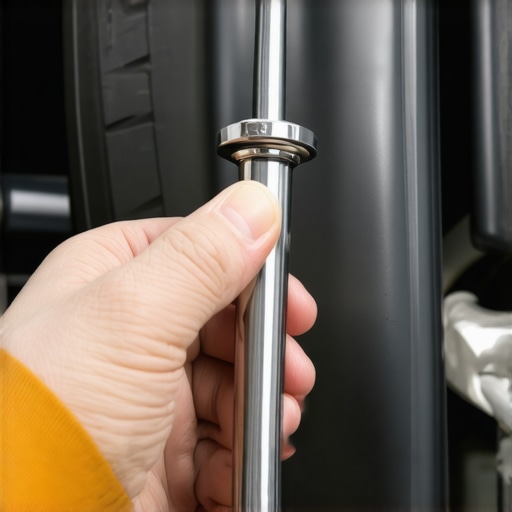
Plug in an OBD-II Scanner Immediately
Your car has a brain, and it records every time a gear takes too long to engage. Even if your ‘Check Engine’ light is not on yet, there might be ‘pending’ codes. This is where you find out if a $50 shift solenoid has gone bad instead of the whole transmission. Modern cars often go into a ‘limp mode’ to protect themselves, which is the reason your car wont rev past 3000 rpm or feels sluggish. This is not the car dying; it is the car trying to stay alive. Many people mistake a confused computer for a mechanical failure. In fact, the one electrical fault that most mechanics misdiagnose can sometimes interfere with how sensors talk to the transmission control module.
Watch How the Car Acts When Its Cold
Pay attention to the timing. Does the car only slip in the morning? If so, you might be dealing with why your automatic transmission won’t shift when cold, which usually points to hardened internal seals that soften up once the engine warms up. Conversely, if it only acts up after an hour of driving, look at why your car wont go in reverse when the engine is hot. Heat thins the fluid, and if your internal pressures are already marginal, that extra heat is enough to make the system lose its grip. Tracking these patterns is the best way to ensure you are not getting fleeced when you finally take it in for a tune up or repair. Keeping a log of when the slips happen can help you learn how to tell if a transmission shop is lying by matching their diagnosis to your real-world symptoms.There is a persistent myth in the automotive world that changing your transmission fluid on a high-mileage vehicle will actually cause it to fail. The old-school logic suggests that the ‘clutch dust’ suspended in the old, gritty fluid is the only thing providing enough friction for worn internal parts to grab. While I have seen transmissions die shortly after a service, the fluid itself is rarely the killer. The real ‘oops’ factor is usually a high-pressure flush machine. These aggressive systems can dislodge sludge and jam it into the delicate valve body or tiny electronic solenoids. In my professional experience, a simple drain-and-fill is the secret to maximizing your car’s lifespan without the risk. If a mechanic insists on a pressurized flush for a car with over 100,000 miles, that is one way how to tell if a transmission shop is lying about what your vehicle actually needs.
The Invisible Ground Wire That Kills Your Gears
One nuance that even seasoned DIYers miss is the impact of electrical grounds on shift quality. Modern transmissions rely on pulse-width modulation (PWM) to control fluid pressure through solenoids. If the electrical path is even slightly compromised, the computer may struggle to command the correct pressure, leading to a ‘soft’ shift or a total slip. I once diagnosed a car that felt like it had a blown second gear, only to find the hidden ground wire that ruins your sensors was corroded near the frame. According to the Automatic Transmission Rebuilders Association (ATRA), a significant percentage of transmission complaints are actually rooted in electrical or sensor issues rather than internal mechanical failure. This is often the one electrical fault that most mechanics misdiagnose as a terminal gearbox failure. 
Can Your Car’s Computer Actually Forget How to Shift?
Yes, and it is a trap that catches thousands of drivers every year. Most modern vehicles use adaptive learning software to adjust shift timing based on your driving style and internal clutch wear. If you disconnect your battery for a simple repair, you might accidentally reset these learning tables to factory defaults. Suddenly, a transmission that was shifting perfectly starts to ‘hunt’ for gears or flare between shifts because the computer is no longer compensating for slight mechanical wear. This confusion can be exacerbated if you are already noticing 5 signs your transmission is silently overheating, as the heat changes the fluid’s viscosity while the computer is trying to ‘re-learn’ the hardware. Before you agree to a $4,000 overhaul, check if your vehicle requires a specific ‘re-learn’ procedure or a software flash. Have you ever fallen into this trap where a simple battery change made your car drive like it was falling apart? Let me know in the comments. Don’t fall for the ‘lifetime’ marketing trap; the truth about lifetime gearbox fluids is that they are designed to last the warranty period, not the actual life of the vehicle.If you want to stop the guessing game, you have to move beyond the basic tools. I have seen too many DIYers rely on those $20 Bluetooth dongles that only show generic ‘P’ codes. To really understand what is happening under the hood, you need a scanner that can talk to the Transmission Control Module (TCM) specifically. This is how I realized that why your automatic transmission hunts for gears on hills is frequently caused by a faulty throttle position sensor rather than a mechanical gear failure. I personally use an Autel unit because it allows me to see real-time data like fluid temperature and solenoid duty cycles. According to technical documentation from ZF Friedrichshafen, a global leader in gearbox manufacturing, even a five-degree variance in fluid temperature during a service can lead to incorrect fill levels, which eventually forces you into an auto repair shop sooner than expected.
Don’t Trust a Twenty Dollar Scanner
While a full rebuild is a scary prospect, understanding how transmission overhauls save you money in the long run helps you see the value in restorative maintenance over simple band-aid fixes. If your scanner shows ‘clutch slip’ codes, do not panic immediately. Check your voltage first. Modern transmissions are incredibly sensitive to electrical health. I always keep a high-quality Fluke multimeter in my trunk to verify that the sensors are getting a clean 12 to 14 volts. If the electrical path is dirty, your car might mimic the symptoms of a dead gearbox. This often traces back to the hidden ground wire that ruins your sensors, creating a phantom resistance that confuses the computer into commanding the wrong gear.
How do I keep my gearbox alive for 200,000 miles?
The secret to longevity is not just the oil; it is the cooling. Heat is the number one killer of automatic transmissions, and once the fluid breaks down, the internal clutches start to glaze over. I believe we are entering an era of predictive maintenance where onboard AI will soon monitor your clutch engagement times in milliseconds and alert you to a solenoid lag before you ever feel a slip. But until your car is that smart, you have to be the brain. Regular tune ups are not just for spark plugs; they are for your entire powertrain. Knowing how to save money on your 100k mile service starts with being proactive about these fluids before the car starts to jerk or the reason your car shakes when you accelerate becomes a permanent fixture of your morning commute. Take ten minutes this weekend to use a multimeter and check your engine grounds. If you see more than 0.1 ohms of resistance between the battery negative and the engine block, you have found a potential transmission killer. Cleaning that connection is a free fix that could save you thousands.
What I Learned the Hard Way About These Ghost Shifts
In my years of turning wrenches, I have realized that the most terrifying transmission noises often have the simplest solutions. I once saw a client nearly sell a classic because it felt like it was slipping in every gear, only to find that the hidden ground wire that ruins your sensors was just a bit loose. It is a vital reminder that your car’s brain is only as good as its electrical connection. Another hard-won lesson is that a rebuild isn’t always a defeat. When done right, how transmission overhauls save you money in the long run becomes clear because you are essentially resetting the clock on your powertrain for a fraction of the cost of a new vehicle.
The DIY Gear That Saves My Wallet Every Year
You do not need a shop full of hydraulic lifts to stay ahead of trouble. I personally recommend three things: a reliable OBD-II scanner to read Transmission Control Module data, a high-quality multimeter to track down electrical gremlins, and a simple fluid extraction pump. Using these tools to handle your own how to save money on your 100k mile service tasks can prevent the heat buildup that leads to mechanical failure. #IMAGE_PLACEHOLDER_FINAL#
I also trust factory workshop manuals over generic internet hacks every single time. Having the actual torque specs and fluid capacities prevents the overfilling issues that cause foaming and slipping. When you know how to tell if your differential needs new fluid or how to check your own levels properly, you stop being a victim of circumstance and start being an informed owner.
Shift Into a More Confident Drive
Your vehicle is a complex machine, but it isn’t a mystery. By paying attention to the top signs your car needs expert auto repair now and not ignoring the small flares or delays, you can maximize your cars lifespan with regular tune-ups and proactive care. Do not wait for the next red light to leave you stranded. Take charge of your maintenance today so your car stays on the road for another 100,000 miles. Have you ever had your car suddenly pop into neutral while you were driving? Tell me what the fix ended up being in the comments below!