
It was 10:00 PM on a Tuesday, and the sky decided to open up in a classic torrential downpour. I was cruising down the highway when—*clunk*—my wipers just quit. Not at the bottom of the glass. Not off to the side. They froze right in my direct line of sight. I was effectively blind while moving at 60 mph, heart hammering against my ribs. It is one of those visceral, heart-stopping moments that makes you realize just how much we rely on two thin strips of rubber and a hidden electrical motor. If you have ever found yourself squinting through a blurred windshield because your blades decided to take a nap halfway through their shift, you are not alone. Today, I am going to walk you through exactly why this happens and how to pinpoint the culprit before the next storm hits.
The Rain Kept Falling But My Wipers Stood Still
Most drivers assume a mid-wipe stall is just a blown fuse or a worn-out blade. I used to think the same thing. In fact, early in my DIY journey, I made the embarrassing mistake of trying to “help” the wipers along by shoving them back down manually while the motor was still trying to engage. Let me tell you: never do that. I ended up snapping the internal plastic linkage, turning a simple electrical glitch into a much more expensive expert auto repair job. We are going to solve this the right way by looking at the park switch, the motor assembly, and the mechanical pivots that usually get neglected during a standard tune up.
Is a failing wiper motor actually worth fixing yourself?
You might be skeptical about diving into the cowl of your car, wondering if it is better to just let the pros handle it. While some jobs require heavy machinery, the wiper system is surprisingly accessible if you have a little patience. However, do not underestimate the importance of this fix. According to the National Highway Traffic Safety Administration (NHTSA), poor visibility due to equipment failure is a significant factor in weather-related collisions. Reliability here is not a luxury; it is a safety requirement. Whether you are performing essential car service for a road trip or just commuting to work, you need to know that your blades will return to their home position every single time. Have you ever been caught in a storm where your wipers had a mind of their own? It is a specific kind of stress that I would not wish on anyone. Let’s get into the nitty-gritty of the park circuit and why it is likely the ghost in your machine.
Stop Guessing and Start Testing the Park Circuit
The first thing you need to grasp is that your wiper motor has two lives: the one where you tell it to move, and the one where it tells itself to stop. That second life is controlled by the “park” circuit. If your blades are stopping mid-glass, the motor is likely fine, but the internal contact that maintains power until the blades reach the bottom is burnt or bent. To find out, you’ll need to pop the hood and remove the plastic cowl—that vented piece at the base of your windshield. I remember one humid July afternoon trying to do this on a neighbor’s truck; I was so impatient that I yanked the plastic too hard and snapped three clips. It was a messy lesson in why a plastic trim tool is your best friend during any expert auto repair at home. Once that cover is off, you can finally see the “heart” of the operation.
Grab Your Multimeter to Find the Electrical Ghost
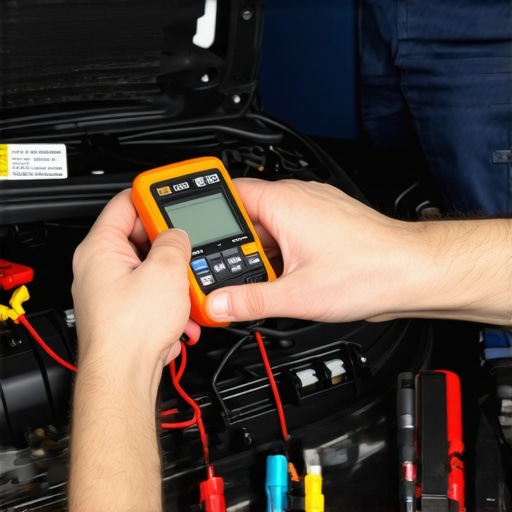
Don’t just start throwing parts at the problem. Set your multimeter to DC volts and check the connector leading to the motor. You are looking for a wire that has constant power even when the wiper switch is turned off (but the ignition is on). If that wire is dead, you have a wiring issue or a blown fuse, similar to how you’d track down weird electrical ghosts in other systems. I remember working on an old sedan where the drainage holes were clogged with leaves, turning the motor housing into an aquarium. I tried to dry it with a hair dryer—bad idea. It smelled like burnt toast for a week and I nearly melted the entire wiring harness. If the power is there, but the wipers still stall halfway, the internal park switch is definitely toast. I’ve found that using the same logic for how to find a parasitic battery drain with a simple multimeter works wonders here; consistency in testing is the key to avoiding a tune up that turns into an expensive disaster.
Check for Seized Mechanical Pivots
Sometimes the motor is screaming for help because it is fighting against years of accumulated rust and road salt. Those metal arms, known as the linkage, that connect the motor to the wiper studs can seize up over time. If they are stiff, the motor gets too hot and the internal circuit breaker trips, causing the blades to freeze mid-motion to prevent a fire. I once spent three hours thinking I had a bad transmission-level complex electrical issue, only to realize the pivot points were just bone dry and jammed with grit. A quick hit of penetrating oil and some white lithium grease solved it instantly. This isn’t just about convenience; it’s part of an essential car service routine that keeps your visibility sharp. If the linkage moves freely and the park wire has power, your motor’s internal gears are likely stripped.
Why You Should Never Force the Blades Manually
It is incredibly tempting to just grab the wiper arm and shove it down when it’s stuck directly in your field of vision. Resist that urge with everything you’ve got. The wiper motor uses a worm gear—think of it like a screw. You can turn the screw to move the gear, but you cannot push the gear to turn the screw without snapping something internal. If you force it, you’ll strip the plastic teeth inside the motor housing or bend the transmission arms. It’s the same kind of mechanical delicacy you find when a transmission struggles; one wrong move and a simple fix becomes a total replacement. If you’re stuck in the rain, it’s better to pull over safely or use a rain-repellent treatment than to destroy the entire assembly out of frustration. Identifying these mechanical limits is what separates a successful DIYer from someone who ends up at the shop with a much larger bill.
One of the most persistent myths in the DIY community is that a standard tune up is a catch-all for any weird vehicle behavior. In reality, these routine checks rarely touch the wiper cowl, leaving your visibility system to fend for itself until it literally freezes in your line of sight. Most people think that if the wipers move at all, the motor is fine and the problem must be a fuse. But here is the contrarian truth: a motor that stalls mid-wipe is often electrically ‘healthy’ but mechanically suffocating. When the internal grease in the transmission arms dries out or gets packed with road salt, the motor draws more current to overcome the friction. Eventually, it hits a thermal limit and shuts down to prevent a fire, only to ‘magically’ work again once it cools down. This is the same logic behind the one electrical fault that most mechanics misdiagnose as a dead battery; it is not a lack of power, but an inefficient path for it.
Stop Over-Greasing Your Linkage
The ‘Oops’ factor here is real. I’ve seen countless drivers try to fix a squeaking or stalling wiper by spraying thick, heavy grease or WD-40 directly onto the pivots. This is a massive mistake. Traditional WD-40 is a solvent, not a long-term lubricant; it will actually strip away what remains of the factory grease, leaving the metal-on-metal contact points to grind themselves into dust. Furthermore, if you use too much grease, it acts as a magnet for grit and sand. This creates a grinding paste that will wear out your plastic bushings in weeks. To avoid an expert auto repair bill, use a dry silicone spray or a very light application of white lithium grease only after you have cleaned the joints with a dedicated degreaser. It’s the small, nuanced details that prevent a simple maintenance task from turning into a nightmare.
Can a Dying Wiper Motor Actually Kill Your Battery Overnight?
Surprisingly, yes. If the internal park switch we discussed earlier fails in a specific way, it can create what we call a parasitic draw. Even with the keys out and the car locked, a damaged park circuit might keep trying to ‘find’ the home position, constantly pulling a small amount of amperage. This is exactly why how to find a parasitic battery drain with a simple multimeter is a skill every car owner should have. I once spent three days jump-starting a sedan before realizing the wiper motor was warm to the touch even though the car hadn’t been driven. It was a classic example of weird electrical ghosts caused by a failing internal contact point. A study by IMR Inc. (Automotive Research) highlighted that nearly 20% of component failures are misdiagnosed because technicians look at the symptom (a dead battery) rather than the hidden mechanical resistance causing the electrical load. Dealing with these nuances is what differentiates a quick fix from a permanent solution. Have you ever fallen into the trap of replacing a battery when the real culprit was a hidden motor or a grounded wire? Let me know in the comments below.
The Critical Role of the Body Control Module
In modern vehicles, the wiper switch is no longer a direct power line to the motor; it is a signal to the Body Control Module (BCM). This adds a layer of complexity to your essential car service. If your wipers are stopping mid-glass, it could actually be a software glitch or a failing BCM relay. Before you rip out the motor, try a ‘hard reset’ by disconnecting the battery for ten minutes. This can clear the logic in the BCM and sometimes resolve the ‘park’ issue without a single tool. If the problem persists, you are likely looking at the mechanical worm gear issues we mentioned earlier, which can mirror the symptoms of transmission-style gear slipping. Being analytical about these systems saves you from throwing money at parts that aren’t actually broken.
Maintaining your visibility isn’t just a seasonal chore; it’s a commitment to your safety. I’ve learned the hard way that ignoring the debris in your cowl is like leaving a ticking time bomb under your hood. If you want to maximize your car’s lifespan with regular tune-ups, you have to look beyond the oil dipstick. Every fall, I take five minutes to vacuum out the leaves and pine needles that settle in the wiper tray. It sounds trivial, but those drains are the only thing standing between a dry motor and a flooded electrical short. When those drains clog, water backs up and finds its way into the motor housing, leading to those weird electrical ghosts that drive most DIYers crazy. I personally swear by a three-pronged tool approach for these jobs. First, a set of nylon pry tools is non-negotiable. If you use a screwdriver to pop those plastic cowl clips, you will scratch your paint or crack the plastic. Second, a high-quality multimeter for tracing current. But the real ‘secret weapon’ in my kit is a Power Probe. It allows me to apply 12 volts directly to the motor leads to see if it moves independently of the car’s wiring. This one tool has saved me hours of guessing whether I’m dealing with a bad switch or a dead motor. This kind of diagnostic precision is what separates a backyard tinkerer from someone who provides expert auto repair level results.
How can I prevent these wiper failures from happening again?
The best way to maintain this system over time is to treat it with the same respect you’d give a transmission overhaul. It’s a complex mechanical linkage that needs clean movement. Every six months, I use a dedicated hydrophobic glass treatment. By reducing the friction between the rubber blade and the glass, you drastically lower the ‘load’ on the wiper motor. According to the technical documentation from Robert Bosch GmbH, reducing surface drag is one of the most effective ways to prevent motor armature burnout. Think of it as an essential car service for your visibility. Looking ahead, I suspect we are seeing the final generation of mechanical wiper blades. Tesla and other manufacturers have already experimented with electromagnetic ‘linear’ wipers and even ultrasonic glass that vibrates at high frequencies to shake water off. While those systems might eliminate the mechanical linkage failures we face today, they will undoubtedly bring their own software headaches. For now, focus on the basics. I want you to go out to your car today, lift the hood, and check those cowl drains. If they’re full of dirt, clear them out. It’s a zero-dollar fix that could save you a $400 motor replacement next month.
What Most Maintenance Manuals Forget to Tell You About Visibility
After years of turning wrenches, I’ve realized that the most common cause of wiper failure isn’t a bad motor—it’s neglect of the surrounding environment. If your blades are stuttering, you might actually be dealing with the hidden drain that kills your battery overnight. When moisture sits in a clogged cowl, it creates a constant high-humidity environment that corrodes internal contacts. Don’t fall for the marketing hype around the truth about high mileage oil additives when it comes to electrical systems; there is no ‘liquid fix’ for a corroded circuit board. Cleanliness is your only real defense.
- Always check the cowl drains first; water is the natural enemy of your wiper motor’s park switch.
- Listen for a ‘hum’—if you hear the motor but see no movement, your linkage has likely popped off its bushing.
- Never use heavy axle grease on wiper pivots; it attracts road grit that acts like sandpaper on your plastic components.
The Essential Kit for Chasing Electrical Ghosts
If you’re serious about DIY, you need more than just a socket set. I never touch a wiper system without my digital multimeter. Learning how to find a parasitic battery drain with a simple multimeter is a foundational skill that applies directly to testing your motor’s park circuit. I also recommend a set of nylon trim tools to save your paint and a can of dry silicone lubricant, which provides the necessary slickness without the mess of traditional grease.
Don’t Let a Drizzle Turn Into a Disaster
Taking the time to address these small mechanical quirks is the best way to maximize your car’s lifespan with regular tune-ups. Visibility is the one area of car maintenance where you cannot afford to take a ‘wait and see’ approach. By cleaning your cowl and testing your park circuit today, you’re ensuring that the next time the sky opens up, you’ll be driving with total confidence. Have you ever had your wipers freeze right in your line of sight during a storm? Let me know how you handled it in the comments below!