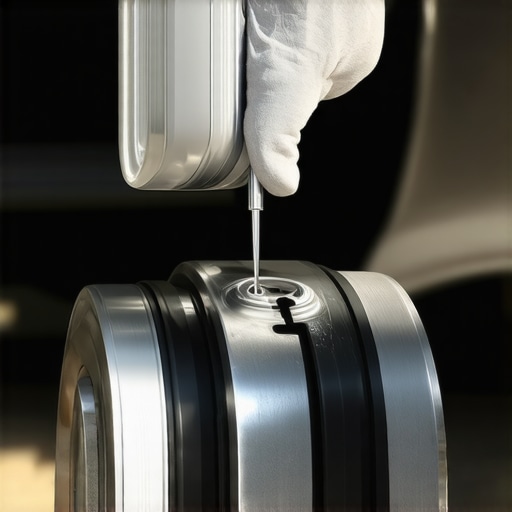
It happened every single Tuesday at exactly 6:15 AM. I’d hop into my sedan, shift into reverse, and let out a screech so piercing it likely woke up every toddler in a three-block radius. My neighbor, Dave, would literally pause his power-walk just to stare at my driveway with a look of pure pity. I was the guy with the screaming car—the one who clearly didn’t know how to handle basic maintenance. It’s a gut-wrenching sound that makes you feel like your wheels are about to fall off, even if you just had an expert auto repair done last month. But after years of tinkering and a few embarrassing failures, I’ve learned that the morning squeal is usually less about your car dying and more about a few simple physics tricks that you can fix in your own garage. Today, I’m going to walk you through why this happens and the exact steps I took to finally win back my dignity and stop that noise for good.
Stop Waking Up the Whole Neighborhood
Most people assume that a squeal means their brake pads are paper-thin and dangerous. While that is sometimes the case, the ‘morning-only’ squeal is a different beast entirely. Early in my DIY journey, I made the expensive mistake of replacing a perfectly good set of pads because I didn’t understand the role of moisture. I spent nearly $200 on parts and a whole Saturday under the car, only to hear the exact same screech the next morning. It was soul-crushing. I’ve realized that keeping up with regular tune-ups is vital, but sometimes you have to look closer at the small things, like the thin layer of surface rust that forms on your rotors overnight. This ‘flash rust’ is caused by humidity or dew, and as the National Institute for Automotive Service Excellence (ASE) points out, brake noise is frequently the result of high-frequency vibrations caused by environmental factors rather than component failure. We often over-complicate the problem when the solution is much simpler. Have you ever had a neighbor give you the ‘stink-eye’ because your car sounds like a freight train coming to a halt? It’s a common struggle, but we are going to fix it.
Is my car actually falling apart or is this normal?
This is the question that kept me up at night. If your brakes only squeal during the first two or three stops of the morning, you are likely dealing with humidity-induced vibration or ‘morning sickness.’ I’ve written about why your brakes squeal even with new pads, and it often boils down to how the hardware was lubricated during the last car service. If those metal-on-metal contact points aren’t buttered up with the right high-temp grease, they will vibrate like a guitar string every time moisture hits them. I learned the hard way that skipping the $5 tube of brake grease is the fastest way to turn a quiet car into a noisy nightmare. In the next section, I’ll show you the specific areas you need to check to distinguish between a harmless morning chirp and a real mechanical emergency.To figure out if you’re dealing with harmless moisture or a legitimate safety hazard, you have to pay attention to the ‘fade-out.’ If the screeching disappears after three stops at the end of your street, it’s just surface oxidation. Think of your brake rotors like an iron skillet left in the sink; they oxidize almost instantly when humidity hits. However, if the sound persists or your steering wheel shakes only when you hit the brakes, you’re likely looking at warped rotors or hardware that’s seized up. I remember one humid July morning in North Carolina where my brakes sounded like a banshee. I was so convinced my pads were gone that I pulled the wheels off in the pouring rain. To my surprise, the pads were practically new. That was the day I realized that noise doesn’t always equal wear; it often equals neglect of the moving parts. 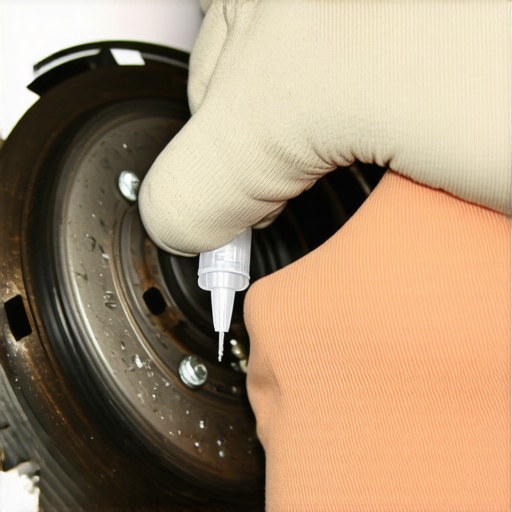
Master the Art of the Silent Stop
The secret to silence isn’t just buying expensive parts; it’s about proper lubrication. Most people treat a brake job like a Lego set—just snap the pieces in and go. But brakes are a high-frequency system. If you have metal rubbing against metal without a buffer, it vibrates. This vibration is the high-pitched sound that makes Dave the power-walker glare at your driveway.
Grease the Slide Pins or Pay the Price
The caliper slide pins are the unsung heroes of your braking system. They allow the caliper to center itself and apply even pressure. If these get dry or crusty, the pads drag against the rotor at a slight angle, creating that initial morning bite that wakes up the neighborhood. I once neglected these on an old SUV, and by the time I realized the issue, the friction had gotten so bad the engine fan ran after I turned the car off just to deal with the ambient heat radiating from the wheels. Pull the pins, wipe off the old gunk, and apply a fresh coat of silicone-based brake grease.
Check the Back of the Pads
Don’t just grease the pins. You need to apply a thin layer of anti-seize or a brake-quiet compound to the metal backing plate of the pads where they touch the caliper piston. This acts like a shock absorber for the squeal frequency. While you’re in there, look for signs of uneven wear. If one pad is paper-thin and the other looks new, your car pulls left only when you brake because the caliper is sticking.
Stop the Flash Rust Before it Starts
If your car sits for long periods, flash rust is inevitable, but you can minimize it. A simple regular tune-up often overlooks the condition of the brake dust shields. If these thin metal plates are bent and touching the rotor, the morning moisture makes the contact point even noisier. I spent twenty minutes once chasing a brake squeak only to find out it was a $10 metal clip that had slipped. Fixing it was as simple as the method you’d use to fix a rattling heat shield for free—just bend it back into place. It’s these small, zero-cost adjustments that often save you from an expensive expert auto repair bill.
The hidden nuance of auto repair is that silence isn’t always bought; it’s earned through precision. Most people believe that if a car makes a noise, a part must be replaced. I used to be the first person in line at the auto parts store, but I’ve since learned that ‘parts-cannon’ engineering is a trap. Sometimes, the most expensive expert auto repair isn’t about the hardware at all, but about understanding the friction coefficients and harmonic frequencies of your vehicle.
Why your new brake pads might still be screaming at you
Everyone tells you that new pads solve everything, but I’ve found that high-performance pads can actually be noisier if they aren’t ‘bedded’ properly. This is the contrarian truth: sometimes the ‘better’ the part, the more finicky it becomes. When you install new pads, you have to transfer a layer of friction material onto the rotor through a series of controlled stops. If you skip this, you get ‘uneven transfer,’ which leads to that rhythmic thumping or high-pitched squeal. It’s not a defect; it’s a failure of process. I’ve seen people demand a refund for a car service because of noise, not realizing they just glazed their rotors by braking too gently during the first fifty miles. Have you ever fallen into this trap? Let me know in the comments.
Is your transmission tricking you into thinking your brakes are failing?
This is where things get sophisticated. Sometimes that vibration you feel when slowing down isn’t the rotors at all—it’s your transmission downshifting poorly. If you find that your transmission slips when the engine is cold or jerks as you come to a halt, the physical sensation can mimic a warped brake rotor. According to research from the Society of Automotive Engineers (SAE), high-frequency brake squeal is often exacerbated by chassis resonance, which can be triggered by engine or transmission mounts that have lost their dampening ability. If your mounts are shot, every little vibration from the brakes is amplified through the frame like a megaphone. This is why a regular tune-up should involve a pry-bar test on your rubber mounts, not just a fluid check.
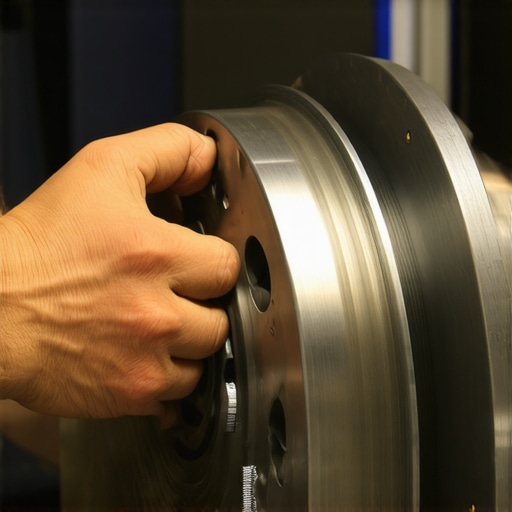
The biggest ‘oops’ factor I see with advanced DIYers is the over-cleaning of the hub surface. While you want the rust gone, if you use a heavy-duty grinding disk and take off even a fraction of a millimeter of the actual metal hub, you’ve just introduced ‘lateral runout.’ This means your rotor will never sit perfectly flat, and you’ll have a permanent pedal pulse that no amount of new parts will fix. If the vibration is coupled with strange shifting patterns, it might be time to look into how transmission overhauls save you money in the long run by preventing collateral damage to your drivetrain. Always remember: in the world of high-end maintenance, ‘clean enough’ is usually better than ‘sanded into oblivion.’ Before you assume a shop is being dishonest, learn how to tell if a transmission shop is lying about a rebuild so you can speak their language and ensure you’re getting a true fix, not just a shiny new part on a dirty hub.
The tool kit that actually saves your knuckles
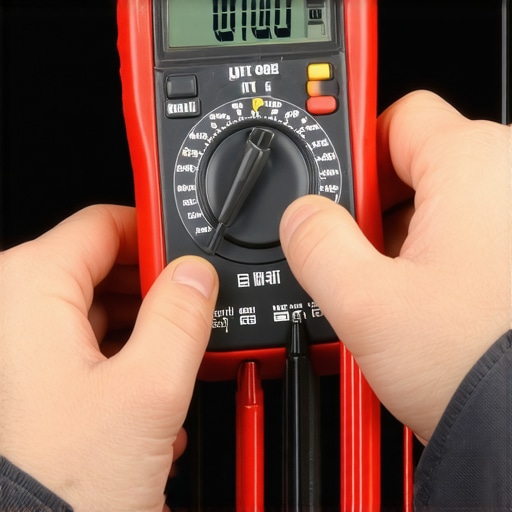
I used to think a massive 500-piece chrome socket set was the mark of a pro. I was wrong. Over time, I’ve realized that 90% of my successes come down to three specific items: a high-quality torque wrench, a digital multimeter, and a graphing OBD-II scanner. Why these? Because they remove the guesswork that leads to broken bolts and wasted parts. For example, when my lights flickered last winter, I didn’t just buy a new alternator. I learned how to find a parasitic battery drain with a simple multimeter and discovered a tiny glovebox light that refused to turn off. This level of precision is what separates a backyard tinkerer from someone performing a professional-grade car service. You aren’t just replacing parts; you’re verifying the health of the entire system before a single bolt is turned.
How do I keep my car running like new for decades?
Sustainability in auto repair is about proactive fluid chemistry and heat management. Most people wait for a puddle to appear on the driveway before they act, but sticking to a strict schedule to maximize your cars lifespan with regular tune-ups is significantly cheaper than an emergency engine swap. If you want your vehicle to hit the 300,000-mile club, you have to look at the ‘lifeblood’ of the machine. I’m a huge advocate for transmission fluid analysis. While some manufacturers claim ‘lifetime’ fluids, the Bosch Automotive Handbook (11th Edition) clarifies that fluid degradation is inevitable under extreme thermal load and shear stress. This is why understanding how transmission overhauls save you money in the long run is critical; it’s about refreshing the internal friction materials and seals before they disintegrate and clog your valve body. Looking ahead, I predict that consumer-grade car maintenance will shift toward predictive AI models where your phone alerts you to a failing water pump based on subtle acoustic changes before it actually leaks.
Stop guessing and start measuring
If you really want to scale your DIY skills, you need to master ‘live data’ diagnostics. Don’t just read the error codes; look at the fuel trims and oxygen sensor voltages while the engine is under load. It sounds intimidating, but it is the only way to catch an issue before you are stuck on the side of the road needing an expert auto repair. I recently worked on a sedan that felt slightly sluggish—no check engine light, just a minor hesitation during acceleration. By checking the live data, I saw a lean condition caused by a microscopic vacuum leak. I could have easily spent $400 on new sensors and a fuel pump, but a $5 smoke test found the crack in a plastic line. If you’re dealing with annoying vibrations, remember that sometimes it’s as simple as knowing how to fix a rattling heat shield for free rather than replacing a whole exhaust system. My challenge to you: go pop your hood today and use the trick to cleaning battery corrosion with baking soda and water. It is a five-minute job that prevents a thousand-dollar electrical headache later.
The Hardest Lesson I Learned While Chasing Ghost Noises
After years of working on my own vehicles, I’ve realized that the most common mistake isn’t using the wrong tool, but having the wrong mindset. We often listen to a noise and jump to the most expensive conclusion. I once spent three days trying to fix a transmission shudder, convinced I needed to learn how to tell if a transmission shop is lying about a rebuild, only to find out it was a loose bolt on an exhaust bracket. Here are the truths that changed everything for me:
- Don’t ignore the electrical foundation: Many mechanical symptoms are actually electrical failures. I’ve seen cars that felt like they were stalling because of the hidden ground strap that causes weird electrical ghosts. If the engine doesn’t have a solid path to ground, your sensors will lie to you.
- Safety isn’t just about sound: A squeal is annoying, but some silence is deadly. I learned to look past the noise and check for the sign your ball joints are about to snap, which is often just a subtle clunk you can barely hear over the radio.
- Precision beats power: Tightening a bolt ‘until it’s tight’ is a recipe for a snapped stud. Buying a torque wrench changed my life and saved me from dozens of expert auto repair visits.
The Essential Toolkit for Reclaiming Your Driveway
If you’re serious about stopping that morning screech and maintaining your own ride, you don’t need a professional shop, but you do need these three things. First, a high-quality silicone brake lubricant—never use petroleum-based grease on rubber boots! Second, a digital multimeter so you can master how to find a parasitic battery drain with a simple multimeter when your car won’t start on a cold morning. Finally, I highly recommend keeping a copy of your vehicle’s specific factory service manual. It contains the exact torque specs and diagnostic flowcharts that the pros use.
#IMAGE_PLACEHOLDER_E#
Take the First Step Toward a Quieter Ride
Working on your own car is about more than just saving money; it’s about the peace of mind that comes from knowing exactly how your machine works. Whether you are performing a regular tune-up or tracking down a mysterious vibration, remember that every expert was once a beginner with a squeaky driveway. If you ever feel in over your head, don’t hesitate to reach out or contact us for guidance. You have the tools and the knowledge—now it’s time to get your hands dirty and win back your dignity from neighbors like Dave. Have you ever had a car noise that completely stumped you for weeks? Let me know in the comments below!