
I remember one particularly brutal morning in Charlotte when I thought my SUV was officially toast. I put it in reverse to back out of the driveway, and nothing happened for a solid three seconds. When it finally engaged, it did so with a bone-shaking jolt. My heart sank. I was already envisioning the bill for a transmission overhaul. But by the time I reached the local coffee shop, the shifts were as smooth as silk. This wasn’t a fluke; it was a lesson in how heat transforms the way your car handles. Today, I’m going to pull back the curtain on why your transmission seems to have a mood swing once the engine warms up, and why that clunk might not be the death sentence you fear.
The Secret Life of Transmission Fluid Under Heat
Automatic transmission fluid is a bit like honey. When it is cold, it is thick and sluggish, making it incredibly hard for the internal pumps to move it through the tiny, intricate passages of your valve body. If you have ever felt that your automatic transmission stays in first gear too long when you first pull out of the driveway, you are experiencing fluid resistance. According to technical data from the Society of Automotive Engineers (SAE), the viscosity of ATF can vary by as much as 1,000 percent between a cold start and its ideal operating temperature. When the fluid is cold, the clutches do not grab as quickly, and the pressures are not high enough to snap those gears into place. This is also why your transmission slips when the engine is cold but grips perfectly once you have driven a few miles. I used to think I could fix this by just adding more fluid—a classic rookie mistake. I ended up overfilling it, which caused the fluid to foam up and almost burned out my clutches. It turns out, I just needed to give the car ten minutes to wake up.
Does This Mean Your Transmission is Secretly Failing?
This is the big question every neighbor asks me over the fence. If it needs heat to work right, is it broken? Not necessarily. While some symptoms, like when a transmission grinds when shifting into reverse, indicate mechanical wear, a slightly firmer shift during the first two minutes of a drive is often just physics at work. However, ignoring the basics can lead to real trouble. I always tell people that regular tune-ups are the best insurance against actual failure. If your fluid is old and dirty, its ability to flow when cold is even worse. Have you ever felt that terrifying moment where your car feels like it is neutralizing between gears on a winter morning? Drop a comment or reach out if you have faced that particular panic attack.
Stop Blaming Your Gearbox for Cold Morning Jitters
Before you rush out to look for an expert auto repair shop, you need to understand the warm-up phase of your vehicle’s brain. Modern cars have a Transmission Control Module (TCM) that actually changes the shift points when the fluid is cold to help the engine reach operating temperature faster. It is a feature, not a bug. By keeping the car in a lower gear longer, the engine works a bit harder, generating the heat needed to protect the system. I did not realize this until I spent a weekend digging through service manuals after a particularly rough summer drive that turned into a cold autumn nightmare. Once I understood the logic behind the computer’s decisions, I stopped stressing and started focusing on proper maintenance instead. We are going to dive into exactly how you can tell the difference between normal cold behavior and a looming repair bill in the next section.
Get Your Hands Dirty Before Calling the Shop
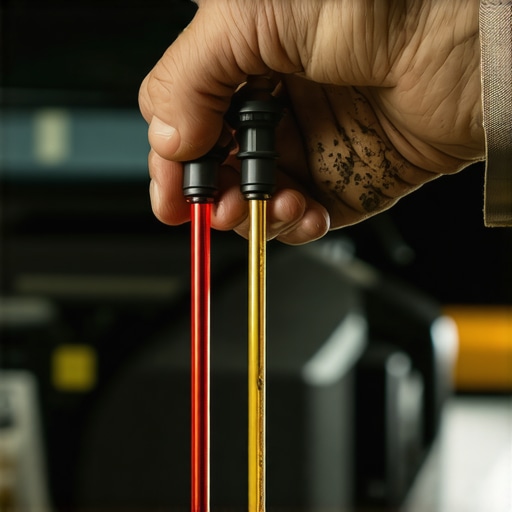
The very first thing you need to do is verify the health of your transmission fluid. Most people check it while the engine is cold and off, which is the exact opposite of what you should do for most automatic vehicles. I remember helping a friend with an old sedan that wouldn’t move until it sat for fifteen minutes. We pulled the dipstick while it was running and the fluid was thick, black, and smelled like burnt toast. It was a clear sign that regular tune-ups had been ignored for years. To do this right, park on a level surface, let the engine reach operating temperature, and keep it idling. Pull the dipstick, wipe it, reinsert it, and check the level. If it is low, you have a leak. If it is dark or gritty, you have internal wear that heat is currently masking.
Spot the Strawberry Milkshake Disaster
While you are looking at that dipstick, pay attention to the color. Transmission fluid should be a translucent cherry red. If you see something that looks thick and opaque, you might be facing a situation where the reason your engine coolant looks like chocolate milk is actually a failure in the radiator’s internal cooler. This cross-contamination is a transmission killer. I once saw a truck where the owner ignored a slightly high temp gauge for a week; by the time he realized the coolant and ATF had swapped spit, the clutches had literally dissolved. If your fluid looks like a pink milkshake, do not drive another mile. You are no longer looking for a simple fix; you are in the territory of top signs your car needs expert auto repair now before the entire unit seizes up.
Use Your Ears and a Cheap Scanner
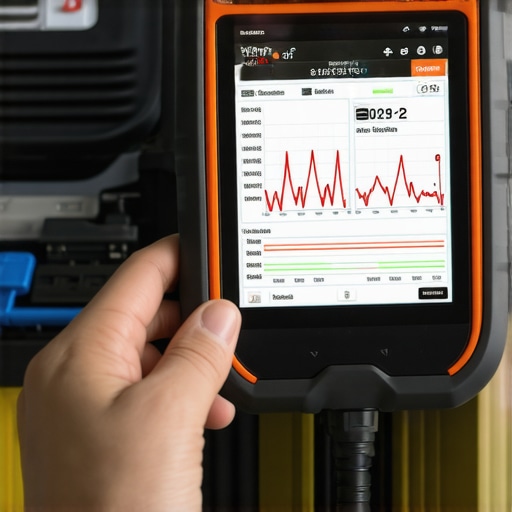
You do not need a thousand-dollar diagnostic tool to see what your car is thinking. A basic OBD-II scanner can show you the real-time temperature of your transmission fluid. If your shifts only smooth out at exactly 150 degrees Fahrenheit, you know the mechanical tolerances are shifting with the heat. While you are at it, check for stored codes even if the check engine light is off. Sometimes the computer knows why your transmission slips when the engine is cold and has flagged a specific solenoid. I once spent three hours hunting for a mechanical clunk only to find a ‘P0751’ code hidden in the memory. It turned out to be a $20 part that was sticking when cold but moved freely once the metal expanded.
Practice the Two-Minute Drill
If your fluid is clean and the levels are perfect, but it still feels wonky on a January morning, adopt the two-minute drill. Start the car and move the shifter through every position—Park to Reverse, Neutral to Drive—holding each for five seconds. This manually cycles the fluid through the valve body and wakes up the seals. I started doing this after my SUV began that three-second delay I mentioned earlier. It’s like stretching before a sprint; it ensures the fluid is pressurized and ready to work before you put the gearbox under a heavy load. It is one of those essential car service tips that applies just as much to the cold months as it does to the heat of July. By the time you pull out of your neighborhood, the system is primed and the shifts will feel intentional rather than accidental.
Most drivers believe that if their owner’s manual says ‘Lifetime Fluid,’ they never need a regular tune-up for the gearbox. This is one of the most dangerous myths in the automotive industry. According to data from the Automatic Transmission Rebuilders Association (ATRA), fluid breakdown is the leading cause of nearly 90% of all transmission failures. In reality, ‘lifetime’ usually refers only to the duration of the factory warranty, not the actual 200,000-mile life of the vehicle. If you want to avoid a premature trip to the shop, that fluid needs to be swapped despite what the marketing materials suggest.
The Flush Trap That Destroys High-Mileage Gears
Here is the ‘oops’ factor I see most often: the high-pressure transmission flush. Many shops push this service because it is fast and highly profitable. However, if your car is already showing top signs your car needs expert auto repair, a pressurized flush can be a death sentence. The high pressure can force metal shavings and clutch debris into the tiny, intricate passages of the valve body, clogging them instantly. I’ve seen perfectly drivable cars leave a shop on a flatbed because a flush dislodged gunk that was better left undisturbed. Instead, I always recommend a simple ‘drain and fill.’ It is a gentler process that allows a technician to inspect the pan and magnets for signs of catastrophic wear. This distinction is a cornerstone of essential car service tips that many chain shops simply ignore in favor of speed. 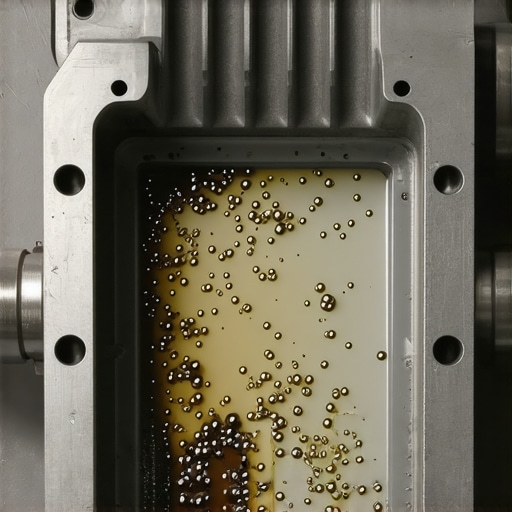
Is Your Mechanic Misdiagnosing a Simple Sensor as a Total Failure?
I cannot count how many times I have seen people quoted for a full rebuild when the actual problem was purely electrical. If you notice that your transmission slips when the engine is cold, it might not be a mechanical failure at all, but rather a faulty Input Speed Sensor or a sticking solenoid. When the computer receives an erratic reading, it often defaults to ‘Limp Mode,’ which feels like the transmission has completely given up. Before you commit to the high cost of how transmission overhauls save you money in the long run, insist on a diagnostic that looks at real-time sensor data. I have had readers save thousands simply by replacing a $20 part that was causing the computer to miscalculate shift timing. Another nuance many miss is the ‘Additive Trap.’ Many owners try to fix a mechanical slip with a bottle of ‘stop-leak’ or friction modifier. While these can provide a temporary fix, they often contain chemicals that swell rubber seals. Over time, this makes the seals brittle, ensuring that when the transmission finally fails, it fails completely. Have you ever fallen into this trap of trying a ‘magic bottle’ fix only to have it backfire on you? Let me know in the comments.
Grab These Tools Before You Touch a Wrench
If you are serious about DIY diagnostics, you have to move beyond the cheap code readers that only tell you why the check engine light is on. I personally swear by the Autel MaxiCheck or a high-end BlueDriver Bluetooth dongle. Why? Because they allow you to access the transmission’s ‘Adaptive Learn’ data. As clutches wear down, the computer compensates by increasing line pressure or changing the timing of the shift. If you perform a fluid swap but don’t reset these adaptives, the car will still shift as if it’s dealing with old, burnt fluid. I learned how to read live data to find a misfire years ago, and applying that same logic to transmission solenoids is what saved me from a $4,000 repair bill last spring. Watching the duty cycle of a solenoid in real-time tells you if the part is physically sticking or if it is just waiting for the fluid to hit the right viscosity.
How can I keep my transmission alive for 300,000 miles?
The secret isn’t a magic chemical; it’s thermal management. Heat is the number one killer of automatic gearboxes. I always recommend installing an auxiliary transmission cooler, especially if you live in a place like Charlotte where stop-and-go traffic in July is a daily ritual. Think of it as a the 10 tool that saves your engine from overheating but for your gearbox. For those looking for long-term results, I also suggest dropping a neodymium magnet into the transmission pan during your next service. It catches the microscopic steel particles that the stock magnet misses, preventing them from sandblasting your valve body. This kind of proactive maximize your cars lifespan with regular tune-ups is what separates a car that hits 100k from one that hits 300k without an overhaul.
The Shift Toward Digital Drivetrains
Looking ahead, we are seeing a massive trend toward ‘software-defined shifting.’ In many modern vehicles, the ‘clunky’ feeling isn’t even a mechanical issue anymore—it is a software glitch. Manufacturers like Ford and GM are increasingly using over-the-air updates to fix shift logic. According to technical documentation from ZF Aftermarket, one of the world’s largest transmission manufacturers, following a strict service interval of 60,000 to 80,000 miles is non-negotiable, regardless of what the dealership’s ‘lifetime’ claim says. As we move into hybrid and electric systems, the role of a traditional top signs your car needs expert auto repair now will shift from gear-grinding to cooling-system management and inverter health. Even if you don’t plan on doing the work yourself, knowing these essential car service tips makes you a far more dangerous customer at the repair counter. You’ll know exactly how transmission overhauls save you money in the long run when they are actually necessary, versus when a simple solenoid swap will do. My advanced tip for you this week: grab a Bluetooth OBD-II adapter and log your transmission fluid temperature during your next 20-minute drive. If it stays above 220 degrees, you have a cooling problem that needs to be addressed before you lose the whole unit.
The Hard-Earned Truth About High-Temperature Shifting
After years of turning wrenches and saving my own vehicles from the scrap heap, I’ve realized that most transmission panic is avoidable. First, stop treating your transmission like a static piece of metal; it’s a living, breathing hydraulic system that responds to environmental changes. Second, the computer is often smarter than your right foot—trust the warm-up cycle to do its job before you demand heavy performance. Third, never assume a heavy clunk means a four-figure bill. I once nearly sold a truck for parts because I thought the gears were shredded, only to find a loose ground wire was confusing the shift solenoids. Patience and a $20 diagnostic tool are often your best friends when things feel slightly off in the morning.
#IMAGE_PLACE_HOLDER_E#
My Go-To Kit for Keeping Gears Turning
I don’t leave my driveway without a few specific tools that help me verify what’s happening under the hood. I highly recommend the BlueDriver OBD-II scanner because it reads transmission-specific codes and live data that basic readers often miss. For those who want to get serious about DIY maintenance, keep a bottle of high-quality synthetic ATF on hand for emergencies—but only use it if you’ve verified your levels while the engine is running and at temperature. Lastly, I always check the essential car service tips provided by technical associations like ATRA to stay updated on modern fluid requirements. These resources transform you from a worried driver into a confident owner who knows exactly what’s happening beneath the floorboards.
Stop Fearing the Shift and Start Driving
You don’t need to be a master mechanic to protect your investment. By simply paying attention to how your car reacts to the morning air and staying consistent with a regular tune-up, you can easily double the life of your gearbox. Remember, heat isn’t just a byproduct of driving; it’s the lifeblood of your transmission’s performance. Don’t let a cold morning scare you into a premature repair or an unnecessary transmission overhaul. Instead, use that time to let your fluid reach its peak potential. If things still feel wonky after twenty minutes on the road, knowing the top signs your car needs expert auto repair now will give you the upper hand when you finally do walk into a shop. Your car takes care of you; a little warmth is the least you can give it in return.
Have you ever had a transmission problem that miraculously “fixed itself” once the engine warmed up? Tell me your story in the comments below—I’d love to hear how you handled it.