
I’ll never forget the rainy Tuesday I nearly ended up in a ditch because my steering wheel decided to pick a fight with me. I was merging onto the I-77, gave the engine a little extra juice to match traffic speed, and suddenly, my sedan yanked to the left like it had a grudge against the fast lane. My knuckles went white. I’d spent years telling myself that a little “character” in a car’s handling was fine, but that moment was a wake-up call. If your car is pulling to the left every time you step on the pedal, you aren’t just imagining it, and you certainly shouldn’t ignore it. It’s a visceral, unsettling feeling that turns a routine commute into a high-stakes wrestling match.
Why Your Steering Wheel Has a Mind of Its Own During Acceleration
Early in my DIY days, I made the classic mistake of thinking a pull only happened because of bad alignment. I spent money on a professional shop alignment only to find my tires still wore unevenly and the pull persisted under load. The truth is, when your car veers specifically during acceleration, you’re often dealing with something more complex than just a crooked wheel. It could be “torque steer,” a worn-out suspension component, or even a dragging brake caliper. We are going to dig into the grease and find out exactly what’s causing that tug so you can get back to driving with one hand—figuratively speaking, of course.
Is this pull actually dangerous or just annoying?
You might be tempted to just “compensate” by holding the wheel tighter, but that’s a band-aid on a bullet wound. According to the National Highway Traffic Safety Administration (NHTSA), steering and suspension failures are leading contributors to loss-of-control crashes. Ignoring a pull can lead to a catastrophic failure of parts like your tie rods or control arms. Have you ever felt that sudden, sharp jerk to the side and wondered if your car was about to fall apart? You aren’t alone, and that fear is your car’s way of telling you it needs an expert auto repair assessment before things get expensive.
The Usual Suspects Behind the Leftward Lean
The most common reason for this specific “pull-under-power” is often related to your tires or your front-end geometry. If you haven’t checked your air lately, you might be surprised. I’ve seen cars pull hard just because one front tire was five PSI lower than the other. But if your pressures are fine, we need to look at the signs your ball joints are failing. When these joints get sloppy, the force of acceleration shifts the wheel’s position, causing that annoying veer. Sometimes, the issue is buried even deeper, requiring you to understand how transmission health affects power delivery. If one side of the drivetrain is receiving more resistance than the other, the car will naturally pivot toward the path of least resistance. Let’s break down the diagnostic steps so you can stop guessing and start fixing.
Start With the Simple Variables First
To stop the tugging, we start with the simplest variable: the air in your tires. Think of your tires like the legs of a sprinter; if one shoe is flatter than the other, they aren’t going to run in a straight line. I once spent an entire Saturday afternoon tearing apart a front-end assembly only to realize my front-left tire was down 8 PSI. It felt like the car was trying to dive into the gutter every time I hit the gas. Before you assume the worst, check your pressures. Even if your dashboard isn’t screaming at you, you should know how to tell if your tire pressure sensor is actually broken because a faulty reading can lead you down a very expensive rabbit hole. If the pressure is perfect, look for uneven tread wear. If one tire is bald on the inside edge, that’s a massive red flag.
Why Sloppy Joints Sabotage Your Steering
When you accelerate, the engine sends force through the drivetrain to the wheels. This force wants to push the wheels forward, but if your suspension components have even a millimeter of ‘play’ or wiggle room, that force will shift the wheel out of alignment. This is usually where the signs of dangerously loose ball joints come into play. Imagine a hinge on a door that’s missing a screw; the door might stay shut when you’re still, but as soon as you try to swing it open, it sags and scrapes the floor. That’s exactly what your control arm does when the ball joint or bushing is shot. 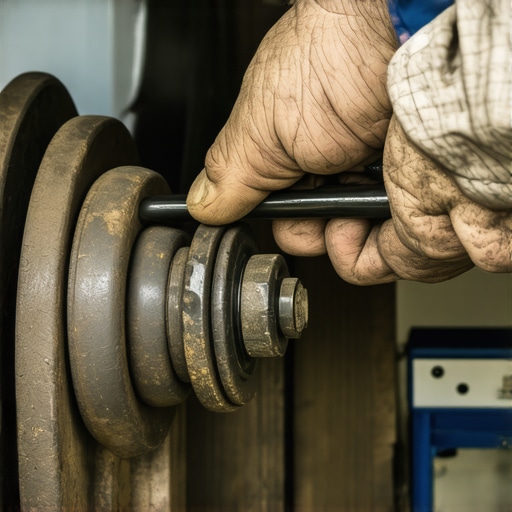
The Secret Role of Your Drivetrain and Torque Steer
If your suspension is tight, we have to talk about torque steer. In front-wheel-drive cars, the driveshafts (CV axles) are often different lengths. Because of the physics of rotating mass, the engine can actually ‘twist’ the car toward one side more than the other. However, if this pull just started recently, it’s likely a mechanical failure rather than a design quirk. I remember a client who swore his car was haunted because it only pulled left on uphill climbs. It turned out his transmission was hunting for the right gear because of a fluid issue, which created uneven power delivery. This is a prime example of why you must maximize your car’s lifespan with regular tune-ups; a healthy engine and transmission ensure that power reaches both wheels equally.
How to Spot a Failing CV Joint or Bearing
Sometimes the pull is accompanied by a sound. If you hear a rhythmic clicking when you turn, you need to learn how to spot a bad CV joint before it snaps. A seized or binding joint creates resistance on one side of the car, forcing the other side to do more work and causing that veer to the left. I once misdiagnosed a pulling issue on my old hatchback as an alignment problem, ignoring a faint growl from the wheel well. Two weeks later, I was stuck on the shoulder because that ‘growl’ was a bearing that finally welded itself shut. Learning how to diagnose a bad wheel bearing by sound alone could have saved me a $200 towing bill and a lot of pride. If you’re feeling a vibration along with the pull, don’t wait for the part to fail completely.
Stop Blaming the Alignment for Every Steering Tug
Most drivers assume that if a car drifts, the wheels are simply crooked. In my years under the hood, I’ve seen thousands of dollars wasted on repeat alignments when the real culprit was dynamic load. Everyone says to start with the alignment rack, but in my experience, a ‘pull-under-power’ is rarely about static angles. It’s about how the car reacts to torque. When you hit the gas, the engine’s rotation tries to twist the entire chassis. If your bushings are soft or your engine mounts are sagging, that torque isn’t contained—it translates into a physical shift in the front-end geometry. This is why you might see top signs your car needs expert auto repair now even if the car drives straight as an arrow while coasting. Have you ever fallen into this trap? Let me know in the comments.
Can a transmission fault actually mimic a bad alignment?
Let’s dig deeper into the ‘Oops’ factor that catches even seasoned DIYers: the transmission. If your internal seals are failing or the fluid is degraded, you might experience uneven power distribution through the differential. When one side receives even 5% more torque than the other, the car will pivot toward the weaker side. If you notice that your transmission feels like its neutralizing or slipping during these pulls, you aren’t looking at a steering issue; you’re looking at a drivetrain imbalance. A study by the Society of Automotive Engineers (SAE) confirms that parasitic drag in a failing CV joint or differential can induce up to 15 lbs of steering wheel ‘tug’ under heavy acceleration, completely independent of wheel alignment.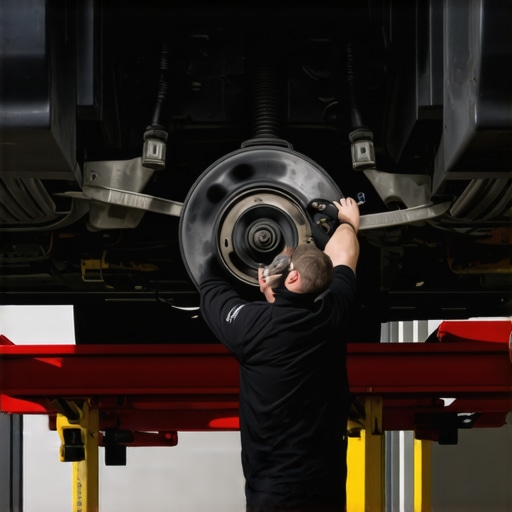
The Single-Sided Repair Trap You Need to Avoid
The biggest mistake I see is the ‘one-side-at-a-time’ philosophy. If you find one bad part and replace it, you’ve only solved half the problem. For instance, if you identify dangerously loose ball joints on the left side and replace only that one, you’ve created a ‘stiffness’ imbalance. The new, tight joint will resist movement differently than the 100,000-mile-old joint on the right. Under the stress of acceleration, the car will naturally pull toward the side with more ‘give.’ To maintain a true line, you must treat your front end as a single ecosystem. This is why I always tell people to maximize your car’s lifespan with regular tune-ups that include a holistic inspection of both sides of the drivetrain. Professional transmission overhauls save you money in the long run because they address these symmetry issues before they destroy your tires or cause a loss of control on the highway. Don’t just fix the noise; fix the balance.I’ve spent a lot of money learning that a cheap wrench is often the most expensive thing you can buy. When you’re trying to diagnose why a car yanks left under load, you need precision, not a ‘good enough’ attitude. I personally swear by a digital dial indicator for checking hub runout and a high-quality OBDII scanner that reads live chassis data. These aren’t just for pros; they are the only way to see what’s happening while the wheels are actually turning. If you’re serious about your DIY game, you need to maximize your car’s lifespan with regular tune-ups that go beyond just oil and filters. You need to look at the health of your bushings and the internal state of your gearbox. In fact, seeing how transmission overhauls save you money in the long run is usually the turning point for most owners who realize that steering and power delivery are two sides of the same coin.
How can I keep my steering straight for years?
The secret to long-term stability is consistency. Most people wait for a ‘thud’ or a ‘pull’ to check their suspension, but the damage is already done by then. I recommend a ‘symmetry check’ every 5,000 miles. This isn’t just an alignment; it’s a physical inspection of every rubber boot and mounting point. You should check if you have dangerously loose ball joints by using a pry bar to check for vertical movement—not just a visual inspection. As noted in technical bulletins from ZF Aftermarket, even a minor deflection in the control arm bushings can cause ‘dynamic toe-out’ during acceleration, which is invisible on a standard alignment rack but feels like a wrestling match on the road. Following essential car service tips for safe summer drives, like inspecting your CV boots for grease leaks, can prevent the drivetrain resistance that causes these pulls in the first place. Stop looking at your car as a collection of separate parts and start seeing it as a single, pressurized system. We are moving toward a future where electromechanical steering racks will use ‘Active Pull Compensation’ software to hide these mechanical flaws automatically. While that sounds convenient, it’s actually a nightmare for safety because it masks the top signs your car needs expert auto repair now until the part fails catastrophically. My advice? Don’t let the computer lie to you. Every six months, perform a ‘dry park test’: have a friend rock the steering wheel back and forth while you’re underneath (safely on stands) feeling for even the slightest vibration in the tie rods. This five-minute check is the ultimate advanced tip to catch a pull before it ruins a set of $800 tires. If you notice any weirdness, don’t hesitate to contact us for a professional opinion before the problem scales.
Hard Truths I Learned While Wrestling My Steering Wheel
Over the years, I have realized that many drivers and even some novice mechanics fall into the same traps when a car starts veering under load. My first big lesson was that symmetry is everything. If you replace a component on the left, you must replace it on the right; an imbalance in part age is often worse than having two old parts. Secondly, I learned that heat is a diagnostic tool. If one side of your car is pulling, feel the wheels after a drive. A hot wheel often points toward a dragging brake or a failing bearing that is creating resistance. Finally, never trust your eyes alone. A bushing might look solid but can deflect significantly under the actual torque of acceleration. This is why you must maximize your car’s lifespan with regular tune-ups that prioritize a physical load test of the suspension.
The Short List of Tools That Saved My Sanity
Precision diagnostics require more than just a standard wrench set. To truly master your car’s front-end geometry, I recommend keeping these in your garage: a high-quality digital tire pressure gauge for pinpoint accuracy, a dial indicator to check for hub runout, and a sturdy pry bar for testing bushing play. I also swear by a dedicated service manual for your specific vehicle. These manuals provide the exact torque specs that prevent you from over-tightening new components. If you find that the mechanical side is too complex, recognizing the top signs your car needs expert auto repair now will save you from a major breakdown. Having the right tools means you stop guessing and start solving.
#IMAGE_PLACEHOLDER_E#
You Can Fix the Pull and Keep Your Peace of Mind
Driving should not be a battle of strength between you and your steering wheel. By taking a systematic approach—checking pressures, inspecting for symmetry, and ensuring your power delivery is balanced—you can reclaim the smooth, effortless ride your car was designed for. Remember that an investment in maintenance today prevents a catastrophe tomorrow. Whether it’s a simple adjustment or realizing that transmission overhauls save you money in the long run by protecting your drivetrain, your proactive care is what keeps you safe on the road. Don’t be afraid to get your hands dirty, and if you ever hit a wall, feel free to contact us for guidance. Have you ever found a tiny tire pressure difference was the culprit behind a massive pull? Let me know in the comments below!