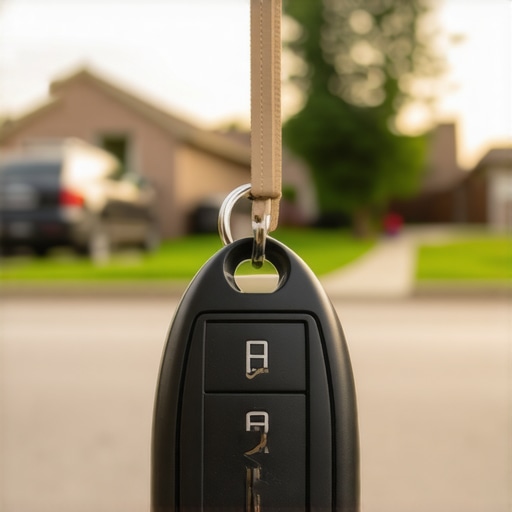
I remember the moment it hit me. I was standing by my car, fumbling with my keys, desperately trying to unlock the door. No matter how much I pressed the button, nothing happened unless I was nearly touching the car. Frustration bubbled up—I felt like I was in some kind of comedy skit. That’s when I realized I wasn’t alone in this struggle; many car owners face the same perplexing problem.
Decoding the Mystery of Your Short-Range Key Fob
This frustrating scenario is more common than you might think. If your key fob only works within a limited distance—say, three feet or less—it’s not just a nuisance; it could be a sign of underlying issues that, if left unaddressed, might leave you stranded. The good news? You can often solve this problem yourself, saving time and money on unnecessary replacements or repairs.
Is Your Key Fob Really Worth the Hype? Discover What You’re Overlooking
Early in my car-owning days, I mistakenly believed I needed a new key fob or a costly battery replacement every time signals weakened. Turns out, I was overlooking simple factors like interference from other electronic devices or even the position of my car relative to nearby objects. One mistake I made was ignoring my car’s manual, which contains vital information about the optimal way to replace your battery and troubleshoot signal issues—an easy way to avoid unnecessary expense. If you’re unsure, check out this guide on signs your vehicle needs professional attention.
So, why does your key fob seem to have a mind of its own? And more importantly, how can you restore its full range? Let’s dive into the common causes and straightforward solutions that can bring your remote range back to life, enabling you to unlock your car from across the parking lot again. Ready? We’re about to uncover the secrets behind that three-foot range limit and how to fix it once and for all.
」}#}#|create_posts|>היי! בשקף זה כתבתי את ההקדמה של פוסט הבלוג שלך בנושא
Check for Obvious Obstructions and Interference
Start by ensuring there are no objects blocking your key fob’s signal, such as thick metal structures or electronic devices like nearby routers or cordless phones. I once tried unlocking my car in a crowded mall parking lot, only to realize that other electronic devices nearby were causing interference. Moving to a different location cleared the signal, and I could unlock the car from a greater distance. Think of it like a walkie-talkie: obstacles and interference cut down the range significantly.
Replace the Key Fob Battery Correctly
Open the Fob Carefully
Use a small flat tool or your fingernail to pry open the fob casing at the seam. Be gentle—forcing it apart might damage the plastic. Once open, remove the old battery. My first attempt broke a tab because I used too much force, so proceed carefully. Check the battery type—most key fobs use CR2032 or similar coin cells—before purchasing a replacement. This step is like changing a watch battery: simple but crucial for reliable signal transmission.
Ensure Proper Installation
Insert the new battery with correct polarity—usually positive side up. Press it firmly into place and reassemble the fob. Sometimes, if the battery isn’t seated properly, the signal weakens. I once misplaced the battery slightly and wondered why my range stayed poor; once properly set, everything improved. This step guarantees a solid power source for the internal circuits.
Reprogram Your Key Fob
If replacing the battery alone doesn’t restore full range, reprogramming might be necessary—especially if you’ve replaced the battery recently. For most vehicles, this involves turning the ignition on and off, pressing certain buttons, or following a specific sequence outlined in your car’s manual. When I first tried this on my car, I thought I needed a new fob, but reprogramming the existing one was enough. It’s akin to resetting a Wi-Fi router—sometimes, a quick reboot solves connectivity issues.
Address Signal Interference Sources
Identify and minimize interference sources. For instance, driving away from strong radio transmitters or electronic devices can improve signal clarity. I noticed that standing near a truck equipped with large antennas diminished my key fob’s range; moving away restored normal operation. Think of your signal like a radio station—obstructions and electromagnetic noise can drown out your message.
Test and Confirm the Range Restoration
After performing these steps, test your key fob from different distances and angles. Aim to unlock your car from across the parking lot. If the range still seems limited, revisit previous steps or consult a professional [here](https://collisionfixer.com/top-signs-your-car-needs-expert-auto-repair-now). Sometimes, the issue lies deeper inside the vehicle’s receiver module, requiring expert diagnosis. Remember, regular maintenance like tune-ups can prevent many electronic-related issues and prolong your vehicle’s lifespan.Many car enthusiasts and even experienced mechanics often operate under misconceptions about routine maintenance, such as tune-ups and auto repairs. One prevalent myth is that a simple tune-up always fixes performance issues. However, in my experience, inconsistent engine performance often results from overlooked nuances like the condition of internal components or fuel system cleanliness, rather than just spark plug replacement. Relying solely on the age of parts can be misleading; modern vehicles require more precise diagnostics to identify underlying problems.
Are All Car Repairs Created Equal or Is There a Hidden Trap?Maintaining your vehicle’s performance over time requires more than just occasional repairs; it involves proactive measures and the right tools to ensure longevity and reliability. One of my personal favorites is the use of a high-quality digital multimeter, specifically the Fluke 115. I rely on this device because of its accuracy and ease of use when testing battery voltage, alternator output, and even inspecting sensor signals. Its durable build and clear display make diagnostics straightforward, reducing guesswork during troubleshooting sessions.
Another essential tool in my arsenal is an OBD-II scanner like the BlueDriver. Unlike generic scanners, I prefer BlueDriver for its comprehensive diagnostic capabilities, including live data streams and manufacturer-specific codes. This allows me to identify issues early, often before they turn into costly repairs, and to monitor the health of critical components such as the transmission or sensor arrays.
When it comes to software, I recommend Techstream for Toyota vehicles or IDS for Ford—these OEM-specific programs provide deeper insights than third-party options. Having access to the manufacturer’s diagnostic software enables precise fault identification, especially for complex systems like the transmission or collision fix systems.
Regularly updating your tools’ firmware and utilizing manufacturer-recommended diagnostic procedures help in maintaining accuracy over time. Moreover, establishing a routine diagnostic schedule—say, every 10,000 miles or during regular tune-ups—can preempt major failures and save significant money in the long run.
Looking ahead, the future of auto maintenance is leaning heavily towards integrated diagnostic systems and AI-driven predictive analytics. Advances in sensors and onboard diagnostics are making it possible to foresee issues before symptoms even appear, shifting from reactive repairs to proactive maintenance.
**How do I keep my vehicle’s systems in top shape over the years?** The key is consistent maintenance, using trusted tools for diagnostics, and staying informed about the latest technological updates. For example, familiarizing yourself with the specifics of your vehicle’s transmission maintenance can prevent costly overhauls. Check out this article for expert tips on how proper transmission care can extend your car’s life.
If you haven’t already, I suggest trying out the Fluke 115 multimeter for your diagnostic toolkit. Its reliability and precision make it a game-changer for maintaining your vehicle’s health. Remember, consistent checks and effective tools are your best allies in keeping your car running smoothly and avoiding unexpected breakdowns.
Lessons from the Frontline of Car Care
- One of the most profound lessons I learned is that seemingly minor issues, like a slightly weak key fob signal, often hide underlying problems that can escalate if ignored. Regularly inspecting your vehicle’s electronic systems can save you from costly repairs down the line.
- Another insight is that myths about quick fixes—like relying solely on a tune-up to solve engine performance issues—rarely hold up without comprehensive diagnostics. Embracing detailed inspection and the right tools makes all the difference.
- My biggest ‘aha’ moment was realizing that proactive maintenance and understanding your vehicle’s specific needs—like choosing the correct transmission fluid or performing timely oil changes—are crucial for longevity. Staying informed through trusted resources transforms car maintenance from a chore into an empowering routine.
Must-Have Tools and Resources for Every Car Enthusiast
- The BlueDriver OBD-II scanner is my go-to because it offers comprehensive diagnostics tailored to my vehicle’s manufacturer, helping me catch issues early. It’s an invaluable addition to any garage.
- I swear by the Fluke 115 multimeter for its precision and ease of use, especially when checking battery health or alternator output. Proper tools turn guessing into certainty.
- Over the years, I’ve found that reading trusted expert articles keeps me ahead of potential problems. Knowledge is power when it comes to vehicle care.
- Lastly, staying connected with reliable sources like Collision Fixer ensures I have the latest insights and diagnostic techniques, which makes maintaining my car’s health both manageable and rewarding.
Believe in Your Power to Keep Your Car Running Smoothly
You’ve got the tools, the knowledge, and the drive to master your car’s upkeep. Every maintenance step you take isn’t just about fixing problems—it’s about building confidence and ensuring safety on every journey. Remember, proactive care beats reactive repairs. Keep learning, stay curious, and don’t hesitate to tackle each challenge head-on. Your vehicle is more than just transportation; it’s a trusted partner in adventure and daily life. Now, what small step will you take today to improve your auto care routine? Let me know below and share your experiences!