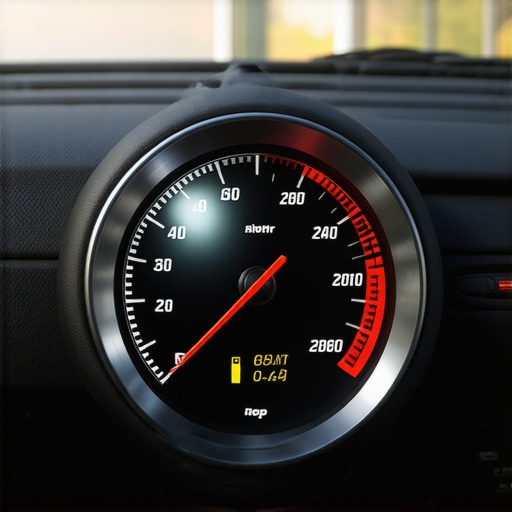
It was a typical Saturday afternoon, and I was cruising down the highway when suddenly, my engine temperature gauge shot up, then plummeted, then jumped around like a jackhammer. I fumbled, heart pounding—was my car about to blow? That unsettling fluctuation isn’t just nerve-wracking; it can be a sign of underlying issues that need immediate attention.
Understanding the Rollercoaster: Your Engine Temperature Gauge’s Mysterious Behavior
Many drivers brush off the flickering or bouncing of their temperature gauge as a minor glitch, but in reality, it can point to problems ranging from simple sensor hiccups to more serious cooling system failures. Having dealt with this myself early on, I quickly learned that ignoring these signals can lead to costly repairs—or worse, breakdowns in the middle of nowhere.
Let’s face it: when your car’s temperature gauge refuses to stay steady, it feels like playing a game of automotive roulette. But the good news? Most of the causes are fixable with some straightforward troubleshooting, and understanding the root of the problem can save you time, money, and peace of mind.
Before we jump into solutions, consider this: a fluctuating engine temperature can damage your engine if left unchecked. According to research by automotive experts, inconsistent cooling can cause long-term wear and tear, ultimately shortening engine lifespan. This is why recognizing and addressing the issue promptly is crucial.
Have you ever experienced your temperature gauge acting up during a commute? If so, you’re not alone—and there’s a good chance a simple fix could be just around the corner. Now, let’s delve into the common culprits behind this curious behavior and how you can troubleshoot them effectively.
Check the Coolant Levels and Quality
Start by ensuring your engine coolant is at the proper level and not contaminated. Pull over safely, open the radiator cap when the engine is cool, and inspect the coolant level. Low or dirty coolant can cause inconsistent readings, similar to a clogged pipe disrupting water flow. During my own experience, a simple coolant refill fixed my fluctuating gauge, preventing potential overheating issues.
Inspect the Temperature Sensor and Wiring
Next, locate the engine temperature sensor—usually attached near the thermostat housing. Disconnected or faulty wiring here can send erratic signals. Use a multimeter to test the sensor’s resistance as per your vehicle’s specifications. I once replaced a malfunctioning sensor after noticing corrosion on the wiring harness, which stabilized my gauge readings and saved me from confusing diagnostic dead-ends. If you’re unsure how to do this, consult your vehicle’s manual or an automotive guide for calibration tips.
Examine the Thermostat for Proper Operation
The thermostat acts as a gatekeeper, regulating coolant flow. A stuck-open or closed thermostat can cause temperature swings—imagine a valve that’s jammed, letting too much or too little water through. Test it by removing the thermostat and checking if it opens at the correct temperature, usually indicated by a small temperature-sensitive strip or a mechanical test. During my repair, replacing a faulty thermostat stopped the bouncing behavior entirely and kept my engine within optimal temperature ranges.
Evaluate the Cooling Fan Function
Cooling fans help dissipate heat when your car is stationary. If they fail to activate or run intermittently, the engine temperature can fluctuate. Turn on your AC to kick the fans on manually—if they don’t run, check the relay and fuse, or test the fan motor directly. I learned that a faulty relay was causing odd gauge movement, and replacing it restored normal operation. Keep in mind, a stuck relay can mimic sensor issues, so troubleshooting it broadens your diagnostic scope.
Assess for External Factors and Cooling System Leaks
If all internal components check out, look for leaks or external factors. Examine hoses and radiator for cracks or loose clamps. A small leak or steam escape can cause inconsistent cooling, just like a leaky pipe disrupts water flow. During my own inspection, I discovered a cracked radiator hose, which I replaced to prevent pressure drops that affected the temperature gauge. For complex leaks, a pressure test can reveal hidden issues you might otherwise miss.
Implement Preventive Maintenance
Regularly flushing your cooling system and replacing coolant according to manufacturer intervals keeps temperature readings stable. Over time, deposits build up, reducing coolant efficiency—equivalent to sediment clogging a water filter. Scheduling routine inspections can catch developing problems early. I set a reminder for my vehicle’s coolant change, which has helped maintain steady gauge readings for years and avoided costly repairs.
Consult Professional Help When Needed
If these steps don’t resolve the fluctuation, it might be time to visit a mechanic. Complex issues like a failing water pump or internal radiator blockages require specialized tools and expertise. Remember, lingering problems can accelerate engine wear, but with each step—checking coolant, sensors, thermostat, fan, and leaks—you minimize the risk and extend your engine’s lifespan. For detailed guidance, explore more at why your engine stays hot after shutdown and similar resources to deepen your understanding of cooling system health.While many car owners believe they understand what a proper tune-up or transmission service entails, there’s a hidden layer of nuance that often gets overlooked. Common myths—like the idea that all transmissions last the same duration or that regular oil changes suffice to keep the engine perfect—can lead to costly mistakes. For instance, many assume that a simple fluid replacement is enough for complex issues like torque converter failures, but in reality, components like the torque converter require careful inspection, as ignored signs can lead to severe damage—read more at the warning signs of a failing torque converter.
One trap many fall into is relying solely on generic auto service schedules without considering driving habits or vehicle use. Hard-driving vehicles or those used in extreme conditions demand more frequent and specialized attention, especially during transmission rebuilds or clutches replacement. Overlooking this nuance can result in premature failures, which many car owners only realize after costly repairs.
A common misconception about tune-ups is that they are purely about spark plugs or air filters. While these are important, the real benefit comes from understanding how modern engine controls and sensors interact. For example, failing to calibrate or test sensors like the mass airflow sensor can cause poor fuel economy and engine misfires—so instead of a routine check, consider specialized diagnostics to ensure optimal performance.
This leads us to a critical question for advanced enthusiasts: How does sensor calibration impact transmission shifting and engine responsiveness?
Because modern cars rely heavily on electronic controls, even small misadjustments can cause transmission slippage or delayed shifts. For instance, vacuum leaks or sensor inaccuracies can trigger your vehicle’s transmission to hunt for gears—comparable to a nervous system error—leading to shuddering or slipping, especially on cold mornings. Regularly inspecting components like vacuum hoses or testing sensors can prevent these complex issues before they escalate. Check out vacuum leak effects on transmission for more insights.
Another advanced nuance lies in understanding the importance of ground wiring. Corroded or loose ground wires can cause transient electrical issues, miscommunicating signals to the transmission control module and resulting in limp modes or shifting faults. These subtle electrical faults are often overlooked but can be diagnosed with a proper wiring inspection—see how ground wires trigger limp mode.
Finally, a critical mistake many make when performing DIY repairs is neglecting the integration of diagnostic tools with calibration procedures. Using scanner tools to reset adaptive values after component replacement can mean the difference between a smooth-running vehicle and a shuddering nightmare. Always update and calibrate sensors following repair work to ensure the car’s electronic psyche remains balanced.
In conclusion, moving beyond generic advice and embracing a nuanced understanding of modern automotive systems ensures longevity, performance, and safety. Are you aware of the complex interplay between sensors, wiring, and control modules? Have you ever fallen into this trap? Let me know in the comments, and together, we can shift gears toward better automotive care.
Equip Yourself with Precision Automotive Diagnostics
To maintain your car’s health effectively, investing in a high-quality OBD-II scanner is indispensable. I personally rely on the BlueDriver scanner because of its comprehensive diagnostics, user-friendly interface, and real-time data access. It allows me to swiftly identify trouble codes, monitor sensor readings, and even clear error codes without visiting a mechanic. This proactive approach prevents minor issues from escalating into costly repairs and keeps my vehicle running optimally.
Master the Art of Visual Inspection with Quality Lighting
Nothing beats good lighting when diagnosing external issues like leaks, corrosion, or worn parts. I recommend a LED headlamp with adjustable brightness and a focused beam. Regular inspections of hoses, belts, and connection points become much easier, ensuring early detection of problems such as tiny cracks or leaks that could lead to bigger failures, like vacuum leaks affecting transmission shifting. Incorporating this simple tool into your routine saves you time and money.
Utilize Data Logging for Long-Term Monitoring
For those serious about diagnostics, I suggest using applications like OBDLink’s OBDLink or Torque Pro paired with a good Bluetooth adapter. These tools let you record sensor data over extended drives, revealing patterns that point to intermittent issues—passive problems that static checks often miss. This method has helped me catch subtle transmission irregularities and prevent future breakdowns by addressing problems early.
Prioritize Preventive Maintenance with Scheduled Checks
Advanced DIYers often overlook the importance of a scheduled maintenance plan. I use a detailed calendar to remind myself to perform oil changes, coolant flushes, and belt replacements based on manufacturer guidelines. Incorporating these checks with the right tools—such as an infrared thermometer to verify cooling system efficiency—extends the life of vital components. Regular maintenance acts as a shield, guarding your vehicle against unexpected failures.
Where Is the Future Heading in Automotive Upkeep?
Modern vehicles are rapidly integrating smart diagnostics and remote monitoring. Expect AI-powered diagnostic systems that predict failures before symptoms appear, much like Tesla’s predictive maintenance features. The trend is moving towards an era where your car actively manages its health, notifying you of issues via smartphone apps, and even scheduling repairs automatically. Staying ahead requires embracing these technological innovations now.
How Do I Maintain Transmission Performance Over Time?
Transmissions are complex, but routine checks can extend their lifespan significantly. Regularly inspect and replace transmission fluid—ideally with a friction modifier like this additive—to reduce shuddering and slipping. Using a thermal imaging camera during fluid checks can help verify if your transmission is running at optimal temperatures, catching overheating early. Investing in these diagnostics and maintenance routines will pay off by preventing expensive rebuilds down the road.
Don’t forget: keeping your vehicle in top shape is an ongoing process. Try implementing a monthly diagnostic scan combined with visual inspections to catch small issues early. Over time, these habits will save you time and money, and maintain the reliability your car promises. If you’re serious about long-term performance, consider exploring our detailed guides on calibration procedures and advanced troubleshooting techniques.
Lessons I Learned the Hard Way About Maintaining Steady Engine Temperatures
One of the biggest revelations for me was realizing that a seemingly small issue like a fluctuating temperature gauge can hint at underlying problems that, if ignored, might lead to devastating engine damage. I once thought it was just a sensor glitch, but it turned out to be a cracked radiator hose—promptly replacing it saved me from a costly engine rebuild. Trust me: paying attention to these subtle signs has saved me thousands.
Another lesson involved overlooking the importance of proper calibration after replacing components. For example, recalibrating sensors like the thermostat or coolant temperature sensor ensures your readings are accurate. During a DIY fix, forgetting this step led to inconsistent gauge behavior, but once I learned to reset and calibrate, my engine stayed reliably cool under all conditions.
Lastly, I discovered that external factors such as debris blocking radiators or fan blades can cause your engine to run hot and cold unexpectedly. Regular visual inspections with good lighting have become part of my routine—catching a simple leaf or dirt buildup before it becomes a real problem.