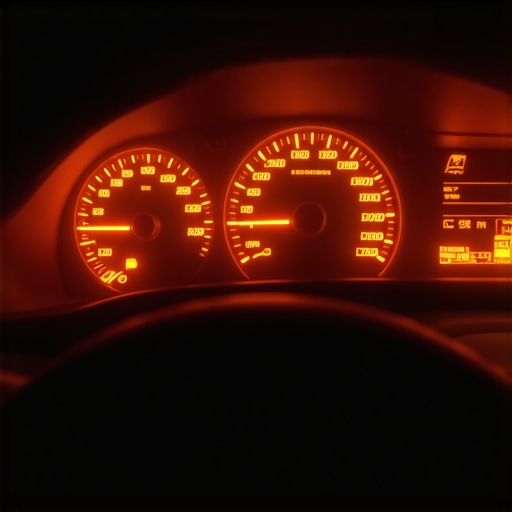
I was stuck at a long red light on a rainy Tuesday, watching my radio display pulse like a weak heartbeat. Every time the engine RPMs dipped, the lights dimmed. It felt like my car was slowly losing its will to live. I did what most people do: I panicked and bought a brand new battery the next morning. It didn’t fix a thing. I wasted nearly a hundred bucks because I didn’t understand how the charging system actually behaves at a stoplight. If you’ve noticed your headlights or dash lights softening when you’re stopped, don’t rush to the parts store just yet. We’re going to walk through why this happens and how to tell if it’s a simple fix or a sign of a failing alternator.
That Sinking Feeling When Your Interior Lights Pulse
Many drivers think their car is possessed when the electronics act up. I spent weeks ignoring my flickering dome light before I realized I was dealing with the one electrical fault that most mechanics misdiagnose as a dead battery. It’s frustrating. You’re trying to focus on the road, but the shifting brightness in your peripheral vision is a constant distraction. Usually, this boils down to the balance between what your battery provides and what your alternator produces while the engine is spinning slowly. Before you schedule a regular tune-up to maximize your car’s lifespan, you need to check the basics. In my early days of DIY wrenching, I overlooked the simplest things. Sometimes, the fix is as easy as cleaning battery corrosion with baking soda and water to ensure a solid connection. Have you ever seen your lights pulse in time with your turn signal? It’s a common quirk that often points to high resistance in the wiring rather than a terminal mechanical failure.
Is a flickering dashboard always an expensive repair?
You might be worried that a dimming dash means a five-hundred-dollar alternator replacement is looming over your head. While that’s a possibility, it isn’t always the case. According to the electrical experts at Delphi Technologies, a modern alternator is designed to provide maximum output at cruising speeds, but at idle, it may only put out 50% or less of its rated capacity. If you have the AC blasting, the radio up, and your foot on the brake, you might simply be out-drawing what the alternator can give at low RPMs. If your lights get brighter the moment you hit the gas pedal, you’re not alone. It might just be the hidden ground strap that causes weird electrical ghosts in your system. We’re going to dive into the diagnostic steps next to save you from the “parts cannon” approach I took years ago.Think of your car’s electrical system like a series of garden hoses connected to a central pump. At highway speeds, the pump (your alternator) is working hard, pushing water through every hose with plenty of pressure. But when you’re stuck at a red light, that pump slows down significantly. If your hoses are clogged or leaking, you’ll see the pressure drop—which manifests as dimming headlights or a flickering dashboard.
Stop Guessing and Start Testing Your Charging System
To get to the bottom of this, you need more than a hunch; you need a multimeter. This is the same tool you’d use if you were trying to find a parasitic battery drain. With the engine off, your battery should read about 12.6 volts. Once you fire the car up and let it idle, that number should jump to somewhere between 13.5 and 14.7 volts. If you’re seeing anything less than 13 volts at a stop, your alternator is struggling to keep up with the load.
Grab a Multimeter for the Five-Minute Voltage Test
I once spent an entire Saturday afternoon swapping out a perfectly good alternator on an old project car because I didn’t bother to do a simple voltage drop test first. I was convinced the unit was dead. After three hours of scraped knuckles and a lot of swearing, the lights still flickered. It turned out the wire running from the alternator to the battery was so corroded inside the insulation that it couldn’t carry the current. It was a ten-dollar wire, not a two-hundred-dollar alternator. To avoid my mistake, check the voltage at the alternator post itself and compare it to the battery terminal. If the difference is more than 0.2 volts, you have a wiring issue, not a mechanical failure.
Hunt Down the Resistance Hiding in Your Wires
Resistance is the enemy of your electronics. Over time, heat and moisture turn your clean copper connections into crusty, green messes. Before you assume you need expert auto repair, take a look at your ground points. I’ve seen cases where the hidden ground strap that causes weird electrical ghosts was the sole reason a car stalled at intersections. If the engine isn’t properly grounded to the chassis, the electricity has a hard time getting back to the battery, causing the voltage to sag exactly when the engine RPMs drop.
Don’t Ignore the Physical Condition of Your Alternator Belt
Sometimes the issue is purely mechanical. If your belt is glazed or loose, it might slip just enough at low speeds to prevent the alternator from spinning at its required frequency. This is a common part of essential car service tips for safe summer drives, as heat makes rubber more prone to slipping. Check for cracks or a shiny appearance on the underside of the belt. If you can flip the belt over with your fingers more than half an inch, it’s too loose. You might also want to spot a hidden electrical drain overnight if you notice the car struggles to start after sitting, as a weak battery puts a massive strain on the alternator the moment you start the car, leading to that dimming effect at the first few stoplights. If you see white or blue powder on the terminals, use baking soda and water to neutralize the acid and restore the connection. Clear paths for electricity mean brighter lights at every stop.Let’s dig deeper into a nuance that even some seasoned mechanics overlook: the myth of the constant 14.4 volts. Most old-school advice tells you that if your multimeter doesn’t show a steady 14 to 14.4 volts while the engine is running, your charging system is failing. In my experience, following this outdated rule is the fastest way to waste money on parts you don’t need. Modern vehicles use ‘Smart Charging’ or Variable Voltage Control (VVC). The car’s computer, not just the internal regulator of the alternator, decides how much juice to pump out. If you’re idling at a light and the battery is already fully charged, the computer might intentionally drop the output to 12.5 volts to save fuel and reduce engine load. According to technical briefs from the National Institute for Automotive Service Excellence (ASE), these systems are designed to prioritize fuel efficiency over constant high voltage, which can lead to that perceived ‘dimming’ that scares drivers into buying unneeded parts.
Why does your voltage fluctuate even with a brand-new high-output alternator?
This is the question that separates the DIYers from the experts. You might think a ‘high-output’ unit is the cure-all for flickering lights, but if your Powertrain Control Module (PCM) doesn’t request that extra power, the alternator won’t deliver it. Sometimes, the issue isn’t the alternator at all, but the hidden ground wire that ruins your sensors and confuses the computer’s voltage sensing. When that ground wire is frayed or corroded, the PCM receives a ‘false’ low-voltage signal, causing it to cycle the alternator on and off rapidly. This oscillation is exactly what creates that rhythmic pulsing in your dashboard. If you’ve been chasing this ghost, you should also consider maximizing your car’s lifespan with regular tune-ups that specifically include an inspection of the Electronic Load Detector (ELD). 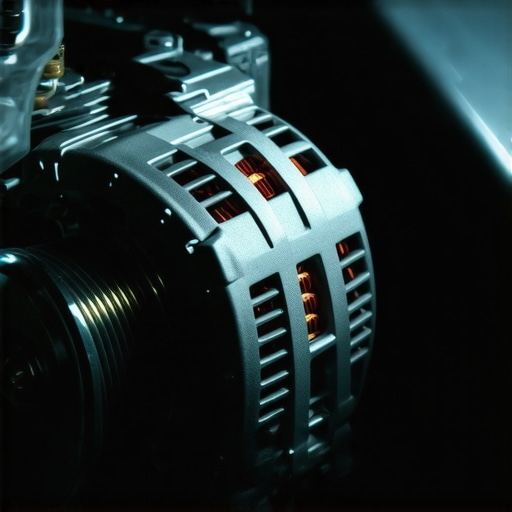 Beware of the ‘clutched pulley’ trap. Many modern alternators use an Overrunning Alternator Pulley (OAP) that allows the alternator to ‘freewheel’ when the engine slows down suddenly. If this pulley seizes, it creates massive tension on the belt, causing a vibration that feels like a mechanical engine miss and can even cause your AC to blow warm air while sitting in traffic because the belt slip affects the compressor too. I’ve seen people replace entire transmissions because they thought the vibration was a torque converter issue, when it was really just a fifty-dollar pulley. This is why you need to know the top signs your car needs expert auto repair now before the symptoms snowball. Achieving the secret to longevity for high-mileage engines involves understanding these electrical interdependencies. Have you ever fallen into this trap and replaced an alternator only to have the same problem? Let me know in the comments.If you want to move beyond just fixing the flicker and actually prevent it from returning, you need a different kit than the one in your trunk. I’ve found that a standard multimeter is great for a static snapshot, but it doesn’t tell you the whole story. For my high-mileage daily driver, I rely on a smart battery maintainer like the NOCO Genius. Why? Because modern cars have a constant parasitic draw even when they’re off. If you only drive short distances, your alternator never gets the chance to fully saturate the battery, which leads to early plate sulfation. Incorporating this into your essential car service tips for safe summer drives can easily double the life of your battery and take the load off your alternator.
How do I maintain my car’s electrical health over the long haul?
Maintenance isn’t just about the battery; it’s about the highways of copper connecting everything. Once a year, I take a wire brush to my main chassis grounds. I’ve seen the hidden ground wire that ruins your sensors cause more headaches than a literal engine failure. According to technical service documentation from Bosch Automotive, modern ‘intelligent’ battery sensors (IBS) are often the real culprit behind fluctuating voltage, as they manage the alternator’s duty cycle based on chemical aging profiles. If your sensor is dirty or the connection is weak, the computer gets ‘bad data’ and starts behaving erratically. This is why the secret to longevity for high-mileage engines often starts with a bottle of electrical contact cleaner and ten minutes of your time.
Stop Guessing and Watch the Live Data Stream
To truly master your car’s electrical health, you need an OBD2 scanner that supports live data streaming. I personally use an inexpensive Bluetooth dongle paired with my phone. It lets me watch the commanded voltage versus the actual voltage in real-time while I’m driving. If the computer is asking for 14.5 volts but the system only delivers 13.1, you know you have a mechanical slip or a failing regulator. Seeing this before you notice the top signs your car needs expert auto repair now can save you from a breakdown. Looking ahead, the industry is moving toward 48-volt architectures in mild hybrids, which will make these traditional 12-volt flickering issues a thing of the past. However, these systems will bring their own complexities, like liquid-cooled DC-to-DC converters that require even more precise monitoring. My advice for right now? Grab a can of contact cleaner this weekend and scrub your main battery terminals and the ground strap on the engine block. You’ll be amazed at how much ‘smoother’ the electronics feel when the resistance is gone.
The Day I Realized New Parts Can’t Fix Bad Wires
Looking back at my first few years of working on cars, I realize I was often terrified of the ‘electrical ghost.’ I used to think every flicker meant a major expert auto repair bill. Here is the reality I learned the hard way:
- Your battery is a reservoir, not the pump. If the alternator is weak or the wires are clogged with corrosion, a bigger battery won’t help you.
- Heat kills conductivity. On a hot summer day, essential car service tips should always include checking your engine’s main ground strap for brittleness.
- A tiny 0.5-volt drop might sound small, but it’s the difference between a crisp dashboard and one that looks like a dying candle.
By shifting my focus from ‘replacing’ to ‘cleaning,’ I saved thousands of dollars over a decade of car ownership. Often, the hidden ground wire that ruins your sensors is just waiting for a quick scrub with some sandpaper to restore perfect connectivity.
Tools I Keep in My Glovebox to Avoid a Tow Truck
I don’t believe in buying every gadget on the shelf, but three items have saved me from being stranded more times than I can count. First, a simple digital multimeter is non-negotiable for anyone serious about maximizing your car’s lifespan. It is the only way to prove a part is actually bad before you spend money on it. Second, a bottle of electrical contact cleaner is like magic in a can for old, crusty connectors. Finally, for those hitting six figures on the odometer, learning how to save money on your 100k-mile service by using a Bluetooth OBD2 scanner to monitor your charging system in real-time is a game-changer. These tools allow you to diagnose with data, not just guesses.
#IMAGE_PLACEHOLDER_E#
Your High-Mileage Car Still Has Plenty of Spark
Don’t let a few dimming lights convince you that your vehicle is on its last legs. Most electrical issues are just the car’s way of asking for a little bit of attention to its connections. When you take the time to clean those terminals and check those grounds, you aren’t just fixing a flicker; you’re ensuring your car remains reliable for years to come. Proper auto repair starts with understanding the ‘why’ before the ‘how.’ You have the tools and the knowledge now—go ahead and pop the hood this weekend.
Have you ever replaced a battery only to find the problem was actually a loose wire? Let me know your most frustrating electrical stories in the comments below!