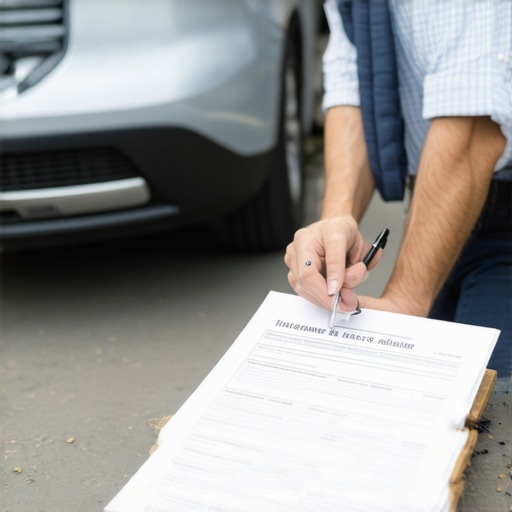
Why You Should Never Trust the Insurance Adjuster’s First Collision Estimate
The moments following a car accident are often a blur of adrenaline, confusion, and stress. Amidst the chaos, a phone call from an insurance adjuster can feel like a lifeline. They sound empathetic, professional, and – most importantly – ready to help you “get back on the road.” However, as an experienced legal advocate, I must warn you: that first collision estimate is rarely designed with your best interests in mind. While the adjuster may seem like a friend, their primary objective is “cost control.” Their goal is to close your file as quickly and cheaply as possible, often leaving you with a vehicle that is structurally unsound and a settlement that covers only a fraction of your true losses. Many victims who search for abogados de accidentes realize too late that once they accept that initial check, they may have forfeited their right to claim more for the hidden damage that inevitably surfaces later.
In the insurance industry, the first estimate is frequently referred to as a “low-ball” offer. It is a strategic opening move in a high-stakes negotiation. Insurance companies are massive corporations with a fiduciary duty to their shareholders, not to the claimants. By offering a quick, surface-level estimate, they hope you will take the money and sign a release before you have the chance to consult with a professional body shop or legal counsel. This “fast cash” tactic is highly effective because it preys on the victim’s immediate need for transportation and financial stability.
The Conflict of Interest: Adjuster vs. Victim
To understand why you shouldn’t trust the first estimate, you must understand the role of the insurance adjuster. Whether they are a “field adjuster” who visits you in person or a “desk adjuster” handling your claim remotely, they work for the insurance carrier. Their performance is often measured by their ability to settle claims for the lowest possible amount. This inherent conflict of interest means that their assessment of your vehicle’s damage is fundamentally biased toward the company’s bottom line.
When dealing with third-party liability claims – where you are filing against the other driver’s insurance – this conflict becomes even more pronounced. Research data indicates that staff adjusters often undervalue these claims because they have no direct contractual obligation to you. This is where the expertise of abogados de accidentes de auto becomes invaluable. A legal professional understands the nuances of indemnity – the principle that you should be “made whole” or returned to the financial and physical state you were in before the accident. The adjuster’s estimate rarely achieves true indemnity; instead, it provides a “patch-job” solution that ignores the long-term depreciation and safety risks associated with a poorly repaired vehicle.
Furthermore, adjusters are trained to use software that prioritizes the cheapest repair methods available. They may overlook necessary diagnostic scans or skip over the labor hours required for intricate recalibrations of modern safety systems. By hiring abogados de accidentes de auto, you signal to the insurance company that you are aware of these tactics and are prepared to fight for a fair valuation that reflects the actual cost of a high-quality, safe repair.
The “Photo Estimate” Trap: Why Virtual Appraisals Fail
In recent years, the industry has shifted toward “virtual appraisals” or “photo-based estimates.” You are asked to download an app, take five or six photos of the damage, and upload them. Within hours, an AI-driven system or a remote adjuster generates an estimate. While convenient, this modern trend is considered a “scam” by many industry experts because it is physically impossible to assess the structural integrity of a vehicle through a smartphone lens. These estimates only account for visible surface damage, such as a dented fender or a cracked headlight, while ignoring the complex systems underneath.
A photo cannot detect a hairline fracture in a suspension component or a slightly tweaked frame rail. If you rely solely on a virtual appraisal, you might end up with a car that looks fine on the outside but is a “death trap” underneath. For instance, a simple bumper scrape might look like a $500 fix in a photo, but once the bumper cover is removed, a technician might find that the impact absorbers (crush zones) are fully compressed and need replacement. If you don’t catch this, you might also find yourself wondering how to spot a bad respray on a used car door later on, as these quick-fix estimates often don’t budget for the proper blending and painting techniques required for a seamless finish.
Photo estimates are designed to be “preliminary,” yet insurance companies often present them as final. They hope you won’t take the car to a certified collision center where a “teardown” can occur. A teardown involves removing damaged panels to see what lies beneath – a step that almost always doubles or triples the initial “photo-based” price tag. Without this physical inspection, you are essentially guessing at the cost of your safety.
Hidden Damage: What Lies Beneath the Bumper
Modern vehicles are marvels of engineering, designed with “crumple zones” that sacrifice the outer shell of the car to protect the occupants. This means that even a low-speed collision can cause significant internal damage that isn’t immediately apparent. When an adjuster provides a first estimate, they are looking at the “cosmetic” damage. They are not looking at the frame, the drivetrain, or the sophisticated sensor arrays that power your Advanced Driver Assistance Systems (ADAS).
One of the most common issues missed by adjusters is frame misalignment. Even a fraction of an inch of variance can cause your vehicle to handle unpredictably, wear tires prematurely, and fail to protect you in a subsequent crash. You can actually learn the secret to checking frame alignment with a tape measure, but a professional frame rack is the only way to ensure the vehicle is back to factory specifications. Adjusters rarely include frame setup and pull time in a first estimate unless the damage is catastrophic.
Mechanical stress is another ghost that haunts first estimates. A minor tap to the wheel can bend a steering knuckle or damage a transmission mount. If your car starts behaving strangely weeks after the “repair,” such as why your transmission shudders only between 40 and 50 MPH, the insurance company will likely claim it is a “maintenance issue” unrelated to the accident because it wasn’t documented in the initial estimate. Similarly, electrical gremlins are common; a pinched wire behind a bumper can lead to a rough idle or poor fuel economy. Sometimes, it’s as simple as the $12 sensor fixing your poor gas mileage and rough idle, but identifying that sensor requires diagnostic time that adjusters don’t want to pay for.
OEM vs. Aftermarket Parts: The Insurance Company’s Secret Discount
One of the most contentious aspects of the first estimate is the choice of parts. To save money, insurance adjusters almost exclusively quote “Like Kind and Quality” (LKQ) parts, which is a fancy term for used parts from a salvage yard, or “Aftermarket” parts, which are third-party imitations. While these parts may be cheaper, they often do not meet the same safety, fit, or finish standards as Original Equipment Manufacturer (OEM) parts.
Using aftermarket parts can compromise your vehicle’s resale value and, more importantly, its safety. For example, an aftermarket bumper may not have the same structural integrity as an OEM one, potentially affecting how your airbags deploy in a future collision. It is vital to know how to tell if a body shop actually replaced your airbag with a genuine unit or if they used a cheap, potentially dangerous substitute to stay within the adjuster’s low budget. Furthermore, aftermarket body panels often have poor fitment, leading to uneven gaps that are a dead giveaway of prior accident damage. This is often accompanied by poor paintwork; you should look for 3 signs your body shop didn’t use a proper clear coat to ensure the longevity of the repair. The adjuster’s estimate won’t account for the extra labor needed to make a “cheap” part fit correctly, leaving the burden on the body shop – or more likely, on you, in the form of a subpar repair.
Why Santa Ana and Orange County Residents Need Local Expertise
Navigating the aftermath of a collision in Southern California presents unique challenges. For residents in the area, finding abogados de accidentes santa ana or abogados de accidentes orange county is not just about convenience; it’s about local market knowledge. California has specific insurance regulations and consumer protection laws that govern how claims are handled, but adjusters often “forget” to mention these to unrepresented victims.
In high-end markets like Orange County, labor rates at certified collision centers are significantly higher than the national average. Insurance adjusters often try to cap labor rates at a “prevailing rate” that is far below what a reputable shop in Santa Ana actually charges. This creates a “short pay” situation where you are left to pay the difference out of pocket. Local abogados de accidentes de auto understand these market dynamics. They know which shops provide factory-certified repairs and can put pressure on the insurance carrier to pay the actual labor rates required for a proper repair in our region. When you search for abogados de accidentes cerca de mi, you are looking for someone who knows the local judges, the local defense firms, and the specific tactics used by adjusters in the California market.
Moreover, California is a “diminished value” state. Even if your car is perfectly repaired, it is worth less because it now has an accident history on reports like Carfax. A first estimate will never include a check for diminished value. You need a local expert to help you calculate and claim this loss of equity, which can amount to thousands of dollars on newer or luxury vehicles common in Orange County.
5 Things You Should Never Say to an Insurance Adjuster
The first conversation you have with an adjuster can make or break your claim. They are trained in “elicitation techniques” designed to get you to admit fault or downplay your injuries. If you are feeling pressured, seeking abogados de accidentes cerca de mi is the best way to protect your rights. Here are five things to avoid:
- “I’m fine” or “I wasn’t hurt”: Adrenaline masks pain. Many soft-tissue injuries, like whiplash, don’t manifest for days or weeks. If you say you’re fine now, they will use it to deny your medical claims later.
- “I think…” or “In my opinion…”: Never guess about speeds, distances, or the sequence of events. If you are unsure, simply state, “I don’t have that information at this time.”
- “I’m sorry”: In many contexts, an apology is seen as an admission of liability. Let the investigators determine fault.
- Agreeing to a recorded statement: You are not legally required to give a recorded statement to the other driver’s insurance company immediately. These recordings are often used to find inconsistencies in your story.
- “I accept your offer”: Once you verbally agree or deposit a check that has “full and final settlement” written on the back, your case is likely over. Never accept the first check without a professional review.
By keeping these points in mind, you prevent the adjuster from building a case against you. If the pressure becomes too much, remember that abogados de accidentes can handle all communications on your behalf, ensuring that you don’t inadvertently sabotage your own recovery.
How to Dispute a Low Settlement Offer
If you have received a low-ball estimate, do not panic. You have the right to dispute it. The first step is to take your vehicle to a “pro-consumer” body shop – not the one the insurance company “suggests” (which is often a DRP or Direct Repair Program shop that has a contract to keep costs low for the insurer). Ask for a comprehensive, line-item estimate that includes a teardown and a scan of the vehicle’s computer systems.
Once you have a competing estimate that shows the true extent of the damage, you must present this evidence to the adjuster. However, adjusters are notoriously stubborn. This is the point where most people benefit from the intervention of abogados de accidentes usa. A formal letter from a law firm often carries more weight than a dozen phone calls from a frustrated claimant. Your attorney can invoke the “appraisal clause” in your policy or file a bad-faith claim if the insurer is unreasonably refusing to pay for a safe repair. Remember, you are not just fighting for a car repair; you are fighting for your safety and your financial future.
Conclusion: Protect Your Rights with Expert Legal Counsel
The insurance adjuster’s first estimate is not a final verdict; it is a starting point for a negotiation that you are currently losing if you don’t have professional help. At DK Law, we specialize in holding insurance companies accountable. We understand the technical complexities of modern collision repair and the legal strategies required to maximize your settlement. As a firm led by Daniel Kim, Esq., who is recognized in the top 1% of California attorneys, we bring a level of authority and precision that adjusters respect – and fear.
Don’t settle for a “good enough” repair that leaves your family at risk. Before you sign any documents or accept a check, contact us for a free consultation. Let us ensure that your vehicle is returned to its pre-accident condition and that you receive every penny you are entitled to under the law. Whether you need abogados de accidentes santa ana or legal support anywhere across the state, we are here to fight for you.