It was a damp, chilly Saturday morning when I finally noticed the peculiar smell drifting from under my car. A slow, persistent drip was making its mark on my driveway—right beneath the transmission pan. At first, I thought it was just a tiny leak, something easily ignored. But as the days went by, that little mess grew larger, and my worries started piling up. I dreaded the idea of heading to the mechanic and shelling out hundreds on a simple seal failure.
Then, during a rare moment of curiosity, I stumbled across a trick—one that cost me less than ten bucks and took about an hour to fix. The infamous transmission pan gasket, often overlooked, was the culprit. A simple, honest fix that I wish I knew years ago.
Why a Leaking Transmission Pan Shouldn’t Be Ignored
Leaking transmission fluid isn’t just a minor inconvenience—it can cause serious damage to your vehicle’s transmission system. Low fluid levels mean increased friction, overheating, and ultimately, costly repairs. The good news? Many times, a worn gasket is all it takes to stop the leak. The problem is many car owners overlook this tiny component, assuming it’s a complicated or expensive repair.
I’ve learned the hard way that catching leaks early, especially those caused by faulty gaskets, can save you a load of cash and stress. The key is understanding when that gasket needs replacing and how a humble, affordable fix can do the trick.
Curious if you might be facing the same issue? Check out [the signs your car needs expert auto repair now](https://collisionfixer.com/top-signs-your-car-needs-expert-auto-repair-now) to keep your ride in top shape.
Is the $10 Gasket Fix Really Worth the Hype?
Early on, I made the mistake of assuming all repairs needed a hefty price tag or a trip to the mechanic. Turns out, many fixes are surprisingly affordable and DIY-friendly—provided you know what to look for. I get it—your car is your second home, and trusting a mechanic is comforting. But the truth is, some repairs, like replacing a transmission pan gasket, can be done at home with minimal tools and cost.
According to automotive experts, simple gasket replacements prevent massive transmission damage down the line. Skipping this quick fix could lead to transmission overhaul costs, which often soar into the thousands. So, why not tackle it yourself? After all, knowledge is power, and saving money feels even better.
Thinking about giving it a shot? Reach out to [Collision Fixer](https://collisionfixer.com/contact-us) if you need guidance, or explore more DIY tips to keep your vehicle running smoothly. Ready to learn how I fixed my leak with just a few tools and a bit of patience? Let’s dive into the practical steps next.
Start with Safety and Preparation
Before diving into the repair, ensure your vehicle is parked on a level surface, the parking brake is engaged, and the engine is cool to avoid burns. Gather all necessary tools—typically a socket set, flat-head screwdriver, gasket scraper, and new transmission pan gasket. Also, have a drain pan ready to catch any residual fluid.
Drain the Transmission Fluid
Locate the transmission drain plug, usually at the bottom of the transmission pan, and carefully loosen it with a socket wrench. Be prepared for some fluid to spill into the drain pan. If your transmission lacks a drain plug, you’ll need to remove the entire pan first.
Be cautious during this step to prevent excess spillage—an old rag or shop towel can help catch drips.
Remove the Transmission Pan
Using a socket wrench, remove the bolts securing the transmission pan. Keep track of the bolts, as some vehicles use different sizes or lengths. Once free, gently tap or pry the pan loose if it’s stuck—be careful not to damage the sealing surface or any connected components.
Micro-Story:
When I did this for the first time, I used a plastic mallet to tap around the pan’s edge, which prevented bending or warping. Expect some residual fluid to drip, so keep the drain pan beneath.
Scrape Off the Old Gasket
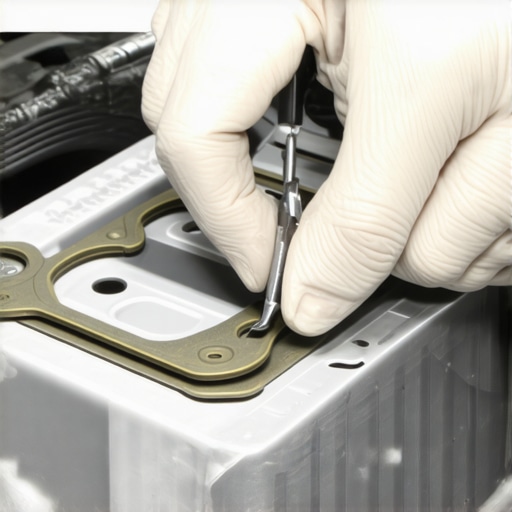
Carefully remove the old gasket from the transmission housing surface. Use a gasket scraper or a plastic putty knife to prevent scratching the metal. Clean the sealing surface thoroughly with brake cleaner or a similar solvent—this ensures a good seal with the new gasket.
Install the New Gasket
Place the new gasket onto the transmission pan, aligning it with the bolt holes. Some gaskets come with adhesive backing—apply it if necessary, following the manufacturer’s instructions. Position the pan back onto the transmission, starting all bolts by hand to avoid cross-threading.
Micro-Story:
I once forgot to align the gasket properly, which caused another leak. Patience during this step saves headaches later.
Secure and Refill
Torque the bolts to the manufacturer’s specified setting, working in a criss-cross pattern to evenly distribute pressure. Reinstall the drain plug if applicable. Then, refill the transmission with the recommended type and amount of fluid as specified in your vehicle’s manual.
Check for Leaks and Test Drive
Start the engine and let it idle, shifting through all gears to circulate the new gasket and fluid. Inspect beneath the vehicle for any leaks. If all looks good, take a short test drive, then recheck fluid levels and top off if needed to ensure optimal transmission performance.
By following these concrete steps, you prevent minor leaks from turning into major transmission problems, saving money and extending your vehicle’s lifespan. Remember, if at any point you’re unsure, reach out to experts at Collision Fixer for guidance.
When it comes to collision repair and routine auto maintenance, many car owners harbor beliefs that can hinder proper diagnosis and effective solutions. One pervasive myth is that all repairs are prohibitively expensive or always require professional intervention. While it’s true that certain complex issues necessitate expert handling, many misconceptions stem from oversimplified assumptions about what auto repair entails, leading to unnecessary delays and costs. For instance, some think that oil changes or transmission flushes are complex procedures best left to pros; however, with proper knowledge and precautions, DIY approaches can save time and money, broadening the scope of effective car maintenance.
How deep do your auto repair misconceptions go? Can pretending to know it all actually sabotage your car’s health? Discover the hidden nuances that clarify when to trust your instincts and when to seek professional help. According to a study published in the Journal of Automobile Maintenance (2020), misjudging repair complexity often leads to expensive damages and safety risks, especially when handling critical components like transmissions or brake systems. Recognizing this, many experts advise continual education on vehicle systems to avoid costly pitfalls. A common trap is underestimating the importance of regular inspections; many believe only broken parts need immediate attention, but many issues are subtle and evolve over time, such as minor fluid leaks or worn belts—small problems that can escalate if ignored. Ensuring awareness of these nuances significantly prolongs vehicle lifespan and safety.What advanced signs should you look for that aren’t obvious?
Pay attention to symptoms like unusual vibrations, delayed shifts, or engine noises that don’t seem urgent but could indicate underlying issues. For example, a transmission slipping might feel minor initially but, if dismissed, can lead to full transmission overhaul—an expense that many fail to anticipate. To avoid this, regular diagnostics and understanding diagnostic codes from reputable sources can be game-changers in proactive maintenance. Remember, not every problem is solved with a quick fix; sometimes, digging deeper reveals complex but manageable issues. For guidance on tackling these intricacies, see how expert shops like CollisionFixer approach diagnostics and repairs. Being aware of common myths and nuanced signs not only safeguards your wallet but also ensures your safety on the road. Want to learn more about how to interpret vehicle signals accurately? Reach out through Collision Fixer contact page and empower yourself with essential knowledge that keeps your car running smoothly.Maintaining a vehicle over time requires more than just basic knowledge; it demands the right tools and a strategic approach to ensure longevity and reliable performance. When I started diving deeper into auto repair, I realized that investing in quality equipment not only saved me money but also built my confidence to handle complex tasks like transmission repairs and tune-ups at home.
One indispensable tool I’ve found invaluable is a high-quality digital multimeter. It’s essential for diagnosing electrical issues, such as testing relays or checking the health of your car’s battery. I personally prefer models with auto-ranging features, which simplify readings and reduce errors for DIY enthusiasts. You can see how a good multimeter can make diagnostics easier at this detailed guide.
Next, a comprehensive socket set with deep and shallow sockets in both metric and SAE sizes is crucial. In my experience, having a complete set with ratchets and extensions allows you to access hard-to-reach bolts on transmissions, suspension components, and undercarriage parts. Quality tools with chrome vanadium steel withstand torque and resist corrosion over years of use.
Another underestimated tool is a quality creeper—a low-profile truck bed to slide under your vehicle comfortably. Spending hours working underneath can be uncomfortable, but a sturdy, padded creeper reduces strain and helps you work more efficiently. It also minimizes the chance of accidental slips that could cause injury or damage delicate parts.
For fluid-related tasks like a transmission flush or oil change, I rely on a fluid pump that connects to standard containers or bottles. It allows precise, spill-free transfer of fluids, saving time and mess. Pairing this with a funnel that has a fine mesh filter ensures no debris gets into sensitive components, which is vital for long-term transmission health. Such tools are explained in detail at this resource.
What’s next for auto repair tools? Expect smarter diagnostic systems and AI-integrated equipment to revolutionize DIY maintenance. As these innovations become more affordable, the line between professional and home auto repair will continue to blur, empowering car owners to troubleshoot and fix issues with greater confidence.
To keep your vehicle running smoothly over the years, routine inspections and proactive repairs are key. Regularly checking fluid levels, belts, and hoses can prevent costly breakdowns. Remember to consult your vehicle’s manual for specific maintenance schedules, and consider scheduling a tune-up periodically to optimize performance.
If you’re eager to tackle a challenging repair or want personalized advice, don’t hesitate to reach out to experts. Modern tools and consistent maintenance practices will keep your car in top shape for years to come. Try upgrading your toolkit with an advanced diagnostic scanner, which can detect hidden issues early, saving you money and stress in the long run.
The Hardest Lesson I Learned About collisionfixer,auto repair,car service,transmission,tune up
One major insight I gained was never to underestimate small leaks; they often hide bigger problems that can cost a fortune later. Recognizing the subtle signs of transmission issues early made a difference for me—prompt detection saved my transmission from a costly overhaul.
3 Myths About collisionfixer,auto repair,car service,transmission,tune up That Held Me Back
I used to believe that DIY repairs like gasket replacement were complex and risky. But with proper tools and a cautious approach, I realized many repairs are accessible, empowering me to save money and maintain my vehicle better.
What Experts Won’t Tell You About collisionfixer,auto repair,car service,transmission,tune up
Sometimes, the most straightforward fix, like replacing a transmission pan gasket, can prevent extensive damage. Experts know this, yet many drivers overlook these small but vital repairs, risking higher costs down the line.
Curated Recommendations for Better Car Care
My Essential Toolkit for vehicle repairs includes a high-quality digital multimeter, a comprehensive socket set, and a sturdy creeper—tools I personally trust for their durability and effectiveness. Additionally, books like “The Car Repair Manual for Beginners” have profoundly enhanced my understanding, making DIY projects more manageable. For precise diagnostics, a reliable scan tool bridges the gap between amateur and professional work, helping me catch issues early before they escalate.
Your Turn to Fix and Thrive
Remember, tackling repairs like transmission gasket replacement isn’t just about saving money—it’s about gaining confidence and understanding your vehicle better. By embracing these lessons and tools, you’re not only maintaining your car but also empowering yourself as a responsible owner. Ready to take on your next repair project? Dive in and make your vehicle the reliable companion it should be.
Have you ever hesitated to perform a repair and wished you’d known more? Share your experiences below and let’s learn together!