I’ll never forget the time I spent four hours rotating my tires in a humid garage, convinced that a simple swap would fix that annoying low-pitched growl coming from my front end. I was so sure of myself. I even checked the tire pressure twice. But when I finally pulled back onto the main road and hit 40 mph, the ‘vroom-vroom’ sound was still there, louder than ever. It wasn’t the rubber; it was the metal. I’d ignored the classic warning signs of a failing wheel bearing because I thought I knew better, and I ended up wasting a whole Saturday and a few hundred bucks on parts I didn’t need. Learning how to diagnose a bad wheel bearing by sound alone isn’t just about being a driveway mechanic; it’s about safety and common sense. A seized bearing can actually lock up a wheel while you’re driving, which is as terrifying as it sounds. Today, I want to help you skip the guesswork and pinpoint exactly which corner of your car is crying for help before a simple fix turns into a massive transmission or axle nightmare. Have you ever replaced a part only to realize the noise didn’t go away? Drop a comment and tell me I’m not the only one. [image_placeholder_1]
That Low Growl Isn’t Just Road Noise
A bad wheel bearing has a very specific ‘voice.’ It usually starts as a faint hum—almost like you’re driving on knobby off-road tires—and gradually builds into a rhythmic grinding that feels like it’s vibrating through the floorboards. One of the biggest mistakes I made early on was assuming that if the car didn’t shake, it wasn’t a bearing. That’s a myth. While you might wonder why your car shakes only when you hit 65 mph, a bearing often makes its presence known through sound long before the steering wheel starts vibrating. It’s a progressive failure. According to research from the National Highway Traffic Safety Administration (NHTSA), mechanical failures like these are significant contributors to accidents when left unchecked, specifically because they degrade handling. You need to treat your car’s noises like a conversation. If it’s growling at you, it’s not just being grumpy; it’s warning you that a critical component is losing its lubrication and grinding itself to dust. Regular car service can sometimes catch this during a lift inspection, but your ears are your best diagnostic tool on a daily basis. If you hear that oscillating ‘whirr-whirr’ that speeds up as you do, you’ve got a bearing that’s reached the end of its life.
Is This Repair Really Necessary Right Now?
I get the skepticism. Auto repairs are expensive, and life is busy. Sometimes you just want to turn up the radio and ignore the drone for another month. You might think it’s just a nuisance, but a bad bearing is a ticking clock that doesn’t care about your schedule. Unlike a squeaky car door hinge that just annoys your neighbors, a bearing failure affects your ability to steer and stop reliably. When a bearing fails completely, the wheel can actually wobble or, in extreme cases, separate from the vehicle. If the sound changes pitch or disappears when you swerve slightly left or right, you’ve found your culprit. It’s much better to handle it now on your terms than to end up needing a full collisionfixer visit later because a wheel decided to quit on the highway. I’ve been there, and trust me, the tow truck bill alone is enough to make you wish you’d listened sooner.
The first real move to take is the ‘sway test.’ I remember taking my old sedan out to a deserted backroad after hearing a persistent hum. I started gently swerving left and right—think of it like a slow-motion slalom. Every time I veered left, the cabin went silent. Every time I straightened out or steered right, the growling returned with a vengeance. This isn’t magic; it’s physics. When you steer left, the centrifugal force shifts the vehicle’s weight to the right side. If the noise stops when the weight leaves the left side, you’ve just identified that your left-side bearing is the culprit. This simple weight-transfer trick is more reliable than any fancy sensor when you’re trying to avoid a trip to collisionfixer for a simple diagnosis.
Shift Your Weight to Pinpoint the Problem
Identifying the noise is one thing, but isolating the corner is another. While a bad CV joint usually clicks during sharp turns, a wheel bearing produces a constant, speed-dependent drone. If you’re hearing a ‘whirr’ that changes pitch when you change lanes, you’re looking at a bearing. I once misdiagnosed a noise as a tire issue, only to realize during a regular tune up that the sound didn’t change when I rotated the tires. That’s a huge red flag. If the sound stays in the same physical corner of the car regardless of where the tires are moved, the bearing is the only constant left. 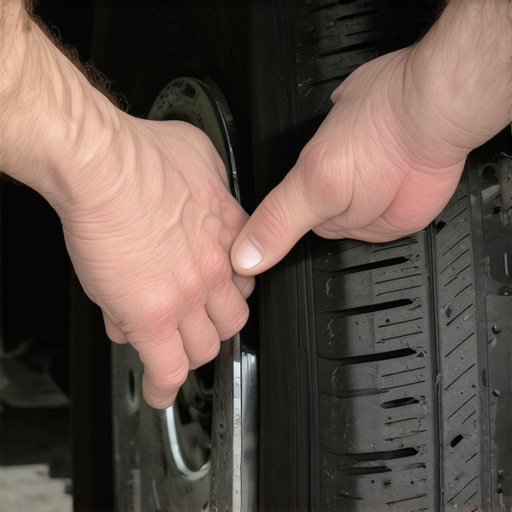
Match the Noise to Your Speedometer
One of the best analogies I use for bearing failure is a plane taking off. As your speed increases, the frequency of the vibration and the pitch of the sound should rise. To rule out engine issues, safely shift into neutral while coasting (if your environment allows). If the noise persists at the same pitch while the engine RPMs drop, you’ve ruled out a tapping engine sound or an exhaust leak. You are now strictly dealing with the drivetrain or wheels. This is exactly why car service professionals always perform a road test first; your ears can distinguish between the mechanical whine of a transmission and the gritty grind of a wheel hub.
Spin the Wheel to Confirm Your Suspicions
The final confirmation happens in the driveway. Once you think you know which wheel it is, jack that side of the car up safely. Grab the tire at the top (12 o’clock) and bottom (6 o’clock) and try to rock it back and forth. There should be absolutely zero movement. In my early days, I ignored a tiny bit of play in a front wheel, thinking it was just an old car. Two weeks later, the heat from the friction was so intense it actually welded the nut to the spindle. If you feel any ‘wiggle’ or hear a faint crunching sound when you spin the wheel by hand, you have found your problem. Identifying these signs your car needs expert auto repair early prevents the kind of catastrophic failure that leaves you stranded. Don’t wait for the steering wheel to shake; if the ‘voice’ of the bearing is loud enough to hear over the radio, it’s already telling you it’s time for a change.
The most dangerous phrase in a garage is ‘there’s no play, so the bearing is fine.’ I’ve seen seasoned techs fall for this over and over. They jack up the car, shake the wheel, and when it doesn’t budge, they assume the noise is coming from somewhere else. This is a massive mistake. A bearing can be completely ‘tight’ but still have microscopic pitting—called spalling—on the metal races. This creates that deafening roar without a single millimeter of movement. In fact, research from the Car Care Council confirms that internal friction and heat are often the first indicators of failure, long before mechanical ‘play’ develops. If you rely solely on the wiggle test, you might end up looking for top signs your car needs expert auto repair in all the wrong places, like your brakes or CV joints, while the real culprit continues to cook itself. Have you ever been told a part was fine just because it wasn’t loose yet? Let me know in the comments. 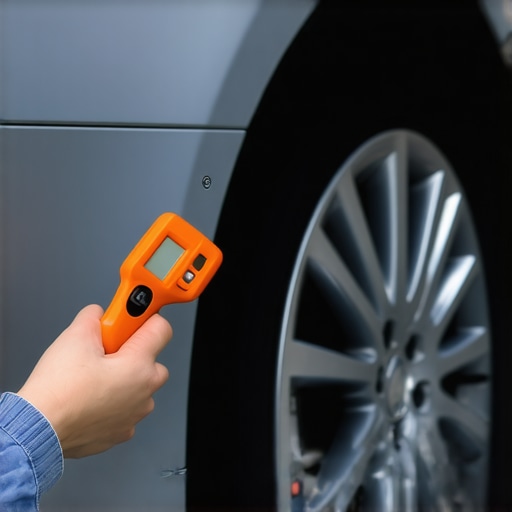
How Much Heat Is Too Much for a Wheel Hub?
If you want to get really technical, grab an infrared thermometer after a twenty-minute highway drive. Point it directly at the center of the wheel hubs, right where the axle nut sits. A failing bearing will consistently run 20 to 30 degrees hotter than the others due to the intense internal resistance of the degrading grease. This is a nuance most people miss during a regular tune up. Another common trap is confusing tire cupping with bearing noise. If you notice why your tires still wear unevenly after a professional shop alignment, that ‘chopped’ or ‘sawtooth’ tread pattern can mimic the exact rhythmic ‘wub-wub’ sound of a bad bearing. Before you drop $400 on a hub assembly, run your hand over the tire tread in both directions. If it feels smooth one way but sharp like a saw blade the other, it’s the rubber, not the metal. Many shops will try to sell you a bearing because it’s a higher-ticket item, but a truly essential car service should rule out tire wear first. I’ve seen people spend a fortune on bearings only to find out they just needed a balance and rotation. If you’re feeling overwhelmed by the diagnosis, don’t guess—it’s always better to contact us and get a second opinion before you start throwing parts at a ghost. One final ‘oops’ factor to avoid: the over-tightened axle nut. If you do the repair yourself, using an impact wrench instead of a calibrated torque wrench to seat that nut can crush a new bearing in under 50 miles. It’s the fastest way to turn a weekend win into an expensive ‘do-over’ that most DIYers never see coming. I learned that one the hard way on a old sedan, and let’s just say, the second repair was much more expensive than the first.That expensive do-over taught me that while my ears were a good start, they weren’t infallible. To really step up your game, you need to move beyond just listening to the wind and start using tools that isolate the vibration at the source.
Upgrade Your Ears with a Mechanics Stethoscope
I used to think a long screwdriver pressed against my ear was high-tech enough, but a $20 mechanics stethoscope is a total game-changer. When you have the car safely on jack stands, you can place the probe directly on the steering knuckle or the back of the hub assembly. Have a buddy spin the wheel. If the bearing is even slightly pitted, it will sound like a literal rock crusher inside your ears. This level of precision is how you avoid misdiagnosing a simple hub issue as a massive transmission failure. If you want to get even more professional, look into an electronic ChassisEAR. It uses wired clamps that you attach to different suspension points, allowing you to listen to each wheel independently while actually driving. It’s the ultimate way to catch top signs your car needs expert auto repair before the parts actually fail. 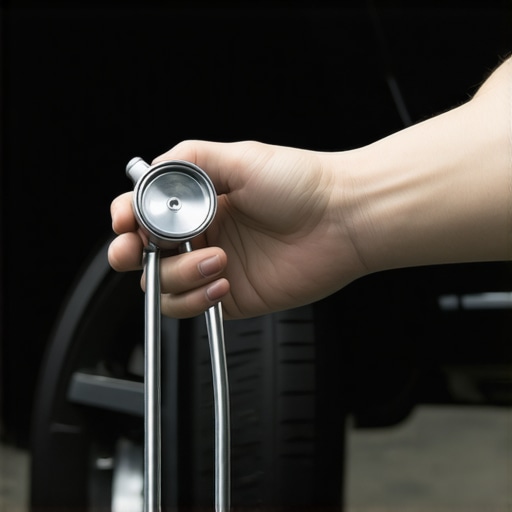
Precision Tools Prevent Repeat Failures
One thing I can’t stress enough is the importance of a high-quality torque wrench. Most people just ‘uugga-duugga’ the axle nut with an impact gun and call it a day. That is the fastest way to kill a new bearing. According to Timken’s TechTip Volume 1, Issue 4, improper preload or overtightening is the leading cause of premature bearing death because it creates excessive heat that breaks down the lubricant. If you don’t have the specific torque spec for your vehicle, you’re essentially gambling with your safety. This attention to detail is part of any regular tune up that actually matters. If you find yourself constantly replacing parts on a car that feels like a money pit, it might be time to how to calculate the real junk value of your car before scrap yards lowball you, because sometimes a failing hub is just the tip of a very rusty iceberg.
How can I keep my wheel bearings healthy for a decade?
The secret to longevity isn’t just buying the most expensive part; it’s protecting the seals. Avoid deep standing water and high-pressure car wash sprays directed right at the center of your wheels. Water is the natural enemy of bearing grease. Also, be mindful of your essential car service schedule, specifically checking for torn CV boots that can sling grease onto the hub and attract abrasive dirt.
The Coming Shift to Smart Hub Sensors
Looking ahead, I suspect we are moving toward ‘smart hubs.’ With the rise of electric vehicles, which are significantly heavier and put more stress on bearings, manufacturers are starting to integrate vibration sensors directly into the hub assembly. Soon, your dashboard won’t just tell you a tire is low; it will alert you that the front-left bearing has 500 miles of life left based on harmonic resonance. Until then, we have to rely on our tools and our senses. My challenge to you: next time you hear a mysterious hum, don’t just turn up the radio. Grab a stethoscope or a cheap infrared thermometer and prove to yourself exactly where that heat is coming from.
The Hardest Lesson I Learned While Chasing Wheel Hub Noises
If there is one thing that years under the chassis have taught me, it is that silence is earned. I once spent an entire week convinced a hum was tire noise, only to have the bearing seize on the highway because I ignored the heat. The biggest takeaway? Never assume a bearing is healthy just because it does not wiggle. Internal spalling is often invisible to the touch but deafening to the ear. To really maximize your cars lifespan with regular tune ups, you have to be willing to trust your senses over a simple shake test. Also, remember that heat is a diagnostic truth-teller; if one hub feels like a furnace after a long drive and the others are cool, stop driving immediately. It is much easier to swap a hub assembly now than to replace a spindle or an axle later.
My Must-Have Tools for a Noise-Free Drive
You do not need a shop full of computers to find a bad bearing, but you do need a few specific items to stop the guessing game. First, a mechanics stethoscope allows you to hear the ‘gravel in a blender’ sound directly at the source. Second, an infrared thermometer is the fastest way to find friction before it becomes a fire hazard. These tools are the backbone of my car service tips because they provide objective data. [image_placeholder_final] I also highly recommend keeping a vehicle-specific service manual handy for exact torque specifications; guessing on the axle nut is the most common reason new bearings fail within a month.
Stop the Grind Before the Grind Stops You
Modern cars are incredibly resilient, but they are not invincible. When you hear that rhythmic drone, your car is essentially asking for a check-up. Catching the signs your car needs expert auto repair early saves you from the danger of a wheel lock-up and the high cost of a tow truck. You have the knowledge now to sway, spin, and listen your way to a solution. Do not be afraid to contact us if the sound still feels like a mystery or if you want a professional eye on your drivetrain. Keep your ears open and your tools ready, and you will keep that smooth, factory-quiet ride for years to come. Have you ever replaced a bearing only to find out the noise was actually coming from the opposite side of the car? Let me know your diagnostic wins and fails in the comments below!