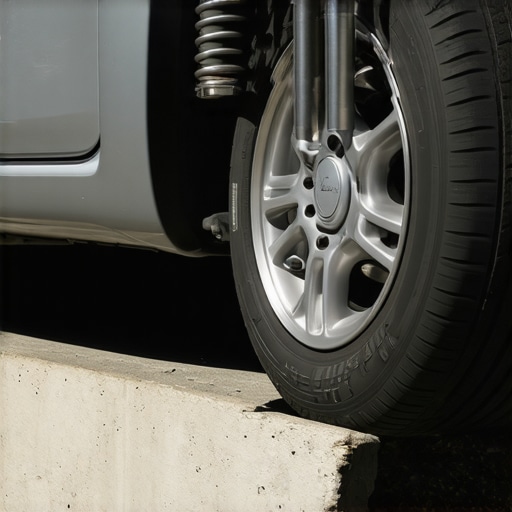
I remember the first time I heard that sharp, metallic snap pulling into my suburban driveway; my heart absolutely sank. I immediately started calculating the potential damage in my head, fearing a massive expert auto repair bill before I even put the car in park. It sounds like something is physically snapping under your floorboards, doesn’t it? You might even feel a slight kick through the steering wheel. For years, I just ignored those little groans and clicks, thinking it was just the character of an aging vehicle, until a simple turn into a grocery store parking lot nearly left me stranded. That popping sound isn’t just an annoyance; it is a localized cry for help from your suspension before a component decides to fail entirely. Today, I am going to help you pinpoint exactly what is causing that racket so you can stop the guessing game and keep your hard-earned money in your pocket.
Stop Guessing and Start Listening to Your Suspension
I will be the first to admit that I made a massive mistake early in my DIY journey. I convinced myself the noise was just a loose piece of plastic, spent a weekend poking around, and eventually replaced a perfectly good set of struts, only for the “pop” to return the very next morning. It turned out to be a worn-out ball joint that was dangerously close to snapping. When your tire meets the resistance of a curb, the entire suspension geometry is compressed and forced to pivot. If a component like a CV joint or a control arm bushing is dry or damaged, it won’t move smoothly—it binds up and then suddenly releases, creating that signature popping noise. According to the National Institute for Automotive Service Excellence (ASE), steering and suspension systems are among the most frequently misdiagnosed areas by vehicle owners. It is incredibly easy to spend money on a regular tune-up when what you actually need is a specific mechanical fix. Finding the source requires a bit of detective work, but it is better than waiting for a total failure.
Will this noise actually leave me stranded?
It is the question we all ask while we nervously turn up the radio to drown out the clunking. Sometimes, the fix is as simple as tightening a bolt, but often, it is a sign of a bad CV joint or a tie rod that has seen better days. Have you ever noticed that your car pulls to the side right after you navigate a bump? That is a huge red flag that your alignment and safety are at risk. If you have heard this sound recently, have you noticed if it happens more when the wheel is turned or when you are heading straight? Knowing that detail is the first step to solving the puzzle. We are going to dive into the three most likely culprits next, so you can walk into a shop with total confidence.
Pinpoint the Sound Before You Pull Your Hair Out
You can save hundreds of dollars just by finding a vacant parking lot and doing what I call the ‘figure-eight dance.’ Most suspension popping happens under load, meaning when the car’s weight shifts from side to side. Drive in a tight circle in both directions. If you hear a rhythmic, rapid clicking that speeds up as you go faster, you are looking at a bad CV joint. Think of the CV joint like your elbow; it’s supposed to move in every direction smoothly, but once the protective grease boot tears, road grit turns that grease into sandpaper. I once ignored a clicking CV joint on my old hatchback for three months until the axle literally snapped while I was pulling away from a stoplight—it was a $500 tow and repair that could have been a $150 axle swap if I’d acted sooner.
Check Your CV Joints with the Figure-Eight Test
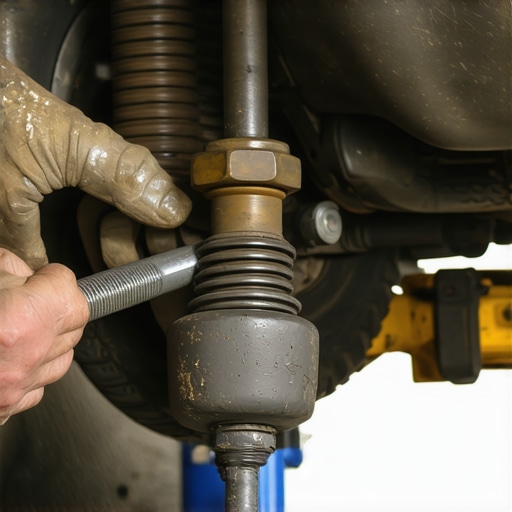
If the pop only happens once when you first turn the wheel or hit a specific bump, the problem is likely structural rather than rotational. This is where you need to get the car off the ground. When the wheel is suspended, the pressure is off the components, and you can find play that is invisible while the car is parked. Grab the tire at the 12 and 6 o’clock positions and try to rock it. If it moves, your ball joints are about to snap. This is a critical safety issue; a snapped ball joint will let your wheel fold outward like a broken wing while you’re driving. If you notice your steering wheel shakes at exactly 60 mph along with that pop, your tie rod ends—the parts that actually pull your wheels left and right—are likely the culprit.
Look Beyond the Wheels for the Source of the Clunk
Don’t assume every noise is a tire or an axle. Sometimes the ‘pop’ is actually the engine or transmission shifting inside the frame because a rubber mount has disintegrated. If you feel the pop specifically when you shift from park to drive, or notice why your transmission jumps out of gear on bumps, your suspension might be fine, but your drivetrain is physically jumping around. It feels like a suspension hit because the vibration travels through the entire subframe. I remember helping a neighbor who was convinced his struts were shot; we found out his transmission mount was so loose the whole gearbox was slamming against the firewall every time he hit the gas.
Why Your Alignment Still Feels Off
Even after you replace a part, you might find that your tires still wear unevenly after a professional shop alignment. This usually happens because one worn part hid another. If you replace a ball joint but leave a crushed control arm bushing, the ‘pop’ might go away, but the tire will still scrub against the pavement. Always inspect the rubber bushings for dry rot or ‘tears.’ If the rubber looks like an old, cracked eraser, it’s not doing its job of dampening the road shock. Taking these steps ensures that when you finally go in for expert auto repair, you can point exactly to the part that’s failing rather than paying a tech $150 an hour just to guess.
I see it every single week: a frustrated driver walks into a shop and asks for a regular tune-up, hoping it will magically silence that annoying rhythmic pop. Here is the hard truth that many shops won’t tell you: the term ‘tune-up’ is a relic of the 1970s. In a modern, computer-controlled vehicle, a tune-up usually involves spark plugs and software updates, neither of which will do a lick of good for a mechanical clunk in your front end. The biggest mistake you can make is assuming that ‘general maintenance’ covers specific mechanical failures. If you have a popping sound, you don’t need a filter change; you need a targeted diagnosis of your drivetrain or suspension geometry. Have you ever fallen into this trap? Let me know in the comments because I certainly did back in my rookie days.
A Tune-Up Won’t Fix a Broken Metal Part
One of the most nuanced mistakes I see experienced DIYers make is misidentifying a ‘neutralizing’ sensation. Sometimes you hit a bump, hear a pop, and for a split second, the car feels like it has no power. You might think your suspension just ‘gave’ a little, but you might actually be experiencing why your transmission feels like its neutralizing. When a transmission mount fails, the entire unit can shift during a jolt, causing the internal linkage to momentarily disengage or the computer to pull timing to protect the gears. This isn’t a suspension issue; it is a drivetrain alignment issue. According to the Car Care Council, nearly 80% of vehicles on the road are in need of at least one service or repair, and often, these are misdiagnosed because we tend to look where the noise is loudest, not where it starts.
Why does your transmission act up only when it is raining?
It sounds like a ghost story, right? But there is a very specific reason your transmission shifts late when its raining. Moisture can interfere with the electrical signals sent from your wheel speed sensors—the same sensors used by your traction control and ABS. If those sensors are dirty or the wiring is frayed, the car ‘pops’ and jerks because the computer is fighting a ghost-slip on the pavement. If you are hearing noises specifically in the wet, stop looking at your ball joints and start looking at your electrical connectors. This is the kind of high-level detective work that separates a parts-changer from a real technician.
Stop treating additives like a mechanic in a bottle
We have all seen those shiny bottles promising to fix leaks and stop noises instantly. I’ve spent a lot of time researching the truth about high-mileage oil additives, and the reality is sobering. While they can swell a rubber seal to stop a tiny drip, they cannot fix a cracked CV boot or a pitted gear. If you are pouring chemicals into your car to stop a mechanical ‘pop,’ you are likely just accelerating the damage by changing the fluid’s viscosity. Instead of a $20 bottle of ‘stop-leak,’ your money is better spent understanding how transmission overhauls save you money in the long run. A rebuild addresses the root cause; an additive just masks the symptoms until the part eventually fails at 65 mph. When you see the top signs your car needs expert auto repair now, trust your gut and get a professional eyes-on inspection before a simple pop turns into a highway horror story. Spending a little more on a precise fix today prevents you from being the person on the side of the road with a broken axle and a very expensive towing bill.Transitioning from the ‘horror story’ phase to the proactive maintenance phase requires a shift in your toolbox. If you are going to get serious about stopping that popping noise for good, you need to graduate from the basic socket set. I personally never touch a suspension bolt without a calibrated torque wrench. According to Society of Automotive Engineers (SAE) Standard J1703, even small deviations in fastener tension can lead to catastrophic failure in mechanical assemblies under high stress. When you replace a part like a control arm, just ‘eyeballing’ the tightness isn’t enough; you need to reach the specific foot-pounds required by the manufacturer to ensure the joint pivots without binding. I also highly recommend picking up the $10 tool that saves your engine from overheating because, as we discussed, drivetrain heat is the silent killer of your transmission mounts and bushings. Keeping your engine cool isn’t just about the radiator; it’s about preserving the life of every rubber component under the hood.
The Diagnostic Kit I Swear By
Beyond the heavy wrenches, you need digital eyes. I spent years guessing at noises until I started using a scan tool that could read live data to find a misfire or a transmission glitch. If you can see the RPMs dip or the gear ratio fluctuate exactly when you hear that ‘pop,’ you’ve moved from guessing to knowing. For those hard-to-find issues, the $15 tool to find a short circuit in your dash is a lifesaver when an electrical ghost makes your transmission shift late or your steering feel heavy. I also keep a pressure tester in my kit. Learning how to find a hidden coolant leak with a pressure tester has saved me from warped heads and seized engines more times than I can count. 
How do I maintain my suspension and drivetrain over time?
Long-term success isn’t about one-off repairs; it’s about a ritual. I suggest a ‘shake down’ every six months. Lift the car and check for play in the wheels and leaks in the boots. If you find a tiny tear in a CV boot early, you can replace the boot for $20 instead of the whole axle for $200. This is the core of regular tune-ups that actually matter. You should also be proactive about your fluids. Don’t believe ‘lifetime’ transmission fluid claims. Understanding how transmission overhauls save you money in the long run starts with realizing that fresh fluid is the cheapest insurance policy you can buy. Also, don’t forget the basics: essential car service tips for safe summer drives always include checking your alignment before a long trip.
Why Everything Is About to Get More Complicated
Looking ahead, the ‘pop’ you hear might not even be purely mechanical. We are moving toward a future where Advanced Driver Assistance Systems (ADAS) are fully integrated into your suspension. Within the next five years, your car will likely have sensors in the ball joints themselves that alert your phone before they fail. While this sounds great, it means a simple expert auto repair will require software recalibration alongside the hardware swap. We are becoming IT managers for our vehicles. My advice? Start getting comfortable with live data now. Try this: the next time you feel a slight vibration, plug in a scanner and look at your wheel speed sensor data while driving—it’s the fastest way to spot a failing bearing before it starts screaming.
The Hardest Lesson I Learned About Chasing Phantom Noises
I’ve spent years under lift bays, and if there is one thing I want you to take away, it is that your car communicates through vibration and sound long before it breaks. One of the biggest myths I had to unlearn was that ‘all old cars just rattle.’ That is simply not true. A well-maintained vehicle, regardless of age, should feel tight and predictable. If you are noticing top signs your car needs expert auto repair now, don’t wait for the metal-on-metal scream. I once ignored a slight vibration because I thought I was being ‘frugal,’ but it ended up costing me three times as much in secondary damage to my tires and steering rack. I also learned that you should never trust a part just because it is new; even brand-name components can have factory defects, so always re-inspect your work after the first 50 miles. Most importantly, remember that cleanliness is mechanical health. A torn boot that lets in a single grain of sand can kill a joint faster than 100,000 miles of normal driving.
The Gear That Saved My Sanity and My Steering
You don’t need a professional shop to get professional results, but you do need the right mindset. My personal ‘must-have’ list starts with a calibrated torque wrench. In the world of suspension, ‘tight enough’ is a recipe for a snapped bolt. I also swear by a set of chassis ears—small electronic microphones you can clip to different parts of the frame to hear exactly where the ‘pop’ originates while you drive. For those looking to be truly proactive, following essential car service tips for safe summer drives can prevent the heat-related expansion that often triggers these noises. I also highly recommend keeping the $10 tool that saves your engine from overheating in your glovebox; maintaining proper thermal health ensures your rubber bushings don’t bake into brittle, noisy plastic. These tools are the difference between a guessing game and a precision fix.
Don’t Let the Noise Win
Tackling a suspension or drivetrain issue can feel overwhelming, but you now have the blueprint to diagnose it like a pro. Whether you find that how transmission overhauls save you money in the long run is your path to peace, or you simply need to tighten a loose sway bar link, the power is in your hands. Taking action now doesn’t just save you money; it ensures your car remains a safe haven for you and your family. Start with the easiest tests first, trust your ears, and don’t be afraid to seek an expert auto repair when the job requires heavy machinery. You’ve got this—now get out there and silence that pop for good. Have you ever replaced a part only to have the noise come back the very next day? Let me know in the comments below!