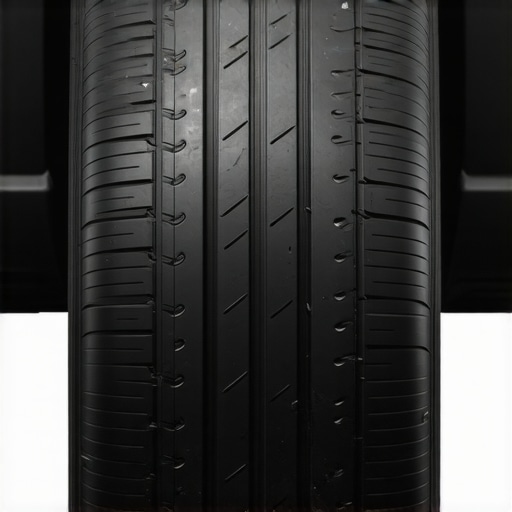
Why Your Tires Still Wear Unevenly After a Professional Shop Alignment
You’ve done everything right. You noticed your car pulling slightly to the right, or perhaps you saw the inner edges of your front tires looking a bit smoother than they should. You did the responsible thing: you took your vehicle to a shop for an auto repair wheel alignment. You paid the bill, looked at the computer printout showing all those satisfying green bars, and drove away thinking your tire troubles were over.
But three months later, you’re looking at your tread again, and the wear is worse than ever. How is that possible? You have the receipt. The machine said the wheels were straight. Why are you still burning through rubber?
My name is Ron Capozzi. After 30 years in the automotive industry – including years spent in the trenches as a technician and service expert at Atlantic Automall – I’ve heard this story more times than I can count. I’ve seen thousands of customers blame the alignment machine when the real culprit was hiding deep in the chassis. The truth is, a wheel alignment is only as good as the mechanical components holding those wheels in place. At md automotive, we treat the alignment as the final step of a process, not the only step.
In this guide, I’m going to pull back the curtain on why a “perfect” alignment doesn’t always save your tires and what you need to look for to actually fix the problem.
Section 1: The Alignment Myth, Why “Green” Doesn’t Always Mean “Good”
The biggest misconception in the automotive world is that an alignment “fixes” tire wear. In reality, an alignment is simply a measurement and adjustment of three primary angles: Camber, Caster, and Toe. When a technician performs an auto repair wheel alignment, they are adjusting the tie rods and eccentric bolts to ensure the wheels are square to each other and the road while the car is stationary on a level rack.
The problem? Your car doesn’t live on a level rack. It lives on the road, hitting potholes, navigating turns, and enduring the physics of 4,000 pounds of metal in motion. If the components that connect your wheels to your frame are compromised, that “perfect” alignment disappears the moment you back out of the service bay.
Many “big box” tire shops offer a “toe-and-go” service. They adjust the toe angle (the most common tire killer), ignore the rest, and send you on your way. But if your vehicle has underlying mechanical issues, you’re just throwing money away. This is why choosing a comprehensive shop like m d automotive is critical; we look at the vehicle as a complete system.
Section 2: Worn Suspension Components, The Foundation of Alignment
Think of your car’s suspension as the foundation of a house. You can hang the front door perfectly straight, but if the foundation is shifting, that door is going to stick within a week. In vehicle suspension repair, we often find that “play” in the system is the primary reason alignments fail to hold.
The Role of Ball Joints and Control Arms
Your control arms hold your wheel assembly in place, and the ball joints allow those wheels to pivot and move up and down. Over time, the internal lubricants in a ball joint dry out, or the rubber bushings in the control arms tear. When this happens, the wheel gains “lateral play.”
On the alignment rack, the wheel might sit perfectly. However, once you hit highway speeds, the force of the road pushes that wheel outward or inward. This dynamic change in geometry causes rapid, uneven wear that no static alignment can fix. If you suspect your suspension is reaching its limit, you should learn The Sign Your Ball Joints Are About to Snap before a simple tire wear issue becomes a catastrophic mechanical failure.
Bushings: The Silent Alignment Killers
At m & d auto repair, we frequently see rubber bushings that have dry-rotted. These small components act as cushions between metal parts. When they fail, the control arm can shift forward or backward under braking or acceleration. This alters your “Caster” and “Toe” dynamically, leading to “feathering” on your tire tread – a pattern where one side of the tread block is higher than the other.
Section 3: The Wheel Bearing Factor and Hub Runout
Another common reason for persistent tire wear after an md automotive repair alignment is a failing wheel bearing. The wheel bearing allows the wheel to spin freely with minimal friction. However, as bearings wear down, they develop “hub runout.”
Imagine a spinning top that starts to wobble as it slows down. That wobble is what happens to your wheel when a bearing is loose. Even if the alignment technician sets the angles correctly, the wheel itself is physically tilting on its axis because the bearing can no longer hold it steady. This often results in “camber wear,” where the inside or outside edge of the tire wears down prematurely because the wheel is leaning.
The tricky part is that a wheel bearing might not be loud enough for you to notice yet. While many bearings growl or hum, some simply become loose without making a sound. Understanding How to Diagnose a Bad Wheel Bearing by Sound Alone can help you catch this issue before you waste money on a second alignment. At a dedicated tire shop auto repair center, a technician should always “shake down” the front end to check for bearing play before starting the alignment process.
Section 4: Brake Drag and Hub Issues
It might seem strange to link your brakes to tire wear, but the two systems are intimately connected. Your braking system relies on calipers to squeeze pads against a rotor. If a caliper piston becomes stuck – a condition known as brake drag – that specific wheel will experience constant friction.
This does two things:
- Heat Generation: The excessive heat from a dragging brake can actually cause the tire’s rubber compound to soften and wear faster than the other three tires.
- Pulling: A dragging brake will cause the vehicle to pull to one side, mimicking an alignment issue. If you keep “correcting” the alignment to stop a pull caused by a bad caliper, you are actually putting the wheels out of spec to compensate for a brake problem.
If you are looking for a suffolk county brake service, ensure they check for “caliper slide” health. A brake auto repair shop that only changes pads without inspecting the calipers is doing you a disservice. Furthermore, if you’ve noticed odd noises lately, you might want to investigate Why Your Brakes Squeal Even with New Pads to see if a mechanical drag is the underlying cause of your tire wear.
Section 5: Tire Quality, Pressure, and Balancing
Sometimes, the problem isn’t the car at all – it’s the tires. Not all rubber is created equal. Cheap, “no-name” tires often have inconsistent internal construction, which can lead to belts shifting inside the tire. When a belt shifts, the tire will never wear evenly, regardless of how straight the alignment is.
The Importance of PSI and Rotation
Even with a perfect alignment from md auto, incorrect tire pressure will destroy your tread.
- Over-inflation: Causes the center of the tire to bulge, wearing out the middle of the tread.
- Under-inflation: Causes the sidewalls to collapse slightly, wearing out both the inner and outer shoulders.
For those managing high-mileage vehicles or commercial vans, md fleet services emphasizes the “rotation and balance” schedule. An unbalanced tire creates a vertical vibration (hopping) that leads to “cupping” – diagonal patches of wear around the circumference of the tire. This is often mistaken for a suspension issue, but it’s simply a matter of weight distribution on the wheel itself. Check out these Essential Car Service Tips for Safe Summer Drives to keep your rubber in top shape during peak heat months.
Section 6: Chassis and Frame Integrity
This is the “elephant in the room” that many shops don’t like to talk about. If a vehicle has been involved in a collision – even a minor one – the frame or “unibody” might be slightly tweaked. In the industry, we look at the “thrust angle,” which is the direction the rear wheels are pointing in relation to the center line of the vehicle.
If your frame is bent, your car might “crab-walk” down the road. The front wheels are aligned to the steering wheel, but the rear wheels are pushing the car at an angle. To keep the car going straight, you have to turn the front wheels slightly, which creates a constant “scrub” on the tires. This is why an auto engine repair shop or auto exhaust repair shop might refer you to a specialized frame shop if they can’t get your alignment specs to hold.
If you’ve bought a used car or were recently in a “fender bender,” you need to know How to Tell if Your Frame is Bent After a Fender Bender. A bent frame is one of the few things that can make a car truly “un-alignable.”
Section 7: Choosing the Right Shop, The M D Automotive Standard
The difference between a frustrating experience and a fixed vehicle often comes down to the shop you choose. A “cheap” alignment is often the most expensive one you’ll ever buy because it doesn’t fix the root cause, leading to the purchase of new tires much sooner than necessary.
At m d automotive, we don’t just hook your car up to a computer and twist a few bolts. A professional md auto repair starts with a “pre-alignment inspection.” We check the following:
- Tire pressure and tread depth.
- Tie rod ends and ball joints for play.
- Wheel bearings for runout.
- Shock absorbers and struts for leaks or “dead spots.”
If we find a bad part, we tell you. We won’t perform an alignment on a car with a failed control arm bushing because we know it won’t last. Whether you’re coming in for an auto shop ac repair or a complex engine diagnostic at auto md, our goal is the long-term health of your vehicle. We pride ourselves on being a comprehensive solution, from the auto engine repair shop to the exhaust and suspension bays.
Section 8: Conclusion, Your Path to Even Tire Wear
If your tires are wearing unevenly after an alignment, don’t just go back for another alignment. It’s time for a deeper look. The issue is likely a worn suspension component, a failing wheel bearing, or perhaps a lingering issue from a previous accident. Tires are one of the most expensive maintenance items on your vehicle; don’t let a $20 bushing ruin a $800 set of rubber.
Stop guessing and start fixing. If you’re tired of the “alignment runaround,” it’s time to see what a professional diagnostic can do for your peace of mind and your wallet. Review the Top Signs Your Car Needs Expert Auto Repair Now and schedule an inspection with a team that understands the “whole vehicle” philosophy.
Drive safe, keep your tires inflated, and remember: if the foundation isn’t solid, the alignment won’t stick.