
It was 6:00 AM, freezing cold, and I was already ten minutes late for a meeting that could’ve been an email. I hopped into my truck, turned the key, and… nothing. Not even a groan. Just a dashboard as dark as my morning coffee. I’d just bought that battery three weeks ago. I felt like a total amateur, standing there in the driveway with my hood up, wondering why I’d spent $150 on a ‘defective’ hunk of lead. But here’s the kicker: it wasn’t the battery’s fault. It was a tiny, silent thief—a parasitic drain—hiding behind a faulty glove box light. We’ve all been there, staring at a dead car and feeling that sinking realization that a simple regular tune up wouldn’t have caught this electrical ghost. Today, I’m going to show you how to hunt down that drain so you never have to deal with the ‘click-click-silence’ routine again.
Stop Blaming Your Alternator and Start Hunting Ghosts
Most people assume a dead battery means you need a new alternator or a fresh slab of lead. I made that mistake early on. I actually returned a perfectly good battery to the parts store, swearing up and down it was a dud. The guy behind the counter just looked at me with pity. The truth is, your car is always ‘awake’ to some degree, but when a module fails to go to sleep, it sucks the life out of your cells while you’re dreaming. It’s frustrating, but learning how to find a parasitic battery drain with a simple multimeter is a skill that saves you hundreds in misdiagnosed parts. Even something as weird as why your car battery dies every time it rains can often be traced back to these hidden draws. Did you know that according to data from the American Automobile Association (AAA), battery-related issues remain the top reason for roadside assistance calls, yet many are simply victims of unchecked parasitic loads rather than internal failure?
Does This Actually Require a High-End Shop?
You might be thinking this is too technical. I get it. Electrical work feels like dark magic. But honestly, if you can use a kitchen scale, you can use a multimeter. You don’t need an expensive expert auto repair session just to see which fuse is pulling power. Have you ever felt like your car was intentionally trying to ruin your morning by going dead for no reason? Tell me I’m not the only one who has yelled at a silent engine block. Once you realize that most ‘dead’ batteries are just victims of a single electrical fault, the whole mystery disappears. We’re going to narrow down the suspects, check the hidden ground strap, and get your peace of mind back before the next cold snap hits.
Set Your Multimeter to the Right Mode First
Before you even touch a wrench, you have to understand that current is like water in a garden hose. If the nozzle is closed but the meter is still spinning, you have a leak. To find it, you need to set your multimeter to the highest Amperage setting—usually 10A—to avoid blowing the internal fuse of the meter itself. I once toasted a $40 multimeter because I forgot the initial surge when you first connect it can be huge. Always start high and dial down to milliamps once the car settles. Once you have disconnected the negative battery terminal, place one probe on the battery post and the other on the cable end. You are now the bridge that the electricity must cross. 
Trick the Modules Into Sleep Mode
It’s a common mistake to start pulling fuses immediately. Most modern cars have a ‘cooldown’ period. If you start pulling things while the body control module is still talking to the instrument cluster, you’ll get a false reading. I remember sitting in my garage for 45 minutes once, just watching the meter, waiting for a stubborn 2018 sedan to finally drop below 0.50 amps. It felt like watching paint dry, but that patience is what separates a DIYer from someone who just replaces parts blindly. While you’re under there, check for the hidden ground strap that causes weird electrical ghosts because a bad ground can sometimes mimic a drain by preventing modules from shutting down properly. You also need to latch your door and trunk catches with a screwdriver so the car thinks it is locked and shut, even with the doors open.
The One-by-One Fuse Pull That Isolates the Thief
Now comes the detective work. Start pulling fuses one by one from the engine bay box first, then the interior. Watch the multimeter. When the amperage drops significantly, you have found the circuit that is staying ‘awake.’ I once spent four hours on a client’s car only to find that the hidden fuse that controls your dashboard illumination was linked to a faulty aftermarket radio install. It was a $2 fix for a problem they thought was a dead alternator. If your car is older, you might find that the trick to cleaning battery corrosion with baking soda and water solves half your connectivity issues before you even find the drain. And don’t ignore the bigger picture; a car that struggles to hold a charge might be overdue for a regular tune up to ensure all systems are firing correctly. Learning how to find a parasitic battery drain with a simple multimeter is about process, not luck. If the drain is coming from something like the transmission control module, you might need to investigate how transmission overhauls save you money in the long run by preventing total electrical failure of the solenoids. If you see top signs your car needs expert auto repair now, like smoke from the fuse box or melting plastic, stop immediately and call a pro. For those preparing for the heat, checking these electrical draws is part of the essential car service tips for safe summer drives to prevent being stranded in 100-degree weather.
Stop Pulling Fuses if You Drive a Modern Car
Every YouTube tutorial tells you to pull fuses one by one while watching your multimeter. In my experience, that is actually the worst way to diagnose a modern vehicle. When you pull a fuse, you break the circuit. When you plug it back in, you ‘wake up’ the computer module attached to it. This can cause a surge of power that resets the very ghost you were trying to find, leaving you more confused than when you started. Instead, the real pros use a technique called voltage drop testing. By touching the tiny metal test points on top of the fuse while it is still plugged in, you can see if current is flowing through it without disturbing the system. This level of precision is what separates a DIY attempt from a regular tune up that actually addresses electrical health. 
Why does my car seem to wake up the second I touch it?
The biggest ‘oops’ factor I see in my shop is people forgetting about the hood and door switches. Modern security systems are incredibly sensitive. If you leave the hood open to test the battery, the car ‘knows’ and keeps the security module in an active state. You have to manually trip the latch with a screwdriver to trick the car into thinking it is fully locked. According to the Society of Automotive Engineers (SAE), an acceptable parasitic draw should be under 50 milliamperes (0.050A). Anything higher means something like the forgotten fuse that disables your power locks or an interior light is staying active. If you don’t account for these ‘awake’ modules, you’ll misdiagnose a perfectly healthy system as a failure.
The Smart Alternator Trap You Must Avoid
Another nuance most beginners miss is the role of the ‘smart alternator.’ These units don’t just pump out 14 volts all the time; they communicate with the Engine Control Unit (ECU) to save fuel. If your ECU thinks the battery is full, it might stop charging, making it look like the alternator is dead. This is often why people get scammed into buying parts they don’t need. Knowing how to tell if a transmission shop is lying about a rebuild often comes down to understanding these electrical signals first, as many ‘shifting’ problems are actually just low-voltage issues affecting the solenoids. If you’re seeing top signs your car needs expert auto repair now, like erratic gear hunting or flickering screens, it’s rarely just a battery; it’s a communication error.
Keep Your Electronics Cool to Prevent Ghost Draws
Heat is the enemy of electrical resistance. During the peak of July, your car’s modules can stay active longer just to run cooling fans or monitor temperatures. This is a key part of essential car service tips for safe summer drives. When a module gets too hot, its internal resistance changes, which can lead to a ‘leak’ of current that wouldn’t happen in the winter. Understanding how transmission overhauls save you money in the long run often starts with ensuring your wiring harness isn’t brittle from years of heat cycles, which eventually leads to these parasitic drains. Have you ever fallen into this trap where you replaced the battery only for it to die three days later? Let me know in the comments.
Keep the Gremlins Out of Your Wiring Harness
If you’ve been burned by a three-day-old dead battery, you’re likely ready to throw the whole car away. But before you do that, let’s talk about the gear that actually fixes this. I’ve seen guys try to use a $5 test light from a gas station to find a parasitic draw. That is like trying to hear a whisper in a hurricane. To do this right, you need a multimeter with a high input impedance—ideally 10 megohms or higher. This prevents the meter itself from becoming a path for the current, which can skew your results. I personally swear by the Fluke 87V because its ‘Peak Capture’ feature can catch the millisecond-long ‘wake up’ signals that modern modules send out. If you’re serious about how to find a parasitic battery drain with a simple multimeter, precision is your only friend. 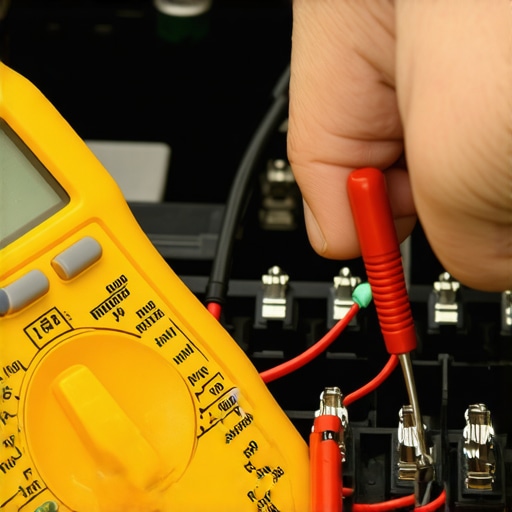
How do I keep my car’s electrical health from tanking?
Maintaining a car’s electrical system isn’t a ‘one and done’ job. You should be checking your battery terminals for oxidation every six months. I’ve found that the best way to clean your engine bay without shorting wires is to use dedicated electrical contact cleaner on the sensitive bits and keep the high-pressure water far away from the ECU. Regular maintenance is how you maximize your cars lifespan with regular tune ups. You also want to keep an eye on your alternator’s output during the summer. Heat increases resistance, and as we noted in our essential car service tips for safe summer drives, an overworked charging system will eventually cook your battery from the inside out.
Why a Cheap Meter Might Cost You a Car
Accuracy matters because of the ‘threshold of pain’ for car batteries. According to the Fluke Automotive Electrical Diagnostics Manual, a variance of even 0.02 volts can indicate the difference between a charging system that’s healthy and one that’s slowly killing your cells. If you aren’t using a quality tool, you might miss the top signs your car needs expert auto repair now, leading to a breakdown when you least expect it. Looking ahead, the rise of 48-volt mild-hybrid systems means these parasitic ghosts are only going to get more complex and harder to track. You won’t just be looking for a stuck light bulb; you’ll be looking for a data-bus that refuses to shut down. Even complex issues like how transmission overhauls save you money in the long run are becoming tied to electrical integrity, as solenoids require perfect voltage to shift correctly. My advice? Grab your multimeter this weekend and perform a voltage drop test across your fuses while the car is off. It’s the single best way to ensure your ‘ghost’ hasn’t moved back in.
The Hardest Lesson I Learned About Electrical Gremlins
I used to think every electrical issue was a terminal illness for the car. I once spent three days chasing a drain that turned out to be a cheap USB charger left in the cigarette lighter. Don’t overcomplicate it. Most issues are human error or poorly installed aftermarket gear. Here are a few lightbulb moments from my years in the shop:
- Aftermarket remote starts and alarms are the #1 source of ‘hanging’ modules that refuse to sleep.
- A tiny spark when you reconnect the terminal is often just capacitors charging, not necessarily a massive leak.
- Cleaning your connections is half the battle; use the trick to cleaning battery corrosion with baking soda and water to ensure your multimeter readings are actually accurate.
Gear I Trust When the Multimeter Is Not Enough
While a high-quality multimeter is my go-to, I also recommend keeping a set of needle probes for your leads. These allow you to back-probe connectors without destroying the weatherproofing seals. If your car sits for long periods, a quality Battery Tender is non-negotiable. It keeps the chemistry healthy while you are away. For those deeper dives, keeping a record of your regular tune ups helps you spot when a new symptom is part of a larger electrical trend.
Take the Mystery Out of Your Dashboard
Electrical work is intimidating, but once you conquer one ‘ghost,’ you will never look at your car the same way again. You are no longer at the mercy of a shop’s hourly diagnostic rate for something as simple as a stuck relay. If you see top signs your car needs expert auto repair now, such as a hot fuse box or melting plastic, that is your signal to call a pro. But for most of us, how to find a parasitic battery drain with a simple multimeter is the ultimate DIY skill that puts you back in the driver’s seat. Have you ever found a truly bizarre object or fault causing your battery to die overnight? Let me know below.