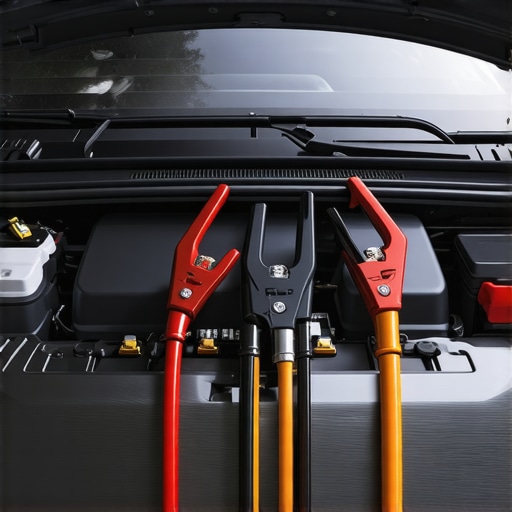
I stood there in my driveway, shivering, looking at the “Ready” light that wouldn’t come on. My hybrid was a high-tech paperweight. Like a lot of people, I reached for my heavy-duty jumper cables, thinking I’d just clamp them onto the battery and be done. Big mistake. I actually ended up causing the one electrical fault that most mechanics misdiagnose as a dead battery because I didn’t realize that jumpstarting a hybrid isn’t about cranking an engine—it’s about waking up a computer. [IMAGE_PLACEHOLDER]
Why You Can’t Treat Your Hybrid Like a 90s Sedan
Hybrid electrical systems are delicate. You aren’t turning a massive starter motor directly; you’re just providing enough juice to the 12V system so the high-voltage battery contactors can close. If you get it wrong, you’re looking at a massive top signs your car needs expert auto repair now situation. According to the Society of Automotive Engineers (SAE), improper jumpstarting can send voltage spikes through the inverter/converter assembly, which is significantly more sensitive than a traditional alternator system. It’s scary stuff. I once saw a DIYer fry an entire ECU because they reversed the polarity on a Prius. Don’t be that guy. Trust me, an inverter costs more than my first three cars combined.
Is this actually worth the risk of doing it myself?
You might be thinking you should just call a tow truck and pay for a car service. I get it. The fear of an expensive mistake is real. But knowing the “Jump Start Terminal” secret saves you that $150 tow fee and gets you back on the road in five minutes. It is absolutely safe as long as you follow the specific sequence I’m about to show you.
Locate the Jump Points Without Breaking Anything
I remember my first time trying this; I spent twenty minutes looking for a battery in the engine bay that wasn’t even there. Most hybrids hide the 12V battery in the trunk, under the rear seat, or tucked behind a plastic panel. Instead of digging through your trunk in the rain, you need to find the dedicated jump-start terminal under the hood. It’s usually hidden under a small red plastic cover inside the fuse box. If you’ve ever had to maximize your cars lifespan with regular tune-ups, you know that small details like this make the difference between a quick fix and a weekend-long headache. Have you ever popped the hood of a hybrid and felt like you were looking at a spaceship instead of a car? It’s intimidating, but once you find that red flap, you’re halfway home.
Get Your Donor Car Ready to Share Power
Before you even grab the cables, make sure the cars aren’t touching. This isn’t just about paint; it’s about preventing a ground loop that could fry both vehicles’ electronics. If you see white crusty stuff on the terminals, use the trick to cleaning battery corrosion with baking soda and water to ensure a solid connection. If you don’t have a clean contact, the computer won’t get enough voltage to click the relays into place.
Park the Vehicles Close But Never Touching
I once saw two cars spark just by their bumpers grazing while jumping. In a hybrid, that spark can travel through the frame and hit the inverter. Always leave at least six inches of daylight between the cars.
Hook Up the Cables in This Exact Order
This is the sequence that saves your ECU. First, take the red clamp and attach it to the positive (+) terminal under that red flap we found earlier. Then, attach the other red clamp to the positive terminal of the donor car. Next, connect the black clamp to the negative (-) terminal of the donor car. Finally—and this is where most people mess up—attach the last black clamp to a solid, unpainted metal bolt on the frame of your hybrid, far away from the jump terminal. I usually look for a clean strut tower bolt. Using a frame ground helps prevent sparks near the battery, which is a safety habit I learned after nearly singeing my eyebrows off on a ’98 Camry. 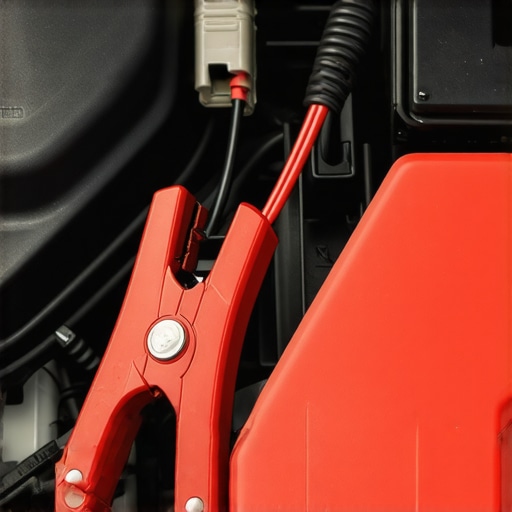
Avoid the Negative Terminal on the Dead Battery
Grounding to the frame is non-negotiable. If you ground directly to the negative terminal of a weak 12V battery, you risk a surge that the hybrid’s DC-DC converter might not handle well.
Give the System Time to Stabilize
Once connected, start the donor vehicle and let it run for about three to five minutes. You aren’t trying to ‘charge’ the hybrid’s massive drive battery. You are simply stabilizing the 12V system. If you’ve been dealing with a car that won’t start for days, you might want to learn how to find a parasitic battery drain with a simple multimeter once you get home, because this 12V battery shouldn’t just die on its own.
Look for the Ready Light Instead of a Crank
Now, get into your hybrid and press the Power button. You aren’t listening for the roar of an engine. You are looking for that green ‘READY’ light on the dash. Once that light stays solid, the high-voltage system has taken over and is now charging the 12V battery itself. I remember the first time I did this, I kept trying to ‘crank’ it and got frustrated because it was silent. I didn’t realize the car was already ‘on’ and ready to drive. If the dash lights flicker but it won’t go to ‘Ready,’ you might actually have the 10 dollar relay that cures a mystery no start issue rather than a dead battery. Stay in the car for a minute. Let the systems talk to each other. Sometimes you’ll see a ‘Check Hybrid System’ warning—don’t panic yet. Usually, this is just the computer complaining about the low voltage event. In some cases, the hidden ground strap that causes weird electrical ghosts can also make the computer throw codes after a jump.That’s the thing about modern hybrids—they aren’t just cars; they are mobile local area networks (LANs). Most people think a battery is just a bucket of electricity, but in a hybrid, it’s a critical stabilizer for the communication bus. If that 12V voltage drops even slightly, the sensors start sending ‘garbage’ data. This is often why you’ll see the hidden ground wire that ruins your sensors mentioned in technician forums; a bad ground or a weak battery mimics a catastrophic hardware failure when it’s really just a lack of clean power.
Stop Revving the Donor Car Engine
Here is a piece of advice that goes against everything your dad taught you: do not have the donor car driver floor the gas while you are starting your hybrid. In the old days, we revved the engine to help the alternator provide more cranking amps. With a hybrid, you aren’t cranking an engine. You are waiting for the DC-DC converter to handshake with the high-voltage pack. Revving the donor car can actually create voltage ripples. The National Institute for Automotive Service Excellence (ASE) warns that these voltage transients are a leading cause of ‘ghost’ codes in hybrid control modules. You want a steady, clean 13.8 to 14.2 volts from the donor, nothing more. If you see your lights flickering, you might have 5 signs your transmission is silently overheating or other electrical stress symptoms that a simple jump won’t fix.
The Inverter Trap That Costs Thousands
I’ve seen DIYers get overconfident and try to use a portable ‘jump box’ on the high-boost setting. Never do this. Those high-amp boosts are designed to turn over a frozen V8, not to wake up a computer. Using one can send a surge directly into the inverter/converter assembly. If you smell something like burnt toast, you’ve likely just turned your car into a very expensive paperweight. At that point, you aren’t looking for a quick fix; you’re looking for top signs your car needs expert auto repair now because that inverter is the heart of your drive system. 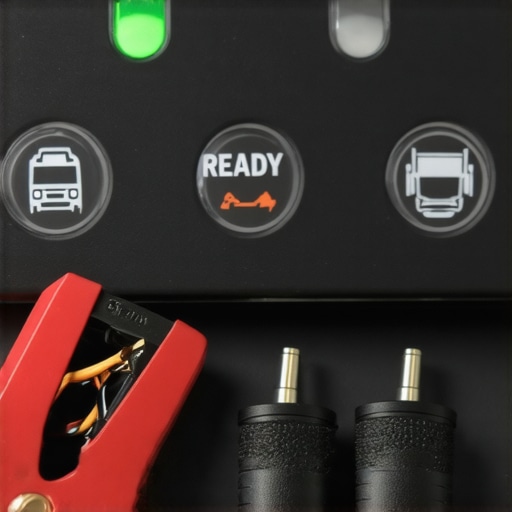
Does Your Hybrid Need a Full Service After a Jump?
A dead 12V battery is often a symptom, not the disease. If your car is over five years old, that jumpstart is a warning shot. When you finally get the car running, it’s the perfect time to look into how to save money on your 100k mile service. Hybrids rely on that 12V battery to keep the computer memory alive; when it dies, the car ‘forgets’ its fuel trim calibrations and idle speed settings. You might notice the engine running rough for the first few miles—that’s the car relearning how to breathe. If it doesn’t smooth out, you might be dealing with the real difference between full synthetic and blends affecting your variable valve timing, or worse, a mechanical glitch. Don’t let a shady shop convince you that you need a total rebuild without proof; knowing how to tell if a transmission shop is lying about a rebuild can save you thousands. Have you ever fallen into this trap of misdiagnosing a simple battery issue for something much larger? Let me know in the comments.Once your car is finally back in the ‘Ready’ state, don’t just drive off and forget about it. A dead 12V battery often leaves behind digital ‘bruises’ in the form of stored fault codes that can affect your car’s performance for weeks. To stay ahead of the curve, I recommend every hybrid owner keep a high-quality Bluetooth OBD-II adapter in their center console. I personally use an OBDLink MX+ because it handles the specialized CAN bus protocols that allow the hybrid’s inverter to communicate with the drive motor. Using a generic, cheap scanner might fail to show you 5 signs your transmission is silently overheating, which is a common byproduct of electrical surges or cooling pump failures. Scanning your car after a jumpstart allows you to clear out the ‘low voltage’ noise and see if there is a legitimate issue, like the tiny vacuum leak that causes a rough idle, which often gets blamed on the battery itself. 
How do I maintain my hybrid’s health over the years?
Maintenance for a hybrid is a two-front war: you have to care for the high-voltage electronics and the traditional mechanical components simultaneously. I’ve found that the best way to maximize your cars lifespan with regular tune-ups is to focus on the cooling systems—both for the engine and the hybrid battery. Most people don’t realize their hybrid battery has an air filter that can get clogged with pet hair and dust. If that battery gets too hot, its internal resistance climbs, and your fuel economy will tank. According to the technical documentation for the Dr. Prius diagnostic platform, maintaining a voltage delta of less than 0.2V between your battery blocks is the gold standard for longevity. If you see that gap widening, it is one of the top signs your car needs expert auto repair now before a single module failure kills the entire pack.
The Secret to Longevity Lies in the Fluids
We often talk about batteries, but the mechanical side needs love too. Applying the secret to longevity for high mileage engines means looking at your transaxle fluid. In many hybrids, this fluid also acts as a coolant for the electric motors. If it breaks down, you’re looking at an internal short. This is why understanding how transmission overhauls save you money in the long run is vital; preventing the heat-related death of an e-CVT is much cheaper than replacing one. Especially before a long trip, checking these systems is part of the essential car service tips for safe summer drives that I swear by. Looking forward, I predict we are entering an era of ‘predictive DIY.’ Within the next few years, apps will likely alert us to a failing 12V cell weeks before it actually strands us in the driveway. My advice? Don’t wait for the future to catch up. Go grab a Bluetooth scanner this weekend, download a hybrid-specific diagnostic app, and run a ‘Full System Health’ report. Catching one ‘ghost code’ today could save you a three-thousand-dollar inverter replacement tomorrow.
Hard-Won Truths from My Years Under the Hood
Over the years, I’ve learned that the most expensive mistakes usually happen when you’re in a hurry. First, never assume a ‘no-start’ is just a dead battery; sometimes the hidden ground wire that ruins your sensors can create the exact same symptoms. Second, the 12V battery in a hybrid is often smaller than you’d expect because it doesn’t have to turn a massive starter—this means it lacks the ‘reserve capacity’ of a traditional car. If you leave a dome light on for even an hour, it’s often toast. Finally, always verify your connections twice. A reversed polarity on an inverter-based system is often an ‘instant death’ sentence for the car’s central computer. [IMAGE_PLACEHOLDER]
My Go-To Gear for Hybrid Peace of Mind
If you want to avoid being stranded again, I highly recommend building a small ‘hybrid kit’ that stays in your vehicle. I never leave home without a lithium-ion jump pack, which is much safer than traditional cables because most modern versions have built-in polarity protection. I also swear by a digital multimeter; it’s the only reliable way to accurately see how to find a parasitic battery drain with a simple multimeter before it leaves you dead in the driveway. Finally, keep a Bluetooth OBDII scanner handy. It allows you to check for those annoying ‘low voltage’ ghost codes that might trigger top signs your car needs expert auto repair now even when the actual hardware is perfectly fine.
Take Control of Your High-Tech Drive
Owning a hybrid doesn’t have to be intimidating. Once you understand that you are managing a computer network on wheels rather than just a mechanical engine, you gain a massive advantage over the average driver. You can maximize your cars lifespan with regular tune-ups and smart 12V management, saving yourself thousands in dealership diagnostic fees over the life of the car. You’ve got the knowledge now—don’t be afraid to use it. Have you ever been stranded by a hybrid that refused to show the ‘Ready’ light? Drop your story in the comments below!