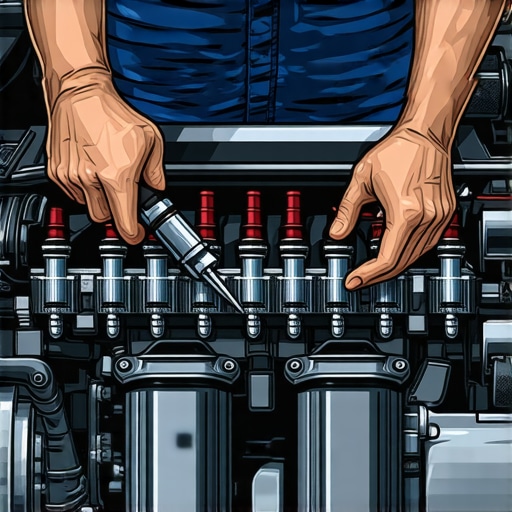
Ever been stranded in the middle of traffic, desperately trying to coax your car to start, only to realize it’s not running smoothly anymore? I remember the frustrating moment when my engine hiccuped, and I knew that dirty fuel injectors might be the culprit. At first, I thought, “I’ll just take it to the shop,” but the thought of costly repairs and the hassle of removing the engine kept bugging me. That lightbulb moment hit — there’s got to be a way to clean those injectors without tearing apart the entire engine!
Why You Should Care About Fuel Injector Maintenance Right Now
Fuel injectors are small but mighty components—they’re responsible for delivering the perfect amount of fuel into your engine to keep it running efficiently. Think of them as tiny chefs preparing your car’s fuel dish. When they get clogged or dirty, your engine’s performance suffers: reduced power, higher fuel consumption, rough idling, and even stalling. But here’s the kicker: most folks think that cleaning these injectors requires professional work and engine removal. Not true!
Recent studies show that over 30% of engine problems are caused by fuel delivery issues, which means cleaning your injectors regularly can save you a lot of money and hassle over time (source: Car Maintenance Weekly). You don’t have to be a mechanic to give your injectors a good scrub—there are simple, no-removal methods that work surprisingly well.
If you’ve ever experienced hesitation upon acceleration or noticed your car feels sluggish without obvious reasons, there’s a good chance dirty injectors are to blame. Have you faced similar frustrations, where an engine’s poor performance leaves you puzzled? Well, you’re not alone, and the good news is, you can take matters into your own hands.
In this post, I’ll guide you through effective techniques to clean your fuel injectors without pulling the engine apart. Trust me, you don’t need to be a professional or own fancy tools—just a bit of patience and the right know-how. Ready to bring your engine back to life? Let’s dive into how you can do this yourself, starting with common mistakes to avoid and tools that will make the job easier.
Get Your Hands Dirty: Preparing for the Clean
Start by ensuring your engine is cool to prevent burns. Gather your supplies: a fuel injector cleaner designed for in-tank use, safety gloves, and a cloth. Open your hood and locate the fuel rail; it’s the metal pipe with injectors attached, usually running across the engine top. Disconnect the fuel pump relay to prevent fuel from flowing while working. This step is crucial—think of it as turning off the water before fixing a leak in your plumbing.
Allow Fuel System to Depressurize
Turn the ignition to the ‘on’ position without starting the engine, and wait for about 10 seconds. This releases pressure in the fuel lines, reducing the risk of spraying fuel later. Repeat this process a few times. Remember, safety first—wear gloves and goggles if possible, as fuel under pressure can be messy. Think of it like releasing pressure from a soda bottle before opening it to avoid a soda explosion.
Introduce the Cleaner
Now, reconnect the fuel line to the fuel injector cleaner bottle. Follow the product instructions closely—some require pouring the cleaner directly into your tank, while others connect via the vacuum line. For a DIY approach, pouring cleaner into your fuel tank and filling up with gas is effective. Imagine adding a detox smoothie to a clogged pipe; over time, it dissolves the gunk and clears the pathway. This method doesn’t require removing injectors or engine disassembly.
Run the Engine for Effectiveness
Start your car and let it idle for 10-15 minutes. During this time, the cleaner circulates through your fuel system, working on those stubborn dirty injectors. You might notice smoother idling and improved acceleration, much like clearing a congestion in your own breathing—feel the difference as your engine breathes freely again. Gain more insights on how regular tune-ups, like the ones discussed in this guide, keep your car running smoothly.
Finish Up and Confirm Success
Turn off your engine and reconnect the fuel pump relay if you removed it earlier. Start the engine again, and listen for smoother operation. If you notice persistent rough idling or hesitation, repeat the process or consider professional cleaning. Think of it like brushing your teeth: a good rinse keeps problems at bay, but sometimes a deeper clean is needed. Regularly cleaning your fuel injectors is like giving your car a health check-up—it keeps performance optimal and prolongs engine life. Remember, avoiding common mistakes, like using the wrong cleaner or neglecting depressurization, makes all the difference. For more maintenance tips, check out this resource. And if you find that cleaning alone doesn’t do the trick, consulting a professional can save you time and money in the long run.
Beyond the Surface: The Hidden Nuance of Proper Car Maintenance
Many drivers believe that regular oil changes or scheduled tune-ups are sufficient to keep their vehicles in top shape, but in my experience, this is only part of the story. One common misconception is that mechanical issues only arise from major failures—however, subtle nuances often determine a car’s true health. For example, neglecting to consider the impact of dynamic components like transmission solenoids or sensors can lead to expensive repairs down the line, despite recent service records. Expert mechanics know that cars are complex systems where small overlooked details, such as fluid condition or connector integrity, can be the difference between a smooth ride and a costly breakdown.
Contrary to popular belief, not every auto repair immediately requires a full overhaul. Sometimes, misdiagnosed symptoms — like late shifts in a transmission — stem from simple issues, such as low fluid levels or minor sensor faults. This leads to another myth: that DIY fixes can replace professional diagnosis. While some maintenance tasks are manageable at home, advanced diagnostics involve knowing the subtle signs of underlying problems, which only seasoned technicians can recognize. Skipping this expertise might result in ‘fixing’ the wrong problem, wasting time, money, and risking further damage.
One trap to avoid is using generic or cheap replacement parts. Many are tempted by low-cost alternatives, but these can cause more harm than good, especially when it comes to critical parts like control modules or transmission components. As noted by industry experts, cheap parts often lack durability and can induce additional failures, negating any initial savings. Always prioritize quality and consult trusted sources or professionals before purchasing replacements. Remember, investing upfront in the right components preserves your vehicle’s longevity and safety.
What Should an Informed Car Owner Know About Advanced Maintenance?
If you’re wondering how to identify subtle signs of transmission wear or early engine trouble, pay attention to unusual vibrations, delayed shifts, or inconsistent acceleration. These nuances often escape basic diagnostic tools but can be detected through keen observation and knowledge of your vehicle’s behavior. Regular comprehensive tune-ups — such as those recommended in this guide — help catch these issues before they escalate. For instance, replacing transmission fluid at optimal intervals and ensuring sensors are functioning properly are critical steps that many overlook, leading to more costly repairs later.
Understanding the importance of system-specific diagnostics—not just the mechanical parts—can save you significant money and extend your car’s lifespan. A professional’s insight into the intricacies of transmission dynamics or fuel injection systems is invaluable. Learn how transmission overhauls can actually be cost-effective in the long run by addressing issues early. Future-proof your vehicle by staying informed about these nuanced aspects of auto maintenance.
Have you ever fallen into this trap of underestimating the complexity of car repairs? Let me know in the comments, and don’t forget: proper knowledge is the key to smarter, safer vehicle care.
Maintaining your car over the years requires more than just regular oil changes or quick fixes. Investing in the right tools and adopting effective methods can extend your vehicle’s lifespan, improve performance, and save you money in the long run. One of my personal favorites is the use of a high-quality scan tool like the BlueDriver Bluetooth Professional OBD2 Scanner. I prefer this device because it connects seamlessly with my smartphone, providing comprehensive diagnostics that go beyond simple error codes, including live data and repair reports. This level of insight allows me to catch potential issues—like a slipping transmission or faulty sensors—before they escalate into costly repairs.
How do I keep my tools sharp and reliable over time?
Regular calibration and proper storage are crucial. For digital tools, updating firmware ensures you have the latest features and bug fixes. I keep my scanner in a dedicated toolbox, avoiding moisture and extreme temperatures, which can damage sensitive electronics. For physical tools such as socket sets or screwdrivers, choosing OEM-grade or high-quality brands like GearWrench or Snap-on adds durability and precision, making maintenance tasks smoother and more accurate. Personally, I replace worn-out bits and sockets annually to prevent stripping or slipping during critical jobs.
Alongside tools, staying informed about emerging diagnostic methods is essential. For instance, Laser Alignment technology is becoming increasingly popular for wheel balancing and suspension diagnostics, leading to more accurate adjustments and longer-lasting components. As automatic transmission control modules evolve, professional-grade diagnostic software like the Mitchell UltraMate or Snap-on Verus can integrate with vehicle sensors, providing data that helps plan preventative maintenance—reducing unexpected breakdowns and costly repairs. In the future, I predict that AI-powered diagnostics will become commonplace, offering even smarter insights into vehicle health, much like Tesla’s approach to predictive maintenance.
What’s the secret to maintaining your transmission without frequent visits to the shop?
Regularly inspecting and replacing transmission fluid at recommended intervals is key. I recommend using a high-quality synthetic ATF like Mobil 1 Synthetic Transmission Fluid, which I personally trust for its stability at high temperatures and longevity. This isn’t just about topping off; a thorough drain-and-fill every 30,000 miles (or as specified) ensures contaminants don’t build up, preventing premature wear. Remember, addressing subtle signs early, such as delayed shifting or slipping, can save you from costly overhauls down the line. For detailed guidance, check out this expert article on how transmission overhauls can be more cost-effective than you think—especially when addressed proactively.
What the Truth Hidden Deep in Car Repair Taught Me
- Sometimes, the biggest breakthroughs come from simple actions. When I first decided to clean my fuel injectors myself, I underestimated how much a small step could reveal about my car’s overall health, reminding me that patience often uncovers the most valuable insights.
- Patience and attention to detail are your best allies. Rushing through the cleaning process or skipping safety steps can lead to setbacks. I learned that taking time to properly depressurize lines and carefully follow instructions results in a smoother, more effective cleanup.
- Understanding your vehicle’s intricacies empowers you. Diving into DIY solutions like injector cleaning gave me a new appreciation for how these small parts contribute massively to performance, teaching me that knowledge truly is power in auto maintenance.
My Top Picks to Keep Your Car Running Smoothly
- BlueDriver Bluetooth Professional OBD2 Scanner: This tool’s ease of use and comprehensive diagnostic data help me catch potential issues early, saving money and stress, making it an essential part of my toolkit.
- High-Quality Fuel Injector Cleaners: I trust brands like Chevron Techron or Royal Purple for their effectiveness in dissolving deposits without damaging delicate engine components, ensuring my curbside DIY projects are successful.
- Trusted Maintenance Guides: The articles from Collision Fixer continually inform my decisions, helping me approach car maintenance holistically and avoid costly surprises down the line.