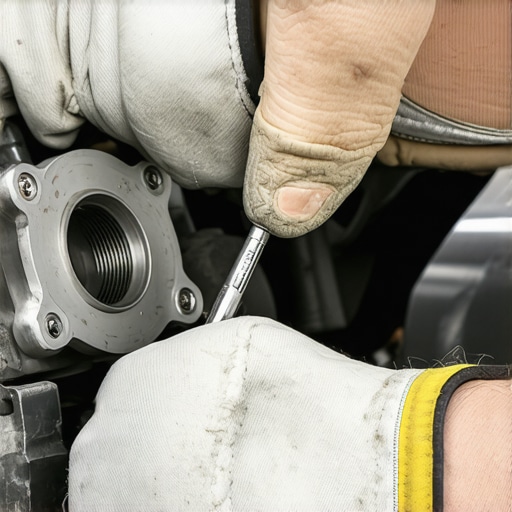
Ever been cruising down the street, pressing gently on the accelerator, only to feel your car hesitate or tug as if it’s got a mind of its own? I sure have. One time, during a routine drive, my engine sputtered and stalled briefly at a stoplight. Turns out, the culprit was a sticky throttle body—the sneaky component that controls your engine’s air intake and, ultimately, your responsiveness. That moment was a real lightbulb for me: I realized that neglecting small maintenance tasks could turn an otherwise reliable car into a sluggish, unresponsive mess.
Why a Dirty Throttle Body Ruins Your Driving Experience
The throttle body acts like a gatekeeper, regulating the amount of air entering your engine. When it gets gummed up with carbon deposits and grime, it doesn’t open and close as smoothly. This causes rough idling, hesitation during acceleration, and even poor fuel efficiency. I learned this the hard way, after ignoring my throttle body’s condition for too long. That oversight led to increased fuel consumption and a noticeable loss of responsiveness—problems I wouldn’t accept from my own car.
If you’re tired of feeling like your vehicle is fighting against you when you step on the pedal, then cleaning your throttle body might be the key to restoring that smooth, responsive ride you once enjoyed. Today, I’ll walk you through how I discovered this simple fix, avoided expensive repairs, and overall gained back the confidence in my car’s performance. Trust me, if your vehicle is acting sluggish, this could be the easiest and most satisfying repair you’ll do this month.
Skeptical? Wondering if Cleaning Your Throttle Body Really Makes a Difference?
Trust me, I was there. I thought it was all hype, that maybe the problem was deeper, more complicated. I made the mistake early on of assuming that only mechanics could handle such stuff, and I let issues linger. It wasn’t until I did my own research and rolled up my sleeves that I realized how straightforward this task truly is. In fact, neglecting to clean the throttle body is a common mistake that many car owners, including myself at first, make—one that can cost you a lot in the long run. For a detailed guide, check out this helpful article.
Now, if you’re wondering whether this is worth your time or just another DIY fad, I promise it’s a game changer. And if you’ve ever faced unexpected misfires, rough idling, or hesitation mid-acceleration, then you’re in the right place. We’re about to tackle this problem head-on and get your vehicle running like new.
Let’s dive into how a simple cleaning process can restore your vehicle’s responsiveness and keep you confidently on the road.
Gather Your Tools and Prepare Your Vehicle
Start by parking your car on a level surface and turning off the engine. Gather necessary tools: a throttle body cleaner, screwdrivers, torque wrench, and rags. Disconnect the negative battery cable to prevent electrical issues, especially if you’re unfamiliar with engine components. I remember once I skipped this step, and my radio flashed errors—that’s a reminder to always prep properly before starting. Ensuring your car is cooled down and disconnecting the battery helps avoid accidents and keeps your electronics safe.
Access the Throttle Body
Locate the throttle body, usually near the air intake manifold connected to the air filter box. Remove the air intake hose clamps using a screwdriver or socket wrench. Carefully detach the hose, watching for any clamps or clips that might be tight. I once struggled because I didn’t loosen all clamps thoroughly; the hose snapped off unexpectedly, so take your time and be gentle. Removing the hose gives you clear access for cleaning, much like revealing the gatekeeper to your engine’s airflow.
Inspect and Clean the Throttle Body
Check for Deposits and Gunk
Look inside the throttle chamber; it should be shiny and free of carbon buildup. If you see a black, sticky film, that’s your culprit behind hesitation or rough idle. I once neglected this step, and it caused my car to stall randomly. Use a flashlight if needed to see clearly inside.
Apply Throttle Body Cleaner
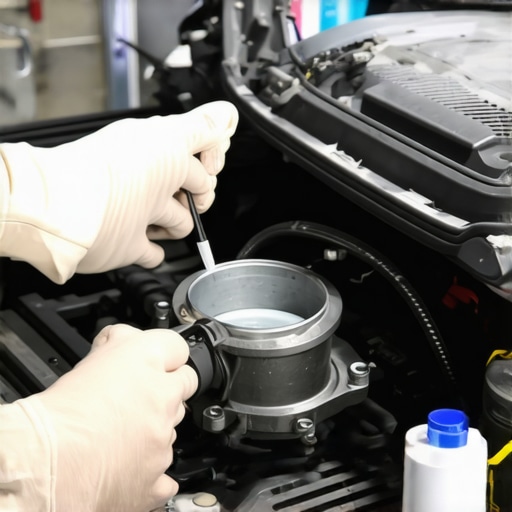
Spray the cleaner generously onto a lint-free cloth or a soft-bristled brush. Gently scrub the inside of the throttle plate and walls without forcing any mechanical parts. Avoid spraying directly onto sensors or electronics. I learned this the hard way—direct spray can damage sensitive components. Focus on breaking down carbon deposits with a light touch, similar to cleaning a delicate surface.
Wipe and Remove Residue
After scrubbing, wipe away loosened grime with a clean cloth. Repeat if necessary until the surfaces are clean and shiny. Make sure no leftover gunk remains; otherwise, it might bake onto the throttle plate when you restart. Think of it like cleaning a window—clear visibility depends on thorough wiping.
Reassemble and Test Drive
Reattach the air intake hose, tightening clamps securely but not over-tightening to avoid damage. Reconnect the negative battery terminal. Start the engine and let it idle for a few minutes; you’ll notice a smoother, more responsive throttle transition. Sometimes, the engine might idle roughly initially—this is normal as the ECU recalibrates. If issues persist, consider checking for vacuum leaks or sensor errors, but typically, a clean throttle body does the trick. Restoring your throttle’s smooth operation brings your vehicle back to life, much like resetting a beneficial reflex after a minor injury.When it comes to auto repair and maintenance, many car owners rely on common myths and simplified advice that can actually lead to costly mistakes. One prevalent misconception is that all auto shops provide the same quality of work, but in my experience, the expertise and transparency of repair facilities like collisionfixer can vary significantly. The truth is, not every mechanic or service provider has the same level of specialization, especially when it comes to complex systems like transmissions or intricate tune-ups. For instance, some shops might perform a quick fix that temporarily solves a problem but overlooks underlying issues, which can cause recurring failures and more expensive repairs down the line.
A critical nuance often overlooked is the importance of diagnosing the root cause rather than just addressing symptoms. This is especially true for transmission repairs; many believe a transmission overhaul is always necessary when shifting issues occur, but sometimes, cleaning or flushing the system with the correct fluid and additives can extend its life considerably. According to expert advice from industry leaders, neglecting precise diagnostic procedures can lead to unnecessary replacements, which tank your budget and trust.
Moreover, a common mistake is ignoring the state of ancillary components that influence the overall health of your vehicle. For example, neglecting the condition of your vehicle’s cooling system or the tightness of your belts and hoses can cause your engine or transmission to wear prematurely. Regular tune-ups, when performed correctly, not only improve performance but also prevent small issues from spiraling into expensive repairs. Visiting reputable sources, such as [Collisionfixer’s guide](https://collisionfixer.com/maximize-your-cars-lifespan-with-regular-tune-ups), can help you understand the real value of preventative maintenance.
Another advanced point worth considering is how some repair shops may overlook modern software-based diagnostics. Today’s vehicles rely heavily on electronic control units (ECUs), and software updates can fix bugs that lead to misfires or sluggish responses, issues often mistaken for mechanical faults. Failing to update or properly calibrate these systems can cause persistent errors, even after repairs. It’s akin to resetting your device’s firmware—just fixing hardware isn’t enough. Conducting comprehensive diagnostics ensures all systems are functioning harmoniously, preserving your vehicle’s longevity.
Be wary of the false security that a quick fix provides. Relying solely on immediate visual inspections or guesswork about parts often results in more damage over time. Instead, advocate for diagnostic-driven repairs, which are more precise and cost-effective. For accurate and advanced auto care, seek out specialists who prioritize transparency and expertise. Check out [this article](https://collisionfixer.com/how-transmission-overhauls-save-you-money-in-the-long-run) to understand the importance of long-term planning in transmission repairs, which is applicable across many repair types.
Have you ever fallen into this trap? Let me know in the comments. Remember, understanding these nuances can help you avoid unnecessary expenses and keep your vehicle running smoothly longer.
Tools That Make the Difference
When it comes to maintaining and repairing your vehicle, having the right tools can save you both time and money. I swear by a high-quality digital multimeter, not just for diagnosing electrical issues but also for verifying battery health and wiring integrity. My personal favorite is the Fluke 115 because of its precision and durability. For more complex tasks like transmission diagnostics, I rely on an OBD-II scanner with advanced functions, such as the BlueDriver, which provides detailed live data and trouble codes, making troubleshooting far more efficient.
Investing in a good torque wrench is non-negotiable. I use it regularly to tighten bolts to manufacturer specifications, ensuring safety and avoiding over-tightening that can cause damage. It’s a simple gear but critical for tasks like replacing brake rotors or suspension components. Additionally, a set of screwdrivers with magnetic tips helps in reaching tight spaces around engine components without losing screws. I’ve found that these basic tools, paired with the right troubleshooting software, enable me to handle most maintenance tasks confidently.
Software That Keeps Repairs Accurate
Modern cars depend heavily on electronic systems, so software tools are essential. I always use an OBD-II diagnostic scanner connected via Bluetooth to my smartphone. The app provides real-time data, sensor readings, and live graphing. It’s insightful for diagnosing issues like misfires, hesitation, or rough idling before pulling apart components. For deeper diagnostics, I turn to manufacturer-specific software when possible, especially for complex transmission or ECU issues. Regularly updating this software is vital because manufacturers routinely release patches to fix bugs and improve system performance, so I make it a point to keep my tools up-to-date.
How do I maintain my diagnostic tools over time?
Keeping your tools calibrated and updated is crucial for ongoing accuracy. I verify my multimeter’s calibration annually using a known voltage source and update my scanner’s firmware whenever new versions are released. Proper storage in a padded case prevents damage, and keeping the batteries fresh ensures reliable readings. As technology advances, I predict diagnostic software will become even more integrated with cloud systems, allowing real-time updates and remote diagnostics. For now, staying proactive with maintenance of these tools guarantees precise readings and trustworthy diagnostics.
Long-Term Results Through Consistent Upkeep
Investing in quality tools and software doesn’t just make repairs easier; it extends your vehicle’s health over years. Routine checks with these devices help you catch issues early, preventing costly failures down the line. For example, monitoring transmission fluid temperature or sensor data can prompt timely flushes or repairs, avoiding surprise breakdowns. The key is consistency—regularly using precision tools ensures your vehicle remains reliable and safe on the road.
Want to stay ahead of costly repairs? I recommend scheduling preventive tune-ups, including fluid replacements and system checks, whenever the diagnostic data indicates anomalies. You can learn more about maximizing your car’s lifespan with professional tune-ups here. Don’t wait for warning lights; proactive maintenance with the right tools is your best strategy.
What I Didn’t Expect About Fixing My Car
- Realizing that small components like the throttle body can dramatically influence driving smoothness was an eye-opener for me. It taught me that sometimes, the tiniest parts are the key to a big difference.
- Practicing patience and gentle handling during cleaning made me appreciate how delicate and precise auto repairs can be. Rushing can cause more harm than good, a lesson I now hold close.
- Discovering the importance of the right tools and proper prep transformed my perspective on DIY auto maintenance. Equipment like quality cleaners and a torque wrench are true game changers.
Tools & Resources I Trust for Auto Revival
- Fluke 115 Digital Multimeter: Its accuracy and durability give me confidence when diagnosing electrical issues. Trustworthy tools like this make all the difference.
- BlueDriver App & Scanner: I rely on this for comprehensive OBD-II diagnostics. It provides detailed insights that save me time and guesswork.
- Regular tune-up guides from CollisionFixer help me stay ahead of potential problems and prolong my vehicle’s life.
Embrace Your Drive to Keep Moving Forward
Taking charge of your vehicle’s health by understanding and performing tasks like throttle body cleaning empowers you and boosts your confidence on the road. Small, informed steps today can save you from major headaches tomorrow. Remember, every journey towards better auto maintenance begins with a single action—so why not start now? Your vehicle’s responsiveness and longevity depend on your commitment to keep it in top shape. Share your stories or ask questions below—your experiences might inspire someone else to make that first move toward DIY auto care!