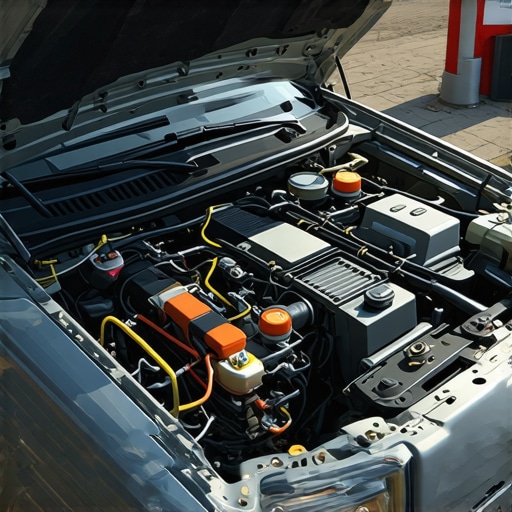
Have you ever stepped on the gas right after filling your tank, only to feel your engine stumble or hesitate like it’s caught in a moment of indecision? I remember the first time this happened to me. I was topped off with fuel, confident that I was fueling my car properly, yet suddenly it groaned, shuddered, and refused to accelerate smoothly. It was frustrating, and frankly, a little worrying. That lightbulb moment made me realize I wasn’t alone—many drivers face this perplexing issue without understanding what’s really going on behind the scenes.
The Hidden Truth About Post-Fueling Engine Hesitation
This hesitation is more common than you might think, and it can stem from several factors, including fuel system issues, sensor glitches, or even simple maintenance oversights. What made me finally resolve the problem was diving into the details of how fuel interacts with the rest of your engine. It turns out that after a fill-up, a surge of extra fuel or vapors can mess with sensors that are responsible for balancing the air-fuel mixture, leading to temporary hesitation.
Is This Just a Normal Quirk or Something Serious?
Early on, I made the mistake of dismissing this hiccup as a minor annoyance. But ignoring it can sometimes mask more serious issues, like a clogged fuel line, dirty sensors, or a faulty fuel cap. Interestingly, according to a study published by the Department of Energy, improper sealing or fuel system leaks are surprisingly common causes of engine performance issues, including hesitation or stalling. Recognizing these signs early can save you from costly repairs down the line.
So, if you’ve faced that nagging feeling of your engine holding back right after you top off, you’re not imagining things. The good news is that most of these issues are fixable, often with simple maintenance or sensor recalibration. In the following sections, I’ll walk you through the practical steps to diagnose and fix this problem, so you can get back to smooth driving without the sudden shudders or hesitation. Ready to get your engine running confidently again? Let’s dive into what might be causing this and how to fix it once and for all.
Inspect and Replace the Fuel Cap
Start by checking your fuel cap; a loose or faulty cap can cause vapor leaks, triggering sensor issues that lead to hesitation. Tighten or replace it if needed. I once found a cracked cap during a quick check, and after replacing it, the hesitation disappeared within days.
Clean or Replace the Mass Air Flow Sensor
The mass airflow sensor monitors incoming air, adjusting fuel mixture accordingly. Over time, dirt accumulates, causing false readings. To clean it, locate the sensor (usually with a plastic tube connected to the air intake), remove it carefully, and spray with a specialized sensor cleaner. I cleaned mine following this method, and my engine responded much smoother afterward. Regular cleaning can prevent hesitation issues.
Check and Service the Fuel Injectors
Clogged or dirty fuel injectors impair fuel delivery, leading to hesitation after refueling. Use a fuel injector cleaner additive or have them professionally cleaned if necessary. During my last tune-up, I added a high-quality injector cleaner, which resulted in quicker throttle response and eliminated stumble signs.
Test and Calibrate the Oxygen Sensors
oxygen sensors measure exhaust gases, informing the ECU to adjust fuel mixture. Faulty sensors can mislead the ECU, causing hesitation. Use an OBD-II scanner to check sensor readings; if they’re out of spec, replace or recalibrate them. I used a scanner to identify my faulty sensors, which solved persistent hesitation issues.
Examine the Engine Control Unit for Software Updates
Sometimes, outdated ECU software causes misinterpretation of sensor data. Check with your manufacturer for updates, or visit a mechanic who can reflash the ECU. I once updated my ECU firmware, which smoothed out throttle response and fixed hesitation after refueling.
Address Possible Vacuum Leaks
Vacuum leaks can cause sensors to receive incorrect air readings, leading to hesitation. Spray carb cleaner around vacuum hoses; if engine RPMs change, you have a leak. Replace cracked hoses immediately. I detected a leak this way, replaced the hose, and the hesitation issue was resolved.
Perform Regular Maintenance Checks
Prevent future problems by maintaining your fuel system: replace filters, check fuel lines, and keep sensors clean. I schedule a thorough check-up every 10,000 miles, which has kept my car running smoothly. Remember, neglected parts can cause cumulative issues, so stay proactive in your maintenance routine.
By following these steps, you’ll systematically eliminate the common causes of hesitation after filling up. Regular check-ups and timely part replacements are your best defense against unsettling engine stumble. For more insights on maintaining your vehicle’s electrical system, see this guide on preventing battery failures.
 Many car owners believe that following basic maintenance routines is enough to keep their vehicles running smoothly, but there’s a lot more nuance involved. A prevalent myth is that all auto repairs are straightforward and that a quick fix will solve persistent issues. In reality, professional diagnostics often reveal underlying problems that simple replacements can’t address alone. For example, relying solely on inexperienced mechanics for transmission repairs can lead to misdiagnosis and further damage, since these systems are intricate and require specialized knowledge. One common mistake is assuming that every sensor or component has an identical function or replacement cost, but advanced systems like adaptive cruise control or electronic stability control involve nuanced calibration and software updates.
Another area often misunderstood is the importance of ground wiring in vehicle electronics. A weak or corroded ground can mimic sensor failures or cause erratic behaviors, but many overlook this because it’s not immediately visible. According to studies from automotive electrical experts, poor grounding accounts for a significant percentage of mysterious malfunctions, including those affecting the transmission’s responsiveness. That said, jumping straight into replacing expensive parts without checking the ground wiring can lead to unnecessary expenses and frustration.
For those aiming to understand the deeper mechanics, consider the process of resetting a stale oil life monitor. Many assume that a simple reset will guarantee accurate oil condition readings, but without proper sensor checks or oil analysis, you might be masking wear and tear that needs actual attention. This highlights the importance of knowing when to perform software resets versus when to conduct substantive repairs.
An advanced question arises: How do modern transmission systems integrate with vehicle sensors for optimal performance, and what are the common pitfalls during repair? Modern transmissions often depend heavily on sensor inputs for shifting algorithms; misalignments or calibration errors can result in harsh shifts or slipping. Experts emphasize that calibration requires precise diagnostic tools—using generic tools can sometimes do more harm than good. As a precaution, always verify the compatibility of your diagnostic equipment with your vehicle’s make and model to prevent miscalibration.
Ultimately, understanding the layered complexity of auto systems is essential for effective maintenance. Regularly educate yourself about your car’s electronics and mechanical interplay. For instance, failing to address minor issues like loose ground wires can escalate into transmission failures, leading to costly repairs. Visiting reliable sources such as CollisionFixer can provide insights on specific problems like [the 12 ground wires that trigger a transmission limp mode](https://collisionfixer.com/the-12-ground-wire-that-triggers-a-transmission-limp-mode). Stay proactive, question assumptions, and avoid falling into common repair traps. Have you ever fallen into this trap? Let me know in the comments.
Keeping It Working: Tools and Strategies for Reliable Vehicle Maintenance
Ensuring your car remains dependable over the years requires more than just routine check-ups; it demands the right tools and disciplined maintenance practices. From diagnostic scanners to specialized cleaning equipment, having the appropriate gear allows you to catch issues early and keep your vehicle running smoothly. I personally rely on a high-quality OBD-II scan tool that supports advanced functions like live data streaming and sensor testing, which has saved me from costly repairs and unexpected breakdowns. Additionally, investing in a good multimeter enables me to troubleshoot electrical issues, such as faulty ground wires that can wreak havoc on transmission responsiveness, as discussed in my previous posts.
When it comes to preventative maintenance, I recommend keeping a detailed service log. It helps me track when to replace filters, fluids, or perform sensor calibrations, extending the life of components like the transmission and fuel system. For example, regularly inspecting and cleaning the exterior paint isn’t just aesthetic—corrosion can accelerate internal wear, especially in harsh climates. For internal systems, I use specialized cleaning kits for injectors and sensors, which I’ve found more effective than generic sprays.
Looking ahead, the trend is shifting towards smart diagnostic tools integrated with smartphones and cloud-based data analysis. These advancements promise quicker diagnostics and more proactive maintenance, minimizing downtime. Predictive analytics will increasingly inform us about the health of critical systems like the transmission and engine control units. As vehicle technology evolves, staying ahead with the latest tools will be essential for dedicated car owners.
Wondering How to Maintain Your Vehicle’s Electrical System Over Time?
One key aspect is ensuring the grounds are solid and free of corrosion. Regularly inspecting the ground wires prevents mysterious malfunctions that can mimic sensor failures and lead to costly repairs. Remember, a well-maintained electrical system is the backbone of reliable transmission and engine performance. Start by checking the battery terminals and grounding points periodically, especially after harsh weather or long road trips. Using a digital multimeter to test voltage stability can reveal issues before they escalate.
Finally, pairing your manual checks with software updates and calibration ensures your vehicle’s systems operate as intended. Nowadays, some repair shops offer advanced diagnostics that can even detect subtle grounding issues and software glitches. Make it a habit to revisit your tools and maintenance routines every six months—this proactive approach keeps your vehicle performing at its best for the long haul.
Try scheduling a comprehensive sensor calibration using your scan tool today, and experience the difference a fine-tuned system makes. Remember, investing in proper tools and disciplined maintenance not only extends your car’s lifespan but also enhances safety and driving enjoyment.
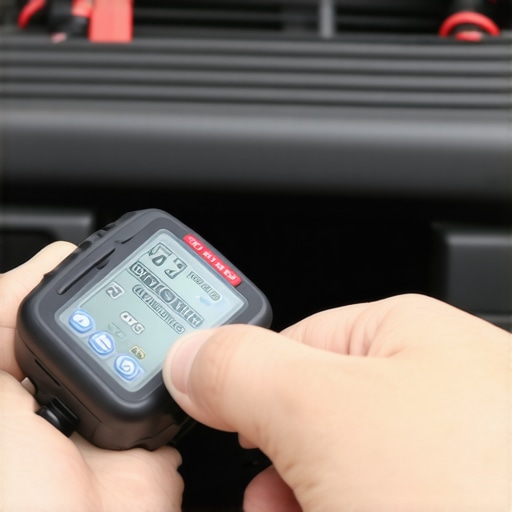
Prompt: Close-up of a mechanic’s hand using a digital OBD-II scanner to diagnose a vehicle, with visible wires and dashboard in background.
Overcoming engine hesitation after refueling is more than just a simple fix—it’s about understanding the intricate dance between your vehicle’s sensors, systems, and your maintenance habits. One eye-opening realization I had was that small overlooked details, like a slightly loose fuel cap or a dirty sensor, could be the key to smooth, hesitation-free driving. Embracing a proactive approach to diagnostics and maintenance transforms frustrating surprises into confidence on the road. Remember, each tweak and check, supported by knowledge and the right tools, brings you closer to a vehicle that responds seamlessly, mile after mile. Keep learning, stay attentive to your car’s whispers, and enjoy the journey of truly knowing your vehicle inside out.