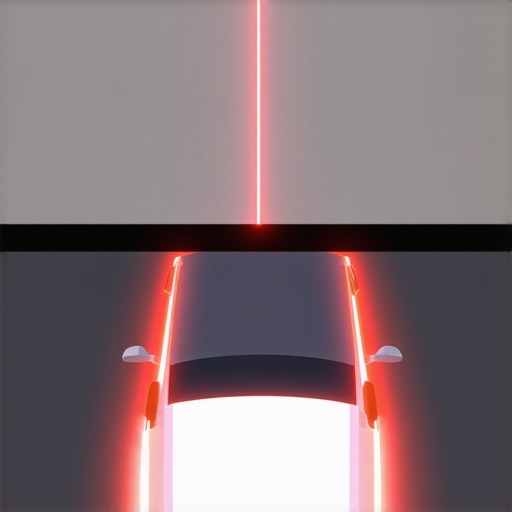
Why Your Emergency Braking System Is Triggered by Shadows After a Windshield Swap
Imagine driving down a clear, sun-drenched highway at 70 miles per hour. There isn’t a car in sight for a quarter-mile. Suddenly, without warning, your seatbelt jerks tight, your dashboard lights up like a Christmas tree, and your car slams on the brakes with violent force. Your heart races as you realize there was absolutely nothing in the road – just the long, dark shadow of an overpass you were about to drive under. This terrifying phenomenon is known as “phantom braking,” and if you have recently had a windshield replacement, the cause is likely sitting right behind your rearview mirror.
As an ADAS Calibration Specialist, I see this scenario more often than I’d like. Modern vehicles are no longer just mechanical machines; they are sophisticated mobile computers. When you replace a windshield today, you aren’t just swapping out a piece of glass; you are reinstalling the primary optical lens for your vehicle’s safety systems. If your car is behaving erratically, it is a sign that your ADAS calibration is compromised. Finding a qualified auto repair near me is the first step in ensuring your vehicle remains a protector rather than a liability. In this guide, we will dive deep into the technical reasons why shadows become obstacles and why precision is the only way to restore safety.
Before we go further, it is important to recognize the Top Signs Your Car Needs Expert Auto Repair Now, as phantom braking is often just the most visible symptom of a deeper electronic misalignment.
Section 1: The “Phantom” in the Machine
The term “phantom braking” refers to a situation where a vehicle’s Automatic Emergency Braking (AEB) system activates in the absence of a genuine collision threat. While the industry has made strides in refining these systems, the most common catalyst for a sudden spike in phantom braking events is a recent windshield swap. To understand why, we have to look at the windshield as more than a wind barrier – it is a mounting bracket for the vehicle’s “eyes.”
Most modern cars utilize a Forward-Facing Camera (FFC) mounted to the upper interior of the glass. This camera is the primary sensor for Lane Departure Warning (LDW), Adaptive Cruise Control (ACC), and AEB. When a technician removes the old glass and installs a new one, that camera is unplugged, moved, and reattached. Even the slightest deviation in the camera’s final resting position changes the way the software interprets the world. Without a professional visit to an auto repair shop for recalibration, the car is essentially driving with a “blurred” or “crosseyed” perspective of the road ahead.
Section 2: The Modern Windshield: More Than Just Glass
In the past, glass was glass. Today, a windshield is a high-tech optical component. It features specific clarity levels, precise thicknesses, and a specialized “frit” – the black ceramic dots around the edges – that is designed to house the ADAS camera bracket without interfering with its field of view. When you are deciding How to tell if a body shop used cheap aftermarket parts, the windshield is a prime place to look. Aftermarket glass that doesn’t meet OEM specifications can have minute distortions that the human eye can’t see but a camera sensor can.
The camera relies on a clear, undistorted path through the glass to calculate distances. If the new glass has a different refractive index or if the mounting bracket is off by even a fraction of a millimeter, the geometric calculations performed by the vehicle’s computer will be wrong. Consider this: a camera tilt of just 1 degree can result in the system’s projected “collision path” being off by several feet at a distance of 100 feet. This means the car might think a car in the adjacent lane is actually in your lane, or it might mistake the pavement for a wall. This is why ADAS calibration is not an optional “add-on” – it is a fundamental requirement of the repair process.
Section 3: The Science of Shadows: Why Your Car “Sees” a Wall
Why are shadows specifically the culprit? The answer lies in how camera-based ADAS systems process images. Unlike LiDAR, which uses laser pulses to measure distance, or Radar, which uses radio waves, a camera uses pixels and contrast detection. The software is programmed to look for “edges” – areas where light and dark meet abruptly – to identify objects like cars, pedestrians, and barriers.
When your camera is correctly calibrated, the software knows exactly where the horizon is and where the road surface should be. It ignores the “edges” created by shadows on the ground because it knows they are on the horizontal plane. However, if the camera is tilted too low or is misaligned following a windshield swap, the road surface enters the “danger zone” of the software’s logic.
A sharp shadow cast by a bridge, a large overhead sign, or even a line of trees creates a high-contrast edge. To a misaligned camera, this horizontal line on the road can be misinterpreted as a vertical object – a stopped vehicle or a barrier. The system’s logic dictates that if a solid object appears suddenly in the path of travel, the AEB must engage to save lives. This is a classic “false positive.” It is worth noting that while you might be worried about Why your new brakes are making a grinding noise, that is a mechanical issue; phantom braking is a purely electronic failure of perception.
The Role of Sensor Fusion
Many high-end vehicles use “sensor fusion,” combining camera data with radar data. In these systems, the radar (which is great at detecting metal objects) and the camera (which is great at identifying what those objects are) must agree. If the camera is misaligned, it might “see” a shadow and ask the radar for confirmation. If the radar is also slightly out of spec, or if the camera’s visual data is weighted more heavily in the software’s decision-making matrix, the car will brake. This conflict between sensors is a recipe for disaster on the highway.
Section 4: The Precision Problem: Why Millimeters Matter
The physical installation of a windshield is a manual process. Even the best glass technicians, using the best urethane and tools, cannot guarantee that the camera bracket on the new glass is in the exact XYZ coordinate position as the previous one. Furthermore, the glass itself acts as a lens. Light bends as it passes through glass (refraction). If the new glass has a slightly different curvature, the light hitting the camera sensor will be shifted.
If you find that your car pulls to the right even after an alignment, you are experiencing the mechanical version of this precision problem. In the digital world of ADAS, a similar “pull” happens when the camera’s centerline is off. If you are searching for an auto repair near me, you must ensure the shop has the specialized electronic tools to perform a digital reset of these parameters.
Another factor often overlooked is the quality of the installation itself. Poorly seated glass can lead to vibrations or even air gaps. While you might be looking for The $10 trick to fix a whistling windshield at highway speeds, a whistling windshield is often a sign that the glass isn’t sealed perfectly, which can cause the camera bracket to vibrate, leading to intermittent sensor errors and more phantom braking.
Section 5: Static vs. Dynamic Calibration: What You Need to Know
When you take your vehicle to a mechanic near me for calibration, they will perform one of two types of procedures – or sometimes both, depending on the manufacturer’s requirements.
Static Calibration
Static calibration is performed inside a specialized service bay. The vehicle is parked on a perfectly level floor, and the technician sets up specific targets (black and white patterns) at precise distances and heights. The vehicle’s onboard computer is then put into a “learning mode” where it looks at these targets to identify its new “zero point.” This process accounts for the specific angle and height of the camera behind the new glass. If your steering wheel is crooked after a front-end hit, the static calibration will also likely fail because the thrust angle of the car is off, proving how interconnected these systems are.
Dynamic Calibration
Dynamic calibration requires the vehicle to be driven on the road. The technician connects a diagnostic tool and drives the car at a steady speed on a road with clear lane markings. The system “learns” by observing real-world objects like road lines and guardrails. Some manufacturers, like Honda and Toyota, often require a static setup followed by a dynamic road test to ensure the system is fully operational.
It is a dangerous myth that “the car will calibrate itself eventually.” While some systems have self-learning capabilities, they are designed to make minor adjustments over time, not to compensate for the massive shift caused by a new windshield installation.
Section 6: The Risks of Ignoring the Issue
Ignoring phantom braking is a gamble with your life and the lives of others. When a car brakes for a shadow, it creates an immediate risk of a rear-end collision. Drivers behind you are not expecting your vehicle to drop 20 MPH in a split second for no reason. Furthermore, the psychological toll on the driver is significant; once you lose trust in your vehicle’s safety systems, you become a more stressed and reactive driver.
There is also the “inverse risk.” If a camera is misaligned enough to mistake a shadow for a car, it might also mistake a car for a shadow. In a critical moment where AEB should save you from a collision, a miscalibrated system might fail to engage because it doesn’t recognize the obstacle as being in the “collision zone.” This is why you should Never Trust the Insurance Adjuster’s First Collision Estimate if it doesn’t include a line item for professional ADAS calibration. Insurance companies often try to shave costs, but calibration is a non-negotiable safety requirement.
Section 7: Conclusion & Expert Recommendations
The transition from traditional auto glass to ADAS-integrated glass has changed the landscape of automotive repair. We can no longer treat a windshield swap as a simple cosmetic or structural fix. It is a technical recalibration of the vehicle’s most important safety sensors. If your car is braking for shadows, it is telling you – loudly – that its eyes are not aligned with its brain.
To ensure your vehicle remains safe, always follow these expert steps:
- Demand OEM Glass: Whenever possible, use Original Equipment Manufacturer glass to ensure the best optical clarity for your sensors.
- Verify Calibration: Ask for a calibration report from the auto repair shop. This document proves that the system was successfully tested and meets factory specs.
- Check Your Alignment: Since ADAS relies on the vehicle’s direction of travel, ensure you get an alignment near me if you notice any pulling or steering issues.
- Stay Proactive: Follow Essential Car Service Tips for Safe Summer Drives to keep all your vehicle’s systems in top shape.
At the end of the day, your safety depends on the precision of your vehicle’s technology. Don’t let a shadow dictate your driving experience. Visit a certified specialist and get your ADAS system back on track.
Author Bio: Kent Bailey is an ADAS Calibration Specialist at Tuffy Tire & Auto Service, with a background from Northwestern Business College. With years of experience in the intersection of collision repair and high-tech automotive electronics, Kent is dedicated to educating car owners on the vital importance of precision calibration in the modern age.