
I remember the first time my old sedan decided to throw a tantrum as I pulled into my driveway. I turned the key, expecting silence, but instead, the whole car shuddered like it was trying to leap out of its skin. It was visceral. I sat there, key in hand, while the engine coughed and sputtered for three seconds that felt like three minutes. It felt like I’d broken something fundamental, and honestly, I was embarrassed to even tell my mechanic because I thought I’d done something wrong. I was convinced the whole block could hear my car gasping for breath. [image_placeholder]
Why Your Engine Keeps Fighting After You Kill the Power
That terrifying jolt is often called “dieseling” or engine run-on. It happens when the fuel in your cylinders ignites without a spark, usually because of hot spots or high compression. I used to think my car was just “quirky” until a buddy of mine at a local shop told me that ignoring those jitters was a one-way ticket to a massive repair bill. You see, when your car refuses to go quietly into the night, it’s usually screaming for a proper tune-up or hinting at deeper carbon buildup. Today, I’m going to help you figure out exactly why your ride is acting like it’s possessed and how you can fix it without losing your mind. We are going to look at everything from timing issues to the quality of fuel you’re pumping at the station. This isn’t just about comfort; it’s about making sure your engine doesn’t eat itself from the inside out.
Is this really a sign of a dying engine?
I get it. You’re worried your transmission is about to drop out onto the pavement. While it’s rarely a “buy a new car tomorrow” situation, it is one of those critical signs your car needs expert help before a small problem turns into a cracked piston. Early in my DIY days, I made the mistake of just turning the idle speed down to hide the symptom. Big mistake. All I did was mask a vacuum leak that eventually left me stranded on the shoulder of the road. According to the automotive experts at the Car Care Council, neglecting these symptoms can lead to severe catalytic converter damage due to unburned fuel entering the exhaust system during those extra rotations. Have you ever turned off your car and felt that weird, heart-stopping “thump-thump-sputter”? If so, you aren’t alone, and you definitely shouldn’t ignore it like I did. Let’s dig into the common culprits so you can get back to smooth, silent shut-offs.
Stop the Shudder at the Source
The first thing I check when an engine won’t stop is the idle speed. If your idle is set too high, the throttle plate stays open just enough to keep sucking in air and fuel even after you’ve cut the electricity. Think of it like a candle that won’t blow out because there’s a constant draft in the room. I once spent three days chasing a “ghost” in my old ’88 pickup, only to realize I’d bumped the idle screw while cleaning the carburetor. A simple half-turn back to the left, and the beast finally went to sleep when told. If your car is idling high, it’s often the hidden vacuum leak that makes your car stall at stoplights or causes this run-on. Check your vacuum hoses for cracks—they’re the thin rubber veins of your engine, and if one leaks, the whole system gets “anxious.”
Scrub Away the Gunk in Your Cylinders
Carbon buildup is the most common silent killer. Over time, bits of unburned fuel and oil bake onto the tops of your pistons and the roof of the combustion chamber. These little black mountains of carbon get red-hot while you drive. When you turn the key off, these glowing embers act like a match, igniting any stray fuel without needing a spark plug. It’s essentially a tiny, unwanted campfire inside your block. To fix this, you need to use a high-quality fuel system cleaner or a “top-end” cleaner. #IMAGE_PLACE_HOLDER_B# This process is one of the essential car service tips for safe summer drives, because heat only makes carbon hot-spots worse. When I finally cleaned out my old truck, the smoke that came out of the tailpipe was thick and black, but the dieseling stopped instantly. It was like the engine finally took a deep breath after being choked for years.
Stop Buying the Cheapest Gas on the Block
If you’re running 87 octane in a car that demands 91 or 93, you’re asking for trouble. Low-octane fuel is more volatile and prone to “pre-ignition.” When your engine is hot and you cut the power, that cheap gas is much more likely to ignite just from the residual heat of the cylinder walls. I know it’s tempting to save five bucks at the pump, but for older engines or high-compression builds, it’s a false economy. Quality fuel is the secret to longevity for high mileage engines. If your car is already struggling, try a tank of the premium stuff and see if the sputtering dies down. If it does, you know your engine was just protesting the “fast food” you were feeding it.
Reset Your Ignition Timing
When the timing is off, the spark happens at the wrong moment, leading to excessive heat in the combustion chamber. This extra heat stays behind long after you’ve pulled the key. This is why you should always maximize your cars lifespan with regular tune-ups. A mechanic with a timing light can tell in thirty seconds if your engine is firing too late. I remember trying to “eye-ball” my timing once—I ended up with a car that ran great at 60 mph but sounded like a bag of marbles in a blender the moment I tried to park it. Precision matters here. Don’t forget to check your fuel delivery system too; sometimes the forgotten filter that kills your fuel pump can lead to lean conditions that drive up engine temperatures, fueling the dieseling fire.
Let’s dig deeper into the stuff the average forum post won’t tell you. Most guys think that if an engine is running hot enough to diesel, the answer is to just throw a colder thermostat at it. I’ve seen this “fix” a hundred times, and it is actually a massive trap. While a 160-degree thermostat might lower the gauge on your dash, it often prevents the engine from reaching the critical operating temperature where fuel atomizes and burns cleanly. When that happens, you end up with even more carbon buildup, which is the very thing that started the shuddering in the first place. If you see that your engine coolant looks like chocolate milk, no thermostat in the world is going to fix the underlying thermal crisis that causes run-on.
Then there’s the “Oops” factor of chemical cleaning. I’ve seen DIYers dump an entire can of aggressive solvent into a vacuum line thinking they are “purging the beast.” If you do this too fast or use the wrong grade of cleaner, you risk hydrolocking the engine or blowing out old, fragile intake gaskets. This is one of the top signs your car needs expert auto repair now rather than a driveway “miracle in a bottle.” You need a controlled application and a specific vacuum pressure, or you’ll be looking for a new engine block instead of a smooth idle.
One nuance that almost everyone misses is the connection to the drivetrain and the vacuum system. If you have an older car with a vacuum-modulated automatic transmission, a ruptured diaphragm in that modulator can suck transmission fluid directly into the intake manifold. This provides a fresh, unintended source of “fuel” that keeps the engine chugging even after the gas pump stops. It’s essentially the hidden vacuum leak that makes your car stall at stoplights but with an added dose of combustible transmission oil. This is often why your transmission feels like its neutralizing or shifting weirdly right before the engine starts acting possessed during shutdown. #IMAGE_PLACE_HOLDER_C# This is a classic example of how two seemingly unrelated systems can conspire to ruin your weekend and your engine health.
Is your car’s cooling fan failing the post-shutdown test?
Advanced enthusiasts often overlook “heat soak” as a primary driver of dieseling. According to research by SAE International on combustion chamber thermodynamics, local “hot spots” on the cylinder head can spike significantly in temperature the moment the water pump stops circulating coolant. If your electric cooling fan doesn’t have a functioning “run-on” timer—or if that relay is dead—the residual heat can easily ignite fuel vapors. It’s a sophisticated failure that requires checking your relays and temp sensors, not just your spark plugs. You might even find yourself wondering how to tell if a transmission shop is lying about a rebuild when the real issue was a five-dollar fan relay all along. Have you ever fallen into this trap where you replaced the most expensive part first? Let me know in the comments.
To keep these engine gremlins at bay, I’ve stopped guessing and started measuring. I realized years ago that my ears were no match for precise data, so I invested in a high-quality infrared thermometer. If you’re dealing with that annoying run-on, try this: point the laser at different points on your cylinder head immediately after you shut down the engine. If one specific cylinder is reading significantly higher than the others, you’ve found your carbon hotspot. I also never go anywhere without my digital multimeter. It’s the only reliable way to verify if your cooling fan relay is actually pulling current or if it is just clicking for show. You can learn how to find a parasitic battery drain with a simple multimeter to see if a failing electrical component is overtaxing the alternator, which in turn creates unnecessary engine load and heat.
The Tools That Saved My Sanity
In my personal garage, the ‘holy trinity’ of maintenance includes a borescope, a fuel pressure gauge, and a vacuum pump. I used to think a borescope was for professionals only, but seeing the actual carbon crust on my pistons with a $30 phone-attached camera changed the game for me. It is how I caught a leaking fuel injector that was dripping just enough gas to cause dieseling. You simply have to maximize your cars lifespan with regular tune-ups that involve more than just a quick oil change. This means checking your EGR valve; if it is stuck open, it is constantly feeding hot exhaust back into the intake, turning your combustion chamber into an oven. 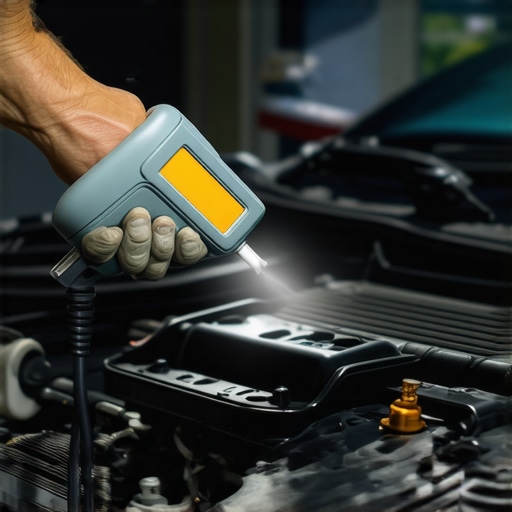
According to the Bosch Automotive Handbook, which is essentially the bible for fuel systems, auto-ignition temperatures are not a fixed number. They fluctuate based on cylinder pressure and air-fuel ratios. This is why a car that ran fine in the winter might start ‘dieseling’ in the July heat. Even Ford’s Technical Service Bulletin (TSB) 06-21-12 highlights that something as simple as a dirty throttle body can prevent the plate from closing fully, allowing enough air to sustain that shuddering run-on. If you notice top signs your car needs expert auto repair now, like a persistent high idle, do not just turn the radio up. These small mechanical drifts are your car’s way of asking for a deeper inspection.
Why You Can Not Fix Tomorrow’s Car with Yesterday’s Pliers
The trend is clear: mechanical simplicity is dying. In the very near future, ‘tuning’ an engine will happen via cloud-based software updates rather than a screwdriver. We are moving toward a world where ‘heat soak’ is managed by electric water pumps that run for ten minutes after the car is locked. However, the physical reality of internal combustion remains. Carbon will always build up, and heat will always be the enemy. I recommend keeping a bottle of PEA-based (polyetheramine) fuel cleaner in your trunk. It is one of the few chemicals that actually survives the fire of combustion to scrub those hot spots off the piston tops. Using it twice a year is one of the most essential car service tips for safe summer drives I can offer.
How do I keep my engine running smooth for the long haul?
Success lies in the details. Keep your cooling system pristine, because even a thin layer of scale inside your radiator can raise combustion temperatures just enough to trigger pre-ignition. If you suspect your engine is struggling to ‘exhale,’ you should learn how to spot a clogged catalytic converter in 2-minutes. Backpressure is a massive heat generator that common sensors often miss until it is too late. My final piece of advice? Do not be afraid to pull a spark plug and look at it. If it is covered in white, crusty deposits, your engine is running too lean and too hot. Take action now and clean your intake tract—your engine and your ears will thank you when you finally turn that key to the ‘off’ position.
Lessons That Finally Tamed My Shuddering Engine
Over the years, I’ve realized that an engine that won’t quit is really just an engine that’s too hot and too dirty. The biggest “lightbulb moment” for me was realizing that dieseling is almost always a combination of factors, not just one loose screw. I stopped looking for a silver bullet and started looking at the thermal health of my block. If you notice top signs your car needs expert auto repair now, like a persistent after-run, remember that your car is under thermal stress. I also learned that the quality of your cooling system is just as important as the quality of your fuel. High-mileage engines have unique personalities, and the secret to longevity for high mileage engines is often found in how well you manage those internal hotspots before they become permanent embers.
The Tiny Toolbox That Solves Massive Engine Sputters
I don’t go into my garage without a few specific items that have saved me thousands in misdiagnosis fees. First, an infrared thermometer is non-negotiable; it tells you exactly where the heat is hiding. Second, I always keep a digital multimeter on hand; you should learn how to find a parasitic battery drain with a simple multimeter to ensure your electrical fans are actually getting the power they need to cool the engine after shut-off. Finally, a bottle of PEA-based fuel system cleaner is the only chemical I trust to actually remove the carbon mountains on my pistons. These tools, combined with the ability to spot a clogged catalytic converter in 2-minutes, will make you more capable than 90% of the weekend warriors out there.
Reclaim Your Peace of Mind Every Time You Park
Stopping that violent engine shudder isn’t just about preserving your pride in the driveway; it’s about protecting the heart of your vehicle. You have the power to stop the “possessions” and ensure your car retires silently every night. Don’t let a small idle issue turn into a major overhaul. To truly maximize your cars lifespan with regular tune-ups, you must listen to what those vibrations are telling you before they get worse. A consistent car service routine is your best defense against the residual heat of the road. Have you ever experienced that gut-wrenching “dieseling” shudder after turning the key off? Let me know in the comments how you finally fixed it!