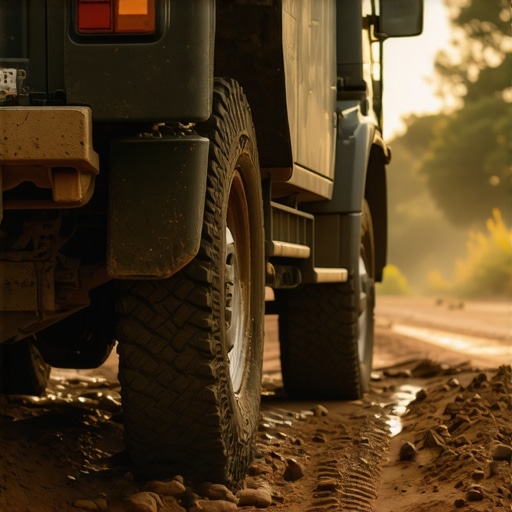
Why a Standard Tow Truck Can Actually Damage Your Car During an Off-Road Recovery
Imagine this: It is a rainy Tuesday night in Elizabeth, New Jersey. You are navigating a slick turn near a construction zone when your tires lose grip. Before you can react, your vehicle slides off the embankment and settles deep into a muddy ditch. In a state of panic, you pull out your phone and search for the closest tow truck company. You are looking for the fastest, most affordable tow truck available to get you back on the road. However, what most drivers do not realize is that there is a massive technical difference between “towing” and “recovery.”
Calling a standard tow truck for an off-road situation is like hiring a house painter to restore a Renaissance masterpiece – they both use brushes, but the stakes and techniques are worlds apart. As a specialist in exotic vehicle transport, motorcycle towing, and complex off-road recoveries, I have seen firsthand how a well-intentioned operator with the wrong equipment can turn a minor mishap into a total loss. My name is Susan Zinser, and at Collisionfixer, we believe that understanding the physics of your vehicle’s recovery is the only way to protect your investment. When you need an off-road towing service, you aren’t just paying for a ride; you are paying for the structural integrity of your car.
The Physics of a “Stuck” Vehicle: Why Weight Isn’t the Only Factor
The most common mistake drivers (and inexperienced operators) make is assuming that if a truck can carry the weight of a car, it can pull it out of a ditch. This ignores the critical concept of Gross Vehicle Weight Rating (GVWR) and the exponential increase in resistance caused by environmental factors. On flat pavement, a standard flatbed towing truck deals with rolling resistance. The vehicle’s wheels turn, and the winch simply guides it up the ramp.
However, once your vehicle leaves the pavement, the physics change entirely. If your car is buried up to the axles in mud, you aren’t just pulling 4,000 pounds of steel; you are fighting “suction” and “gradient resistance.” Research into heavy-duty recovery indicates that a vehicle stuck in deep mud can require a pulling force equal to its own weight plus an additional 50% to 100% of that weight just to break the surface tension. A standard light-duty tow truck (Class A) is designed for vehicles under 26,000 lbs on a flat surface. When that truck attempts an off-road pull, the resistance can exceed the truck’s own weight.
When a tow truck company uses a standard truck for a heavy recovery, you will often see the front wheels of the tow truck lift off the ground. This is a catastrophic safety hazard. Not only does the operator lose steering control, but the sudden release of tension can cause the tow line to snap or the truck to flip. A professional off-road towing service understands that “stuck” weight is not the same as “rolling” weight.
Common Damages Caused by Improper Recovery Techniques
When you call for a local tow truck in a hurry, you might be tempted to accept a “hook and pull” approach. This is where the damage begins. Standard equipment is designed for transport, not extraction.
Frame and Chassis Stress
Modern vehicles are increasingly built with unibody construction or lightweight aluminum frames. These are designed to manage energy during a front-end or rear-end collision, but they are not designed for lateral (side) tension. If a standard truck pulls your vehicle at an improper angle from a ditch, it can actually twist the frame. This results in a vehicle that will never track straight again. If you suspect this has happened to a vehicle you are looking to buy, you should learn How to Spot a Bent Frame Without a Measurement Rack to avoid a lemon.
Suspension and Alignment Ruin
Standard tow operators often look for the easiest place to attach a hook. Frequently, this is a control arm, a tie rod, or a suspension subframe. These components are precision-engineered for vertical movement, not for the massive horizontal force of a recovery winch. Yanking a car by its suspension will almost certainly lead to bent components. You might notice the damage immediately when your car pulls to one side, or it might manifest later as “loose” steering. If your car doesn’t feel right after a recovery, check out our guide on Why Your Steering Feels Loose After Hitting a Pothole, as the symptoms are remarkably similar.
Body and Cosmetic Damage
A standard flat tire tow truck might have the chains to move you, but they lack the “soft” rigging required for modern aesthetics. Steel chains rubbing against a plastic bumper or a side skirt under tension will rip the bodywork right off the clips. Furthermore, there is the “ball hitch” danger. We have all seen videos of people trying to pull a car out of the mud using a rope looped over a trailer ball. This is incredibly dangerous; a ball hitch is not rated for recovery forces and can shear off, becoming a lethal projectile. Professional off-road towing service providers never use hitch balls for recovery.
At Collisionfixer, we often see the aftermath of these “budget” recoveries. Our experts know How Collisionfixer Techs Spot Hidden Frame Damage on Used Cars, and it is heartbreaking to tell a customer that their “affordable” tow ended up totaling their vehicle due to hidden structural warping.
Why Flatbed Towing Isn’t Always the Solution for Off-Roading
Many drivers believe that flatbed towing is the safest option for every scenario. While it is true that flatbeds are superior for motorcycle towing and protecting the drivetrain of AWD vehicles, they have significant limitations in a recovery environment.
A flatbed truck is essentially a long, rigid lever. To load a vehicle, the truck needs a significant amount of clear, flat space in front of the car. If your vehicle is down an embankment or stuck in a tight wooded area in Elizabeth, a flatbed simply cannot get into the necessary position. If a flatbed operator tries to winch a car “up and over” a steep ledge, the underside of the car (the oil pan, exhaust, and transmission) will likely scrape against the edge of the bed or the ground, causing thousands of dollars in damage.
Furthermore, flatbeds are heavy and have a high center of gravity. If the ground is soft or the shoulder is unstable, the tow truck company risks getting their own multi-ton rig stuck right next to you. In these cases, you don’t need a bed; you need a boom.
Specialized Equipment: The Tools of a Professional Off-Road Towing Service
When you call activatetowing.com for an emergency, you aren’t just getting a truck; you are getting a specialized toolkit designed to defy gravity and friction without harming your car. Here is what a professional tow truck company uses for a safe recovery:
- Rotators: These are the “cranes” of the towing world. A rotator can swing its boom 360 degrees, allowing it to lift a vehicle vertically out of a ditch rather than dragging it through the dirt and rocks. This eliminates the friction damage to the undercarriage.
- Winches and Snatch Blocks: A pro doesn’t just pull harder; they pull smarter. By using snatch blocks (pulleys), a recovery specialist can double or triple the pulling power of their winch while also changing the angle of the pull. This ensures the force is applied exactly where the vehicle’s frame can handle it.
- Soft Shackles and Spreader Bars: Instead of heavy steel chains that can crush body panels, experts use synthetic soft shackles. When combined with spreader bars, these tools allow the operator to lift a vehicle without the straps ever touching the paint or the fragile plastic bumpers.
Whether you need a flat tire tow truck or a full extraction, the equipment makes the difference. Using the right tools is part of Essential Car Service Tips for Safe Summer Drives – knowing who to call before you get stuck is the best way to ensure your car survives the trip.
How to Choose a Local Tow Truck in Elizabeth for Emergencies
If you find yourself stuck in the Elizabeth area, don’t just click the first result for tow trucks near me. You need to vet the local tow truck provider. When you call for a tow truck quote, ask the dispatcher two specific questions:
- “Do you have a truck with a recovery boom or a rotator, or just a flatbed?”
- “Do your operators use soft shackles for aluminum frames?”
A reputable company providing 24 hrs towing will be able to answer these questions clearly. If they seem confused or tell you “we’ll just pull it out with a chain,” hang up. Protecting your car’s value is worth the extra five minutes of research. Finding a towing elizabeth service that understands the nuances of NJ terrain – from the marshy areas near the port to the tight urban streets – is vital for a damage-free experience.
Conclusion: Protecting Your Investment
The “cheapest” tow truck quote you receive today could be the most expensive mistake you ever make. A standard tow truck is a transport tool, but an off-road towing service is a surgical operation. By choosing a tow truck company that prioritizes the physics of recovery over the speed of the “hook,” you are ensuring that your car returns to the road in the same structural condition it was in before the accident.
Whether you need activatetowing.com for a jumpstart, activatetowing.com for a lockout, or a complex heavy-duty recovery, remember that expertise matters. If you find yourself off the road, don’t risk a DIY pull or a standard hook-and-chain. Contact the experts at activatetowing.com for a professional off-road towing service that protects your vehicle’s integrity.