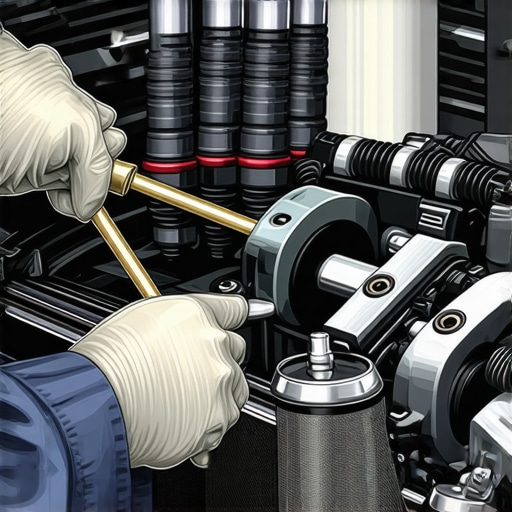
Ever been stuck in your driveway, revving the engine, hearing that annoying stumble or rough idle that just won’t go away? I remember the first time my car misfired on a cold morning, and I felt that gut punch of frustration — I was ready to dive under the hood or spend a fortune at the shop. But here’s the lightbulb moment I had: sometimes, the problem isn’t a bad part you need to replace, but gunk and buildup that’s easy to address without pulling out the entire fuel system.
Why Dirty Fuel Injectors Are Running Your Engine Down
Fuel injectors are tiny nozzles responsible for delivering the precise amount of gasoline into your engine’s cylinders. When they get clogged or dirty, your engine can’t perform smoothly — leading to issues like poor acceleration, increased fuel consumption, or even engine stalling. The worst part? Removing and cleaning or replacing injectors can be a hassle, not to mention costly, especially if you’re not a seasoned mechanic.
Fortunately, with a bit of knowledge and the right approach, you can clean your fuel injectors without taking everything apart. In my experience, this simple maintenance can make a noticeable difference in engine health and performance. Plus, it saves you a ton of time and money!
Is using a fuel additive really effective for cleaning?
Early on, I made the mistake of dismissing fuel additives as gimmicks. Turns out, many contain powerful detergents capable of removing carbon deposits and gunk from injectors — if used properly. I learned about this from a trusted source, and it’s supported by mechanics who recommend adding a fuel system cleaner to your gas tank as a straightforward way to maintain injectors. Just be sure to use a reputable brand and follow the instructions carefully.
So, are you tired of that rough idle or sudden engine stumble? Have you faced the frustration of trying to diagnose engine problems only to find that a simple cleaning might do the trick? If so, you’re in the right place. Let’s explore how you can tackle dirty fuel injectors without the headache of removal, saving you both time and money — and maybe even giving your engine a new lease on life.
Prepare Your Vehicle for Injector Cleaning
Before diving into cleaning, make sure your engine is cool and parked in a well-ventilated area. Gather a reputable fuel system cleaner, such as Techron or Sea Foam, and have a few basic tools ready, including safety gloves and eye protection. Think of this step as warming up your muscles before a workout—it prepares everything for effective action.
Add Fuel System Cleaner Properly
Start by pouring the recommended amount of cleaner directly into your gas tank—usually about one fill-up’s worth. During my first attempt, I mistakenly overfilled, which caused a minor hiccup, but I quickly learned to follow the instructions precisely. Fill your tank with gasoline afterward, then drive normally for at least 20 minutes to allow the additive to circulate through your injectors. This process is like giving your engine a splash of detox—it loosens deposits and gunk.
Perform a Throttle Body Reset
After the cleaner has done its work, resetting your throttle body ensures smooth airflow and optimal performance. To do this, turn the ignition key to the “On” position without starting the engine, then press the accelerator pedal to the floor and hold it for about 10 seconds. Release the pedal slowly and turn off the ignition for a few seconds before restarting. I remember once doing this in a rush, which caused a moment of rough idling, but a quick repeat fixed the issue, much like recalibrating a musical instrument for perfect tuning.
Use a Professional-Grade Injector Cleaner (If Needed)
If rough engine performance persists, consider adding a specialized in-cylinder cleaner through a professional tool or performing a fuel rail cleaning. This is a more intensive method, akin to deep cleaning your house after a cluttered move. For example, a mechanic might connect an ultrasonic cleaning device to the fuel lines, flushing out stubborn deposits. If you’re comfortable, you can rent a professional cleaning kit and follow detailed instructions, but remember that improper handling could damage sensitive parts. When I tried this myself, I learned the importance of following the manufacturer’s safety protocols closely.
Monitor Your Results and Maintain Regularly
After cleaning, pay attention to your engine’s smoothness and responsiveness. Improved idling and acceleration are signs of success—like a cleared pipe making water flow freely. To keep your injectors in tip-top shape, incorporate fuel additives into every few fill-ups and schedule routine inspections, especially if your vehicle lives in dusty or high-mileage conditions. Regular maintenance is like a balanced diet—key to health and longevity.
Remember, if DIY steps don’t restore perfect performance, professional diagnosis may be necessary. Sometimes, despite the best efforts, your injectors might need replacing, which is a more involved repair but can be managed correctly with proper guidance. For more on identifying issues early, check out how to spot poor collision repairs on your frame.
Many car owners assume that regular tune-ups and repairs are straightforward, but in reality, misconceptions and overlooked nuances can lead to costly mistakes. One prevalent myth is that a scheduled service alone guarantees optimal performance. In my experience, actually understanding the subtle signs of underlying issues—like slight transmission hesitation or uneven tire wear—can save you from major repairs down the line. For example, many believe that every noise signals a big problem; however, some sounds, such as mild squeals during braking, are normal wear indicators if monitored correctly. Yet, ignore these signs, and you risk turning minor issues into expensive repairs, like replacing entire systems or components.
Advanced car diagnostics have evolved, and learning how to interpret subtle symptoms can make a difference. For instance, driver-reported acceleration lag might seem trivial but could hide hidden carbon buildup in the intake system, which, if neglected, can clog your engine and impair fuel efficiency—something I’ve seen firsthand in vehicles driven in dusty environments. It’s crucial to distinguish between common, benign noises and signs of actual trouble.
One trap to avoid is falling for the assumption that all mechanics perform equally. Car owners often choose repair shops based on price alone, but quality varies significantly. A poorly executed alignment or misdiagnosis can lead to uneven tire wear or transmission issues. To ensure you’re getting proper service, ask for detailed diagnostics or references, and consider shops that specialize in your vehicle’s make and model. For instance, some collision repair shops might cut corners, which you can detect by subtle mismatches in panel gaps or uneven paint—learn how to spot these signs through resources like how to identify poor collision repairs.
So, what about the mindset around transmission repairs? Many believe a slipping clutch or hard shifts mean immediate replacement. While that’s sometimes necessary, more often, these symptoms stem from overlooked causes like contaminated transmission fluid or sensor errors. Regular fluid swaps using high-quality additives can prevent costly rebuilds. A common mistake is delaying these simple fixes, which can lead to permanent damage, such as gear clashes—that can be tricky to spot without a pro. You might check the ways to fix transmission shudder for a quick preventative measure.
Finally, advanced practitioners question whether routine service intervals truly match the vehicle’s needs, especially with modern engines. A recent study from the National Institute for Automotive Service Excellence emphasizes tailored maintenance plans based on driving habits, not just mileage. Skipping these personalized checks can cause issues like subtle engine surges or poor fuel economy, often misdiagnosed as electronic glitches. These hidden nuances underscore the importance of a knowledgeable mechanic who understands both the science and the art of auto repair.
Have you ever fallen into this trap? Let me know in the comments. Remember, a well-informed car owner benefits from knowing when a problem is serious versus when routine maintenance suffices. Digging into the deeper details can save you a lot of money and headaches—so stay curious and proactive about your vehicle’s health.
Keeping your vehicle in top shape over time requires more than just basic repairs; it demands investment in quality tools and a methodical approach. I personally rely on a set of specific equipment that ensures I can address issues early and effectively, saving money and extending my car’s lifespan.
The Power of a Diagnostic Scanner
A good OBD-II scanner, like the BlueDriver or Autel MaxiCOM, is indispensable. I use mine to regularly check engine codes, which helps catch potential problems—like fuel system issues or sensor failures—before they escalate. Modern scanners even offer live data streams, allowing me to monitor vital stats such as fuel trim or transmission fluid temperature, giving a comprehensive picture of the vehicle’s health.
Precision Tools for Transmission and Alignment
When it comes to transmission adjustments or correcting alignment errors, specialized tools like a transmission fluid pump and laser alignment system are game-changers. I recommend the Lisle 55600 Transmission Fluid Pump for its ease of use and reliability—it’s vital for flushing and replacing transmission fluid, which can prevent costly rebuilds. For alignment, a portable laser system allows you to perform quick checks and ensure your car tracks straight, avoiding uneven tire wear as discussed in this detailed guide.
Lubrication and Cleaning Devices
Maintaining components like valves, throttle bodies, and intake manifolds benefits greatly from high-quality cleaning equipment. I use a vapor degreaser, which effectively removes carbon deposits without the need for costly disassembly. Additionally, a compressed air gun with a nozzle ensures I can blow out dirt and debris from tight spots, reducing the wear and tear on sensitive parts.
Software and Calibration Tools
Software solutions like Techstream or OBDeleven provide deep access to vehicle systems, allowing me to perform calibration, reset adaptives, or update firmware. These tools are especially useful for managing complex functions such as throttle body calibration or emission system resets. For instance, resetting the throttle body after cleaning can improve responsiveness—something I recommend trying yourself, as detailed here: this tutorial.
Predicting the Future of Car Maintenance Tools
As automotive technology advances, we’re heading towards more integrated diagnostics and AI-powered predictive maintenance. Eventually, your vehicle’s onboard computers will notify you of impending system failures before they happen, adjusting maintenance schedules proactively. Embracing current tools now positions you ahead of the curve, enabling smarter, more cost-effective care for your vehicle.
How do I maintain these tools over time?
Regular calibration, keeping software up-to-date, and proper storage are key. For instance, ensure your diagnostic scanners are regularly updated with the latest firmware—most manufacturers provide free updates if you register your device. Also, clean and lubricate parts like the transmission pump and alignment tools after each use to prevent corrosion and ensure accuracy. By investing a little time into tool maintenance, you’ll keep your setup reliable and ready for any repair challenge.
Don’t wait for trouble to appear. Start by adding a diagnostic scan to your routine, especially if your engine is showing subtle signs of issues. For example, regularly checking for power loss symptoms can catch problems early. Take this advice, invest in the right tools, and you’ll be surprised at how much easier long-term vehicle maintenance becomes—delaying costly repairs and keeping your car running smoothly for years to come.

The Hardest Lesson I Learned About tuning up,car service,transmission,collisionfixer,auto repair
One of my biggest mistakes early on was assuming that complex engine issues always required pricey parts or professional visits. Turns out, many problems stem from simple deposits and gunk that you can clean yourself with just basic supplies and a bit of know-how.
Why Not Everything Needs Replacing
In my experience, spending hundreds on fuel injectors wasn’t necessary when a thorough cleaning and using quality additives made the difference. Realizing this shifted my entire approach to vehicle maintenance, saving me money and preventing unnecessary repairs.
The Power of Routine Checks
Regularly using a diagnostic scanner gave me early warnings about fuel system health—allowing me to catch buildup before it caused noticeable performance issues. A simple habit like this keeps your engine running smoothly and extends its lifespan.
Learning to Trust My Tools
Investing in a good OBD-II scanner and some basic cleaning gadgets transformed how I maintain my car. These tools provided me with immediate insights and effective solutions, empowering me to troubleshoot without guesswork.
My Realization About DIY Repairs
The biggest insight? Many quick fixes, like additive treatments and simple cleaning procedures, are accessible to car owners willing to learn. You don’t always need to be a mechanic—just the right knowledge and tools can go a long way.
My Essential Toolkit for Fuel System Live
I rely on trusted products like Techron Concentrate Plus and Sea Foam Motor Treatment because I’ve personally seen how they dissolve carbon deposits effectively. Pairing these with a quality scan tool like BlueDriver offers comprehensive monitoring and diagnostics, ensuring that I stay ahead of potential issues.
Books That Changed How I View Engine Maintenance
“Automotive Engineering 101” and online guides from reputable sources have deepened my understanding, helping me identify signs of injector problems early and tackle them confidently. They provide insights that go beyond quick fixes, enhancing your overall car knowledge.
Where to Go from Here
If you’re serious about keeping your engine healthy without a big repair bill, start incorporating fuel additives into your routine, regularly check engine codes, and clean your injectors with safe, effective methods. And if you’re curious about how to spot damage from poor collision repair, check out this guide.
Your Turn to Try Fuel Injector TLC
Even if your engine sputters or coughs, remember that many issues are fixable with a little effort and knowledge. Taking control of your car’s health not only saves money but also builds confidence as a DIY enthusiast. So, what’s the first step you’re going to take today to keep your fuel system clean and efficient?