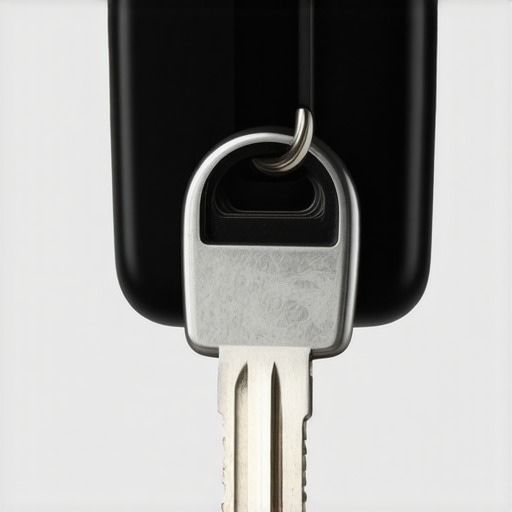
The panic starts the second the key stops clicking. I remember sitting in a grocery store parking lot on a Tuesday afternoon, ice cream slowly turning into soup in the back seat, and my key simply refused to turn back to the ‘off’ position so I could pull it out. I wiggled it. I pulled. I even gave it a little pep talk, but it was stuck fast. It felt like the car was holding my keys hostage. I spent forty minutes sweating through my shirt before I realized I was fighting a battle I couldn’t win with brute force alone.
Stop Yanking and Start Troubleshooting Your Stuck Key
Most of us think we’ve reached the end of the line when the key gets trapped, but usually, it’s just a safety feature being a bit too overzealous. I remember early on in my DIY days, I actually snapped a key clean off in the cylinder because I thought a bigger pair of pliers was the answer. Trust me, it was not. It turned a ten-second fix into a four-hour nightmare. Before you call for expert auto repair now, you need to check the basics. Sometimes, your car simply doesn’t know it is in Park. If your car won’t shift out of park correctly, or if the shifter is just a hair out of alignment, that ignition lock is going to hold onto your key like a bulldog. This is often linked to the transmission’s safety interlock system, which is designed to prevent you from taking the key out while the car could still roll away.
Is This Just a Symptom of a Dying Transmission?
You might worry that a stuck key means a massive bill is coming, but it is often much simpler. According to the National Highway Traffic Safety Administration, many ignition-related issues stem from external factors like steering column tension or shift-lock solenoid failures rather than the ignition switch itself failing internally. It is not always about a transmission overhaul; sometimes, it is just a bit of grit in the tumblers or a steering wheel that’s locked tight against its pins. I once knew a guy who tried to lubricate his ignition with WD-40, which—spoiler alert—is a great way to attract dust and kill your ignition switch for good. A little regular tune-up of your knowledge can save you hundreds. Have you ever been stranded because your ignition decided to go on strike? It is a frustrating rite of passage, but I am going to show you how to handle it without losing your cool.
Make Sure Your Car Actually Knows It Is in Park
The most common reason for a key to stay stuck is simply a communication breakdown between your shifter and your ignition. Modern cars are designed like a high-stakes puzzle where every piece must be in the exact right spot before the ‘release’ command is given. I remember a freezing February morning in a beat-up sedan where I spent ten minutes cursing at my dashboard, only to realize my bag had nudged the shifter just a fraction of an inch out of the ‘P’ slot. If your car is even slightly in gear, it will not let go of that key.
The Shifter Needs a Firm Hand
Try pushing the shifter forward into Park with a bit more conviction. Sometimes the linkage gets loose or the plastic components inside wear down. If your car won’t shift out of park or into it smoothly, the ignition interlock won’t engage. Think of it like a safety latch on a gate; if the gate isn’t closed all the way, the latch won’t drop. While you are at it, check for pennies or crumbs stuck in the shifter path. I once found a single dime wedged in a customer’s console that was causing a ‘transmission failure’ panic, when really it just needed a vacuuming.
Wiggle the Wheel to Kill the Tension
If the shifter isn’t the culprit, your steering column probably has a literal grip on your ignition. This happens when you turn the wheel after the engine is off, engaging the steering lock. The lock pin puts massive pressure on the ignition cylinder, pinning the key in place. It is like trying to pull a heavy bolt out of a door while someone is leaning their full weight against it.
Find the Sweet Spot Between Lock and Release
To fix this, you need to gently jiggle the steering wheel back and forth while simultaneously trying to turn the key. I say ‘gently’ because you aren’t trying to win a wrestling match; you are looking for the ‘click.’ 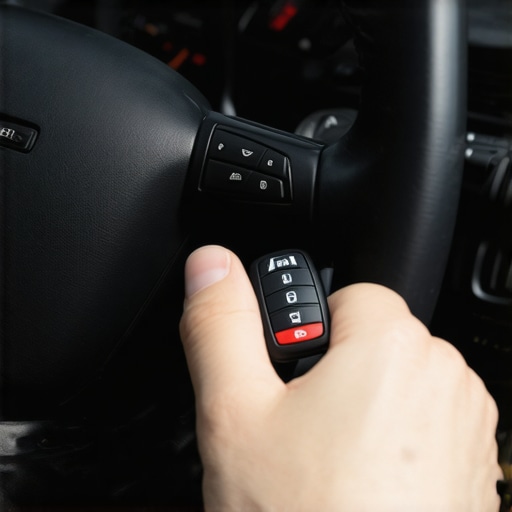 I once helped a neighbor who was about to call a tow truck because her wheel was locked so tight she thought the rack-and-pinion had snapped. By turning the wheel hard to the left and then the right, we found the tiny gap where the pressure released, and the key practically fell into her hand. This tension can also be a hint that you need to maximize your car’s lifespan with regular tune-ups, as a worn ignition cylinder only makes this sticking worse over time.
Tackle the Hidden Electrical Gremlins
If the mechanical fixes fail, it is time to look at the battery. Many modern ignition systems are electronic, and if the voltage drops too low, the solenoid that releases the key won’t fire. It sounds counterintuitive—why would a dead battery lock the key in?—but it’s a safety measure.
Check for a Failing Battery or Parasitic Loss
If your dash lights are flickering or your car beeps when there is no warning light, you might have a power issue. Use a jump pack or another car to give your battery a boost. If the key pops out immediately once it has power, you likely have the hidden drain that kills your battery overnight. This happened to me once when a trunk light stayed on, draining just enough juice to leave me stranded with a key I couldn’t remove and a car that wouldn’t start. If you’re still stuck, it might be one of the top signs your car needs expert auto repair now, especially if the internal tumblers have finally collapsed.Most people will tell you that if a key is sticky, you should douse it in WD-40. In my experience, that is the single fastest way to turn a minor annoyance into a $500 replacement bill. While it might provide a temporary slickness, the oils in standard lubricants act like a magnet for pocket lint, dust, and metal shavings. Over time, this creates a ‘sludge’ that actually glues the tumblers in place. If you absolutely must use something, dry graphite is the industry standard, but even then, less is more. I’ve seen countless DIYers go overboard and end up with a cylinder so packed with graphite that the key can’t even bottom out.
Why Does the Key Stay Stuck Even with a Fresh Battery?
It’s a common misconception that a new battery solves all electronic release issues. I’ve seen cars where the owner replaced the battery, yet the key remained hostage. The nuance here often lies in the hidden ground strap that causes weird electrical ghosts. If the engine or chassis ground is corroded, the shift-lock solenoid might not receive enough current to pull the locking pin back, regardless of how much ‘juice’ the battery has. This is the one electrical fault that most mechanics misdiagnose as a dead battery. In a technical review by Car and Driver, experts noted that modern multiplexed electrical systems are incredibly sensitive to voltage drops; even a minor loss can prevent a safety solenoid from firing properly. 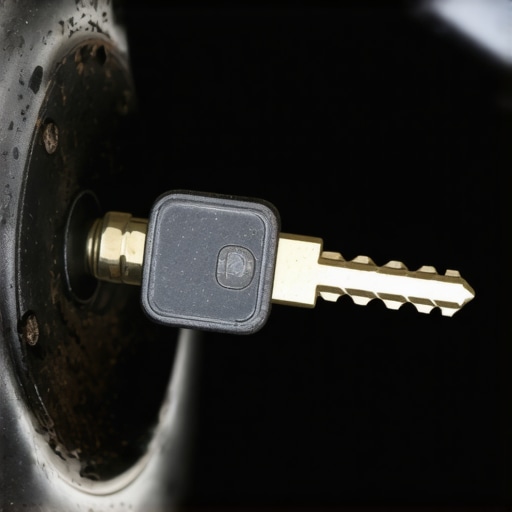
Stop Thinking the Ignition Is Always the Culprit
The biggest ‘Oops’ I see is people immediately blaming the ignition lock itself and tearing the dash apart. Before you assume you need to maximize your cars lifespan with regular tune-ups or replace a lock cylinder, look at your brake pedal. Most automatic cars require the brake to be depressed to shift into Park fully. If your brake light switch is failing, the car’s computer might not get the signal that you’ve completed the parking sequence. It thinks you’re still in gear or in a ‘transitional’ state, so it keeps the key locked for safety. This is one of the top signs your car needs expert auto repair now because it involves the critical intersection of your braking and transmission safety systems.
Avoid the Brute Force Trap
Another common mistake is trying to ‘force’ the shifter into the Park position. If it doesn’t click in naturally, you might have a stretched shift cable or a broken plastic bushing. Forcing it might make the dash indicator say ‘P,’ but the mechanical linkage at the transmission might still be a millimeter off. If you’re feeling a ‘mushy’ shifter, it’s better to look into how transmission overhauls save you money in the long-run by catching small linkage issues before they snap. Have you ever fallen into this trap of trying to muscle a car part into submission? Let me know in the comments. Keeping your cool is the best tool in your box.Whenever I’m staring down a key that won’t budge, I don’t reach for a hammer; I reach for my digital multimeter. Most people think electrical issues require a degree in rocket science, but knowing how to find a parasitic battery drain with a simple multimeter is often the difference between a free fix and a towed car. I personally use a Fluke 87V because it catches those tiny millivolt drops that cheaper units miss. If your ignition solenoid isn’t getting exactly 12.6 volts, it might just stay ‘half-cocked,’ keeping your key trapped in the cylinder.
How can I keep my ignition cylinder smooth for years?
The secret isn’t just about what you put in the lock, but what you hang off it. I see people with keychains that weigh three pounds, acting like a pendulum that slowly carves out the brass tumblers inside the lock. To keep things moving, I use a tiny puff of dry locksmith’s graphite once a year—never liquid lube. This simple habit is a core part of how I maximize your cars lifespan with regular tune-ups. According to the ASE (Automotive Service Excellence) study guides, mechanical wear in the ignition is the leading cause of steering column lock-ups in vehicles over ten years old. Keeping your keychain light is the cheapest insurance policy you’ll ever buy.
Stop Ignoring That Mushy Shifter Feel
If your shifter feels like it’s moving through a bucket of oatmeal, you’re on a collision course with a stuck key. That ‘mushiness’ is usually a sign that your shift cable bushings are disintegrating. You don’t need a transmission overhaul to fix this, but you do need to be proactive. I’ve seen that $20 part that fixes a car that won’t shift out of park save people from being stranded at the gas station. If the car can’t mechanically confirm it’s in Park, the ignition lock will never let go. I also recommend plugging in a scanner to see what the computer thinks. Learning how to read live data isn’t just for engine codes; you can actually watch the ‘Park/Neutral Switch’ status in real-time to see if the signal is flickering.
Look Toward a Future Without Physical Keys
We are rapidly moving toward a world where the ‘stuck key’ is a vintage problem. Most new models have moved to proximity fobs and ‘Phone-as-a-Key’ (PaaK) technology. While this eliminates the mechanical tumbler issue, it introduces the risk of the hidden ground strap that causes weird electrical ghosts interfering with the RF signal. In the next five years, I expect biometric fingerprint starts to become the standard, which will shift our maintenance focus from mechanical cleaning to keeping sensors smudge-free. For now, if you’re dealing with a stubborn ignition, I challenge you to try a ‘Voltage Drop Test’ on your starter relay before you buy a single new part. You might find that a simple terminal cleaning is all you actually need.
The Hardest Lessons I Learned Fighting Sticky Ignitions
One thing nobody tells you is that ignitions are prone to thermal expansion. If your car has been baking in the sun all day, the metal tumblers can expand just enough to create friction that locks everything tight. I’ve learned that sometimes a blast of AC through the steering column vents for five minutes is all it takes to shrink things back down. Another lightbulb moment was the ‘Spare Key Test.’ If your primary key is worn down like a smooth stone, the tumblers won’t align properly. Always keep a fresh, non-worn spare at home to see if the problem is the lock or just the physical metal in your hand. Lastly, never underestimate the power of the brake light switch; if your brake lights aren’t coming on when you press the pedal, the car won’t release the transmission lock, and your key stays trapped as a result. These are essential car service tips for safe summer drives that can save you from a frustrating tow truck bill.
My Go-To Tools for Troubleshooting Electrical Gremlins
When I’m dealing with a key that refuses to budge, I rely on a few specific items that I think every driver should keep in their trunk to avoid being stranded. First, I always have a can of dry graphite lubricant—never use the liquid stuff. Brands like Houdini or Panef are industry standards because they don’t attract dust or create the ‘sludge’ that kills ignition switches. Second, a portable lithium jump starter is a total lifesaver. If your battery is too weak to fire the release solenoid, these small packs provide the instant 12-volt surge you need. Finally, knowing how to find a parasitic battery drain with a simple multimeter is a skill that has saved me more money than any other DIY trick. I trust a basic digital multimeter to tell me if my ignition cylinder is getting the power it needs or if I’m fighting a ‘ghost’ in the wiring. #IMAGE_PLACE_HOLDER_E#
Turn a Panic Moment into a Pro Fix
Struggling with a stuck key is a rite of passage for many drivers, but it doesn’t have to be the end of your afternoon. By checking your shifter position, wiggling the steering wheel to relieve tension, and ensuring your battery has enough juice, you can usually solve the issue in minutes. If you find that your ignition is consistently temperamental, it’s a clear sign you should maximize your cars lifespan with regular tune-ups before a minor stick becomes a major mechanical failure. Don’t wait until you’re stranded at a gas station to seek expert auto repair now. With a little patience and the right knowledge, you can keep your car—and your keys—moving freely. Have you ever had to resort to a ‘steering wheel wiggle’ or a shifter slam to get your keys back? Let me know in the comments below!