
I remember the first time it happened to me like it was yesterday. I was merging onto the interstate, coffee in the cup holder, sun hitting the dashboard, just enjoying the drive. But the moment my speedometer needle kissed 65 mph, my steering wheel started vibrating like a frantic jackhammer. It wasn’t just a tiny wiggle; it was a bone-deep tremor that made me grip the wheel until my knuckles turned white. I immediately slowed down, terrified that a wheel was about to fly off and send me into the guardrail. If you have felt that specific, high-speed shudder, I know exactly what is going through your head: how much is this going to cost me, and is my car even safe to drive? Today, I am going to help you pinpoint the culprit so you can get back to a smooth ride without getting fleeced at the shop.
Why Your Steering Wheel Acts Like a Jackhammer at Highway Speeds
The reality is that high-speed vibrations are rarely a mystery if you know where to look. When your car behaves at 40 mph but loses its mind at 65, you are dealing with a resonance issue. Usually, this points toward a rotating component that is slightly out of balance. Years ago, when I was first learning my way around a wrench, I made a massive mistake. I was convinced my entire front end was shot. I spent an entire weekend and hundreds of dollars replacing tie rods and a steering rack, only to find out later that the real the reason your car shakes when you accelerate at those speeds was a simple lead weight that had fallen off my front-left rim. It was a $20 fix that I turned into a $500 headache. Trust me, you do not want to go down that road. These top signs your car needs expert auto repair now often start with these subtle warnings. Have you ever experienced that heart-stopping moment where the car feels like it’s vibrating apart the second you hit the speed limit? Drop a comment and tell me what speed your ‘death wobble’ starts at!
Will This High-Speed Vibration Total My Bank Account?
The short answer is: probably not, as long as you do not ignore it. Most people fear the worst, but often the solution is part of essential car service tips for safe summer drives. According to the Car Care Council, something as minor as a half-ounce weight imbalance in a tire can create enough centrifugal force to cause significant steering wheel shake at highway velocities. However, if you recently hit a curb or noticed why your steering feels loose after hitting a pothole, the issue might be deeper in your suspension. The ‘why’ matters because ignored vibrations do not just stay annoying; they act like a slow-motion wrecking ball for your bearings, bushings, and tires. We are going to dig into the mechanical physics of why 65 mph is the magic number for these shakes and how you can diagnose it in your own driveway.
Take Control of the Shake Before It Takes Control of You
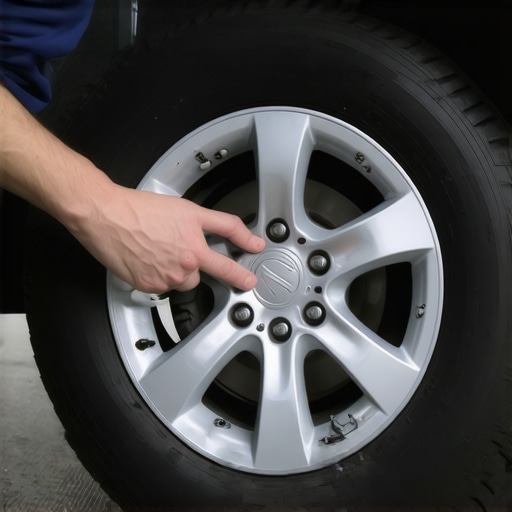
First, we need to talk about tire balance. Think of your tire like a ceiling fan; if one blade is just slightly heavier than the others, the whole unit wobbles once it gets up to speed. On a car, that wobble translates directly into your steering column. I once spent an hour chasing a vibration in my old truck, thinking the entire front end was about to collapse. I pulled the front wheels off and found a massive clump of dried mud stuck to the inside of the rim. It acted like an off-center weight. I scraped it off with a putty knife, and the shake vanished instantly. Before you pay for an alignment, check the ‘barrel’ of your rim for mud, ice, or debris.
Fix Your Tire Balance Without Breaking the Bank
If the rims are clean, you likely have a lost wheel weight. A professional balance involves a machine that spins the tire and tells the technician exactly where to tap on a lead weight. While you can maximize your cars lifespan with regular tune-ups, tire balancing is a standalone task that needs high precision. If the shake only happens while your foot is on the pedal, it might be the reason your car shakes when you accelerate, which is often related to the inner CV joint. However, if the shaking is constant at 65 mph regardless of whether you are coasting or accelerating, the tire is almost certainly the culprit.
Spot Weak Suspension Components in Your Driveway
If your tires are perfectly balanced but the wheel still dances in your hands, it’s time to get dirty. Jack up the front of the car and secure it on jack stands. Grab the tire at the 12 and 6 o’clock positions and try to rock it. Any play here often points to ball joints or wheel bearings. You can learn how to tell if your ball joints are dangerously loose by looking for a ‘clunking’ sound during this test. Next, grab it at 3 and 9 o’clock. If it wiggles there, your tie rods—the parts that actually turn the wheels—are likely worn out. This isn’t just about comfort; it’s about making sure your wheels stay pointed in the same direction.
Detect Driveline Issues Before They Strand You
Sometimes the vibration isn’t a ‘shake’ so much as a rhythmic shudder. This is where you look at the CV joints. These joints allow your axles to flex while they spin. When the protective rubber boot tears, grease leaks out and dirt gets in, grinding the internal bearings to dust. Using the secret to identifying a failing cv joint early involves listening for a clicking sound during sharp turns at low speeds. If you also have a bounce that won’t quit after a dip in the road, use the simple test to see if your shocks are actually blown by pushing down on the bumper; it shouldn’t bounce more than once. Finally, if the vibration only kicks in the moment you touch the middle pedal, it is almost certainly a warped brake rotor. You can diagnose the reason your steering wheel shakes only when you hit the brakes by checking for pulsation in the pedal alongside the steering wheel vibration.
While checking for mud or loose weights is a great start, seasoned DIYers often hit a wall when the obvious fixes fail. This is where the nuanced ‘black magic’ of automotive physics comes into play. If you have already balanced your tires twice and the shake persists, you might be falling for the most common myth in the industry: that an alignment fixes vibrations. Let me be clear—a bad alignment will make your car pull to the left, eat your tires for breakfast, or make your steering wheel crooked, but it almost never causes a high-speed shake. If a shop tries to sell you an alignment to stop a 65 mph vibration, they are either misinformed or taking you for a ride.
Get a Road Force Balance Before You Replace Your Suspension
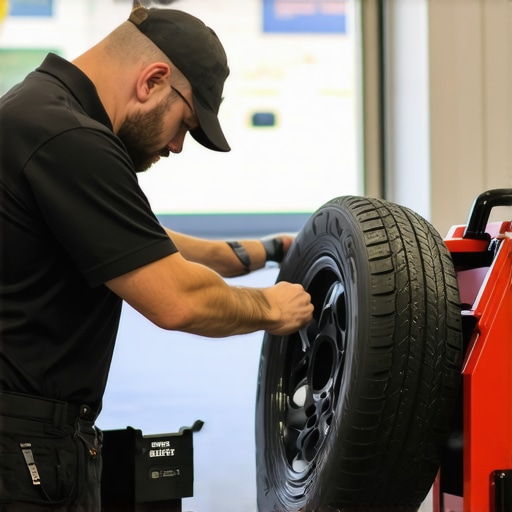
Standard balancing machines spin a tire in the air, which is fine for most cars. However, ‘Road Force’ balancing uses a roller to press against the tire, mimicking the weight of the vehicle. This detects ‘radial force variation’—essentially hard spots in the tire’s internal structure that act like a speed bump every time they hit the pavement. According to the Tire Industry Association (TIA), even a perfectly balanced tire (weight-wise) can cause severe vibrations if the tire carcass itself has inconsistent stiffness. It is a subtle distinction that separates a smooth ride from a frustrating one. This is often the missing piece when you are trying to maximize your cars lifespan with regular tune-ups and still feel that nagging shudder.
Can a Faulty Torque Converter Mimic a Bad Tire?
Here is the ‘oops’ factor that haunts many owners: the transmission shudder. Sometimes, what feels like a tire vibration is actually your torque converter clutch struggling to stay engaged. This often happens between 40 and 60 mph. If you notice the vibration only occurs when the car is in overdrive or under light load, you might be dealing with a fluid issue rather than a mechanical failure. Many manufacturers claim their transmissions have ‘lifetime’ fluid, but as we’ve discussed in the truth about lifetime gearbox fluids, that ‘lifetime’ usually ends right when the warranty does. Dirty fluid can cause the internal clutches to chatter, creating a vibration that feels remarkably like a wheel balance issue. Before you commit to expensive repairs, check your transmission fluid level and color. This is one of those how to save money on your 100k mile service secrets that most people ignore until it is too late.
The Trap of Ignoring Harmonic Resonance
There is a concept in engineering called harmonic resonance. Every car has a ‘natural frequency.’ When a component like a worn CV axle or a slightly bent rim rotates at a speed that matches that frequency, the vibration amplifies. This is why the shake might be terrible at 65 mph but magically disappear at 80 mph. Research published by SAE International on vehicle NVH (Noise, Vibration, and Harshness) highlights that ignoring these resonant vibrations leads to accelerated wear on the steering rack and cabin electronics. It is not just an annoyance; it is a mechanical cancer. If you find yourself in a situation where the vibration is inconsistent, it might be time to look for top signs your car needs expert auto repair now, specifically focusing on the driveline. If the vibration is tied to the engine speed rather than vehicle speed, you might even be looking at failing motor mounts. Have you ever fallen into the trap of replacing your tires only to find the shake was still there? Let me know in the comments below—I’d love to hear how you finally tracked it down!
When I finally got tired of swapping parts based on ‘hunches,’ I invested in a set of Wireless Chassis Ears, specifically the Steelman Pro series. This isn’t your grandfather’s stethoscope; it consists of Bluetooth-enabled clamps you attach to various suspension components. While driving, a receiver in the cabin allows you to toggle between channels to hear exactly which bearing or CV joint is screaming at highway speeds. If you want to maximize your cars lifespan with regular tune-ups, you have to move beyond guesswork. I have seen enthusiasts spend thousands on how transmission overhauls save you money in the long-run only to realize the shudder was actually a bent half-shaft that only revealed itself under load. According to Hunter Engineering’s technical documentation for the GSP9700 series, nearly 30% of tires that are ‘perfectly balanced’ on a standard machine still produce enough radial force variation to cause significant cabin discomfort. This is why professional shops are pivoting toward digital diagnostic systems that measure the tire’s structural uniformity. 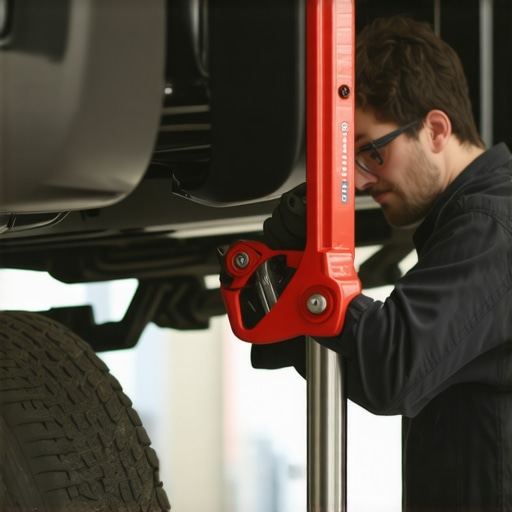
How can I ensure my car stays smooth for the next 50,000 miles?
The secret isn’t a one-time fix; it is a routine that extends well beyond a standard oil change. Every time you rotate your tires, you should be inspecting the rubber boots on your CV axles for microscopic tears. Even a pinhole leak will eventually lead to dirt ingress, which is why the secret to identifying a failing cv joint early is so critical for your wallet. While you are under the chassis, do not ignore the electrical basics. Sometimes a persistent shake is actually caused by subtle engine misfires that mimic mechanical vibrations. Keeping your electrical system clean by using the trick to cleaning battery corrosion with baking soda and water ensures your sensors receive the steady voltage required to prevent these stumbles. Also, keep an eye out for the 15-gasket that stops your persistent oil leak, because oil-saturated rubber bushings fail at twice the normal rate.
The Future of the Highway Shake in the EV Era
As we transition toward electric vehicles, the nature of these vibrations is shifting. EVs have no engine noise to mask mechanical flaws, making even the slightest tire flat-spot feel like a major catastrophe. Industry experts predict the rise of ‘smart tires’ equipped with internal sensors that alert your dashboard the moment a belt shifts or a weight is lost. In the meantime, before you start wondering how to calculate the real junk value of your car before scrap yards lowball you, try the ‘neutral test.’ If you are vibrating at 70 mph, safely pop the car into neutral. If the shake persists, the issue is likely tires or wheels; if it vanishes, you are looking at an engine or transmission problem. Go try that diagnostic tip on the safest stretch of road you know today—it might save you a fortune in unnecessary repairs.
The Expensive Mistakes I Made So You Don’t Have To
One of the hardest lessons I learned in my years under the hood is that the most aggressive symptoms often have the simplest causes. I once spent three days diagnosing a vibration that I was certain required how transmission overhauls save you money in the long-run, only to find a slightly bent rim that wasn’t visible to the naked eye. First, remember that an alignment is almost never the cure for a shake. Alignment affects how your tires wear and how the car tracks, but vibration is almost always about balance or rotating mass. Second, never assume a new tire is a perfect tire. I have seen brand-new rubber with internal belt defects that only showed up under the pressure of highway speeds. If you are noticing top signs your car needs expert auto repair now, start with the rotating parts first.
Tools and Resources That Actually Work
When you are tired of the guesswork, you need to rely on the same technology the pros use. I personally swear by Road Force Balancing; if your local shop doesn’t have a Hunter GSP9700 or a similar machine, you are only getting half the story. For DIY diagnostics, the Steelman Pro Wireless Chassis Ears are a game-changer for pinpointing whether a sound is coming from a hub or a CV joint. I also highly recommend keeping a digital tread depth gauge in your glovebox to catch uneven wear early. Monitoring these small details is part of the essential car service tips for safe summer drives that keep you off the side of the road. Finally, always consult the Tire Industry Association (TIA) charts for torque specifications—over-tightening your lug nuts can actually warp your brake rotors and cause the very shake you are trying to fix.
Get Back to Loving Your Commute
There is no reason to white-knuckle your steering wheel every morning. By systematically checking your balance, inspecting your suspension, and using the ‘neutral test’ to rule out the drivetrain, you can isolate the problem without spending a fortune. A smooth-running car isn’t just about comfort; it is about the safety of you and your family. Staying on top of your maintenance and knowing how to save money on your 100k mile service will help you maximize your cars lifespan with regular tune-ups and keep that highway vibration a thing of the past. You’ve got the tools and the knowledge—now it’s time to get that car back to factory-smooth. Have you ever had a vibration that turned out to be something incredibly simple like a lost wheel weight or mud in the rim? Let me know in the comments below!