I remember pulling out of a grocery store parking lot in my trusty old sedan, and as I cranked the wheel to the left, I heard it—a rhythmic, metallic clicking that sounded exactly like a woodpecker on a caffeine binge. I did what most people do: I turned up the radio and hoped it would go away, thinking maybe a pebble was just stuck in the tread. Spoiler alert: it wasn’t. A week later, that CV joint finally gave up the ghost right in the middle of a busy intersection during rush hour. The engine revved, the gears engaged, but I was going nowhere fast. It was an expensive, embarrassing mistake that taught me a valuable lesson about listening to my vehicle before it stops talking and starts screaming. [IMAGE_PLACEHOLDER]
Hear That Click? It’s Your Car Begging for Help
Most folks assume a little noise is just part of an aging car’s personality, but when it comes to your drivetrain, silence really is golden. Today, I want to show you how to spot these red flags before you’re calling a tow truck, because maximizing your car’s lifespan with regular tune-ups starts with keeping your ears open to the small changes. I made the classic mistake of thinking my suspension was just ‘settling’ into its old age. In reality, my CV joint was crying out for help because a tiny rubber boot had torn, allowing road grit and salt to get inside the joint while all the essential grease leaked out onto my driveway. If you’ve been wondering about the reason your car shakes when you accelerate, you’re likely seeing the symptoms of a component that’s lost its balance and is literally tearing itself apart from the inside.
Is a little noise really that big of a deal?
You might think you can squeeze another few hundred miles out of a noisy joint, but physics isn’t on your side. According to technical documentation from the Society of Automotive Engineers (SAE), Constant Velocity joints are precision-engineered to handle immense torque while pivoting at extreme angles, but once that lubrication is gone, the friction generated can weld parts together in seconds. It’s not just an annoyance; it’s a major safety hazard that leads to top signs your car needs expert auto repair now. When that joint snaps, the axle spins freely, and you lose power to that wheel entirely. If you’re at highway speeds or trying to merge into traffic, that’s a recipe for a dangerous situation. I’ve seen people ignore these signs only to have their axle flail around and damage the transmission housing—turning a relatively simple fix into a multi-thousand dollar nightmare. Have you noticed a dark, thick grease splattered on the inside of your rim lately? That was my first clue, and I walked right past it. Let’s look at how to silence a grinding noise when you turn the wheel and check those boots before the damage becomes permanent. It only takes a few minutes and a flashlight to save your weekend.
Look for the Black Grease Explosion Under Your Wheel Well
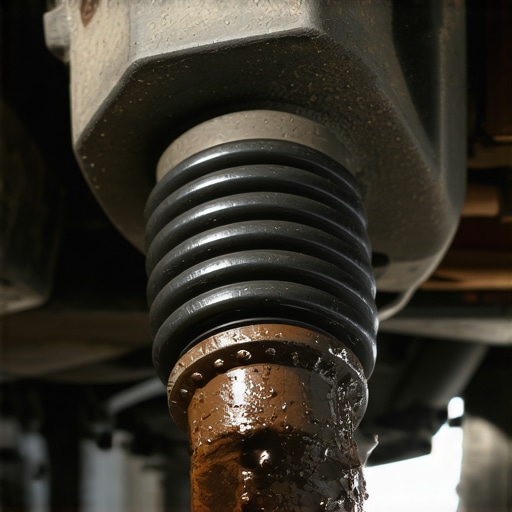
First, you need to get your hands dirty—or at least get your eyes under the chassis. Think of the CV boot as a thick, rubberized surgical glove protecting the most sensitive moving parts of your drivetrain. If that glove tears, the ‘patient’ gets infected with road grime almost instantly. I remember helping my neighbor, Dave, check his old SUV after he complained about a ‘weird smell’ coming from his wheel wells. We popped the hood and looked down at the inner axle joints. It looked like a black-powder bomb had gone off; thick, tacky grease was plastered against the frame and the suspension components. He thought he had a massive oil leak, but I knew that specific, tar-like consistency anywhere. That was the secret to identifying a failing cv joint early before the clicking even started. If you see that mess, the lubrication that prevents metal-on-metal grinding is gone, and the clock is ticking.
Identify the Rhythmic Clicking on Tight Turns
If a visual check doesn’t reveal a torn boot, your ears are the next best diagnostic tool. Find an empty parking lot and perform the ‘Circle Test.’ Roll down your windows, turn the steering wheel all the way to one lock, and slowly drive in a circle. If you hear a loud, rhythmic pop-pop-pop or click-click-click, the joint is already physically damaged. The noise happens because the ball bearings inside the joint are catching on tiny pits or ridges worn into the metal housing. This is often the same culprit behind how to silence a grinding noise when you turn the wheel, as the lack of grease turns your smooth steering into a battle of friction.
Stop the Shake When You Step on the Gas
Sometimes the symptoms aren’t auditory; they’re tactile. If you feel a shudder or vibration specifically when you are merging onto a highway or climbing a steep hill, you might be feeling an inner CV joint failure. While the outer joint handles the steering, the inner joint handles the up-and-down movement of the suspension while transferring power. If it develops ‘play’ or looseness, it creates a centrifugal imbalance. This is often the reason your car shakes when you accelerate, and it can feel like a tire is out of balance. However, unlike a bad tire, the shaking usually stops the moment you take your foot off the gas.
Check Your Suspension Bounce to Rule Out Other Parts
Before you commit to an axle replacement, make sure you aren’t actually dealing with a worn-out strut or shock. You can perform the simple test to see if your shocks are actually blown by pushing down firmly on each corner of the car. If it bounces more than once, your vibration might be suspension-related rather than a drivetrain issue. However, if the car is stable but the clicking persists, you are definitely looking at top signs your car needs expert auto repair now. Don’t wait until the joint shears off entirely, which can lead to a loss of control or even damage the casing of the gearbox. Investing in a fix now is much cheaper than how transmission overhauls save you money in the long run after a flailing axle destroys your drivetrain. Catching a torn boot early means you might only need a $20 part and some fresh grease, rather than a $400 axle assembly and a tow truck bill.
Why a New Boot Usually Isn’t Enough
Let’s dig deeper into a common piece of advice you’ll find on every DIY forum: ‘Just swap the boot and save the axle.’ On paper, spending $20 on a rubber kit sounds better than $150 on a new assembly, but this is where most folks get burned. In my years of tinkering, I’ve found that by the time you actually see the grease on your rim, the damage is already done. Atmospheric moisture and road silica have already turned that remaining grease into a grinding paste. According to technical bulletins from GKN Automotive, a leading OEM driveline manufacturer, even a 1% contamination of CV grease with road dust can accelerate internal wear by over 500% within a few hundred miles. When you simply put a new boot over a contaminated joint, you’re just gift-wrapping a ticking time bomb. It’s why maximizing your car’s lifespan with regular tune-ups requires an honest assessment of whether a part is worth saving or if it’s already a paperweight.
Why does the vibration persist after a full replacement?
If you’ve already replaced the axle and your car still feels like it’s dancing at 60 MPH, you might have fallen into the ‘Cheap Aftermarket Trap.’ Many budget-friendly axles are ‘reground’ or made with inferior steel that doesn’t handle the heat of a modern transaxle. This is very similar to the truth about cheap aftermarket brake pads; you might save money today, but the performance loss is immediate. If the vibration is still there, check your motor mounts. A failing CV joint puts extra stress on the rubber mounts that hold your engine in place. I’ve seen countless drivers spend a fortune on drivetrain parts only to realize a $40 rubber mount was the actual culprit. It’s the kind of thing you need to know to how to tell if a transmission shop is lying about a rebuild, because a shady shop will charge you for a whole gear set when it’s just a mounting bolt.
The Myth of Lifetime Drivetrain Fluids
While we’re talking about things people get wrong, let’s address the elephant in the room: ‘lifetime’ fluids. Manufacturers love to claim their gearboxes and axles are sealed for life, but in the engineering world, ‘lifetime’ usually just means ‘until the warranty expires.’ Heat is the enemy of every lubricant. Over time, the additives that prevent foaming and oxidation break down, especially if you live in a hilly area or do a lot of stop-and-go driving. This is the truth about lifetime gearbox fluids that most dealerships won’t tell you. If you want that CV joint and the transmission it’s plugged into to last 200,000 miles, you need to ignore the manual and change those fluids every 60k. It’s the same logic behind why how transmission overhauls save you money in the long run; prevention is always cheaper than a total failure. Have you ever fallen into this trap of buying a ‘budget’ part only to have it fail six months later? Let me know in the comments below!
The Digital Tool That Stopped My Guesswork
I used to rely solely on my ears and a long screwdriver held against the chassis like a stethoscope, but nowadays, I don’t touch a wrench until I’ve plugged in a high-quality OBD-II scanner with live data capabilities. Why? Because sometimes that rhythmic clicking isn’t the CV joint itself; it is actually a fouled ABS tone ring or a wheel speed sensor misreading a magnetic signal, which causes the system to pulse the brakes. According to technical documentation from Robert Bosch GmbH on electronic stability control systems, wheel speed sensor signal ‘drift’ can mimic mechanical drivetrain shudder, leading thousands of DIYers to replace perfectly good axles. If you want to avoid that, you need to look at live data streams while you drive. It is the only way to be 100% sure before you start pulling bolts and spending money on parts you don’t need. This is a crucial step if you are trying to find the reason your car shakes when you accelerate without guessing.
How do I keep my drivetrain healthy for the long haul?
Maintenance isn’t a one-time event; it’s a habit. Every time I change my oil, I make it a point to wipe down the CV boots with a silicone-based protectant. This keeps the rubber from drying out and cracking, especially if you live in a climate with extreme temperature swings. If you are looking at how to save money on your 100k mile service, this five-minute habit is your best friend. I also recommend a ‘nut and bolt’ check on your suspension every 12,000 miles. Suspension components settle, and a slightly loose ball joint can put uneven pressure on the CV axle, leading to premature failure of those expensive internal bearings.
Prepare for the Rise of Electric Hub Motors
Looking ahead, the traditional CV joint as we know it is going through a massive transformation. With the industry shifting toward electric vehicles, we are seeing the emergence of hub-integrated motors. These systems eliminate the long axle shafts entirely, placing the power delivery directly at the wheel. While this reduces mechanical complexity in some areas, it introduces high-voltage cooling requirements that will make our current grease-and-boot problems look simple. However, for those of us driving internal combustion engines for the foreseeable future, maximizing your car’s lifespan with regular tune-ups remains the most effective way to keep your wallet full. If you start seeing top signs your car needs expert auto repair now, don’t wait for the technology to change—fix it before the damage spreads. I challenge you to go out to your garage right now, turn your wheels to the full lock position, and check those boots for even the smallest pinhole or oily residue. Catching it today could be the difference between a quick clean-up and an afternoon stranded on the shoulder.
The Expensive Realizations I Made While Stranded
Looking back at that intersection where my car finally quit, I realized that my vehicle wasn’t actually ‘aging gracefully’—it was actively failing. One of the biggest lightbulb moments was understanding that the secret to identifying a failing cv joint early isn’t just about sound; it’s about checking for that tell-tale grease during every single oil change. I also learned the hard way that a clicking sound is basically a countdown timer. Once you hear it, the mechanical clock has started, and you’re officially on borrowed time. Finally, I realized that while I love DIY fixes, knowing the top signs your car needs expert auto repair now is a skill in itself. Sometimes, the safest and most cost-effective move is to let a pro handle a pressed-in bearing or a complex axle swap.
My Must-Have Resources for Drivetrain Longevity
If you want to keep your car out of the shop and on the road, I highly recommend building a small ‘health kit’ for your drivetrain. First, grab a high-quality silicone-based spray; it’s my secret weapon for keeping rubber boots from cracking. Second, I always keep a bottle of the real difference between full synthetic and blends fluid on hand for top-offs, ensuring the transmission stays cool. Lastly, use a digital maintenance log or app to track your services. This is a game-changer when you’re figuring out how to save money on your 100k mile service, as it prevents you from paying for the same inspection twice. These simple tools have saved me thousands by catching small issues before they snowballed.
Keep Your Car Rolling and Your Stress Low
Your vehicle is one of your biggest investments, and it deserves more than just ‘good enough’ maintenance. Taking the time to crawl under there with a flashlight might feel like a chore, but it’s the ultimate form of insurance. When you proactively maximize your car’s lifespan with regular tune-ups, you aren’t just saving money—you’re ensuring your safety and the safety of everyone else on the road. Don’t wait for the metal to scream. Listen while it’s still whispering. Have you ever ignored a weird noise only to have it turn into a massive repair? Share your story in the comments!