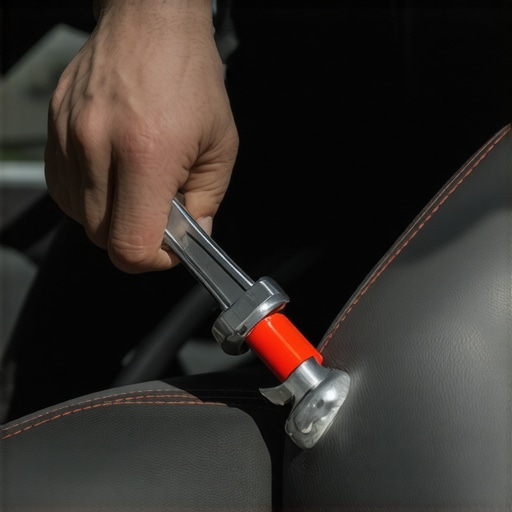
There I was, driving home from a long day at work, finally enjoying a bit of peace and quiet when that familiar, rhythmic chirping started up again. It sounded like a tiny woodpecker was trapped inside my passenger seat. Every time I hit a small expansion joint or a patch of rough pavement, the *click-click-rattle* would echo through the cabin. I actually found myself reaching over to press my hand against the seatback just to get five seconds of silence. I felt ridiculous. I even started wondering if I was seeing the top signs your car needs expert auto repair now for something much more serious than a loose bolt. It’s funny how a small noise can make you feel like your whole car is falling apart. I spent weeks ignoring it, which is exactly what you shouldn’t do if you want to maximize your cars lifespan with regular tune ups and simple maintenance. Today, I’m going to share the lightbulb moment that saved my sanity and show you that you don’t need a mechanics degree to fix this nuisance.
Fix the Clatter Before You Lose Your Mind
If you have ever felt like your car was mocking you with a mystery noise, you aren’t alone. In fact, a study by JD Power on vehicle dependability shows that interior squeaks and rattles are among the most common complaints that drive car owners crazy, often outranking actual mechanical failures in terms of daily frustration. I made the classic mistake early on of overthinking the problem. I once spent nearly two hundred dollars on a seat motor assembly because I was convinced the internal gears were stripped. It turns out, I didn’t need a motor; I just needed a ten-cent rubber washer and a bit of patience. This rattle usually comes down to three specific areas: the seat tracks, the headrest guides, or the seatbelt buckle hitting the plastic trim. Have you ever found yourself turning the radio up just to drown out a mystery sound, or am I the only one who used to play that game? The truth is, these small vibrations can sometimes be linked to other issues, like why your dashboard vibrates when the ac is on, but more often than not, the seat rattle is a standalone annoyance that we can tackle right in the driveway.
Could a small rattle actually mean your car is unsafe?
While most rattles are just annoying, they can sometimes be a symptom of a loose mounting bolt that keeps your seat secured during an accident. I realized this the hard way when I found one of my main floor bolts was backed out by nearly half an inch. It was a wake-up call that essential car service tips for safe summer drives aren’t just about the engine; they are about everything that keeps you snug and secure. We’re going to look at the simple steps to tighten things up and add some dampening where the factory missed the mark. By the time we’re done, your cabin will feel like a luxury vault again, and you’ll have the satisfaction of knowing you did it yourself.
Stop the Shake at the Source
To start this repair, you need to get physically down in the footwell. Move the seat all the way forward and all the way back to expose the four main bolts that anchor the seat frame to the floor pan. Often, the vibration isn’t coming from inside the seat, but from the seat frame dancing against the chassis. Use a socket wrench to ensure these are snug. I remember the first time I tried to fix a track squeak in my old sedan; I was so frustrated I grabbed a tub of axle grease and smeared it along the rails with my bare hands. It stopped the noise, sure, but for the next six months, anyone who moved the seat ended up with black streaks on their shoes and my floor mats were a disaster. Lesson learned: precision matters more than volume. Dealing with these mechanical connections is a great way to learn how to save money on your 100k-mile service because you start to understand how the interior components are actually assembled.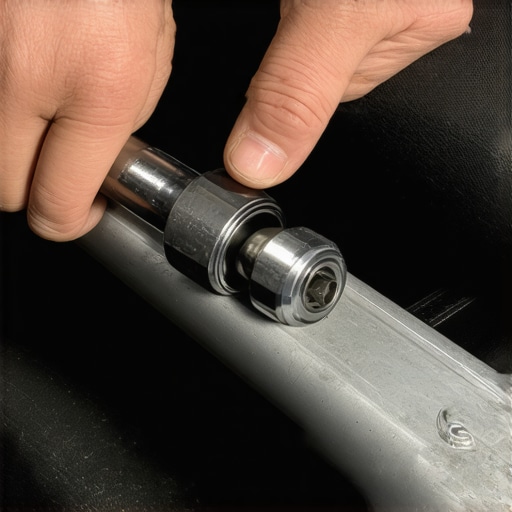
Clear the Tracks and Lubricate
Once the bolts are tight, inspect the tracks for debris. Even a stray coin or a pebble can create a high-pitched metallic click that sounds like a terminal failure. If the tracks are clear but still groaning, apply a very thin layer of white lithium grease specifically to the sliding mechanisms. This is similar to the logic of how to fix a squeaky door hinge for good, where the goal is to reduce friction without creating a sticky mess. If you still hear a deeper thud, it might be worth checking if the noise is actually coming from underneath the vehicle, much like why your suspension squeaks over speed bumps. Metal-on-metal contact inside the cabin is almost always a sign that a plastic bushing has worn away or a fastener has vibrated loose.
The Stealthy Headrest Fix
If the noise sounds like it is right in your ear, the headrest is the likely culprit. The metal posts that slide into the seatback can have a tiny bit of play. Pull the headrest out and apply a single wrap of electrical tape around the bottom of the posts before sliding them back in. This creates a tighter tolerances and dampens the vibration. This kind of resonant vibration is remarkably similar to the reason your car makes a whistling noise at high speeds; it is all about air gaps and loose fitments. Finally, check the seatbelt buckle. If it hangs too low, it might be tapping against the center console. A small piece of adhesive-backed felt on the side of the buckle or the console will kill that noise instantly. Taking these small steps keeps your cabin quiet and ensures you aren’t ignoring the top signs your car needs expert auto repair now for more critical structural issues.
While fixing a seat rattle is a victory for your sanity, true automotive expertise means looking past the surface level and questioning the ‘common knowledge’ that often leads to expensive repairs. One of the biggest traps I see DIYers and even some shops fall into is the myth of ‘lifetime’ fluids. You have probably seen it in your owner’s manual—the claim that your gearbox fluid never needs to be changed. In my experience, and according to engineering studies by transmission manufacturers like ZF, ‘lifetime’ usually just means ‘until the warranty expires.’ Real-world thermal cycles break down additives regardless of what the manual says. If you are ignoring your gears because a book told you to, you are likely missing 5 signs your transmission is silently overheating right under your nose.
Why Lifetime Fluids Are a Marketing Lie
The contrarian truth is that the cleaner the fluid, the longer the mechanical life, period. Waiting for a symptom to appear before acting is the fastest way to turn a simple service into a full-blown rebuild. I’ve seen owners skip basic maintenance because they didn’t see a leak, only to find out that the truth about lifetime gearbox fluids is that they become saturated with microscopic metal shavings over time. This acts like liquid sandpaper on your internal clutches. A study by Blackstone Laboratories suggests that consistent fluid analysis is the only way to truly gauge wear, but for the average driver, a 60,000-mile exchange is a much safer bet than ‘forever.’ This is why I always tell people that to maximize your cars lifespan with regular tune ups, you have to look at the fluids the manufacturer wants you to forget.

Is that weird vibration a loose bolt or a failing transmission?
Here is where things get nuanced. Many people hear a rattle or feel a shudder and immediately jump to the most expensive conclusion. I once had a reader convinced they needed a whole new trans because the car jerked at stoplights. After a bit of digging, it turned out to be a the tiny vacuum leak that causes a rough idle, which was tricking the computer into weird shift patterns. The ‘Oops’ factor here is the tendency to throw parts at a problem instead of diagnosing the system. For example, if you notice why your transmission fluid is turning black, don’t just flush it and hope for the best; you need to find the friction source before the debris clogs your valve body. Most people get this wrong by assuming a flush is a cure-all, when sometimes a flush on a neglected system can actually dislodge gunk and cause a total failure.
Don’t Let Cheap Parts Ruin a Good Repair
Another common mistake is the ‘budget’ trap. It is tempting to grab the cheapest sensors or pads from a big-box site, but the truth about cheap aftermarket brake pads and electrical components is that their tolerances are often miles off from OEM specs. I’ve seen brand-new ‘economy’ sensors trigger top signs your car needs expert auto repair now within a week of installation. It’s frustrating to do the work twice because you tried to save twenty bucks. Staying ahead of these issues is part of essential car service tips for safe summer drives, ensuring that one small failure doesn’t cascade into a roadside breakdown. Have you ever fallen into this trap or been told your car had ‘lifetime’ parts that eventually failed? Let me know in the comments.
I learned the hard way that throwing parts at a problem is just a fast track to an empty wallet. After that debacle with the seat motor I didn’t actually need, I invested in a bidirectional OBD2 scanner. Unlike those cheap code readers that just give you a cryptic ‘P-code,’ a real diagnostic tool lets you talk back to the car. I remember using my Autel unit to manually trigger each individual solenoid in my gearbox. Being able to hear that specific ‘click’ from the transmission while sitting in the driver’s seat told me my electronics were fine and the problem was mechanical. This kind of precision is how you really identify the top signs your car needs expert auto repair now without falling for the ‘parts cannon’ trap.
Stop Guessing and Start Scanning
In my own garage, I’ve seen the trend shifting rapidly. We are moving toward ‘software-defined vehicles’ where even a simple brake job might require a digital service reset. If you aren’t comfortable with a diagnostic screen, you are going to find it harder to maximize your cars lifespan with regular tune ups in the coming years. The future of DIY isn’t just about turning a wrench; it’s about interpreting data streams. For instance, watching your fuel trims in real-time can reveal a vacuum leak long before it triggers a check engine light. It is the ultimate proactive move.

How do I keep my car running forever?
The real secret isn’t a magic additive; it’s consistency and high-quality data. I follow the logic found in the Society of Automotive Engineers (SAE) Technical Paper 2003-01-3273, which emphasizes that while lubricant chemistry has improved, particulate contamination remains the primary driver of component fatigue. This is why I obsess over fluid quality. Understanding the real difference between full synthetic and blends is a great start, but the real victory is the ‘drain and fill’ strategy. By refreshing a few quarts of transmission fluid every 30,000 miles, you might avoid the need for a major rebuild. I’ve seen this habit alone be the reason how transmission overhauls save you money in the long run, or better yet, how you avoid them entirely. It’s all about maintaining that secret to longevity for high mileage engines by never letting the oil reach its breaking point.
Your Wrench is Becoming a Tablet
Even though I love my digital tools, I still swear by my calibrated torque wrench. Most people ‘hand-tighten’ everything, but on modern aluminum heads and plastic intake manifolds, being off by just five foot-pounds can cause a hairline crack. Following these strict specs is part of the essential car service tips for safe summer drives that I live by. It keeps the seals tight and the leaks at bay. If you want to take your maintenance to the next level, my challenge for you this weekend is to learn how to find a parasitic battery drain with a simple multimeter. It’s an advanced skill that will save you from being stranded with a ‘dead’ battery that is actually perfectly healthy.
The Hardest Lesson I Learned Chasing Mystery Noises
After a decade of wrenching, the most valuable thing I’ve learned is that your ears are your best diagnostic tools, but your brain needs to be the filter. I once spent a weekend tearing down a dashboard only to realize the rattle was just a pair of sunglasses in the overhead bin. This realization changed how I approach every fix. First, I’ve learned that the ‘parts cannon’ is a luxury nobody can afford; always prove a part is dead before you bury it. Second, the satisfaction of a silent cabin is directly proportional to the patience you have for the small stuff. Lastly, don’t fear the dealership for parts, but fear the ‘lifetime’ label on any fluid. Real maintenance is proactive, not reactive.
My Essential Gear for Proactive Maintenance
If you want to move beyond basic oil changes, you need tools that talk to your car’s brain. I never travel without a bidirectional scanner; it’s the only way to accurately identify the top signs your car needs expert auto repair now without guessing. I also recommend every driver keep a quality multimeter in their kit. Learning how to find a parasitic battery drain with a simple multimeter can save you hundreds on batteries you don’t actually need. For those deeper mechanical worries, like the reason your car shakes when you accelerate, having a set of chassis ears or even a simple mechanic’s stethoscope can pinpoint a failing bearing before it becomes a roadside nightmare.
#IMAGE_PLACE_HOLDER_E#
Stop Tolerating the Clutter and Take Control
Your car is likely the second most expensive thing you own, so why let a $10 rattle ruin the experience? Taking ownership of these small fixes builds the confidence needed for bigger tasks, like realizing how transmission overhauls save you money in the long run by preventing total mechanical failure. Whether you are following essential car service tips for safe summer drives or just tightening a loose seat track, you are actively extending the life of your vehicle. Don’t wait for a breakdown to start paying attention. Have you ever spent money on a major repair only to find out it was a simple five-minute fix? Let me know in the comments below!