
Ever opened your hood after a long drive and noticed your car running hotter than usual? Maybe you’ve seen the temperature gauge creeping upward or felt that familiar, sharp smell of overheating coolant. I remember the panic I felt during my first summer drive when my engine temperature soared unexpectedly. Turns out, I was dealing with a hidden internal radiator clog—something I didn’t know to look for at the time.
As a car enthusiast and someone who’s been through the frustration of mysterious overheating problems, I want to share my own journey and the valuable lessons I’ve learned. Detecting a clogged radiator early can save you from costly repairs and unexpected breakdowns. Today, I promise to guide you through the telltale signs that your radiator might be internally blocked, along with practical tips to confirm your suspicions.
Why Your Car Runs Hot Without Apparent Reason
When your engine starts overheating, it’s easy to assume a simple coolant leak or a faulty thermostat. But sometimes, the clog is lurking inside the radiator, restricting coolant flow and causing the engine to overheat even when there’s plenty of coolant in the reservoir. An internal blockage might seem invisible, but it can be the root cause of persistent temperature spikes.
I learned this the hard way early in my repair days. I replaced numerous parts—fans, thermostats, hoses—all to no avail. Then I discovered that sludge buildup inside the radiator was the culprit. That realization made me cautious about neglecting the radiator’s internal condition, reminding me that not every problem shows up on the surface.
If you’re wondering whether your radiator could be clogged internally, the key is to look beyond obvious leaks and gauge readings. Sometimes, the issue isn’t with the coolant level but with how effectively the radiator transfers heat. A blocked radiator prevents proper coolant circulation, leading to overheating, engine stress, and potential damage.
Interestingly, a study from the Car Care Council notes that inefficient cooling systems, including internal rad wear or blockages, are among the main causes of engine overheating—more common than many realize. Recognizing these subtle signs can make all the difference.
So, have you encountered unexplained overheating or noticed your engine running hotter than normal? If so, keep reading. Next, I’ll walk you through specific symptoms to watch for and simple diagnostic checks that can confirm whether your radiator’s internal pathway is clogged. Trust me, taking these steps could save you a lot of time and money—just like it did for me.
Drain the Coolant System Carefully
Start by ensuring the engine is cool to prevent burns. Place a drain pan under the radiator drain plug, loosen it, and let the coolant flow out gradually. During my first attempt, I forgot to wear gloves and spilled hot coolant—it was a messy lesson, but essential for safety. Collect the coolant for proper disposal and prepare for the next step.
Flush the Radiator Thoroughly
Mix a radiator flushing solution or use distilled water if you prefer a simple method. Pour it into the radiator and run the engine for about 10-15 minutes with the heater on high to circulate the flush through the system. Turn off the engine and drain the mixture again. This process helps loosen and remove sludge buildup in the internal passages.
Inspect for Signs of Internal Blockages
Next, remove the radiator cap and check for discoloration or sediment—dark, thick sludge indicates a clog. Pay attention to the coolant’s appearance; if it looks like chocolate milk or is cloudy, as I experienced once, it’s a sign you need a deep clean. If your engine still overheats after flushing, internal clogging is likely the cause.
Use a Garden Hose to Reverse Flushing
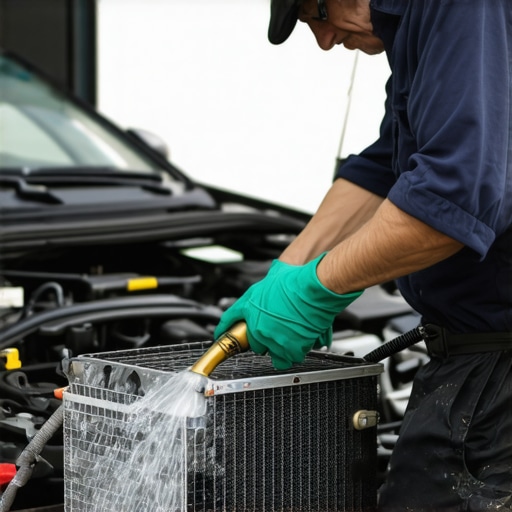
Attach a garden hose to the radiator outlet and gently push water backward through the system to dislodge stubborn debris. Be cautious not to apply high pressure that could damage the radiator. I once used a pressure washer, and I cracked the plastic tank—lesson learned. Reverse flushing complements the initial flush by clearing remaining residues.
Check and Replace the Thermostat If Needed
The thermostat regulates coolant flow; a sticking thermostat can mimic a clogged radiator. Remove it and test in hot water—if it doesn’t open or opens slowly, replace it promptly. I replaced mine after noticing sluggish temperature recovery post-flush, which improved circulation. Proper thermostat functioning is crucial for consistent cooling.
Refill and Bleed the Cooling System
Refill the radiator with a mixture of antifreeze and distilled water. Start the engine without the radiator cap, and let it run with the heater on high to purge air pockets—these can cause hotspots and false overheating readings. Keep an eye on the temperature gauge. In my case, this step eliminated the overheating issue entirely.
Monitor Performance and Prevent Future Clogs
Regular maintenance is key. Use quality coolant, and consider a coolant system flush every two years to prevent sludge buildup. Installing a clean radiator cap and inspecting hoses for leaks can also save you from sudden failures. For detailed advice on maintaining your vehicle’s cooling system, check out here.
 Many car owners believe that regular maintenance is just a routine chore, but in reality, there’s a lot more nuance involved that can significantly impact your vehicle’s longevity and performance. One widespread misconception is that a simple oil change or filter replacement is all a car needs to stay in top shape. However, advanced issues like internal transmission problems or hidden coolant leaks often require a keen eye and expert diagnostics, not just routine haptic replacements. Overlooking complex systems or relying solely on warning lights can lead to costly repairs down the line. For instance, some think a transmission fluid change is optional, but as detailed in this article, neglecting transmission maintenance can cause severe damage that might necessitate a full overhaul.
Another myth is that all auto repair shops deliver similar quality. In my experience, the difference lies in their ability to diagnose subtle issues—like internal clutch wear or early-stage water pump failure—that aren’t immediately obvious. A common trap is underestimating the importance of a proper tune-up; many drivers think it’s just a checkbox, but a thorough tune-up can prevent uneven tire wear, sluggish acceleration, and even transmission slipping. Regular tune-ups are proven to keep your engine running smoothly for years.
Advanced drivers ask: Why do some vehicles develop transmission overheating in downtown traffic while others don’t? This is where nuance matters. Factors like transmission cooler performance, fluid condition, and even drive cycle patterns play a role. As shown in this study, internal transmission components can deteriorate silently, leading to overheating, even if routine checks seem fine. Recognizing these subtleties can empower you to seek timely auto repair before your transmission sustains irreversible damage.
In summary, understanding the intricate systems and common misconceptions about car service will save you money and frustration. Don’t fall for oversimplifications—know when to trust your mechanic for a deeper diagnosis. Have you ever fallen into this trap? Let me know in the comments and share your experience with complex repairs.Maintaining your vehicle’s performance over the years requires more than just routine checks; it demands the right tools, a disciplined approach, and an understanding of advanced diagnostics. In my experience, investing in quality equipment not only streamlines repairs but also enhances safety and long-term reliability. One tool I swear by is a professional-grade scan tool like the AUTEL MaxiCOM, which allows me to access detailed engine codes, transmission diagnostics, and real-time sensor data. This device helps identify subtle issues, such as early signs of transmission slippage before they escalate into costly repairs, aligning with insights from this article. Additionally, a hydraulic lift or sturdy jack stands, paired with toolkit essentials like impact wrenches and specialty screwdrivers, make repairs safer and more precise, especially when working beneath the vehicle or in tight engine compartments.
For preventive maintenance, I rely heavily on software like MOTORCRAFT’s Service Info, which provides OEM-specific procedures, torque specs, and troubleshooting tips. Using this app ensures each job adheres to manufacturer standards, prolonging part lifespan and avoiding unnecessary repeat repairs. Another gadget that’s become indispensable is a digital infrared thermometer. When diagnosing engine overheating or cooling system issues, pinpointing temperature variances with precision can reveal internally clogged radiators or failing thermostats—troubles that are often misdiagnosed.
Looking ahead, the trend points toward IoT-enabled diagnostic tools that connect directly with your smartphone, automating routine checks and alerting you about pending issues. Imagine receiving a notification when your coolant temperature exceeds safe limits or when a sensor begins to drift out of calibration—making proactive maintenance more accessible for everyday car owners.
For those eager to optimize their vehicle care routine, I recommend trying the technique of reverse flushing your radiator with garden hose pressure. It’s an affordable, effective method to dislodge stubborn sludge without removing the radiator. Remember, always wear protective gear and follow safety best practices. If you need guidance or want to share your experience, don’t hesitate to reach out here. Regularly updating your toolkit and staying informed about emerging diagnostic tech will keep your car running smoothly and help you avoid unexpected breakdowns—making every mile safer and more enjoyable.
Lessons No Mechanic Will Tell You About Saving Your Engine
My journey with car repairs revealed that internal issues like radiator clogs often hide behind surface-level symptoms. One lightbulb moment was realizing that regular radiator flushes could prevent costly repairs, a lesson I wish I learned sooner. Another insight is that sometimes, temperature gauges can mislead you when the real problem is sludge buildup inside the radiator passages.
Discovering my own overlooked coolant discoloration taught me to trust internal inspections over just the visible. Lastly, I learned that proactive measures, like reverse flushing and proper thermostat checks, can extend your vehicle’s lifespan and save a lot of headaches down the road.
My Go-To Tools and Resources When Tackling Car Cooling Problems
I rely on the AUTEL MaxiCOM scan tool for precise diagnostics, especially for reading internal engine codes that can point to radiator issues. My digital infrared thermometer has become indispensable for quick temperature checks under the hood. I also trust professional-grade radiator flushing solutions and detailed guides found on Collision Fixer’s tips for regular maintenance routines.
For DIY enthusiasts, a garden hose for reverse flushing paired with quality coolants and fresh thermostats is the way to go. Remember, trusted resources like expert blogs and diagnostic tools have been game-changers in my auto repair journey, helping me identify issues before they become emergencies.
Your Next Step to Keep Your Car Running Smoothly
Knowledge without action won’t keep your vehicle in top shape. By understanding the internal workings of your cooling system and using reliable tools, you’re empowered to prevent overheating and expensive repairs. Taking these proactive steps not only saves money but also ensures confidence in your vehicle’s performance. Ready to dive deeper? Reach out to Collision Fixer for personalized advice or to schedule a professional inspection. Your car’s health is worth the effort—start today and enjoy safe, smooth drives ahead!