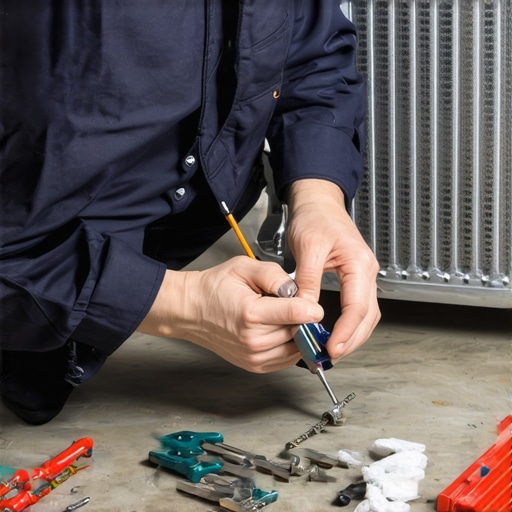
It was a cold morning when I noticed that strange wet patch forming under my car. At first, I thought it was just dew, but then I saw a tiny drip from the radiator—so small I almost missed it. That little pinhole was like a leaky faucet, slowly draining my cooling system and raising my stress level. Trust me, I’ve been there, and it’s a frustrating experience—one that can leave you wondering if you need a full radiator replacement or just a quick fix. But after some trial, error, and a few lessons learned the hard way, I discovered that a tiny pinhole in your radiator doesn’t mean you need a costly overhaul. With the right approach, you can patch it up yourself and keep your engine cool and running smoothly.
Why Addressing Radiator Leaks Quickly Matters
Radiator leaks, even tiny ones, can cause severe engine overheating if left unattended. Over time, a tiny pinhole can grow, leading to bigger problems like engine warping, head gasket failure, or complete radiator failure. The good news is that fixing these small leaks early can save you a lot of money and stress down the road. I learned this the hard way—an unattended leak led to costly repairs, more than I’d like to admit. Preventing this means understanding your radiator’s delicate parts and knowing how to patch minor holes yourself. It’s a skill every car owner should have in their toolkit.
Once I realized how simple a temporary patch could be, I started exploring effective methods. If you’ve ever faced a tiny leak and wondered whether a DIY patch is good enough, you’re not alone. Many drivers hesitate because they fear making things worse or aren’t sure where to start. That’s exactly what I want to help you with today: how to temporarily patch that minuscule hole and get you back on the road without a costly visit to the mechanic.
Is a Pinhole Leak in the Radiator Really Fixable at Home?
Early on, I made the mistake of thinking all radiator issues needed professional repairs. Turns out, some small leaks—like that tiny pinhole—can be managed with the right supplies and techniques. The key is to act fast before the leak enlarges and causes bigger problems. Remember, this isn’t a permanent fix; it’s just enough to buy you time or get through until you can get a proper repair. The trick is knowing what materials work best and how to apply them effectively, which I’ll cover in the next section. If you’re the type who’s ever felt overwhelmed by the idea of radiator repairs, think again—you might just need a simple patch and a little know-how.
Having avoided quick fixes in the past, I learned that rushing into a repair without prep often makes things worse. A common mistake I made was ignoring the importance of proper cleaning before applying any patch—leading to poor adhesion and a quick failure. Trust me, it’s crucial to prepare the surface thoroughly and choose reliable patching materials. For more detailed insights, check out how a simple vacuum leak can sabotage your engine’s performance [here](https://collisionfixer.com/the-vacuum-leak-that-only-happens-during-acceleration). Now, let’s get into the practical steps on how to patch that tiny radiator pinhole and keep your engine cool.
Start by Locating the Leak Precisely
Park your car on a level surface and let the engine cool completely. Turn on the engine and carefully inspect your radiator for the tiny hole. Use a flashlight if needed, and look for any signs of coolant dripping or wet spots. A common mistake is assuming the leak is in a different area; focus on the spot where you see the smallest drip or shimmer of coolant. I remember my first fix, where I spent 20 minutes chasing spots before realizing the leak was just a tiny pinhole at the radiator’s edge. Pinpointing the exact location ensures the patch adheres properly and lasts longer.
Clean and Prep the Radiator Surface
Thorough cleaning is essential. Use a wire brush or sandpaper to gently roughen the area around the leak, removing any rust, dirt, or old repair residue. Wipe the area with a clean rag soaked in brake cleaner or rubbing alcohol to remove grease and coolant residues. This step is like preparing a painting surface; without it, the patch won’t stick well. I once rushed this step and ended up reapplying the patch twice because it peeled off after a week.
Choose the Right Patch Material
For temporary repairs, epoxy-based radiator sealants are your best bet. Automotive putty or high-temperature epoxy sticks designed for radiators work well. If you want a quick fix with minimal equipment, a ready-to-use radiator repair putty that hardens after application can be applied directly over the hole. Remember, this isn’t a permanent fix—think of it as a patchwork that buys you time. When I repaired my radiator, I used a two-part epoxy; it was messy but held firm through a long drive, saving me from an emergency stop at the shop.
Apply the Patch Material Correctly
Mix or prepare the patch material according to the instructions. Carefully spread and mold it over the pinhole, ensuring it extends a few centimeters beyond the leak for a solid seal. For best adhesion, press the patch firmly into the surface and smooth out any air bubbles or bumps. Use a putty knife or a piece of plastic to shape it. I remember the first time I applied epoxy, I skipped this step and ended up with a bubble that later caused another leak. Patience during application pays off.
Allow Adequate Curing Time
Let the patch cure completely before refilling coolant or restarting the engine. This could take anywhere from 30 minutes to a few hours, depending on the material used. Check the manufacturer’s instructions for precise curing times. During this period, avoid driving or pressurizing the radiator. A quick tip: I once rushed the curing process and had the patch pop off during the next drive—lesson learned the hard way. Patience here ensures the patch adheres firmly and resists pressure and heat.
Refill Coolant and Test the Repair
Once cured, carefully refill the radiator with the appropriate coolant mixture. Start the engine and let it reach operating temperature, observing the repaired area for any leaks. Keep a close eye on the temperature gauge and coolant level. If you see any drips or wetness, you might need to reapply or reinforce the patch. During my last repair, I noticed the patch was holding but the coolant level dropped faster than expected—so I double-checked the patch, and sure enough, a small gap was forming. Reapplying fixed the issue immediately.
Monitor and Plan for a Permanent Fix
This temporary patch is just a stopgap. Schedule a professional repair for a permanent solution, especially if the leak worsens or if the radiator shows signs of corrosion. Consider flushing the radiator and replacing the damaged part if necessary. Think of this as a bandage—use it to get home or to a mechanic, but don’t rely on it long-term. Last year, I kept patching my radiator until I finally decided to replace it entirely, saving myself more costly repairs down the line. Keep an eye on your engine’s performance and coolant levels, and don’t hesitate to seek expert help when needed.When it comes to vehicle maintenance, many car owners cling to myths that can lead to costly mistakes. One common misconception is that all repairs are straightforward and that every mechanic has the same level of expertise. In reality, complex systems like transmissions and collision repairs require nuanced understanding and specialized skills that aren’t always obvious at first glance. For example, a transmission shifting hesitation might seem like a simple fluid change, but as highlighted in https://collisionfixer.com/stop-transmission-shifting-hesitation-with-this-45-fluid-additive, addressing the root cause often involves more than just adding fluid. Relying solely on quick fixes can mask underlying issues, making future repairs even more expensive.
A trap many fall into is trusting a mechanic based solely on price or convenience, without considering their experience with sophisticated diagnostics. For instance, a common mistake is assuming that a new oil filter guarantees engine health; as discussed in https://collisionfixer.com/3-signs-your-mechanic-didnt-actually-change-your-oil-filter, visual inspection alone isn’t enough—you need to verify proper installation and operation.
Let’s talk about an advanced nuance that often trips up even seasoned enthusiasts: vacuum leak detection during acceleration. A leak here, as explained in https://collisionfixer.com/the-vacuum-leak-that-only-happens-during-acceleration, can cause subtle power loss and inefficient engine performance, yet it’s easily overlooked during routine inspections. This highlights the importance of specialized diagnostics to uncover hidden issues before they escalate.
Don’t miss this—ignorance of these complexities can lead to poor service outcomes. Recognizing the difference between superficial fixes and genuine repairs saves you money and extends your vehicle’s life. Are you surprised by how many myths pervade the industry? Share your experiences and let me know in the comments. Remember, good maintenance isn’t just about changing parts; it’s about understanding the nuanced systems that keep your car running smoothly. Whether it’s a simple tune-up or a complex transmission repair, always seek a professional with the right expertise. After all, a well-informed owner is the best defense against costly mistakes.Maintaining your vehicle effectively requires the right tools and a strategic approach. Over the years, I’ve tested numerous equipment and software solutions to diagnose and address common issues efficiently. One essential tool I’ve relied on is a high-quality code scanner, like the Autel MaxiCom MK808, which provides comprehensive diagnostics across a wide range of vehicle systems. This device helps me pinpoint trouble codes quickly, saving time and money, especially when dealing with complex systems like transmissions or engine sensors. Combining this with a reputable coolant refractometer ensures accurate coolant testing, which is crucial for preventing overheating issues and extending radiator life. Personally, I prefer the EZ Red Coolant Refractometer because of its durability and ease of use, allowing me to monitor coolant quality during routine maintenance.
For software, I recommend vehicle-specific diagnostic programs such as OEM diagnostic platforms. These programs offer deeper insights than generic scanners, allowing for precise adjustments and resets—particularly useful when fine-tuning complex systems like the transmission or collision sensors. Regular updates to these tools keep you ahead of emerging issues and vehicle recalls.
To keep long-term results consistent, I suggest maintaining a comprehensive maintenance log using software like AutoMate. This helps track service intervals, fluid changes (like differential or transmission fluid), and repairs. I’ve found that routine checks with these tools prevent small problems from escalating, thereby saving significant costs over time.
Scaling your car repair capabilities is also feasible with advanced equipment like a hydraulic transmission jack and digital torque wrench. These tools provide stability and precision during repairs, enabling you to tackle more ambitious projects such as gear linkage adjustments or suspension work. Remember, investing in quality equipment might seem costly upfront, but it pays off by reducing repair time and improving job quality.
Looking to the future, I believe integration of smart diagnostic tools with predictive maintenance software will revolutionize auto care. Imagine getting alerts about potential issues before they manifest—saving you from unexpected breakdowns and costly repairs.
How do I maintain my car’s critical systems over time?
Consistent maintenance starts with regular system checks, fluid analysis, and timely part replacements. Using tools like a digital multimeter helps monitor electrical components, ensuring everything from your battery to sensors functions optimally. For instance, routinely testing your vacuum hoses and sensors can prevent subtle issues that lead to engine misfires or transmission hesitations. Remember, staying proactive is key; it’s better to catch a problem early than to deal with a major breakdown later. For example, keeping an eye on vacuum leaks, which can gradually worsen, is essential—learn how to diagnose and fix them early by reading this detailed guide on vacuum leak detection. Additionally, consult with trusted professionals for complex diagnostics and embrace software updates to keep your vehicle’s systems current. By adopting these methods and investing in reliable tools, you ensure your vehicle remains dependable for years to come.
Lessons from the Front Lines of Radiator Repair
One of the most valuable insights I gained was that patience is key—rushing a patch often means redoing it. Vigilance about surface prep, like cleaning thoroughly before applying a patch, can make the difference between a leak that sticks and one that fails. I also learned that understanding your radiator’s material and choosing the right patch—like epoxy or radiator cement—can dramatically improve your success rate.
Another lightbulb moment was realizing that temporary fixes are just that: temporary. The ultimate goal should always be a professional, permanent repair, but your DIY patch can buy you the crucial time needed to get to a mechanic without risking further damage. Recognizing the signs of a growing leak beyond that tiny pinhole has helped me prevent costly engine failures and keep my car running smoothly.
My Essential Arsenal for Vehicle Longevity
- High-Temperature Epoxy Sealants: Reliable and easy to apply, perfect for quick patches on radiator pinholes—trustworthy from personal experience.
- Wire Brushes and Sandpaper: Critical for surface prep, ensuring patches adhere properly and last longer.
- Coolant Refractometer: Ensures your coolant stays at optimal levels, preventing overheating and extending radiator life.
- Code Scanners like Autel MaxiCom MK808: Not just for diagnostics—they help catch leaks and other issues early, saving you money and stress.
Consistency in maintenance, combined with the right tools, has transformed the way I approach vehicle care. From routine fluid analysis to temporary patch fixes, embracing these strategies keeps my car dependable and saves me from surprise breakdowns. Building a well-equipped toolkit and staying informed empowers any car owner to handle minor crises confidently, knowing that expert assistance is a call away when needed.
Your Next Step in Confident Car Care
The future of vehicle maintenance is about proactive, informed decisions. Don’t let small leaks turn into big problems—arming yourself with practical knowledge and quality tools makes all the difference. Whether you’re patching a tiny radiator pinhole or planning your next professional service, remember that your attentive care now will pay off immensely later. Your engine’s health depends on it, and you have the power to keep it in top shape. How do you plan to enhance your vehicle maintenance routine today? Share your strategies below and join the conversation about keeping cars running smoothly for miles to come.