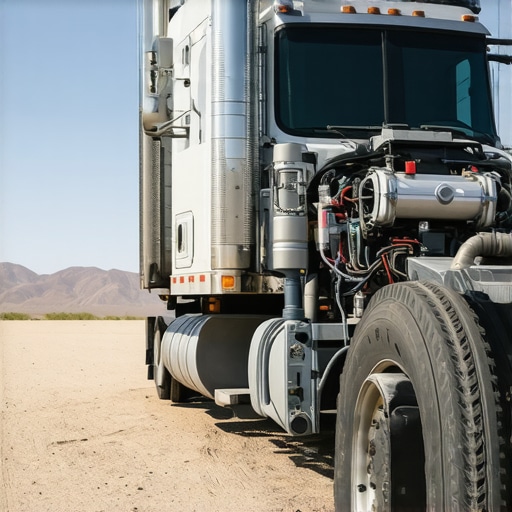
The Specific Sensor That Fails When Your Diesel Truck Overheats in Yuma
Yuma, Arizona, is not just a place; it’s a gauntlet for machinery. When the mercury consistently climbs past 110°F, your diesel truck isn’t just working; it’s fighting for survival. We see it every year: heavy-duty Rams, Silverados, and F-Series trucks pulling trailers up the grades or idling in traffic, only to have the temperature gauge spike into the red. Most owners immediately fear the worst – a blown head gasket, a cracked head, or a seized turbo. However, as a seasoned diesel mechanic near me, I can tell you that the culprit is often a small, $30 component that most people overlook until it’s too late. According to the “Summer Breakdown Index,” Southwest cities like Yuma top the list for heat-impacted automotive failures, and the primary catalyst for these breakdowns isn’t always a mechanical leak, but an electronic failure of a specific sensor.
The Culprit: The Engine Coolant Temperature (ECT) Sensor
The Engine Coolant Temperature (ECT) sensor is effectively the “brain’s thermometer.” In a modern diesel engine, the Engine Control Module (ECM) relies on a constant stream of data to make split-second decisions about fuel timing, injection pulse width, and, most importantly, cooling fan engagement. When you are looking for a diesel repair shop to diagnose an overheating issue, the ECT sensor should be the first place the technician looks.
Technically speaking, the ECT is a thermistor – a resistor that changes its electrical resistance based on temperature. Most diesels use a Negative Temperature Coefficient (NTC) sensor, meaning resistance decreases as the temperature increases. The ECM sends a 5-volt reference signal to the sensor and measures the voltage drop. In the extreme environment of Yuma, these sensors don’t always “break” in the traditional sense of stopping entirely. Instead, they “skew.”
A skewed sensor is far more dangerous than a dead one. If a sensor fails completely, the ECM usually detects the open circuit, throws a code, and defaults the cooling fans to 100% high-speed as a failsafe. But a skewed sensor might tell the truck it’s running at a comfortable 180°F when the actual coolant temperature is climbing past 230°F. Because the ECM thinks the engine is cool, it won’t engage the electronic fan clutch or the auxiliary cooling fans. By the time the mechanical gauge on your dash reflects the truth, the engine is already in the danger zone.
Why Yuma’s Climate is a “Sensor Killer”
The “Extreme Heat Warning” context in Arizona isn’t just a weather report; it’s a diagnostic reality. When ambient temperatures hit 115°F, the under-hood temperatures of a working diesel can easily exceed 250°F. This creates a “heat soak” effect that is brutal on electrical components. Local auto repair shops yuma az see a massive spike in sensor-related failures every July because of how these conditions affect materials.
The ECT sensor is typically housed in a plastic or composite connector. Over years of Yuma summers, the constant expansion and contraction cause the plastic to become brittle and crack. Once the seal is compromised, moisture or even microscopic amounts of coolant can seep into the electrical pins, causing corrosion. This corrosion adds resistance to the circuit, which the ECM interprets as a temperature change. Furthermore, the internal ceramic element of the sensor can degrade under extreme heat, leading to erratic voltage fluctuations. This is why why your engine temperature rises while you’re sitting in traffic – the lack of airflow combined with a failing sensor prevents the cooling system from reacting to the heat soak.
Secondary Failures: The Coolant Level Sensor and Oil Temp Sensor
While the ECT is the primary offender, it’s rarely a lone actor. In many diesel platforms, the Engine Oil Temperature (EOT) sensor and the Coolant Level Sensor play critical supporting roles. If your truck suddenly enters “Limp Mode” – where power is severely restricted to protect the engine – it might be due to a faulty Coolant Level Sensor. These sensors often use a float or a conductivity probe. Mango Automotive insight suggests that Yuma’s hard water and the breakdown of older coolant can cause deposits on these sensors, leading to “low coolant” warnings even when the reservoir is full.
The relationship between oil and coolant temperatures is also vital. In engines like the 6.0L or 6.4L Powerstroke, a significant “delta” or difference between ECT and EOT (usually more than 15 degrees) indicates a localized cooling failure. While a sensor failure can cause a false delta, it’s also important to understand how to tell if your radiator is clogged internally. If the sensors are accurate and the delta is still high, the mechanical cooling components are likely failing alongside the electronics.
5 Signs Your Overheating is Sensor-Related (Not Mechanical)
Before you commit to a multi-thousand dollar radiator and water pump replacement, look for these specific indicators that the problem is electronic:
- Check Engine Light: Specifically, look for OBD-II codes P0117 (ECT Circuit Low Input) or P0118 (ECT Circuit High Input). These are “smoking guns” for sensor failure.
- Erratic Temperature Gauge: If the needle on your dash bounces up and down or stays “stuck” at a certain temperature regardless of how long you’ve been driving, the sensor is likely failing.
- Poor Fuel Economy: If the ECM thinks the engine is colder than it actually is, it will keep the engine in “warm-up mode,” dumping more fuel into the cylinders. This is similar to the $12 sensor that fixes your car’s sudden stalling – it’s all about the data reaching the computer.
- Cooling Fans Not Engaging: If you can hear your engine getting hot but don’t hear the “roar” of the cooling fan, the ECT is likely failing to trigger the fan clutch.
- Rough Idle or Hesitation: An incorrect temperature reading messes with the air-fuel ratio, leading to a “choppy” idle, especially after a hot restart in the Yuma sun.
The Diagnostic Process: How a Professional Mechanic Shop Near Me Handles It
A quality auto repair near me won’t just “parts cannon” your truck. “Parts cannoning” is the expensive habit of replacing parts until the problem goes away. Instead, a professional technician uses a high-end scan tool to look at “Live Data.”
The most effective test is the “Cold Soak” comparison. If a truck has been sitting overnight for 12 hours, the Ambient Air Temperature, the Intake Air Temperature, the Oil Temperature, and the Coolant Temperature should all be within a few degrees of each other. If it’s a 75°F morning in Yuma and the ECT sensor says the coolant is 140°F, we know immediately that the sensor is skewed and needs replacement. This precision is why choosing the right diesel repair shop is essential; they have the tools to see what the computer sees.
Preventative Maintenance: Surviving the Next Heatwave
Prevention is the only way to ensure your diesel survives the record-shattering March and summer heatwaves in Arizona. First, ensure you are following essential car service tips for safe summer drives, which include regular coolant flushes. Old coolant becomes acidic and can actually eat away at the protective coating of the ECT sensor.
Second, check your ground wires. Diesel engines vibrate significantly, and Yuma’s dry air can lead to static and grounding issues. A poor ground can cause “electrical noise” that interferes with the low-voltage signals of the ECT sensor. Finally, always use OEM (Original Equipment Manufacturer) sensors. While a $15 aftermarket sensor might seem like a deal, their calibration curves are often slightly off, which can be disastrous in 120°F weather. You can also maximize your car’s lifespan with regular tune-ups that include electrical system health checks.
Conclusion & Call to Action
In the extreme heat of Yuma, your diesel truck is only as reliable as the sensors that monitor it. If your temperature gauge is acting up or your truck feels sluggish when the sun is at its peak, don’t wait for a catastrophic engine failure. Visit a trusted diesel mechanic near me today to get a professional diagnostic. A simple sensor swap could save you from a $15,000 engine rebuild.